Nuclear Plants Slammed for No Terror Planning

By Daily News (in New York)


NFPA 70e Training - Arc Flash

Our customized live online or in‑person group training can be delivered to your staff at your location.

  • Live Online
  • 6 hours Instructor-led
  • Group Training Available
Regular Price:
$199
Coupon Price:
$149
Reserve Your Seat Today
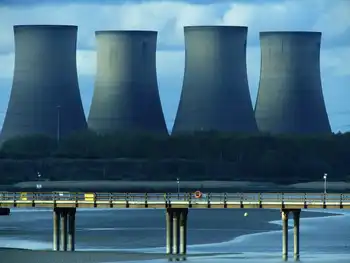
Evacuation plans for the Indian Point nuclear plants ignore the risk of terrorist attacks and fail to "protect the people from an unacceptable dose of radiation," a safety expert hired by Gov. Pataki has concluded.

James Witt, the former chief of the Federal Emergency Management Agency, said in a 500-page report that the plans are flawed because they are based on regulatory compliance rather than "a strategy ... to protect from radiation exposure."

About 20 million people live within 50 miles of Indian Point, located in Buchanan, Westchester County.

Witt's report stopped short of calling for the plants -- 35 miles north of midtown Manhattan -- to be shut down. But he said the risk is so serious that emergency planning for nuclear plants, in general, should be upgraded "on a national basis."

In response, Pataki urged the Nuclear Regulatory Commission and FEMA to reevaluate their certification standards and "determine if they are strong enough to meet the post-Sept. 11 reality."

Entergy, the company that operates Indian Point, has said they are safe and that a shutdown would lead to energy price spikes. The plants supply seven per cent of New York's power.

"We recognize the post-Sept. 11 world may necessitate making additional changes to the plan," an Entergy spokesman said.

But Assemblyman Richard Brodsky said the Witt report should prompt Pataki to call for an immediate shutdown of Indian Point.

Pataki spokeswoman Suzanne Morris said Brodsky had "no interest in proceeding in a responsible manner. It's clear he will say or do anything to get attention for himself."

Related News

Dubai Planning Large-Scale Solar Powered Hydrogen Production

Dubai Green Hydrogen advances electrolysis at the Mohammed Bin Rashid Al Maktoum Solar Park, with DEWA and Siemens enabling clean energy storage, re-electrification, and fuel-cell mobility for Expo 2020 Dubai and public transport.


Key Points

Dubai Green Hydrogen is a DEWA-Siemens project making solar hydrogen for storage, mobility, and reelectrification.

✅ Electrolysis at Mohammed Bin Rashid Al Maktoum Solar Park

✅ Partners: DEWA and Siemens; public-private demonstration plant

✅ Hydrogen for buses, re-electrification, and energy storage


Something you hear frequently if you are a clean tech aficionado is that excess solar and wind power can be used to split water into oxygen and hydrogen. The Dubai Supreme Council of Energy, the 2020 Dubai Higher Committee and the Dubai Electricity and Water Authority broke ground in early February on a solar power hydrogen electrolysis facility located in the Mohammed Bin Rashid Al Maktoum Solar Park, and related initiatives like the Solar Decathlon Middle East underscore Dubai's clean energy focus. Sheikh Ahmed bin Saeed Al Maktoum, chairman of the Dubai Supreme Council of Energy and chairman of the Expo 2020 Dubai Higher Committee, participated in the groundbreaking ceremony, according to a report by Khaleej Times.

Saeed Mohammed Al Tayer, CEO of DEWA, said at the groundbreaking ceremony the project is important to understanding the limits of green hydrogen technology and how it can contribute to the UAE’s vision of clean energy, and aligns with DEWA's latest renewable initiatives now progressing in the emirate. “This pioneering project is a role model for strategic partnerships between the public and private sectors. It will contribute to developing the green economy concept in the UAE and explore the potential of green hydrogen technology. The hydrogen produced at the facility will be stored and deployed for re-electrification, transportation and other uses.”

Siemens is providing much of the technology that will be used at the demonstration facility, while DEWA expands its China outreach to woo renewable energy firms that can contribute to the ecosystem. Joe Kaeser, president and CEO of Siemens, said the UAE was the perfect location for Siemens to test the technology, building on advances in offshore green hydrogen the company is pursuing. One of the primary uses of the hydrogen produced will be to power Dubai’s public transportation system.

“We are aware of the stress that is placed on vehicles in this region due to the high levels of heat; with hydrogen cells, you are not putting as much strain on the vehicle and that improves its longevity,” Kaeser said. “However, this is only the first step and we are eager to explore more ways in which we can adapt the technology to other sectors. The interest from various companies and partners has been immense and we are eager to work with all interested parties.”

“Dewa, Expo 2020 Dubai and Siemens are working together to help realize His Highness Sheikh Mohammed bin Rashid Al Maktoum, Vice-President and Prime Minister of the UAE and Ruler of Dubai’s, vision to identify new energy resources and provide sustainable power as part of a balanced approach that prioritizes the environment. Our aim is to make Dubai a model of energy efficiency and safety,” said Sheikh Ahmed.

Expo 2020 Dubai intends to use the hydrogen generated at the facility to transport visitors to the Expo 2020 Dubai and the Mohammed bin Rashid Al Maktoum Solar Park, reflecting regional momentum such as Saudi Arabia's clean energy plans over the next decade, in hydrogen fuel cell powered vehicles. Live data of the green hydrogen electrolysis will be displayed at Expo 2020 Dubai to help inform broader efforts like hydrogen hubs in the United States.


Related News

View more

Finland Investigates Russian Ship After Electricity Cable Damage

Finland Shadow Fleet Cable Investigation details suspected Russia-linked sabotage of Baltic Sea undersea cables, AIS dark activity, and false-flag tactics threatening critical infrastructure, prompting NATO and EU vigilance against hybrid warfare across Northern Europe.


Key Points

Finland probes suspected sabotage of undersea cables by a Russia-linked vessel using flag of convenience and AIS off.

✅ Undersea cable damage in Baltic Sea sparks security alerts

✅ Suspected shadow fleet ship ran AIS dark under false flag

✅ NATO and EU boost maritime surveillance, critical infrastructure


In December 2024, Finland launched an investigation into a ship allegedly linked to Russia’s “shadow fleet” following a series of incidents involving damage to undersea cables. The investigation has raised significant concerns in Finland and across Europe, as it suggests possible sabotage or other intentional acts related to the disruption of vital communication and energy infrastructure in the Baltic Sea region. This article explores the key details of the investigation, the role of Russia’s shadow fleet, and the broader geopolitical implications of this event.

The "Shadow Fleet" and Its Role

The term “shadow fleet” refers to a collection of ships, often disguised or operating under false flags, that are believed to be part of Russia's covert maritime operations. These vessels are typically used for activities such as smuggling, surveillance, and potentially military operations, mirroring the covert hacker infrastructure documented by researchers in related domains. In recent years, the "shadow fleet" has been under increasing scrutiny due to its involvement in various clandestine actions, especially in regions close to NATO member countries and areas with sensitive infrastructure.

Russia’s "shadow fleet" operates in the shadows of regular international shipping, often difficult to track due to the use of deceptive practices like turning off automatic identification systems (AIS). This makes it difficult for authorities to monitor their movements and assess their true purpose, raising alarm bells when one of these ships is suspected of being involved in damaging vital infrastructure like undersea cables.

The Cable Damage Incident

The investigation was sparked after damage was discovered to an undersea cable in the Baltic Sea, a vital link for communication, data transmission, and energy supply between Finland and other parts of Europe. These undersea cables are crucial for everything from internet connections to energy grid stability, with recent Nordic grid constraints underscoring their importance, and any disruption to them can have serious consequences.

Finnish authorities reported that the damage appeared to be deliberate, raising suspicions of potential sabotage. The timing of the damage coincides with a period of heightened tensions between Russia and the West, particularly following the escalation of the war in Ukraine, with recent strikes on Ukraine's power grid highlighting the stakes, and ongoing geopolitical instability. This has led many to speculate that the damage to the cables could be part of a broader strategy to undermine European security and disrupt critical infrastructure.

Upon further investigation, a vessel that had been in the vicinity at the time of the damage was identified as potentially being part of Russia’s "shadow fleet." The ship had been operating under a false flag and had disabled its AIS system, making it challenging for authorities to track its movements. The vessel’s activities raised red flags, and Finnish authorities are now working closely with international partners to ascertain its involvement in the incident.

Geopolitical Implications

The damage to undersea cables and the suspected involvement of Russia’s "shadow fleet" have broader geopolitical implications, particularly in the context of Europe’s security landscape. Undersea cables are considered critical infrastructure, akin to electric utilities where intrusions into US control rooms have been documented, and any deliberate attack on them could be seen as an act of war or an attempt to destabilize regional security.

In the wake of the investigation, there has been increased concern about the vulnerability of Europe’s energy and communication networks, which are increasingly reliant on these undersea connections, and as the Baltics pursue grid synchronization with the EU to reduce dependencies, policymakers are reassessing resilience measures. The European Union, alongside NATO, has expressed growing alarm over potential threats to this infrastructure, especially as tensions with Russia continue to escalate.

The incident also highlights the growing risks associated with hybrid warfare tactics, which combine conventional military actions with cyberattacks, including the U.S. condemnation of power grid hacking as a cautionary example, sabotage, and disinformation campaigns. The targeting of undersea cables could be part of a broader strategy by Russia to disrupt Europe’s ability to coordinate and respond effectively, particularly in the context of ongoing sanctions and diplomatic pressure.

Furthermore, the suspected involvement of a "shadow fleet" ship raises questions about the transparency and accountability of maritime activities in the region. The use of vessels operating under false flags or without identification systems complicates efforts to monitor and regulate shipping in international waters. This has led to calls for stronger maritime security measures and greater cooperation between European countries to ensure the safety and integrity of critical infrastructure.

Finland’s Response and Ongoing Investigation

In response to the cable damage incident, Finnish authorities have mobilized a comprehensive investigation, seeking to determine the extent of the damage and whether the actions were deliberate or accidental. The Finnish government has called for increased vigilance and cooperation with international partners to identify and address potential threats to undersea infrastructure, drawing on Symantec's Dragonfly research for insights into hostile capabilities.

Finland, which shares a border with Russia and has been increasingly concerned about its security in the wake of Russia's invasion of Ukraine, has ramped up its defense posture. The damage to undersea cables serves as a stark reminder of the vulnerabilities that come with an interconnected global infrastructure, and Finland’s security services are likely to scrutinize the incident as part of their broader defense strategy.

Additionally, the incident is being closely monitored by NATO and the European Union, both of which have emphasized the importance of safeguarding critical infrastructure. As an EU member and NATO partner, Finland’s response to this situation could influence how Europe addresses similar challenges in the future.

The investigation into the damage to undersea cables in the Baltic Sea, allegedly linked to Russia’s "shadow fleet," has significant implications for European security. The use of covert operations, including the deployment of ships under false flags, underscores the growing threats to vital infrastructure in the region. With tensions between Russia and the West continuing to rise, the potential for future incidents targeting critical communication and energy networks is a pressing concern.

As Finland continues its investigation, the incident highlights the need for greater international cooperation and vigilance in safeguarding undersea cables and other critical infrastructure. In a world where hybrid warfare tactics are becoming increasingly common, ensuring the security of these vital connections will be crucial for maintaining stability in Europe. The outcome of this investigation may serve as a crucial case study in the ongoing efforts to protect infrastructure from emerging and unconventional threats.


Related News

View more

Tariff Threats Boost Support for Canadian Energy Projects

Canadian Energy Infrastructure Tariffs are reshaping pipelines, deregulation, and energy independence, as U.S. trade tensions accelerate approvals for Alberta oil sands, Trans Mountain expansion, and CAPP proposals amid regulatory reform and market diversification.


Key Points

U.S. tariff threats drive approvals, infrastructure, and diversification to strengthen Canada energy security.

✅ Tariff risk boosts support for pipelines and export routes

✅ Faster project approvals and deregulation gain political backing

✅ Diversifying markets reduces reliance on U.S. buyers


In recent months, the Canadian energy sector has experienced a shift in public and political attitudes toward infrastructure projects, particularly those related to oil and gas production. This shift has been largely influenced by the threat of tariffs from the United States, as well as growing concerns about energy independence and U.S.-Canada trade tensions more broadly.

Scott Burrows, the CEO of Pembina Pipeline Corp., noted in a conference call that the potential for U.S. tariffs on Canadian energy imports has spurred a renewed sense of urgency and receptiveness toward energy infrastructure projects in Canada. With U.S. President Donald Trump’s proposed tariffs Trump tariff threat on Canadian imports, particularly a 10% tariff on energy products, there is increasing recognition within Canada that these projects are essential for the country’s long-term economic and energy security.

While the direct impact of the tariffs is not immediate, industry leaders are optimistic about the long-term benefits of deregulation and faster project approvals, even as some see Biden as better for Canada’s energy sector overall. Burrows highlighted that while it will take time for the full effects to materialize, there are significant "tailwinds" in favor of faster energy infrastructure development. This includes the possibility of more streamlined regulatory processes and a shift toward more efficient project timelines, which could significantly benefit the Canadian energy sector.

This changing landscape is particularly important for Alberta’s oil production, which is one of the largest contributors to Canada’s energy output. The Canadian Association of Petroleum Producers (CAPP) has responded to the growing tariff threat by releasing an “energy platform,” outlining recommendations for Ottawa to help mitigate the risks posed by the evolving trade situation. The platform includes calls for improved infrastructure, such as pipelines and transportation systems, and priorities like clean grids and batteries, to ensure that Canadian energy can reach global markets more effectively.

The tariff threat has also sparked a wider conversation about the need for Canada to strengthen its energy infrastructure and reduce its dependency on the U.S. for energy exports. With the potential for escalating trade tensions, there is a growing push for Canadian energy resources to be processed and utilized more domestically, though cutting Quebec’s energy exports during a tariff war. This has led to increased political support for projects like the Trans Mountain pipeline expansion, which aims to connect Alberta’s oil sands to new markets in Asia via the west coast.

However, the energy sector’s push for deregulation and quicker approvals has raised concerns among environmental groups and Indigenous communities. Critics argue that fast-tracking energy projects could lead to inadequate environmental assessments and greater risks to local ecosystems. These concerns underscore the tension between economic development and environmental protection in the energy sector.

Despite these concerns, there is a clear consensus that Canada’s energy industry needs to evolve to meet the challenges posed by shifting trade dynamics, even as polls show support for energy and mineral tariffs in the current dispute. The proposed U.S. tariffs have made it increasingly clear that the country’s energy infrastructure needs significant investment and modernization to ensure that Canada can maintain its status as a reliable and competitive energy supplier on the global stage.

As the deadline for the tariff decision approaches, and as Ford threatens to cut U.S. electricity exports, Canada’s energy sector is bracing for the potential fallout, while also preparing to capitalize on any opportunities that may arise from the changing trade environment. The next few months will be critical in determining how Canadian policymakers, businesses, and environmental groups navigate the complex intersection of energy, trade, and regulatory reform.

While the threat of U.S. tariffs may be unsettling, it is also serving as a catalyst for much-needed changes in Canada’s energy policy. The push for faster approvals and deregulation may help address some of the immediate concerns facing the sector, but it will be crucial for the government to balance economic interests with environmental and social considerations as the country moves forward in its energy transition.


Related News

View more

OEB issues decision on Hydro One's first combined T&D rates application

OEB Hydro One Rate Decision 2023-2027 sets approved transmission and distribution rates in Ontario, with a settlement reducing revenue requirement, modest bill impacts, higher productivity factors, inflation certainty, DVA credits, and First Nations participation measures.


Key Points

OEB-approved Hydro One 2023-2027 transmission and distribution rates settlement, lowering costs and limiting bill impacts.

✅ $482.7M revenue reductions vs. original proposal

✅ Avg bill impact: +$0.69 trans., +$2.43 distr. per month

✅ Faster DVA refunds; productivity and efficiency incentives


The Ontario Energy Board (OEB) issued its Decision and Order on an application filed by Hydro One Networks Inc. (Hydro One) on August 5, 2021 seeking approval for changes to the rates it charges for electricity transmission and distribution, beginning January 1, 2023 and for each subsequent year through to December 31, 2027. 

The proceeding resulted in the filing of a settlement proposal that the OEB has now approved after concluding that it is in the public interest. 

The negotiated reductions in Hydro One's transmission and distribution revenue requirements over the 2023 to 2027 period total $482.7 million compared to the requests made by Hydro One in its application.

The OEB found that the reductions in Hydro One's proposed capital expenditure and operating, maintenance and administration costs were reasonable, and should not compromise the safety and reliability of Hydro One's transmission and distribution systems. It also concluded that the estimated bill impacts for both transmission and distribution customers are reasonable, and that the January 1, 2023 implementation and effective date of the new rates is appropriate.

In the broader Canadian context, pressures on utility finances at other companies, such as Manitoba Hydro's debt provide additional background for stakeholders.


Bill Impacts

This proceeding related to both transmission and distribution operations.


Transmission

The new transmission revenue requirement will affect Ontario electricity consumers across the province because it will be incorporated into updated transmission rates, which are paid by electricity distributors and other large consumers connected directly to the transmission system, and distributors then pass this cost on to their customers.

As a result of the settlement approved on the transmission portion of the application, it is estimated that for a typical Hydro One residential customer with a monthly consumption of 750 kWh, the total bill impact averaged over the 2023-2027 period will be an increase of $0.69 per month or 0.5%, which follows the 2021 electricity rate reductions that affected many businesses.


Distribution

The new OEB-approved distribution rates will affect Hydro One's distribution customers, including areas served through acquisitions such as the Peterborough Distribution sale which expanded its customer base.

As a result of the settlement reached on the distribution portion of the application, it is estimated that for a typical residential distribution customer of Hydro One with a monthly consumption of 750 kWh, the total bill impact averaged over the 2023-2027 period will be an increase of $2.43 per month or 1.5%.
This proceeding included 24 approved intervenors representing a wide variety of customer classes and other interests. Representatives of 18 of those intervenors participated in the settlement conference. Having this diversity of perspective enriches the already thorough examination of evidence and argument that the OEB routinely undertakes when considering an application.

Other features of the settlement proposal include:

  • A commitment by Hydro One to include, in future operational and capital investment plans, a discussion of how the proposed spending will directly support the achievement of Hydro One's climate change policy.
  • Eliminating further updates to reflect changes to inflation in 2022 and 2023 as originally proposed, to provide Hydro One's customers with greater certainty as to the potential impacts of inflation on their bills.
  • Increases in the productivity factors and supplemental stretch factors for both the distribution and transmission business segments which will provide Hydro One with additional incentives to achieve greater efficiencies during the 2023 to 2027 period.
  • Undertaking certain measures to seek economic participation or equity investment opportunities from First Nations.
  • Disposition of net credit balances in deferral and variance accounts (DVAs) owed to customers will be returned over a shorter period of time:
  • Transmission DVA – $22.5M over a one-year period in 2023 (versus five years)
  • Distribution DVA – $85.9M over a three-year period – 2023-2025 (versus five years)
  • Undertaking certain measures to continue examining cost-effective transmission and distribution line losses
  • In the decision, the OEB acknowledged the efforts involved by parties to participate in this entire proceeding, including the settlement conference, considering the number of participants, the complexity of the issues, and the challenging logistics of a "virtual" proceeding. The OEB commended the parties and OEB staff for achieving a comprehensive settlement on all issues.


Related News

View more

New England's solar growth is creating tension over who pays for grid upgrades

New England Solar Interconnection Costs highlight distributed generation strains, transmission charges, distribution upgrades, and DAF fees as National Grid maps hosting capacity, driving queue delays and FERC disputes in Rhode Island and Massachusetts.


Key Points

Rising upfront grid upgrade and DAF charges for distributed solar in RI and MA, including some transmission costs.

✅ Upfront grid upgrades shifted to project developers

✅ DAF and transmission charges increase per MW costs

✅ Queue delays tied to hosting capacity and cluster studies


Solar developers in Rhode Island and Massachusetts say soaring charges to interconnect with the electric grid are threatening the viability of projects. 

As more large-scale solar projects line up for connections, developers are being charged upfront for the full cost of the infrastructure upgrades required, a long-common practice that they say is now becoming untenable amid debates over a new solar customer charge in Nova Scotia. 

“It is a huge issue that reflects an under-invested grid that is not ready for the volume of distributed generation that we’re seeing and that we need, particularly solar,” said Jeremy McDiarmid, vice president for policy and government affairs at the Northeast Clean Energy Council, a nonprofit business organization. 

Connecting solar and wind systems to the grid often requires upgrades to the distribution system to prevent problems, such as voltage fluctuations and reliability risks highlighted by Australian distributors in their networks. Costs can vary considerably from place to place, depending on the amount of distributed generation coming online and the level of capacity planning by regulators, said David Feldman, a senior financial analyst at the National Renewable Energy Laboratory.

“Certainly the Northeast often has more distribution challenges than much of the rest of the country just because it’s more populous and often the infrastructure is older,” he said. “But it’s not unique to the Northeast — in the Midwest, for example, there’s a significant amount of wind projects in the queues and significant delays.”

In Rhode Island and Massachusetts, where strong incentive programs are driving solar development, the level of solar coming online is “exposing the under-investment in the distribution system that is causing these massive costs that National Grid is assigning to particular projects or particular groups of projects,” McDiarmid said. “It is going to be a limiting factor for how much clean energy we can develop and bring online.”

Frank Epps, chief executive officer at Energy Development Partners, has been developing solar projects in Rhode Island since 2010. In that time, he said, interconnection charges on his projects have grown from about $80,000-$120,000 per megawatt to more than $400,000 per megawatt. He attributed the increase to a lack of investment in the distribution network by National Grid over the last decade.

He and other developers say the utility is now adding further to their costs by passing along not just the cost of improving the distribution system — the equivalent of the city street of the grid that brings power directly to customers — but also costs for modifying the transmission system — the interstate highway that moves bulk power over long distances to substations. 

Solar developers who are only requesting to hook into the distribution system, and not applying for transmission service, say they should not be charged for those additional upgrades under state interconnection rules unless they are properly authorized under the federal law that governs the transmission system. 

A Rhode Island solar and wind developer filed a complaint with the Federal Energy Regulatory Commission in February over transmission system improvement charges for its four proposed solar projects. Green Development said National Grid subsidiaries Narragansett Electric and New England Power Company want to charge the company more than $500,000 a year in operating and maintenance expenses assessed as so-called direct assignment facility charges. 

“This amount nearly doubles the interconnection costs associated with the projects,” which total 38.4 megawatts in North Smithfield, the company says in its complaint. “Crucially, these charges are linked to recovering costs associated with providing transmission service — even though no such transmission service is being provided to Green Development.”

But Ted Kresse, a spokesperson for National Grid, said the direct assignment facility, or DAF, construct has been in place for decades and has been applied to any customer affecting the need for transmission upgrades.

“It is the result of the high penetration and continued high volume of distributed generation interconnections that has recently prompted the need for transmission upgrades, and subsequently the pass-through of the associated DAF charges,” he said. 

Several complaints before the Rhode Island Public Utilities Commission object to these DAF and other transmission charges.

One petition for dispute resolution concerns four solar projects totaling 40 MW being developed by Energy Development Partners in a former gravel pit in North Kingstown. Brown University has agreed to purchase the power. 

The developer signed interconnection service agreements with Narragansett Electric in 2019 requiring payment of $21.6 million for costs associated with connecting the projects at a new Wickford Junction substation. Last summer, Narragansett sought to replace those agreements with new ones that reclassified a portion of the costs as transmission-level costs, through New England Power, National Grid’s transmission subsidiary.

That shift would result in additional operational and maintenance charges of $835,000 per year for the estimated 35-year life of the projects, the complaint says.

“This came as a complete shock to us,” Epps said. “We’re not just paying for the maintenance of a new substation. We are paying a share of the total cost that the system owner has to own and operate the transmission system. So all of the sudden, it makes it even tougher for distributed energy resources to be viable.”

In its response to the petition, National Grid argues that the charges are justified because the solar projects will require transmission-level upgrades at the new substation. The company argues that the developer should be responsible for the costs rather than ratepayers, “who are already supporting renewable energy development through their electric rates.”

Seth Handy, one of the lawyers representing Green Development in the FERC complaint, argues that putting transmission system costs on distribution assets is unfair because the distributed resources are “actually reducing the need to move electricity long distances. We’ve been fighting these fights a long time over the underestimating of the value of distributed energy in reducing system costs.”

Handy is also representing the Episcopal Diocese of Rhode Island before the state Supreme Court in its appeal of an April 2020 public utilities commission order upholding similar charges for a proposed 2.2-megawatt solar project at the diocese’s conference center and camp in Glocester. 

Todd Bianco, principal policy associate at the utilities commission, said neither he nor the chairperson can comment on the pending dockets contesting these charges. But he noted that some of these issues are under discussion in another docket examining National Grid’s standards for connecting distributed generation. Among the proposals being considered is the appointment of an independent ombudsperson to resolve interconnection disputes. 

Separately, legislation pending before the Rhode Island General Assembly would remove responsibility for administering the interconnection of renewable energy from utilities, and put it under the authority of the Rhode Island Infrastructure Bank, a financing agency.

Handy, who recently testified in support of the bill, said he believes National Grid has too many conflicting interests to administer interconnecting charges in a timely, transparent and fair fashion, and pointed to utility moves such as changes to solar compensation in other states as examples. In particular, he noted the company’s interests in expanding natural gas infrastructure. 

“There are all kinds of economic interests that they have that conflict with our state policy to provide lower-cost renewable energy and more secure energy solutions,” Handy said.

In testimony submitted to the House Committee on Corporations opposing the legislation, National Grid said such powers are well beyond the purpose and scope of the infrastructure bank. And it cited figures showing Rhode Island is third in the country for the most installed solar per square mile (behind New Jersey and Massachusetts).

Nadav Enbar, program manager at the Electric Power Research Institute, a nonprofit research organization for the utility industry, said interconnection delays and higher costs are becoming more common due to “the incredible uptake” in distributed renewable energy, particularly solar.

That’s impacting hosting capacity, the room available to connect all resources to a circuit without causing adverse harm to reliability and safety. 

“As hosting capacity is being reduced, it’s causing an increasing number of situations where utilities need to study their systems to guarantee interconnection without compromising their systems,” he said. “And that is the reason why you’re starting to see some delays, and it has translated into some greater costs because of the need for upgrades to infrastructure.”

The cost depends on the age or absence of infrastructure, projected load growth, the number of renewable energy projects in the queue, and other factors, he said. As utilities come under increasing pressure to meet state renewable goals, and as some states pilot incentives like a distributed energy rebate in Illinois to drive utility innovation, some (including National Grid) are beginning to provide hosting capacity maps that provide detailed information to developers and policymakers about the amount of distributed energy that can be accommodated at various locations on the grid, he said. 

In addition, the coming availability of high-tech “smart inverters” should help ease some of these problems because they provide the grid with more flexibility when it comes to connecting and communicating with distributed energy resources, Enbar said. 

In Massachusetts, the Department of Public Utilities has opened a docket to explore ways to better plan for and share the cost of upgrading distribution infrastructure to accommodate solar and other renewable energy sources as part of a grid overhaul for renewables nationwide. National Grid has been conducting “cluster studies” there that attempt to analyze the transmission impacts of a group of solar projects and the corresponding interconnection cost to each developer.

Kresse, of National Grid, said the company favors cost-sharing methodologies under consideration that would “provide a pathway to spread cost over the total enabled capacity from the upgrade, as opposed to spreading the cost over only those customers in the queue today.” 

Solar developers want regulators to take an even broader approach that factors in how the deployment of renewables and the resulting infrastructure upgrades benefit not just the interconnecting generator, but all customers. 

“Right now, if your project is the one that causes a multimillion-dollar upgrade, you are assigned that cost even though that upgrade is going to benefit a lot of other projects, as well as make the grid stronger,” said McDiarmid, of the clean energy council. “What we’re asking for is a way of allocating those costs among a variety of developers, as well as to the grid itself, meaning ratepayers. There’s a societal benefit to increasing the modernization of the grid, and improving the resilience of the grid.”

In the meantime, BlueHub Capital, a Boston-based solar developer focused on serving affordable housing developments, recently learned from National Grid that, as a part of one of the area studies, it will be required to pay $5.8 million in transmission and distribution upgrades to interconnect a 2-megawatt solar-plus-storage project that leverages cheaper batteries to enhance resilience, approved for a brownfield site in Gardner, Massachusetts. 

According to testimony submitted to the department, the sum is supposed to be paid within the next year, even though the project will have to wait to be interconnected until April 2027, when a new transmission line is completed. In addition, BlueHub will be responsible for DAF charges totaling $3.4 million over the 20-year life of the project. 

“We’re being asked to pay a fortune to provide solar that the state wants,” said DeWitt Jones, BlueHub’s president. “It’s so expensive that the upgrades are driving everyone out of the interconnection queue. The costs stay the same, but they fall on fewer projects. We need a process of grid design and modernization to guide this.”


Related News

View more

UCP scraps electricity price cap, some will see $7 bill increase this month

Edmonton Electricity Rate Increase signals Alberta RRO changes as the UCP ends the NDP price cap; kilowatt-hour rises to 7.5 cents, raising energy bills for typical households by 3.9 percent in December.


Key Points

The end of Alberta’s RRO cap lifts kWh to 7.5 cents, raising an average Edmonton home’s bill about 3.9% in December.

✅ RRO price cap scrapped; kWh set at 7.5 cents in December.

✅ Average 600 kWh home pays about $7.37 more vs November.

✅ UCP ends NDP-era cap after stakeholder and consumer feedback.


Electricity will be more expensive for some Edmontonians in December after the UCP government scrapped a program that capped rates amid prices spiking in Alberta this year.

Effective Nov. 30, the province got rid of the consumer price cap program for Regulated Rate Option customers.

In 2017, the NDP government capped the kilowatt per hour price at 6.8 cents under a consumer price cap policy, meaning Edmontonians would pay the market rate and not more than the capped price.

In December, kWh will cost 7.5 cents amid expert warnings to lock in rates across Alberta. Typical Edmonton homes use an average of 600 kWh, increasing bills by $7.37, or 3.9 per cent, compared to November.

In Calgary, electricity bills have been rising as well, reflecting similar market pressures.

The NDP created the capacity system to bring price stability to Albertans, though a Calgary retailer urged scrapping the market overhaul at the time.

Energy Minister Sonya Savage said the UCP decided to scrap it after "overwhelming" feedback from consumers and industry stakeholders, as the province introduced new electricity rules earlier this year. 


Related News

View more

Sign Up for Electricity Forum’s Newsletter

Stay informed with our FREE Newsletter — get the latest news, breakthrough technologies, and expert insights, delivered straight to your inbox.

Electricity Today T&D Magazine Subscribe for FREE

Stay informed with the latest T&D policies and technologies.
  • Timely insights from industry experts
  • Practical solutions T&D engineers
  • Free access to every issue

Live Online & In-person Group Training

Advantages To Instructor-Led Training – Instructor-Led Course, Customized Training, Multiple Locations, Economical, CEU Credits, Course Discounts.

Request For Quotation

Whether you would prefer Live Online or In-Person instruction, our electrical training courses can be tailored to meet your company's specific requirements and delivered to your employees in one location or at various locations.