L.A. Utility To Build Wind Facility

By Reuters


Arc Flash Training CSA Z462 - Electrical Safety Essentials

Our customized live online or in‑person group training can be delivered to your staff at your location.

  • Live Online
  • 6 hours Instructor-led
  • Group Training Available
Regular Price:
$249
Coupon Price:
$199
Reserve Your Seat Today
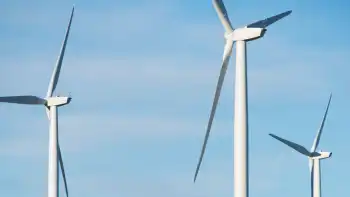
The Los Angeles Department of Water and Power, the largest US municipal utility, is planning to build a 120 megawatt wind power facility, L.A. mayor Jim Hahn said.

The Pine Tree Wind project, to be constructed in the Mojave Desert about 100 miles north of Los Angeles, is scheduled to begin operation in July 2004. It would supply enough power for more than 100,000 households, Hahn said in a statement.

The LADWP's board of commissioners will consider the $162 million project at its board meeting on Tuesday and it must also receive the backing of the city council. The project would be constructed by Wind Turbine Prometheus LLC.

Hahn said the project would be the largest municipally owned wind plant in the U.S.

The largest wind facility in the U.S. is FPL Energy's 300 MW Stateline Wind Energy Center on the Washington-Oregon border. FPL Energy is a unit of Juno Beach, Florida-based FPL Group Inc.

Related News

Hydro One launches Ultra-Low Overnight Electricity Price Plan

Ultra-Low Overnight Price Plan delivers flexible electricity pricing from Hydro One and the Ontario Energy Board, with TOU, tiered options, off-peak EV charging savings, balanced billing, and an online calculator to optimize bills.


Key Points

An Ontario pricing option with ultra-low night rates, helping Hydro One customers save by shifting usage to off-peak.

✅ Four periods with ultra-low overnight rate for EV charging

✅ Compare TOU vs tiered with Hydro One's online calculator

✅ Balanced billing and due date choice support budget control


Hydro One has announced that customers have even more choice and flexibility when it comes to how they are billed for electricity with the company's launch of the Ontario Energy Board's new Ultra-Low Overnight Electricity Price Plan for customers. A new survey of Ontario customers, conducted by Innovative Research Group, shows that 74 per cent of Ontarians find having choice between electricity pricing plans useful.

"As their trusted energy advisor, we want our customers to know we have the insights and tools to help them make the right choice when it comes to their electricity plans," said Teri French, Executive Vice President, Safety, Operations and Customer Experience. "We know that choice and flexibility are important to our customers, and we are proud to now offer them a third option so they can select the plan that best fits their lifestyle."

The same survey revealed that fewer than half of Ontarians are familiar with either tiered or the new ultra-low overnight price plans. To better support its customers Hydro One is providing an online calculator to help them choose which pricing plan best suits their lifestyle. The company also offers additional flexibility and assistance in managing household budgets by providing customers with the ability to choose their billing due date and flatten usage spikes from temperature fluctuations through balanced billing.

During the pandemic, Ontario introduced electricity relief to support families, small businesses and farms, complementing these customer options.

"By offering families and small businesses more choice, we are putting them back in control of their energy bills," said Todd Smith, Minister of Energy. "Starting today Hydro One customers have a new option - the Ultra-Low Electricity Price Plan - which could help them save money each year, while making our province's grid more efficient."

Electricity price plan options

  • New Ultra-Low Overnight price plan (ULO): Designed for customers who use more electricity at night, such as those who charge their electric vehicle, this new price plan can help customers keep costs down and take control of their electricity bill by shifting usage to the ultra-low overnight price period and related off-peak electricity rates when province-wide electricity demand is lower.
  • This plan has four price periods that are the same in the summer as they are in the winter and includes an ultra-low overnight rate.
  • Time-of-Use price plan (TOU): TOU provides customers with more control over their electricity bill by adjusting their usage habits with time-of-use rates used in other jurisdictions as well.
  • In this plan, electricity prices change throughout each weekday, when demand is on-peak, and peak hydro rates can affect overall costs.
  • Tiered price plan (RPP): Tiered pricing provides customers with the flexibility to use electricity at any time of day at the same low price up until the threshold is exceeded during the month, after that usage is charged at a higher price.
  • For residential customers, the winter period (November 1 – April 30) threshold is 1,000 kWh per month and the summer period (May 1 – October 31) threshold is 600 kWh per month. 
  • For small business customers, the threshold is 750 kWh throughout the year, while broader stable electricity pricing supports industrial and commercial companies.


Related News

View more

Hot Houston summer and cold winter set new electricity records

US Electricity Demand 2018-2050 projects slower growth as energy consumption, power generation, air conditioning, and electric heating shift with efficiency standards, commercial floor space, industrial load, and household growth across the forecast horizon.


Key Points

A forecast of US power use across homes, commercial space, industrial load, and efficiency trends from 2018 to 2050.

✅ 2018 generation hit record; residential sales up 6%.

✅ Efficiency curbs demand; growth lags population and floor space.

✅ Commercial sales up 2%; industrial demand fell 3% in 2018.


Last year's Houston cold winter and hot summer drove power use to record levels, especially among households that rely on electricity for air conditioning during extreme weather conditions.

Electricity generation increased 4 per cent nationwide in 2018 and produced 4,178 million megawatt hours, driven in part by record natural gas generation across the U.S., surpassing the previous peak of 4,157 megawatt hours set in 2007, the Energy Department reported.

U.S. households bought 6 percent more electricity in 2018 than they did the previous year, despite longer-term declines in national consumption, reflecting the fact 87 percent of households cool their homes with air conditioning and 35 percent use electricity for heating.

Electricity sales to the commercial sector increased 2 percent in 2018 compared to the previous year while the industrial sector bought 3 percent less last year.

Going forward, the Energy Department forecasts that electricity consumption will grow at a slower pace than in recent decades, aligning with falling sales projections as technology improves and energy efficiency standards moderate consumption.

The economy and population growth are primary drivers of demand and the government predicts the number of households will grow at 0.7 percent per year from now until 2050 but electricity demand will grow only by 0.4 percent annually.

Likewise, commercial floor space is expected to increase 1 percent per year from now until 2050 but electricity sales will increase only by half that amount.

Globally, surging electricity demand is putting power systems under strain, providing context for these domestic trends.


Related News

View more

California Blackouts reveal lapses in power supply

California Electricity Reliability covers grid resilience amid heat waves, rolling blackouts, renewable energy integration, resource adequacy, battery storage, natural gas peakers, ISO oversight, and peak demand management to keep homes, businesses, and industry powered.


Key Points

Dependable California power delivery despite heat waves, peak demand, and challenges integrating renewables into grid.

✅ Rolling blackouts revealed gaps in resource adequacy.

✅ Early evening solar drop requires fast ramping and storage.

✅ Agencies pledge planning reforms and flexible backup supply.


One hallmark of an advanced society is a reliable supply of electrical energy for residential, commercial and industrial consumers. Uncertainty that California electricity will be there when we need it it undermines social cohesion and economic progress, as demonstrated by the travails of poor nations with erratic energy supplies.

California got a small dose of that syndrome in mid-August when a record heat wave struck the state and utilities were ordered to impose rolling blackouts to protect the grid from melting down under heavy air conditioning demands.

Gov. Gavin Newsom quickly demanded that the three overseers of electrical service to most of the state - the Public Utilities Commission, the Energy Commission and the California Independent Service Operator – explain what went wrong.

"These blackouts, which occurred without prior warning or enough time for preparation, are unacceptable and unbefitting of the nation's largest and most innovative state," Newsom wrote. "This cannot stand. California residents and businesses deserve better from their government."

Initially, there was some fingerpointing among the three entities. The blackouts had been ordered by the California Independent System Operator, which manages the grid and its president, Steve Berberich, said he had warned the Public Utilities Commission about the potential supply shortfall facing the state.

"We have indicated in filing after filing after filing that the resource adequacy program was broken and needed to be fixed," he said. "The situation we are in could have been avoided."

However, as political heat increased, the three agencies hung together and produced a joint report that admitted to lapses of supply planning and grid management and promised steps to avoid a repeat next summer.

"The existing resource planning processes are not designed to fully address an extreme heat storm like the one experienced in mid August," their report said. "In transitioning to a reliable, clean and affordable resource mix, resource planning targets have not kept pace to lead to sufficient resources that can be relied upon to meet demand in the early evening hours. This makes balancing demand and supply more challenging."

Although California's grid had experienced greater heat-related demands in previous years, most notably 2006, managers then could draw standby power from natural gas-fired plants and import juice from other Western states when necessary.

Since then, the state has shut down a number of gas-fired plants and become more reliant on renewable but less reliable sources such as windmills and solar panels.

August's air conditioning demand peaked just as output from solar panels was declining with the setting of the sun and grid managers couldn't tap enough electrons from other sources to close the gap.

While the shift to renewables didn't, unto itself, cause the blackouts, they proved the need for a bigger cushion of backup generation or power storage in batteries or some other technology. The Public Utilities Commission, as Beberich suggested, has been somewhat lax in ordering development of backup supply.

In the aftermath of the blackouts, the state Water Resources Control Board, no doubt with direction from Newsom's office, postponed planned shutdowns of more coastal plants, which would have reduced supply flexibility even more.

Shifting to 100% renewable electricity, the state's eventual goal, while maintaining reliability will not get any easier. The state's last nuclear plant, Diablo Canyon, is ticketed for closure and demand will increase as California eliminates gasoline- and diesel-powered vehicles in favor of "zero emission vehicles" as part of its climate policies push and phases out natural gas in homes and businesses.

Politicians such as Newsom and legislators in last week's blackout hearing may endorse a carbon-free future in theory, but they know that they'll pay the price as electricity prices climb if nothing happens when Californians flip the switch.


Related News

View more

Russian Missiles and Drones Target Kyiv's Power Grid in Five-Hour Assault

Assault on Kyiv's Power Grid intensifies as missiles and drones strike critical energy infrastructure. Ukraine's air defenses intercept threats, yet blackouts, heating risks, and civilian systems damage mount amid escalating winter conditions.


Key Points

Missile and drone strikes on Kyiv's power grid to cripple infrastructure, cause blackouts, and pressure civilians.

✅ Targets power plants, substations, and transmission lines

✅ Air defenses intercept many missiles and drones

✅ Blackouts jeopardize heating, safety, and communications


In a troubling escalation of hostilities, Russian forces launched a relentless five-hour assault on Kyiv, employing missiles and drones to target critical infrastructure, particularly Ukraine's power grid. This attack not only highlights the ongoing conflict between Russia and Ukraine but also underscores the vulnerability of essential services, as seen in power outages in western Ukraine in recent weeks, in the face of military aggression.

The Nature of the Attack

The assault began early in the morning and continued for several hours, with air raid sirens ringing out across the capital as residents were urged to seek shelter. Eyewitnesses reported a barrage of missile strikes, along with the ominous whir of drones overhead. The Ukrainian military responded with its air defense systems, successfully intercepting a number of the incoming threats, but several strikes still managed to penetrate the defenses.

One of the most alarming aspects of this attack was its focus on Ukraine's energy infrastructure. Critical power facilities were hit, resulting in significant disruptions to electricity supply across Kyiv and surrounding regions. The attacks not only caused immediate outages but also threatened to complicate efforts to keep the lights on in the aftermath.

Impacts on Civilians and Infrastructure

The consequences of the missile and drone strikes were felt immediately by residents. Many found themselves without power, leading to disruptions in heating, lighting, and communications. With winter approaching, the implications of such outages become even more serious, as keeping the lights on this winter becomes harder while temperatures drop and the demand for heating increases.

Emergency services were quickly mobilized to assess the damage and begin repairs, but the scale of the attack posed significant challenges. In addition to the direct damage to power facilities, the strikes created a climate of fear and uncertainty among civilians, even as many explore new energy solutions to endure blackouts.

Strategic Objectives Behind the Assault

Military analysts suggest that targeting Ukraine's energy infrastructure is a calculated strategy by Russian forces. By crippling the power grid, the intention may be to sow chaos and undermine public morale, forcing the government to divert resources to emergency responses rather than frontline defenses. This tactic has been employed previously, with significant ramifications for civilian life and national stability.

Moreover, as winter approaches, the vulnerability of Ukraine’s energy systems becomes even more pronounced, with analysts warning that winter looms over the battlefront for civilians and troops alike. With many civilians relying on electric heating and other essential services, an attack on the power grid can have devastating effects on public health and safety. The psychological impact of such assaults can also contribute to a sense of hopelessness among the population, potentially influencing public sentiment regarding the war.

International Response and Solidarity

The international community has responded with concern to the recent escalation in attacks. Ukrainian officials have called for increased military support and defensive measures to protect critical infrastructure from future assaults, amid policy shifts such as the U.S. ending support for grid restoration that complicate planning. Many countries have expressed solidarity with Ukraine, reiterating their commitment to support the nation as it navigates the complexities of this ongoing conflict.

In addition to military assistance, humanitarian aid is also critical, and instances of solidarity such as Ukraine helping Spain amid blackouts demonstrate shared resilience. As the situation continues to evolve, many organizations are working to provide relief to those affected by the attacks, offering resources such as food, shelter, and medical assistance. The focus remains not only on immediate recovery efforts but also on long-term strategies to bolster Ukraine’s resilience against future attacks.


Related News

View more

Prime minister, B.C. premier announce $1B B.C. battery plant

Maple Ridge Lithium-Ion Battery Plant will be a $1B E-One Moli clean-tech facility in Canada, manufacturing high-performance cells for tools and devices, with federal and provincial funding, creating 450 jobs and boosting battery supply chains.


Key Points

A $1B E-One Moli facility in B.C. producing lithium-ion cells, backed by federal and provincial funding.

✅ $204.5M federal and up to $80M B.C. support committed

✅ E-One Moli to create 450 skilled jobs in Maple Ridge

✅ High-performance cells for tools, medical devices, and equipment


A lithium-ion battery cell production plant costing more than $1 billion will be built in Maple Ridge, B.C., Prime Minister Justin Trudeau and Premier David Eby jointly announced on Tuesday.

Trudeau and Eby say the new E-One Moli facility will bolster Canada's role as a global leader in clean technology, as recent investments in Quebec's EV battery assembly illustrate today.

It will be the largest factory in Canada to manufacture such high-performance batteries, Trudeau said during the announcement, amid other developments such as a new plant in the Niagara Region supporting EV growth.

The B.C. government will contribute up to $80 million, while the federal government plans to contribute up to $204.5 million to the project. E-One Moli and private sources will supply the rest of the funding. 

Trudeau said B.C. has long been known for its innovation in the clean-technology sector, and securing the clean battery manufacturing project, alongside Northvolt's project near Montreal, will build on that expertise.

"The world is looking to Canada. When we support projects like E-One Moli's new facility in Maple Ridge, we bolster Canada's role as a global clean-tech leader, create good jobs and help keep our air clean," he said.

"This is the future we are building together, every single day. Climate policy is economic policy."

Nelson Chang, chairman of E-One Moli Energy, said the company has always been committed to innovation and creativity as creator of the world's first commercialized lithium-metal battery.

E-One Moli has been operating a plant in Maple Ridge since 1990. Its parent company, Taiwan Cement Corp., is based in Taiwan.

"We believe that human freedom is a chance for us to do good for others and appreciate life's fleeing nature, to leave a positive impact on the world," Chang said.

"We believe that [carbon dioxide] reduction is absolutely the key to success for all future businesses," he said.

The new plant will produce high-performance lithium-cell batteries found in numerous products, including vacuums, medical devices, and power and gardening tools, aligning with B.C.'s grid development and job plans already underway, and is expected to create 450 jobs, making E-One Moli the largest private-sector employer in Maple Ridge.

Eby said every industry needs to find ways to reduce their carbon footprint to ensure they have a prosperous future and every province should do the same, with resource plays like Alberta's lithium supporting the EV supply chain today.

It's the responsible thing to do given the record wildfires, extreme heat, and atmospheric rivers that caused catastrophic flooding in B.C., he said, with large-scale battery storage in southwestern Ontario helping grid reliability.

"We know that this is what we have to do. The people who suggest that we have to accept that as the future and stop taking action are simply wrong."

Trudeau, Eby and Chang toured the existing plant in Maple Ridge, east of Vancouver, before making the announcement.

The prime minister wove his way around several machines and apologized to technicians about the commotion his visit was creating.

The Canadian Taxpayers Federation criticized the federal and B.C. governments for the announcement, saying in a statement the multimillion-dollar handout to the battery firm will cost taxpayers hundreds of thousands of dollars for each job.

Federation director Franco Terrazzano said the Trudeau government has recently given "buckets of cash" to corporations such as Volkswagen, Stellantis, the Ford Motor Company and Northvolt.

"Instead of raising taxes on ordinary Canadians and handing out corporate welfare, governments should be cutting red tape and taxes to grow the economy," said Terrazzano. 

Construction is expected to start next June, as EV assembly deals put Canada in the race, and the company plans for the facility to be fully operational in 2028.


Related News

View more

This kite could harness more of the world's wind energy

Autonomous Energy Kites harness offshore wind on floating platforms, using carbon fiber wings, tethers, and rotors to generate grid electricity; an airborne wind energy solution backed by Alphabet's Makani to cut turbine costs.


Key Points

Autonomous Energy Kites are tethered craft that capture winds with rotors, generating grid power from floating platforms.

✅ Flies circles on tethers; rotors drive generators to feed the grid.

✅ Operates over deep-sea winds where fixed turbines are impractical.

✅ Lighter, less visual impact, and lower installation costs offshore.


One company's self-flying energy kite may be the answer to increasing wind power around the world, alongside emerging wave power solutions as well.

California-based Makani -- which is owned by Google's parent company, Alphabet -- is using power from the strongest winds found out in the middle of the ocean, where the offshore wind sector has huge potential, typically in spots where it's a challenge to install traditional wind turbines. Makani hopes to create electricity to power communities across the world.

Despite a growing number of wind farms in the United States and the potential of this energy source, lessons from the U.K. underscore how to scale, yet only 6% of the world's electricity comes from wind due to the the difficulty of setting up and maintaining turbines, according to the World Wind Energy Association.

When the company's co-founders, who were fond of kiteboarding, realized deep-sea winds were largely untapped, they sought to make that energy more accessible. So they built an autonomous kite, which looks like an airplane tethered to a base, to install on a floating platform in water, as part of broader efforts to harness oceans and rivers for power across regions. Tests are currently underway off the coast of Norway.

"There are many areas around the world that really don't have a good resource for renewable power but do have offshore wind resources," Makani CEO Fort Felker told Rachel Crane, CNN's innovation correspondent. "Our lightweight kites create the possibility that we could tap that resource very economically and bring renewable power to hundreds of millions of people."

This technology is more cost-efficient than a traditional wind turbine, which is a lot more labor intensive and would require lots of machinery and installation.

The lightweight kite, which is made of carbon fiber, has an 85-foot wingspan. The kite launches from a base station and is constrained by a 1,400-foot tether as it flies autonomously in circles with guidance from computers. Crosswinds spin the kite's eight rotors to move a generator that produces electricity that's sent back to the grid through the tether.

The kites are still in the prototype phase and aren't flown constantly right now as researchers continue to develop the technology. But Makani hopes the kites will one day fly 24/7 all year round. When the wind is down, the kite will return to the platform and automatically pick back up when it resumes.

Chief engineer Dr. Paula Echeverri said the computer system is key for understanding the state of the kite in real time, from collecting data about how fast it's moving to charting its trajectory.

Echeverri said tests have been helpful in establishing what some of the challenges of the system are, and the team has made adjustments to get it ready for commercial use. Earlier this year, the team successfully completed a first round of autonomous flights.

Working in deeper water provides an additional benefit over traditional wind turbines, according to Felker. By being farther offshore, the technology is less visible from land, and the growth of offshore wind in the U.K. shows how coastal communities can adapt. Wind turbines can be obtrusive and impact natural life in the surrounding area. These kites may be more attractive to areas that wish to preserve their scenic coastlines and views.

It's also desirable for regions that face constraints related to installing conventional turbines -- such as island nations, where World Bank support is helping developing countries accelerate wind adoption, which have extremely high prices for electricity because they have to import expensive fossil fuels that they then burn to generate electricity.

Makani isn't alone in trying to bring novelty to wind energy. Several others companies such as Altaeros Energies and Vortex Bladeless are experimenting with kites of their own or other types of wind-capture methods, such as underwater kites that generate electricity, a huge oscillating pole that generates energy and a blimp tethered to the ground that gathers winds at higher altitudes.


Related News

View more

Sign Up for Electricity Forum’s Newsletter

Stay informed with our FREE Newsletter — get the latest news, breakthrough technologies, and expert insights, delivered straight to your inbox.

Electricity Today T&D Magazine Subscribe for FREE

Stay informed with the latest T&D policies and technologies.
  • Timely insights from industry experts
  • Practical solutions T&D engineers
  • Free access to every issue

Live Online & In-person Group Training

Advantages To Instructor-Led Training – Instructor-Led Course, Customized Training, Multiple Locations, Economical, CEU Credits, Course Discounts.

Request For Quotation

Whether you would prefer Live Online or In-Person instruction, our electrical training courses can be tailored to meet your company's specific requirements and delivered to your employees in one location or at various locations.