Protective Relay Training - Basic
Our customized live online or in‑person group training can be delivered to your staff at your location.
- Live Online
- 12 hours Instructor-led
- Group Training Available
Regular Price:
$699
Coupon Price:
$599
Secretary of Energy Spencer Abraham recently announced the testing of the Lignite Fuel Enhancement System, a new process that could dramatically reduce air emissions from certain coal-based power plants while boosting overall generating capacity. The project, conducted by Greater River Energy, will test the Lignite Fuel Enhancement System and is expected to boost the generating capacity and efficiency of power plants that burn high-moisture lignite coal, thereby reducing air pollutants and greenhouse gases. The new technology uses "waste" heat to dry nearly a quarter of the moisture in the coal before it is fed into the power plant boiler.
"President Bush is committed to improving air quality throughout the nation," Secretary Abraham said. "This project demonstrates that environmental protection and energy production are not competing priorities. With advanced clean-coal technologies, we can enjoy clear skies while maximizing our use of our most abundant domestic energy resource."
The Great River Energy project is one of eight selected in the initial phase of President Bush's Clean Coal Power Initiative, a 10-year, $2 billion commitment to clean coal technology and a key component of the National Energy Policy. The program competitively seeks commercial-scale technology demonstrations to continue and expand the use of coal as a fuel source.
Great River Energy and its research partners will conduct the project at Great River Energy's Coal Creek Station in Underwood, N.D.. The $25.6 million project will administered by the Energy Department's Office of Fossil Energy, and managed by the National Energy Technology Laboratory. The Energy Department is expected to provide $11 million for the project over its 45 month duration.
In the project's first phase, a prototype module will be designed to dry about one-sixth of the coal fed to a 546-megawatt (MW) unit at the Coal Creek Station. Following successful demonstration of the prototype, Great River Energy will design, construct, and perform full-scale, long-term operational testing on a complete set of dryer modules needed for full power operation of one of the 546-MW units. The coal will be dried to several different moisture levels. The effects of coal drying on plant performance will be measured, and optimum operating conditions will be determined.
The researchers will use North Dakota lignite, which typically contains about 40 percent moisture. By drying the lignite first, they expect to lower its moisture content by at least 10 percentage points, resulting in an estimated 2.8 percent to 5 percent efficiency improvement in the plant. This improvement translates into 25 percent less emission of sulfur dioxide (SO2), and 7 percent less emissions of mercury, carbon dioxide, nitrogen oxides (NOx) and particulates per unit of electricity output.
Successful commercial application of the technology could result in striking benefits nationwide. In the United States today, 35 power-generation units, with an installed capacity of 15-gigawatts (GW), burn lignite; 250 units, with an installed capacity of about 100-GW, burn Powder River Basin coal, a subbituminous coal with a high moisture content. Over the next two decades, the capacity of power plants burning high-moisture coals is projected to increase by another 100-GW.
If applied by power plants totaling just 10-GW, the technology would significantly reduce air emissions in the United States, estimated at 6,890 tons per year of NOx, 18,360 tons per year of SO2, more than 7 million tons per year of carbon dioxide, 9,340 tons per year of particulates, and almost 300 pounds per year of mercury.
In addition to the Energy Department and Great River Energy, project partners include the Electric Power Research Institute, Palo Alto, Calif.; Lehigh University, Bethlehem, Pa.; Barr Engineering, Minneapolis, Minn.; and Falkirk Mining and Couteau Properties, Underwood, N.D..
Related News

B.C. Hydro adds more vehicle charging stations across southern B.C.
BC Hydro EV Charging Stations expand provincewide with DC fast chargers, 80% in 30 minutes…
View more
Two-thirds of the U.S. is at risk of power outages this summer
Home Energy Independence reduces electricity costs and outage risks with solar panels, EV charging, battery…
View more
Ontario Providing Support for Industrial and Commercial Electricity Consumers During COVID-19
Ontario Global Adjustment Deferral provides COVID-19 relief to industrial and commercial electricity consumers, holding GA…
View more
How Ukraine Unplugged from Russia and Joined Europe's Power Grid with Unprecedented Speed
Ukraine-ENTSO-E Grid Synchronization links Ukraine and Moldova to the European grid via secure interconnection, matching…
View more
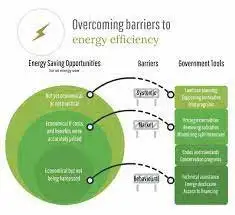
Ontario to Provide New and Expanded Energy-Efficiency Programs
Ontario CDM Programs expand energy efficiency, demand response, and DER incentives via IESO's Save on…
View more
Balancing Act: Germany's Power Sector Navigates Energy Transition
Germany January Power Mix shows gas-fired generation rising, coal steady, and nuclear phaseout impacts, amid…
View more
Sign Up for Electricity Forum’s Newsletter
Stay informed with our FREE Newsletter — get the latest news, breakthrough technologies, and expert insights, delivered straight to your inbox.
Electricity Today T&D Magazine Subscribe for FREE

Stay informed with the latest T&D policies and technologies.
- Timely insights from industry experts
- Practical solutions T&D engineers
- Free access to every issue

