Ontario Power Agencies Confirm 2002 Power Market Opening

By Dow Jones


CSA Z463 Electrical Maintenance -

Our customized live online or in‑person group training can be delivered to your staff at your location.

  • Live Online
  • 6 hours Instructor-led
  • Group Training Available
Regular Price:
$249
Coupon Price:
$199
Reserve Your Seat Today
-- Ontario's electricity watchdogs have released new schedule guidelines for opening a competitive power market in 2002, sweeping aside any illusion that deregulated electricity brokering will happen this year.

The Independent Electricity Market Operator and the Ontario Energy Board released a joint statement revising earlier market readiness plans to accommodate later testing of wholesale and retail interests.

The board's schedule extends retailer self-testing to mid-December from October.

The IMO said it would start live operational testing - the last market readiness test - in February 2002 rather than in November as announced this spring.

"We now have the plan that will lead all industry players to market readiness," Dave Goulding, president and CEO said in a statement. "It is imperative that the dates in today's plan be achieved by all involved."

Ontario, Canada's most populated and energy-hungry province, originally planned to open a competitive electricity market by November 2000. Opening day has since been delayed twice.

In May, Premier Mike Harris indicated that the province will open a competitive power market by May 2002. The uncertainty of opening day chilled some investors' ardor to build or expand generation plants in Ontario, such as TransAlta Corp.

Related News
Alberta's Rising Electricity Prices

Alberta Last-Resort Power Rate Reform outlines consumer protection against market volatility, price spikes, and wholesale rate swings, promoting fixed-rate plans, price caps, transparency, and stable pricing mechanisms within Alberta's deregulated power market.


Key Points

Alberta Last-Resort Power Rate Reform seeks stable, transparent pricing and stronger consumer protections.

✅ Caps or hedges shield bills from wholesale price spikes

✅ Expand fixed-rate options and enrollment nudges

✅ Publish clear, real-time pricing and market risk alerts


Alberta’s electricity market is facing growing instability, with rising prices leaving many consumers struggling. The province's rate of last resort, a government-set price for people who haven’t chosen a fixed electricity plan, has become a significant concern. Due to volatile market conditions, this rate has surged, causing financial strain for households. Experts, like energy policy analyst Blake Shaffer, argue that the current market structure needs reform. They suggest creating more stability in pricing, ensuring better protection for consumers against unexpected price spikes, and addressing the flaws that lead to market volatility.

As electricity prices climb, many consumers are feeling the pressure. In Alberta, where energy deregulation is the norm in the electricity market, people without fixed-rate plans are automatically switched to the last-resort rate when their contracts expire. This price is based on fluctuating wholesale market rates, which can spike unexpectedly, leaving consumers vulnerable to sharp price increases. For those on tight budgets, such volatility makes it difficult to predict costs, leading to higher financial stress.

Blake Shaffer, a prominent energy policy expert, has been vocal about the need to address these issues. He has highlighted that while some consumers benefit from fixed-rate plans, with experts urging Albertans to lock in rates when possible, those who cannot afford them or who are unaware of their options often find themselves stuck with the unpredictable last-resort rate. This rate can be substantially higher than what a fixed-plan customer would pay, often due to rapid shifts in energy demand and supply imbalances.

Shaffer suggests that the province’s electricity market needs a restructuring to make it more consumer-friendly and less vulnerable to extreme price hikes. He argues that introducing more transparency in pricing and offering more stable options for consumers through new electricity rules could help. In addition, there could be better incentives for consumers to stay informed about their electricity plans, which would help reduce the number of people unintentionally placed on the last-resort rate.

One potential solution proposed by Shaffer and others is the creation of a more predictable and stable pricing mechanism, though a Calgary electricity retailer has urged the government to scrap an overhaul, where consumers could have access to reasonable rates that aren’t so closely tied to the volatility of the wholesale market. This could involve capping prices or offering government-backed insurance against large price fluctuations, making electricity more affordable for those who are most at risk.

The increasing reliance on market-driven prices has also raised concerns about Alberta’s energy policy changes and overall direction. As a province with a large reliance on oil and gas, Alberta’s energy sector is tightly connected to global energy trends. While this has its benefits, it also means that Alberta’s electricity prices are heavily influenced by factors outside the control of local consumers, such as geopolitical issues or extreme weather events. This makes it hard for residents to predict and plan their energy usage and costs.

For many Albertans, the current state of the electricity market feels precarious. As more people face unexpected price hikes, calls for a market overhaul continue to grow louder across Alberta. Shaffer and others believe that a new framework is necessary—one that balances the interests of consumers, the government, and energy companies, while ensuring that basic energy needs are met without overwhelming households with excessive costs.

In conclusion, Alberta’s last-resort electricity rate system is an increasing burden for many. While some may benefit from fixed-rate plans, others are left exposed to market volatility. Blake Shaffer advocates for reform to create a more stable, transparent, and affordable electricity market, one that could better protect consumers from the high risks associated with deregulated pricing. Addressing these challenges will be crucial in ensuring that energy remains accessible and affordable for all Alberta residents.


Related News

View more

US looks to decommission Alaskan military reactor

SM-1A Nuclear Plant Decommissioning details the US Army Corps of Engineers' removal of the Fort Greely reactor, Cold War facility dismantling, environmental monitoring, remote-site power history, and timeline to 2026 under a deactivated nuclear program.


Key Points

Army Corps plan to dismantle Fort Greely's SM-1A reactor and complete decommissioning of remaining systems by 2026.

✅ Built for remote Arctic radar support during the Cold War

✅ High costs beat diesel; program later deemed impractical

✅ Reactor parts removed; residuals monitored; removal by 2026


The US Army Corps of Engineers has begun decommissioning Alaska’s only nuclear power plant, SM-1A, which is located at Fort Greely, even as new US reactors continue to take shape nationwide. The $17m plant closed in 1972 after ten years of sporadic operation. It was out of commission from 1967 to 1969 for extensive repairs. Much of has already been dismantled and sent for disposal, and the rest, which is encased in concrete, is now to be removed.

The plant was built as part of an experimental programme to determine whether nuclear facilities, akin to next-generation nuclear concepts, could be built and operated at remote sites more cheaply than diesel-fuelled plants.

"The main approach was to reduce significant fuel-transportation costs by having a nuclear reactor that could operate for long terms, a concept echoed in the NuScale SMR safety evaluation process, with just one nuclear core," Brian Hearty said. Hearty manages the Army Corps of Engineers’ Deactivated Nuclear Power Plant Program.

#google#

He said the Army built SM-1A in 1962 hoping to provide power reliably at remote Arctic radar sites, where in similarly isolated regions today new US coal plants may still be considered, intended to detect incoming missiles from the Soviet Union at the height of the Cold War. He added that the programme worked but not as well as Pentagon officials had hoped. While SM-1A could be built and operated in a cold and remote location, its upfront costs were much higher than anticipated, and it costs more to maintain than a diesel power plant. Moreover, the programme became irrelevant because of advances in Soviet rocket science and the development of intercontinental ballistic missiles.

Hearty said the reactor was partially dismantled soon after it was shut down. “All of the fuel in the reactor core was removed and shipped back to the Atomic Energy Commission (AEC) for them to either reprocess or dispose of,” he noted. “The highly activated control and absorber rods were also removed and shipped back to the AEC.”

The SM-1A plant produced 1.8MWe and 20MWt, including steam, which was used to heat the post. Because that part of the system was still needed, Army officials removed most of the nuclear-power system and linked the heat and steam components to a diesel-fired boiler. However, several parts of the nuclear system remained, including the reactor pressure vessel and reactor coolant pumps. “Those were either kept in place, or they were cut off and laid down in the tall vapour-containment building there,” Hearty said. “And then they were grouted and concreted in place.” The Corps of Engineers wants to remove all that remains of the plant, but it is as yet unclear whether that will be feasible.

Meanwhile, monitoring for radioactivity around the facility shows that it remains at acceptable levels. “It would be safe to say there’s no threat to human health in the environment,” said Brenda Barber, project manager for the decommissioning. Work is still in its early stages and is due to be completed in 2026 at the earliest. Barber said the Corps awarded the $4.6m contract in December to a Virginia-based firm to develop a long-range plan for the project, similar in scope to large reactor refurbishment efforts elsewhere. Among other things, this will help officials determine how much of the SM-1A will remain after it’s decommissioned. “There will still be buildings there,” she said. “There will still be components of some of the old structure there that may likely remain.”


Related News

View more

Don't be taken in by scammers threatening to shut off electricity: Manitoba Hydro

Manitoba Hydro Phone Scam targets small businesses with disconnection threats, prepaid card payments, caller ID spoofing, phishing texts, and door-to-door fraud; hang up, verify your account directly, and never share banking information.


Key Points

A scam where callers threaten disconnection and demand prepaid cards; verify account status directly with Manitoba Hydro.

✅ Hang up and call Manitoba Hydro at 1-888-624-9376 to verify.

✅ Never pay by prepaid cards, gift cards, or crypto.

✅ Hydro will not cut power on one-hour notice.


Manitoba Hydro is warning customers, particularly small business owners, to be wary of high-pressure scammers, as Ontario utilities warn of scams in other provinces, threatening to shut off their electricity.

The callers demand the customer to make immediate payment by a prepaid card. Often, the calls are made in the middle of the day at a busy time, frightening the customer with aggressive threats about disconnection, as hydro disconnections have made headlines elsewhere, says hydro spokesman Bruce Owen.

"They tell them 'we have a truck on the way to cut off your power. If you don't pay in the next hour you're out of luck,'" he said.

"And because these folks have inventory in freezers and they have customers … they're willing to fork over several hundred or even several thousand dollars on a prepaid card to somebody they don't know to keep the lights on."

Maybe the business owners can't recall, with everything happening, including discussions about Hydro One peak rates in Ontario, if they've made their payments on time. They start second-guessing and believing the person on the other line, Owen says.

And they worry about losing thousands of dollars in business if they lose power. So they're more than willing to run out to a store, buy a prepaid debit card and provide the number to the caller.

"Their goal is to manipulate you into sending money before you figure out it's a scam," said Chris McColm, hydro's security and investigations supervisor. "These people are crooks and you should hang up on them."

For any customers that are in arrears, hydro will work with them to resolve the issue, Owen said.

"We do not have to take that extreme measure of cutting off or disconnecting anybody. That's not the business we're in — we don't strong arm people that way," he said.

"Anybody who's threatening to cut off your power with an hour or half-an-hour notice, well it's it's no better than someone waiting around the corner, waiting the club you over the head in the dark of night. That's what they are."


Fraud reports soar

The power utility has recorded a nearly-300 per cent jump in the number of fraud-related complaints this year over 2017. There have been 862 phone, text and e-mail scams and that could still go much higher.

The current statistics from 2018 have only calculated up to Oct. 31. In 2017, there were 221.

That jump in numbers doesn't necessarily mean there are more scammers out there.

It could simply mean people are finally getting wise to fraudsters and reporting it more, Owen says.

"At the same token, we don't hear of everybody who's been taking advantage of because once they've found out that they've been hoodwinked they don't want to tell anybody because they're so embarrassed," he said.

"These scammers can be very convincing and anyone can be victimized," McColm said.

If you are able to think clearly when some high-pressure caller gets you on the line, Owen suggests asking a few simple questions to challenge their legitimacy:

  • What street am I on?
  • What does my business look like? 
  • What's the weather outside right now?

Phone scammers can falsify their caller ID information to make it appear they're calling from a local number, but what you'll find is most of them aren't in Winnipeg or Manitoba and likely not even this country or continent, Owen says.

The key to being safe is simply to never give out banking information, Owen says. It's a message that has been stressed for years and 80-90 per cent of people understand it, but it's that other 10-20 per cent that are still being victimized.And it's not just phone calls. Many other fraud-related complaints to Manitoba Hydro this year concerned unsolicited text messages to customers saying they had been overbilled, or faced retroactive charges elsewhere, and were eligible for a refund.

This scam is also aimed at getting a customer's personal banking information, under the guise of having money put back into their account.

Also, many people, especially seniors living alone, continue to be targeted by aggressive door-to-door fraudsters, and cases like the electricity theft ring in Montreal underscore the risks, McColm says. However, he adds, hydro employees always display photo ID and will never demand to come into a home. 

If you're unsure whether a phone call, text or email is real or a scam, contact Manitoba Hydro at 1-888-624-9376.


Related News

View more

Power bill cut for 22m Thailand houses

Thailand Covid-19 Electricity Bill Relief offers energy subsidies, tariff cuts, and free power for small meters, helping work-from-home users as authorities waive charges and discount kWh rates via EGAT, MEA, PEA for three months.


Key Points

Program waiving or cutting household electricity bills for 22 million homes in March-May, easing work-from-home costs.

? Free power for meters <= 5 amps; up to 10M homes

? Up to 800 kWh: pay February rate; above, 50% discount

? >3,000 kWh: 30% discount; program valid March-May


The Thailand cabinet has formally approved energy authorities' decision to either waive or cut electricity charges, similar to B.C. electricity relief measures, for 22 million households where people are working at home because of the coronavirus disease.

Energy Minister Sontirat Sontijirawong said after the cabinet meeting on Tuesday that the ministers acknowledged the step taken by from the Energy Regulatory Commission, the Electricity Generating Authority of Thailand, the Metropolitan Electricity Authority and the Provincial Electricity Authority and noted parallels with Ontario's COVID-19 hydro plan rolled out to support ratepayers.

The measure would be valid for three months, from March to May, and cover 22 million households. It would cost the state 23.68 billion baht in lost revenue, he said, a pattern also seen with Ontario rate reductions affecting provincial revenues.


"The measure reduces the electricity charges burden on households. It is the cost of living of the people who are working from home to support the government's control of Covid-19," Mr Sontirat said.

The business sector also wants similar assistance, echoing sentiments from Ontario manufacturers during recent price reduction efforts. He said their requests were being considered.

Free electricity is extended to households with a power meter of no more than 5 amps. Up to 10 million households are expected to benefit, although issues like electricity payment challenges in India highlight different market contexts.

For households with a power meter over 5 amps, if their consumption does not exceed 800 units (kilowat hours), they will pay as much as they did in their February bill. The amount over 800 units will be subject to a 50 per cent discount, while elsewhere B.C. commercial consumption has fallen sharply.

Large houses that consume more than 3,000 units will get a 30 per cent discount, at a time when BC Hydro demand is down 10%.


Related News

View more

Idaho gets vast majority of electricity from renewables, almost half from hydropower

Idaho Renewable Energy 2018 saw over 80% in-state utility-scale power from hydropower, wind, solar, biomass, and geothermal, per EIA, with imports declining as Snake River Plain resources and Hells Canyon hydro lead.


Key Points

Idaho produced over 80% in-state power from renewables in 2018, led by hydropower, wind, solar, and biomass.

✅ Hydropower supplies about half of capacity; Hells Canyon leads.

✅ Wind provides nearly 20% of capacity along the Snake River Plain.

✅ Utility-scale solar surged since 2016; biomass and geothermal add output.


More than 80% of Idaho’s in-state utility-scale electricity generation came from renewable resources in 2018, behind only Vermont, according to recently released data from the U.S. Energy Information Administration’s Electric Power Monthly and broader trends showing that solar and wind reached about 10% of U.S. generation in the first half of 2018.

Idaho generated 17.4 million MWh of electricity in 2018, of which 14.2 million MWh came from renewable sources, while nationally January power generation jumped 9.3% year over year according to EIA. Idaho uses a variety of renewable resources to generate electricity:

Hydroelectricity. Idaho ranked seventh in the U.S. in electricity generation from hydropower in 2018. About half of Idaho’s electricity generating capacity is at hydroelectric power plants, and utility actions such as the Idaho Power settlement could influence future resource choices, and seven of the state’s 10 largest power plants (in terms of electricity generation) are hydroelectric facilities. The largest privately owned hydroelectric generating facility in the U.S. is a three-dam complex on the Snake River in Hells Canyon, the deepest river gorge in North America.

Wind. Nearly one-fifth of Idaho’s electricity generating capacity and one-sixth of its generation comes from wind turbines. Idaho has substantial wind energy potential, and nationally the EIA expects solar and wind to be larger sources this summer, although only a small percentage of the state's land area is well-suited for wind development. All of the state’s wind farms are located in the southern half of the state along the Snake River Plain.

Solar. Almost 5% of Idaho’s electricity generating capacity and 3% of its generation come from utility-scale solar facilities, and nationally over half of new capacity in 2023 will be solar according to projections. The state had no utility-scale solar generation as recently as 2015. Between 2016 and 2017, Idaho’s utility-scale capacity doubled and generation increased from 30,000 MWh to more than 450,000 MWh. Idaho’s small-scale solar capacity also doubled since 2017, generating 33,000 MWh in 2018.

Biomass. Biomass-fueled power plants account for about 2% of the state’s utility-scale electricity generating capacity and 3% of its generation, contributing to a broader U.S. shift where 40% of electricity came from non-fossil sources in 2021. Wood waste from the state’s forests is the primary fuel for these plants.

Geothermal. Idaho is one of seven states with utility-scale geothermal electricity generation. Idaho has one 18-MW geothermal facility, located near the state’s southern border with Utah.

EIA says Idaho requires significant electricity imports, totaling about one-third of demand, to meet its electricity needs. However, Idaho’s electricity imports have decreased over time, and Georgia's recent import levels illustrate how regional dynamics can vary. Almost all of these imports are from neighboring states, as electricity imports from Canada accounted for less than 0.1% of Idaho’s total electricity supply in 2017.


Related News

View more

Understanding the Risks of EV Fires in Helene Flooding

EV Flood Fire Risks highlight climate change impacts, lithium-ion battery hazards, water damage, post-submersion inspection, first responder precautions, manufacturer safeguards, and insurance considerations for extreme weather, flood-prone areas, and hurricane aftermaths.


Key Points

Water-exposed EV lithium-ion batteries may ignite later, requiring inspection, isolation, and trained responders.

✅ Avoid driving through floodwaters; park on high ground.

✅ After submersion, isolate vehicle; seek qualified inspection.

✅ Inform first responders and insurers about EV water damage.


As climate change intensifies the frequency and severity of extreme weather events, concerns about electric vehicle (EV) safety in flood-prone areas have come to the forefront. Recent warnings from officials regarding the risks of electric vehicles catching fire due to flooding from Hurricane Idalia underscore the need for heightened awareness and preparedness among consumers and emergency responders, as well as attention to grid reliability during disasters.

The alarming incidents of EVs igniting after being submerged in floodwaters have raised critical questions about the safety of these vehicles during severe weather conditions. While electric vehicles are often touted for their environmental benefits and lower emissions, it is crucial to understand the potential risks associated with their battery systems when exposed to water, even as many drivers weigh whether to buy an electric car for daily use.

The Risks of Submerging Electric Vehicles

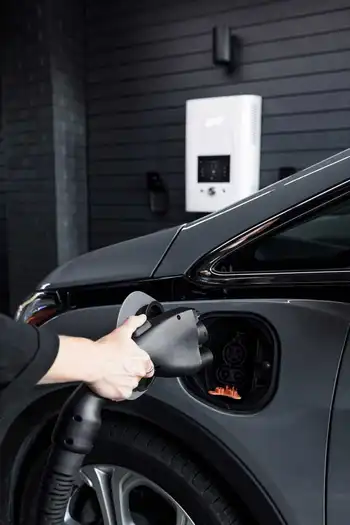
Electric vehicles primarily rely on lithium-ion batteries, which can be sensitive to water exposure. When these batteries are submerged, they risk short-circuiting, which may lead to fires. Unlike traditional gasoline vehicles, where fuel may leak out, the sealed nature of an EV’s battery can create hazardous situations when compromised. Experts warn that even after water exposure, the risk of fire can persist, sometimes occurring days or weeks later.

Officials emphasize the importance of vigilance in flood-prone areas, including planning for contingencies like mobile charging and energy storage that support recovery. If an electric vehicle has been submerged, it is crucial to have it inspected by a qualified technician before attempting to drive it again. Ignoring this can lead to catastrophic consequences not only for the vehicle owner but also for surrounding individuals and properties.

Official Warnings and Recommendations

In light of these dangers, safety officials have issued guidelines for electric vehicle owners in flood-prone areas. Key recommendations include:

  1. Avoid Driving in Flooded Areas: The most straightforward advice is to refrain from driving through flooded streets, which can not only damage the vehicle but also pose risks to personal safety.

  2. Inspection After Flooding: If an EV has been submerged, owners should seek immediate professional inspection. Technicians can evaluate the battery and electrical systems for damage and determine if the vehicle is safe to operate.

  3. Inform Emergency Responders: In flood situations, informing emergency personnel about the presence of electric vehicles can help them mitigate risks during rescue operations, including firefighter health risks that may arise. First responders are trained to handle conventional vehicles but may need additional precautions when dealing with EVs.

Industry Response and Innovations

In response to rising concerns, electric vehicle manufacturers are working to enhance the safety features of their vehicles. This includes developing waterproof battery enclosures and improving drainage systems to prevent water intrusion, as well as exploring vehicle-to-home power for resilience during outages. Some manufacturers are also investing in research to improve battery chemistry, making them more resilient in extreme conditions.

The automotive industry recognizes that consumer education is equally important, particularly around utility impacts from mass-market EVs that affect planning. Manufacturers and safety organizations are encouraged to disseminate information about proper EV maintenance, the importance of inspections after flooding, and safety protocols for both owners and first responders.

The Role of Insurance Companies

As the risks associated with electric vehicle flooding become more apparent, insurance companies are also reassessing their policies. With increasing incidences of extreme weather, insurers are likely to adapt coverage options related to water damage and fire risks specific to electric vehicles. Policyholders should consult with their insurance providers to ensure they understand their coverage in the event of flooding.

Preparing for the Future

With the increasing adoption of electric vehicles, it is vital to prepare for the challenges posed by climate change and evolving state power grids capacity. Community awareness campaigns can play a significant role in educating residents about the risks and safety measures associated with electric vehicles during flooding events. By fostering a well-informed public, the likelihood of accidents and emergencies can be reduced.


Related News

View more

Sign Up for Electricity Forum’s Newsletter

Stay informed with our FREE Newsletter — get the latest news, breakthrough technologies, and expert insights, delivered straight to your inbox.

Electricity Today T&D Magazine Subscribe for FREE

Stay informed with the latest T&D policies and technologies.
  • Timely insights from industry experts
  • Practical solutions T&D engineers
  • Free access to every issue

Download the 2025 Electrical Training Catalog

Explore 50+ live, expert-led electrical training courses –

  • Interactive
  • Flexible
  • CEU-cerified