By For more information, call Juli Collins at 800.432.5879 or 404.237.9099, or visit www.chartwellinc.com


Protective Relay Training - Basic

Our customized live online or in‑person group training can be delivered to your staff at your location.

  • Live Online
  • 12 hours Instructor-led
  • Group Training Available
Regular Price:
$699
Coupon Price:
$599
Reserve Your Seat Today
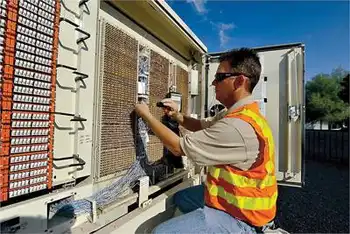
-- Automated meter reading technology can do more than improve operational efficiency for electric utilities; it can also generate thousands of dollars in revenue, according to Deriving Revenue from AMR, a new industry report from Chartwell Inc.

Many utilities are using AMR systems and AMR-related experience to offer data or meter-related services. For a fee, some electric utilities are providing Web-based interval and power quality data, as well as meter reads for other utilities. One large northeastern utility is charging customers as much as $300 for previous-day and historical data over the Web, while utilities in Florida can charge as much as $75 for providing power quality information.

Additionally, utilities can employ their AMR installation and operational experience to provide AMR retrofit and consulting services. One of two case studies included in Deriving Revenue from AMR describes how one small utility in Minnesota takes in about $85,000 a year for completing meter testing and AMR retrofits. At least one other cooperative, however, has seen the AMR meter services market "dry-up."

Although some experts are skeptical of AMR's effectiveness in detecting theft, some electric utilities have credited AMR for recovering and preventing the loss of more than $10,000 in stolen power costs.

Deriving Revenue from AMR, which is available from Chartwell for $250, is part of The Chartwell AMR Report Research Series. Membership in the series is available for $2,495 annually.

Related News

New EPA power plant rules will put carbon capture to the test

CCUS in the U.S. Power Sector drives investments as DOE grants, 45Q tax credits, and EPA carbon rules spur carbon capture, geologic storage, and utilization, while debates persist over costs, transparency, reliability, and emissions safeguards.


Key Points

CCUS captures CO2 from power plants for storage or use, backed by 45Q tax credits, DOE funding, and EPA carbon rules.

✅ DOE grants and 45Q credits aim to de-risk project economics.

✅ EPA rules may require capture rates to meet emissions limits.

✅ Transparency and MRV guard against tax credit abuse.


New public and private funding, including DOE $110M for CCUS announced recently, and expected strong federal power plant emissions reduction standards have accelerated electricity sector investments in carbon capture, utilization and storage,’ or CCUS, projects but some worry it is good money thrown after bad.

CCUS separates carbon from a fossil fuel-burning power plant’s exhaust through carbon capture methods for geologic storage or use in industrial and other applications, according to the Department of Energy. Fossil fuel industry giants like Calpine and Chevron are looking to take advantage of new federal tax credits and grant funding for CCUS to manage potentially high costs in meeting power plant performance requirements, amid growing investor pressure for climate reporting, including new rules, expected from EPA soon, on reducing greenhouse gas emissions from existing power plants.

Power companies have “ambitious plans” to add CCUS to power plants, estimated to cause 25% of U.S. CO2 emissions. As a result, the power sector “needs CCUS in its toolkit,” said DOE Office of Fossil Energy and Carbon Management Assistant Secretary Brad Crabtree. Successful pilots and demonstrations “will add to investor confidence and lead to more deployment” to provide dispatchable clean energy, including emerging CO2-to-electricity approaches for power system reliability after 2030,| he added.

But environmentalists and others insist potentially cost-prohibitive CCUS infrastructure, including CO2 storage hub initiatives, must still prove itself effective under rigorous and transparent federal oversight.

“The vast majority of long-term U.S. power sector needs can be met without fossil generation, and better options are being deployed and in development,” Sierra Club Senior Advisor, Strategic Research and Development, Jeremy Fisher, said, pointing to carbon-free electricity investments gaining momentum in the market. CCUS “may be needed, but without better guardrails, power sector abuses of federal funding could lead to increased emissions and stranded fossil assets,” he added.

New DOE CCUS project grants, an increased $85 per metric ton, or tonne, federal 45Q tax credit, and the forthcoming EPA power plant carbon rules and the federal coal plan will do for CCUS what similar policies did for renewables, advocates and opponents agreed. But controversial past CCUS performance and tax credit abuses must be avoided with transparent reporting requirements for CO2 capture, opponents added.


Related News

View more

Europe's EV Slump Sounds Alarm for Climate Goals

Europe EV Sales Slowdown signals waning incentives, economic uncertainty, and supply chain constraints, threatening climate targets and net-zero emissions goals while highlighting the need for charging infrastructure, affordable batteries, and policy support across key markets.


Key Points

Europe's early-2024 EV registrations fell as incentives waned and supply gaps persisted, putting climate targets at risk.

✅ Fewer subsidies and tax breaks cut EV affordability

✅ Inflation and recession fears dampen car purchases

✅ Supply-chain and lithium constraints limit availability


A recent slowdown in Europe's electric vehicle (EV) sales raises serious concerns about the region's ability to achieve its ambitious climate targets.  After years of steady growth, new EV registrations declined in key markets like Norway, Germany, and the U.K. in early 2024. Experts are warning that this slump jeopardizes the transition away from fossil fuels and could undermine Europe's commitment to a net-zero emissions future.


Factors Behind the Decline

Several factors are contributing to the slowdown in EV sales:

  • Reduced Incentives: Many European countries have scaled back generous subsidies and tax breaks for EV purchases. While these incentives played a crucial role in driving early adoption, their reduction has made EVs less financially attractive for some consumers, with many U.K. buyers citing higher prices even after discounts.
  • End of ICE Ban Support: Public support for phasing out gasoline and diesel-powered cars by 2035, a key European Union policy, appears to be waning in some areas. Without robust support for this measure, consumers may be less inclined to embrace the transition to electric vehicles.
  • Economic Uncertainty: Rising inflation and fears of a recession in Europe have made consumers hesitant to invest in big-ticket purchases like new cars, regardless of fuel type. This economic uncertainty is impacting both electric and conventional vehicle sales.
  • Supply Chain Constraints: Ongoing supply chain disruptions and shortages of raw materials like lithium continue to impact the availability of affordable electric vehicles. This means potential buyers face long wait times or inflated prices even when they're ready to embrace EVs.


Consequences for Europe's Green Agenda

The decline in EV sales threatens Europe's plans to reduce carbon emissions and become the first climate-neutral continent by 2050, aligning with a broader push for electricity to address the climate dilemma across Europe. The transportation sector is a major contributor to greenhouse gas emissions, and the rapid electrification of vehicles is a pillar of Europe's decarbonization strategy.

The current slump highlights the need for continued policy support for the EV market, as EVs still trail gas models in many markets today, to ensure long-term growth and affordability for consumers. Without action, experts fear that Europe may find itself locked into a dependence on fossil fuels for decades to come, making its climate targets unreachable.


A Global Concern

Europe is a leader in electric vehicle policies and technology, during a period when global EV sales climbed markedly. The recent slowdown, however, sends a worrying signal to other regions around the world aiming to accelerate their transition to electric vehicles, including the U.S. market's Q1 dip as a cautionary example. It underscores the importance of sustained government support, investment in charging infrastructure and overcoming supply chain challenges to secure a future of widespread electric vehicle use, with many forecasts suggesting mass adoption within a decade if support continues.


Related News

View more

$453M Manitoba Hydro line to Minnesota could face delay after energy board recommendation

Manitoba-Minnesota Transmission Project faces NEB certificate review, with public hearings, Indigenous consultation, and cross-border approval weighing permit vs certificate timelines, potential land expropriation, and Hydro's 2020 in-service date for the 308-MW intertie.


Key Points

A cross-border hydro line linking Manitoba and Minnesota, now under NEB review through a permit or certificate process.

✅ NEB recommends certificate with public hearings and cabinet approval

✅ Stakeholders cite land, health, and economic impacts along route

✅ Hydro targets May-June 2020 in-service despite review


A recommendation from the National Energy Board could push back the construction start date of a $453-million hydroelectric transmission line from Manitoba to Minnesota.

In a letter to federal Natural Resources Minister Jim Carr, the regulatory agency recommends using a "certificate" approval process, which could take more time than the simpler "permit" process Manitoba Hydro favours.

The certificate process involves public hearings, reflecting First Nations intervention seen in other power-line debates, to weigh the merits of the project, which would then go to the federal cabinet for approval.

The NEB says this process would allow for more procedural flexibility and "address Aboriginal concerns that may arise in the circumstances of this process."

The Manitoba-Minnesota Transmission Project would provide the final link in a chain that brings hydroelectricity from generating stations in northern Manitoba, through the Bipole III transmission line and, like the New England Clean Power Link project, across the U.S. border as part of a 308-megawatt deal with the Green Bay-based Wisconsin Public Service.

When Hydro filed its application in December 2016, it had expected to have approval by the end of August 2017 and to begin construction on the line in mid-December, in order to have the line in operation by May or June 2020.  

Groups representing stakeholders along the proposed route of the transmission line had mixed reactions to the energy board's recommendation.

A lawyer representing a coalition of more than 120 landowners in the Rural Municipality of Taché and around La Broquerie, Man., welcomed the opportunity to have a more "fulsome" discussion about the project.

"I think it's a positive step. As people become more familiar with the project, the deficiencies with it become more obvious," said Kevin Toyne, who represents the Southeast Stakeholders Coalition.

Toyne said some coalition members are worried that Hydro will forcibly expropriate land in order to build the line, while others are worried about potential economic and health impacts of having the line so close to their homes. They have proposed moving the line farther east.

When the Clean Environment Commission — an arm's-length provincial government agency — held public hearings on the proposed route earlier this year, the coalition brought their concerns forward, echoing Site C opposition voiced by northerners, but Toyne says both the commission and Hydro ignored them.

Hydro still aiming for 2020 in-service date

The Manitoba Métis Federation also participated in those public hearings. MMF president David Chartrand worries about the impact a possible delay, as seen with the Site C work halt tied to treaty rights, could have on revenue from sales of hydroelectric power to the U.S.

"I know that a lot of money, billions have been invested on this line. And if the connection line is not done, then of course this will be sitting here, not gaining any revenue, which will affect every Métis in this province, given our Hydro bill's going to go up," Chartrand said.The NEB letter to Minister Carr requests that he "determine this matter in an expedited manner."

Manitoba Hydro spokesperson Bruce Owen said in an email that the Crown corporation will participate in whatever process, permit or certificate, the NEB takes.

"Manitoba Hydro does not have any information at this point in time that would change the estimated in-service date (May-June 2020) for the Manitoba-Minnesota Transmission Project," he said.

The federal government "is currently reviewing the NEB's recommendation to designate the project as subject to a certificate, which would result in public hearings," said Alexandre Deslongchamps, a spokesperson for Carr.

"Under the National Energy Board Act, an international power line requires either the approval by the NEB through a permit or approval by the Government of Canada by a certificate. Both must be issued by the NEB," he wrote in an email to CBC News.

By law, the certificate process is not to take longer than 15 months.


Related News

View more

Fish boom prompts energy conglomerate to spend $14.5M to bury subsea cables

Maritime Link Cable Burial safeguards 200-kV subsea cables in the Cabot Strait as Emera and Nova Scotia Power trench lines to mitigate bottom trawling risks from a redfish boom, ensuring Muskrat Falls hydro delivery.


Key Points

Trenching Cabot Strait subsea power cables to prevent redfish-driven bottom trawling and ensure Muskrat Falls power.

✅ $14.492M spent trenching 59 km at 400 m depth

✅ Protects 200-kV, 170-km subsea interconnects from trawls

✅ Driven by Gulf redfish boom; DFO and UARB consultations


The parent company of Nova Scotia Power disclosed this week to the Utility and Review Board, amid Site C dam watchdog attention to major hydro projects, that it spent almost $14,492,000 this summer to bury its Maritime Links cables lying on the floor of the Cabot Strait between Newfoundland and Cape Breton.

It's a fish story no one saw coming, at least not Halifax-based energy conglomerate Emera.

The parent company of Nova Scotia Power disclosed this week to the Utility and Review Board that it spent almost $14,492,000 this summer to bury its Maritime Link cables lying on the floor of the Cabot Strait between Newfoundland and Cape Breton.

The cables were protected because an unprecedented explosion in the redfish population in the Gulf of St Lawrence is about to trigger a corresponding boom in bottom trawling in the area.

Also known as ocean perch, redfish were not on anyone's radar when the $1.5-billion Maritime Link was designed and built to carry Muskrat Falls hydroelectricity from Newfoundland to Nova Scotia.

The two 200-kilovolt electrical submarine cables spanning the Cabot Strait are the longest in North America, compared with projects like the New England Clean Power Link planned further south. They are each 170 kilometres long and weigh 5,500 tonnes.

Nova Scotia Power customers are paying for the Maritime Link in return for a minimum of 20 per cent of the electricity generated by Muskrat Falls over 35 years.

The electricity is supposed to start sending first electricity through the Maritime Link in mid-2020.

First time cost disclosed
In August, the company buried 59 kilometres of subsea cables one metre below the bottom at depths of 400 metres.

"These cables had not been previously trenched due to the absence of fishing activities at those depths when the cables were originally installed," spokesperson Jeff Myrick wrote in an email to CBC News in October.

Ratepayers will get the bill next year, as utilities also face risks like copper theft that can drive costs in the region. Until now, the company had declined to release costs relating to protecting the Maritime Link.

The bill will be presented to regulators, a process that has affected projects such as a Manitoba Hydro line to Minnesota, when the company applies to recover Maritime Link costs from Nova Scotia Power ratepayers in 2020.

Myrick said the company was acting after consultation with the Department of Fisheries and Oceans.

Unexpected consequences
After years of overfishing in the 1980s and early 1990s, redfish quotas were slashed and a moratorium imposed on some redfish.

Confusingly, there are actually two redfish species in the Gulf of St. Lawrence.

But very strong recent year classes, that have coincided with warming waters in the gulf, as utilities adapt to climate change considerations grow, have produced redfish in massive numbers.

After years of overfishing, the redfish population is now booming in the Gulf of St. Lawrence. (Submitted by Marine Institute)
There is now believed to be three-million tonnes of redfish in the Gulf of St Lawrence.

The Department of Fisheries and Oceans is expected to increase quotas in the coming years and the fishing industry is gearing up in a big way.

Earlier this month, Scotia Harvest announced it will begin construction of a new $14-million fish plant in Digby next spring in part to process increased redfish catches.


Related News

View more

Hot Houston summer and cold winter set new electricity records

US Electricity Demand 2018-2050 projects slower growth as energy consumption, power generation, air conditioning, and electric heating shift with efficiency standards, commercial floor space, industrial load, and household growth across the forecast horizon.


Key Points

A forecast of US power use across homes, commercial space, industrial load, and efficiency trends from 2018 to 2050.

✅ 2018 generation hit record; residential sales up 6%.

✅ Efficiency curbs demand; growth lags population and floor space.

✅ Commercial sales up 2%; industrial demand fell 3% in 2018.


Last year's Houston cold winter and hot summer drove power use to record levels, especially among households that rely on electricity for air conditioning during extreme weather conditions.

Electricity generation increased 4 per cent nationwide in 2018 and produced 4,178 million megawatt hours, driven in part by record natural gas generation across the U.S., surpassing the previous peak of 4,157 megawatt hours set in 2007, the Energy Department reported.

U.S. households bought 6 percent more electricity in 2018 than they did the previous year, despite longer-term declines in national consumption, reflecting the fact 87 percent of households cool their homes with air conditioning and 35 percent use electricity for heating.

Electricity sales to the commercial sector increased 2 percent in 2018 compared to the previous year while the industrial sector bought 3 percent less last year.

Going forward, the Energy Department forecasts that electricity consumption will grow at a slower pace than in recent decades, aligning with falling sales projections as technology improves and energy efficiency standards moderate consumption.

The economy and population growth are primary drivers of demand and the government predicts the number of households will grow at 0.7 percent per year from now until 2050 but electricity demand will grow only by 0.4 percent annually.

Likewise, commercial floor space is expected to increase 1 percent per year from now until 2050 but electricity sales will increase only by half that amount.

Globally, surging electricity demand is putting power systems under strain, providing context for these domestic trends.


Related News

View more

California Welcomes 70 Volvo VNR Electric Trucks

Switch-On Project Electric Trucks accelerate California freight decarbonization, deploying Volvo VNR Electric rigs with high-capacity charging infrastructure, zero-emissions operations, and connected safety features to cut greenhouse gases and improve urban air quality.


Key Points

A California program deploying Volvo VNR Electric trucks and charging to decarbonize freight and improve air quality.

✅ 70 Volvo VNR Electric trucks for regional logistics

✅ Strategic high-capacity charging for heavy-duty fleets

✅ Lower TCO via fuel savings and reduced maintenance


In a significant step toward sustainable transportation, the Switch-On project is bringing 70 Volvo VNR Electric trucks to California. This initiative aims to bolster the state's efforts to reduce emissions and transition to greener logistics solutions. The arrival of these electric vehicles marks an important milestone in California's commitment to combating climate change and improving air quality.

The Switch-On Project: Overview and Goals

The Switch-On project is a collaborative effort designed to enhance electric truck adoption in California. It focuses on developing the necessary infrastructure and technology to support electric vehicles (EVs) in the freight and logistics sectors, building on recent nonprofit investments at California ports. The project not only seeks to increase the availability of electric trucks but also aims to demonstrate their effectiveness in real-world applications.

California has set ambitious goals for reducing greenhouse gas emissions, particularly from the transportation sector, which is one of the largest contributors to air pollution. By introducing electric trucks into freight operations, the state aims to significantly cut emissions, improve public health, and pave the way for a more sustainable future.

The Volvo VNR Electric Trucks

The Volvo VNR Electric trucks are specifically designed for regional distribution and urban transport, aligning with Volvo's broader electric lineup as the company expands offerings, making them ideal for the needs of California’s freight industry. With a range of approximately 250 miles on a single charge, these trucks can efficiently handle most regional routes. Equipped with advanced technology, including regenerative braking and connectivity features, the VNR Electric models enhance operational efficiency and safety.

These trucks not only provide a cleaner alternative to traditional diesel vehicles but also promise lower operational costs over time. With reduced fuel expenses and lower maintenance needs, and emerging vehicle-to-grid pilots that can create new value streams, businesses can benefit from significant savings while contributing to environmental sustainability.

Infrastructure Development

A crucial aspect of the Switch-On project is the development of charging infrastructure to support the new fleet of electric trucks. The project partners are working on installing high-capacity charging stations strategically located throughout California while addressing utility planning challenges that large fleets will pose to the power system. This infrastructure is essential to ensure that electric trucks can be charged efficiently, minimizing downtime and maximizing productivity.

The charging stations are designed to accommodate the specific needs of heavy-duty vehicles, and corridor models like BC's Electric Highway provide useful precedents for network design, allowing for rapid charging that aligns with operational schedules. This development not only supports the new fleet but also encourages other logistics companies to consider electric trucks as a viable option for their operations.

Benefits to California

The introduction of 70 Volvo VNR Electric trucks will have several positive impacts on California. Firstly, it will significantly reduce greenhouse gas emissions from the freight sector, contributing to the state’s ambitious climate goals even as grid expansion will be needed to support widespread electrification across sectors. The transition to electric trucks is expected to improve air quality, particularly in urban areas that struggle with high pollution levels.

Moreover, the project serves as a model for other regions considering similar initiatives. By showcasing the practicality and benefits of electric trucks, California hopes to inspire widespread adoption across the nation. As the market for electric vehicles continues to grow, this project can play a pivotal role in accelerating the transition to sustainable transportation solutions.

Industry and Community Reactions

The arrival of the Volvo VNR Electric trucks has been met with enthusiasm from both industry stakeholders and community members. Logistics companies are excited about the opportunity to reduce their carbon footprints and operational costs. Meanwhile, environmental advocates applaud the project as a crucial step toward cleaner air and healthier communities.

California’s commitment to sustainable transportation has positioned it as a leader in the shift to electric vehicles amid an ongoing biofuels vs. EVs debate over the best path forward, setting an example for other states and countries.

Conclusion

The Switch-On project represents a major advancement in California's efforts to transition to electric transportation. With the deployment of 70 Volvo VNR Electric trucks, the state is not only taking a significant step toward reducing emissions but also demonstrating the feasibility of electric logistics solutions.

As infrastructure develops and more electric trucks hit the roads, California is paving the way for a greener, more sustainable future in transportation. The success of this project could have far-reaching implications, influencing policies and practices in the broader freight industry and beyond.


Related News

View more

Sign Up for Electricity Forum’s Newsletter

Stay informed with our FREE Newsletter — get the latest news, breakthrough technologies, and expert insights, delivered straight to your inbox.

Electricity Today T&D Magazine Subscribe for FREE

Stay informed with the latest T&D policies and technologies.
  • Timely insights from industry experts
  • Practical solutions T&D engineers
  • Free access to every issue

Download the 2025 Electrical Training Catalog

Explore 50+ live, expert-led electrical training courses –

  • Interactive
  • Flexible
  • CEU-cerified