By -- Source, Canada NewsWire via COMTEX


NFPA 70b Training - Electrical Maintenance

Our customized live online or in‑person group training can be delivered to your staff at your location.

  • Live Online
  • 12 hours Instructor-led
  • Group Training Available
Regular Price:
$699
Coupon Price:
$599
Reserve Your Seat Today
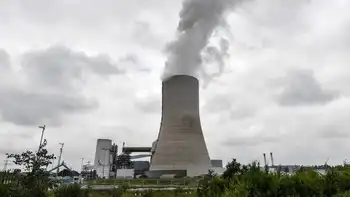
TECO Power Services Corporation (TPS) today announced the successful testing and operation of its interconnection between the TPS-owned and operated Frontera Power Station in Southwest Texas and the Cumbres substation in Mexico, owned and operated by the Comision Federal de Electricidad (CFE).

The interconnection provides for the first fully dispatchable electrical transmission line between the United States and Mexico, and is designed to provide up to 150 megawatts of electricity from the Frontera facility to Mexico via a two-mile, 138-kv transmission line. The plant is also interconnected to the U.S. energy market, allowing for domestic sales as well.

Fully operational since May 2000, Frontera is a 477-megawatt, natural gas- fueled, combined-cycle power plant located 10 miles west of McAllen, Texas, and two miles from the U.S.-Mexico border.

Senior Vice President-Energy Marketing and Development Michael Schuyler said, "We are excited about the opportunity to sell power into Mexico. The success of this interconnection with CFE is a major milestone in TPS' efforts to supply electricity to the fast-growing Mexican energy market."

TECO Power Services Corporation is a wholly owned subsidiary of TECO Energy, Inc. (NYSE: TE) a diversified, energy-related holding company headquartered in Tampa. Other TECO Energy businesses include Tampa Electric, Peoples Gas System, TECO Transport, TECO Coal, TECO Coalbed Methane and TECO Solutions. TPS builds, owns, and operates electric generation facilities with emphasis on high growth areas of North America. Domestically, announced projects call for TPS to serve customers in 18 states, spanning the southern half of the United States. TECO Energy as a whole has ownership interests in more than 10,500 megawatts, operating, in construction, or in advanced stages of development worldwide. For more information, visit online at www.tecopowerservices.com.

Related News

U.S. Electricity and natural gas prices explained

Energy Pricing Factors span electricity generation, transmission, and distribution costs, plus natural gas supply-demand, renewables, seasonal peaks, and wholesale pricing effects across residential, commercial, and industrial customers, usage patterns, weather, and grid constraints.


Key Points

They are the costs and market forces driving electricity and natural gas prices, from generation to delivery and demand.

✅ Generation, transmission, distribution shape electricity rates

✅ Gas prices hinge on supply, storage, imports/exports

✅ Demand shifts: weather, economy, and fuel alternatives


There are a lot of factors that affect energy prices globally. What’s included in the price to heat homes and supply them with electricity may be a lot more than some people may think.

Electricity
Generating electricity is the largest component of its price, according to the U.S. Energy Information Administration (EIA). Generation accounts for 56% of the price of electricity, while distribution and transmission account for 31% and 13% respectively.

Homeowners and businesses pay more for electricity than industrial companies, and U.S. electricity prices have recently surged, highlighting broader inflationary pressures. This is because industrial companies can take electricity at higher voltages, reducing transmission costs for energy companies.

“Industrial consumers use more electricity and can receive it at higher voltages, so supplying electricity to these customers is more efficient and less expensive. The price of electricity to industrial customers is generally close to the wholesale price of electricity,” EIA explains.

NYSEG said based on the average use of 600 kilowatt-hours per month, its customers spent the most money on delivery and transition charges in 2020, 57% or about $42, and residential electricity bills increased 5% in 2022 after inflation, according to national data. They also spent on average 35% (~$26) on supply charges and 8% (~$6) on surcharges.

Electricity prices are usually higher in the summer. Why? Because energy companies use sources of electricity that cost more money. It used to be that renewable sources, like solar and wind, were the most expensive sources of energy but increased technological advances have changed this, according to the International Energy Agency’s 2021 World Energy Outlook.

“In most markets, solar PV or wind now represents the cheapest available source of new electricity generation. Clean energy technology is becoming a major new area for investment and employment – and a dynamic arena for international collaboration and competition,” the report said.

Natural gas
The price of natural gas is driven by supply and demand. If there is more supply, prices are generally lower. If there is not as much supply, prices are generally higher the EIA explains. On the other side of the equation, more demand can also increase the price and less demand can decrease the price.

High natural gas prices mean people turn their home thermostats down a few degrees to save money, so the EIA said reduced demand can encourage companies to produce more natural gas, which would in turn help lower the cost. Lower prices will sometimes cause companies to reduce their production, therefore causing the price to rise.

The three major supply factors that affect prices: the amount of natural gas produced, how much is stored, and the volume of gas imported and exported. The three major demand factors that affect price are: changes in winter/summer weather, economic growth, and the broader energy crisis dynamics, as well as how much other fuels are available and their price, said EIA.

To think the price of natural gas is higher when the economy is thriving may sound counterintuitive but that’s exactly what happens. The EIA said this is because of increases in demand.


Related News

View more

Updated Germany hydrogen strategy sees heavy reliance on imported fuel

Germany Hydrogen Import Strategy outlines reliance on green hydrogen imports, expanded electrolysis capacity, IPCEI-funded pipelines, and industrial decarbonization for steel and chemicals to reach climate-neutral goals by 2045, meeting 2030 demand of 95-130 TWh.


Key Points

A plan to import 50-70% of hydrogen by 2030, backing green hydrogen, electrolysis, pipelines, and decarbonization.

✅ Imports cover 50-70% of 2030 hydrogen demand

✅ 10 GW electrolysis target with state aid and IPCEI

✅ 1,800 km H2 pipelines to link hubs by 2030


Germany will have to import up to 70% of its hydrogen demand in the future as Europe's largest economy aims to become climate-neutral by 2045, an updated government strategy published on Wednesday showed.

The German cabinet approved a new hydrogen strategy, setting guidelines for hydrogen production, transport infrastructure and market plans.

Germany is seeking to expand reliance on hydrogen as a future energy source to bolster energy resilience and cut greenhouse emissions for highly polluting industrial sectors that cannot be electrified such as steel and chemicals and cut dependency on imported fossil fuel.

Produced using solar and wind power, green hydrogen is a pillar of Berlin's plan to build a sustainable electric planet and transition away from fossil fuels.

But even with doubling the country's domestic electrolysis capacity target for 2030 to at least 10 gigawatts (GW), Germany will need to import around 50% to 70% of its hydrogen demand, forecast at 95 to 130 TWh in 2030, the strategy showed.

"A domestic supply that fully covers demand does not make economic sense or serve the transformation processes resulting from the energy transition and the broader global energy transition overall," the document said.

The strategy underscores the importance of diversifying future hydrogen sources, including potential partners such as Canada's clean hydrogen sector, but the government is working on a separate strategy for hydrogen imports whose exact date is not clear, a spokesperson for the economy ministry said.

"Instead of relying on domestic potential for the production of green hydrogen, the federal government's strategy is primarily aimed at imports by ship," Simone Peter, the head of Germany's renewable energy association, said.

Under the strategy, state aid is expected to be approved for around 2.5 GW of electrolysis projects in Germany this year and the government will earmark 700 million euros ($775 million) for hydrogen research to optimise production methods, research minister Bettina Stark-Watzinger said.

But Germany's limited renewable energy space will make it heavily dependent on imported hydrogen from emerging export hubs such as Abu Dhabi hydrogen exports gaining scale, experts say.

"Germany is a densely populated country. We simply need space for wind and photovoltaic to be able to produce the hydrogen," Philipp Heilmaier, an energy transition researcher at Germany energy agency, told Reuters.

The strategy allows the usage of hydrogen produced through fossil energy sources preferably if the carbon is split off, but said direct government subsidies would be limited to green hydrogen.

Funds for launching a hydrogen network with more than 1,800 km of pipelines in Germany are expected to flow by 2027/2028 through the bloc's Important Projects of Common European Interest (IPCEI) financing scheme, as the EU plans to double electricity use by 2050 could raise future demand, with the goal of connecting all major generation, import and storage centres to customers by 2030.

Transport Minister Volker Wissing said his ministry was working on plans for a network of hydrogen filling stations and for renewable fuel subsidies.

Environmental groups said the strategy lacked binding sustainability criteria and restriction on using hydrogen for sectors that cannot be electrified instead of using it for private heating or in cars, calling for a plan to eventually phase-out blue hydrogen which is produced from natural gas.

Germany has already signed several hydrogen cooperation agreements with countries such as clean energy partnership with Canada and Norway, United Arab Emirates and Australia.


Related News

View more

On the road to 100 per cent renewables

US Climate Alliance 100% Renewables 2035 accelerates clean energy, electrification, and decarbonization, replacing coal and gas with wind, solar, and storage to cut air pollution, lower energy bills, create jobs, and advance environmental justice.


Key Points

A state-level target for alliance members to meet all electricity demand with renewable energy by 2035.

✅ 100% RES can meet rising demand from electrification

✅ Major health gains from reduced SO2, NOx, and particulates

✅ Jobs grow, energy burdens fall, climate resilience improves


The Union of Concerned Scientists joined with COPAL (Minnesota), GreenRoots (Massachusetts), and the Michigan Environmental Justice Coalition, to better understand the feasibility and implications of leadership states meeting 100 percent of their electricity needs with renewable energy by 2035, a target reflected in federal clean electricity goals under discussion today.

We focused on 24 member states of the United States Climate Alliance, a bipartisan coalition of governors committed to the goals of the 2015 Paris Climate Agreement. We analyzed two main scenarios: business as usual versus 100 percent renewable electricity standards, in line with many state clean energy targets now in place.

Our analysis shows that:

Climate Alliance states can meet 100 percent of their electricity consumption with renewable energy by 2035, as independent assessments of zero-emissions feasibility suggest. This holds true even with strong increases in demand due to the electrification of transportation and heating.

A transition to renewables yields strong benefits in terms of health, climate, economies, and energy affordability.

To ensure an equitable transition, states should broaden access to clean energy technologies and decision making to include environmental justice and fossil fuel-dependent communitieswhile directly phasing out coal and gas plants.

Demands for climate action surround us. Every day brings news of devastating "this is not normal" extreme weather: record-breaking heat waves, precipitation, flooding, wildfires. To build resilience and mitigate the worst impacts of the climate crisis requires immediate action to reduce heat-trapping emissions and transition to renewable energy, including practical decarbonization strategies adopted by states.

On the Road to 100 Percent Renewables explores actions at one critical level: how leadership states can address climate change by reducing heat-trapping emissions in key sectors of the economy as well as by considering the impacts of our energy choices. A collaboration of the Union of Concerned Scientists and local environmental justice groups COPAL (Minnesota), GreenRoots (Massachusetts), and the Michigan Environmental Justice Coalition, with contributions from the national Initiative for Energy Justice, assessed the potential to accelerate the use of renewable energy dramatically through state-level renewable electricity standards (RESs), major drivers of clean energy in recent decades. In addition, the partners worked with Greenlink Analytics, an energy research organization, to assess how RESs most directly affect people's lives, such as changes in public health, jobs, and energy bills for households.

Focusing on 24 members of the United States Climate Alliance (USCA), the study assesses the implications of meeting 100 percent of electricity consumption in these states, including examples like Rhode Island's 100% by 2030 plan that inform policy design, with renewable energy in the near term. The alliance is a bipartisan coalition of governors committed to reducing heat-trapping emissions consistent with the goals of the 2015 Paris climate agreement.[1]

On the Road to 100 Percent Renewables looks at three types of results from a transition to 100 percent RES policies: improvements in public health from decreasing the use of coal and gas2 power plants; net job creation from switching to more labor-oriented clean energy; and reduced household energy bills from using cleaner sources of energy. The study assumes a strong push to electrify transportation and heating to address harmful emissions from the current use of fossil fuels in these sectors. Our core policy scenario does not focus on electricity generation itself, nor does it mandate retiring coal, gas, and nuclear power plants or assess new policies to drive renewable energy in non-USCA states.

Our analysis shows that:

USCA states can meet 100 percent of their electricity consumption with renewable energy by 2035 even with strong increases in demand due to electrifying transportation and heating.

A transition to renewables yields strong benefits in terms of health, climate, economies, and energy affordability.

Renewable electricity standards must be paired with policies that address not only electricity consumption but also electricity generation, including modern grid infrastructure upgrades that enable higher renewable shares, both to transition away from fossil fuels more quickly and to ensure an equitable transition in which all communities experience the benefits of a clean energy economy.

Currently, the states in this analysis meet their electricity needs with differing mixes of electricity sourcesfossil fuels, nuclear, and renewables. Yet across the states, the study shows significant declines in fossil fuel use from transitioning to clean electricity; the use of solar and wind powerthe dominant renewablesgrows substantially:

In the study's "No New Policy" scenario"business as usual"coal and gas generation stay largely at current levels over the next two decades. Electricity generation from wind and solar grows due to both current policies and lowest costs.

In a "100% RES" scenario, each USCA state puts in place a 100 percent renewable electricity standard. Gas generation falls, although some continues for export to non-USCA states. Coal generation essentially disappears by 2040. Wind and solar generation combined grow to seven times current levels, and three times as much as in the No New Policy scenario.

A focus on meeting in-state electricity consumption in the 100% RES scenario yields important outcomes. Reductions in electricity from coal and gas plants in the USCA states reduce power plant pollution, including emissions of sulfur dioxide and nitrogen oxides. By 2040, this leads to 6,000 to 13,000 fewer premature deaths than in the No New Policy scenario, as well as 140,000 fewer cases of asthma exacerbation and 700,000 fewer lost workdays. The value of the additional public health benefits in the USCA states totals almost $280 billion over the two decades. In a more detailed analysis of three USCA statesMassachusetts, Michigan, and Minnesotathe 100% RES scenario leads to almost 200,000 more added jobs in building and installing new electric generation capacity than the No New Policy scenario.

The 100% RES scenario also reduces average energy burdens, the portion of household income spent on energy. Even considering household costs solely for electricity and gas, energy burdens in the 100% RES scenario are at or below those in the No New Policy scenario in each USCA state in most or all years. The average energy burden across those states declines from 3.7 percent of income in 2020 to 3.0 percent in 2040 in the 100% RES scenario, compared with 3.3 percent in 2040 in the No New Policy scenario.

Decreasing the use of fossil fuels through increasing the use of renewables and accelerating electrification reduces emissions of carbon dioxide (CO2), with implications for climate, public health, and economies. Annual CO2 emissions from power plants in USCA states decrease 58 percent from 2020 to 2040 in the 100% RES scenario compared with 12 percent in the No New Policy scenario.

The study also reveals gaps to be filled beyond eliminating fossil fuel pollution from communities, such as the persistence of gas generation to sell power to neighboring states, reflecting barriers to a fully renewable grid that policy must address. Further, it stresses the importance of policies targeting just and equitable outcomes in the move to renewable energy.

Moving away from fossil fuels in communities most affected by harmful air pollution should be a top priority in comprehensive energy policies. Many communities continue to bear far too large a share of the negative impacts from decades of siting the infrastructure for the nation's fossil fuel power sector in or near marginalized neighborhoods. This pattern will likely persist if the issue is not acknowledged and addressed. State policies should mandate a priority on reducing emissions in communities overburdened by pollution and avoiding investments inconsistent with the need to remove heat-trapping emissions and air pollution at an accelerated rate. And communities must be centrally involved in decisionmaking around any policies and rules that affect them directly, including proposals to change electricity generation, both to retire fossil fuel plants and to build the renewable energy infrastructure.

Key recommendations in On the Road to 100 Percent Renewables address moving away from fossil fuels, increasing investment in renewable energy, and reducing CO2 emissions. They aim to ensure that communities most affected by a history of environmental racism and pollution share in the benefits of the transition: cleaner air, equitable access to good-paying jobs and entrepreneurship alternatives, affordable energy, and the resilience that renewable energy, electrification, energy efficiency, and energy storage can provide. While many communities can benefit from the transition, strong justice and equity policies will avoid perpetuating inequities in the electricity system. State support to historically underserved communities for investing in solar, energy efficiency, energy storage, and electrification will encourage local investment, community wealth-building, and the resilience benefits the transition to renewable energy can provide.

A national clean electricity standard and strong pollution standards should complement state action to drive swift decarbonization and pollution reduction across the United States. Even so, states are well positioned to simultaneously address climate change and decades of inequities in the power system. While it does not substitute for much-needed national and international leadership, strong state action is crucial to achieving an equitable clean energy future.


Related News

View more

New EPA power plant rules will put carbon capture to the test

CCUS in the U.S. Power Sector drives investments as DOE grants, 45Q tax credits, and EPA carbon rules spur carbon capture, geologic storage, and utilization, while debates persist over costs, transparency, reliability, and emissions safeguards.


Key Points

CCUS captures CO2 from power plants for storage or use, backed by 45Q tax credits, DOE funding, and EPA carbon rules.

✅ DOE grants and 45Q credits aim to de-risk project economics.

✅ EPA rules may require capture rates to meet emissions limits.

✅ Transparency and MRV guard against tax credit abuse.


New public and private funding, including DOE $110M for CCUS announced recently, and expected strong federal power plant emissions reduction standards have accelerated electricity sector investments in carbon capture, utilization and storage,’ or CCUS, projects but some worry it is good money thrown after bad.

CCUS separates carbon from a fossil fuel-burning power plant’s exhaust through carbon capture methods for geologic storage or use in industrial and other applications, according to the Department of Energy. Fossil fuel industry giants like Calpine and Chevron are looking to take advantage of new federal tax credits and grant funding for CCUS to manage potentially high costs in meeting power plant performance requirements, amid growing investor pressure for climate reporting, including new rules, expected from EPA soon, on reducing greenhouse gas emissions from existing power plants.

Power companies have “ambitious plans” to add CCUS to power plants, estimated to cause 25% of U.S. CO2 emissions. As a result, the power sector “needs CCUS in its toolkit,” said DOE Office of Fossil Energy and Carbon Management Assistant Secretary Brad Crabtree. Successful pilots and demonstrations “will add to investor confidence and lead to more deployment” to provide dispatchable clean energy, including emerging CO2-to-electricity approaches for power system reliability after 2030,| he added.

But environmentalists and others insist potentially cost-prohibitive CCUS infrastructure, including CO2 storage hub initiatives, must still prove itself effective under rigorous and transparent federal oversight.

“The vast majority of long-term U.S. power sector needs can be met without fossil generation, and better options are being deployed and in development,” Sierra Club Senior Advisor, Strategic Research and Development, Jeremy Fisher, said, pointing to carbon-free electricity investments gaining momentum in the market. CCUS “may be needed, but without better guardrails, power sector abuses of federal funding could lead to increased emissions and stranded fossil assets,” he added.

New DOE CCUS project grants, an increased $85 per metric ton, or tonne, federal 45Q tax credit, and the forthcoming EPA power plant carbon rules and the federal coal plan will do for CCUS what similar policies did for renewables, advocates and opponents agreed. But controversial past CCUS performance and tax credit abuses must be avoided with transparent reporting requirements for CO2 capture, opponents added.


Related News

View more

LOC Renewables Delivers First MWS Services To China's Offshore Wind Market

Pinghai Bay Offshore Wind Farm MWS advances marine warranty survey best practices, risk management, and international standards in Fujian, with Haixia Goldenbridge Insurance and reinsurer-aligned audits supporting safer offshore wind construction and logistics.


Key Points

An MWS program ensuring Pinghai Bay Phase 2 meets standards via audits, risk controls, and vetted procedures.

✅ First MWS delivered in China's offshore wind market

✅ Audits, risk consultancy, and reinsurer-aligned standards

✅ Supports 250MW Phase 2 at Pinghai Bay, Fujian


LOC Renewables has announced it is to carry out marine warranty survey (MWS) services for the second phase of the Pinghai Bay Offshore Wind Farm near Putian, Fujian province, China, on behalf of Haixia Goldenbridge Insurance Co., Ltd. The agreement represents the first time MWS services have been delivered to the Chinese offshore wind market.

China’s installed offshore capacity jumped more than 60% in 2017, and its growing offshore market is aiming for a total grid-connected capacity of 5GW by 2020, as the sector globally advances toward a $1 trillion industry over the coming decades. Much of this future offshore development is slated to take place in Jiangsu, Zhejiang, Guangdong and Fujian provinces. As developers becoming increasingly aware of the need for stringent risk management and value that internationally accepted standards can bring to projects, Pinghai Bay will be the first Chinese offshore wind farm to employ MWS to ensure it meets the highest technical standards and minimise project risk. The agreement will see LOC Renewables carry out audit and risk consultancy services for the project from March until the end of 2018.

#google#

In recent years, as Chinese offshore wind projects have grown in scale and complexity the need for international expertise in the market has increased, with World Bank support for emerging markets underscoring global momentum. In response, domestic insurers are partnering with international reinsurers to manage and mitigate the associated larger risks. Applying the higher standards required by international reinsurers, LOC Renewables will draw on its extensive experience in European, US and Asian offshore wind markets to provide MWS services on the Pinghai project from its Tianjin office.

“As offshore wind technology continues to proliferate across Asia, driven by declining global costs, successful knowledge transfer based on best practices and lessons learned in the established offshore wind markets becomes ever more important,” said Ke Wan, Managing Director, LOC China.

“With a wealth of experience in Europe and the US, where UK offshore wind growth has accelerated, we’re increasingly working on projects across Asia, and are delighted to now be providing the first MWS services to China’s offshore wind market – services that bring real value in lower risk and will enable the project to achieve its full potential.”

“At 250MW, phase two of the Pinghai Bay Wind Farm represents a significant expansion on phase one, and we wanted to ensure that it met the highest technical and risk mitigation standards, informed by regional learnings such as Korean installation vessels analyses,” said Fan Ming, Business Director at Haixia Goldenbridge Insurance.

“In addition to their global experience, LOC Renewables’ familiarity with and presence in the local market was very important to us, and we’re looking forward to working closely with them to help bring this project to fruition and make a significant contribution to China’s expanding offshore wind market.”


Related News

View more

Group of premiers band together to develop nuclear reactor technology

Small Modular Reactors in Canada are advancing through provincial collaboration, offering nuclear energy, clean power and carbon reductions for grids, remote communities, and mines, with factory-built modules, regulatory roadmaps, and pre-licensing by the nuclear regulator.


Key Points

Compact, factory-built nuclear units for clean power, cutting carbon for grids, remote communities, and industry.

✅ Provinces: Ontario, Saskatchewan, New Brunswick collaborate

✅ Targets coal replacement, carbon cuts, clean baseload power

✅ Modular, factory-made units; 5-10 year deployment horizon


The premiers of Ontario, Saskatchewan and New Brunswick have committed to collaborate on developing nuclear reactor technology in Canada. 

Doug Ford, Scott Moe and Blaine Higgs made the announcement and signed a memorandum of understanding on Sunday in advance of a meeting of all the premiers. 

They will be working on the research, development and building of small modular reactors as a way to help their individual provinces reduce carbon emissions and move away from non-renewable energy sources like coal. 

Small modular reactors are easy to construct, are safer than large reactors and are regarded as cleaner energy than coal, the premiers say. They can be small enough to fit in a school gym. 

SMRs are actually not very close to entering operation in Canada, though Ontario broke ground on its first SMR at Darlington recently, signaling early progress. Natural Resources Canada released an "SMR roadmap" last year, with a series of recommendations about regulation readiness and waste management for SMRs.

In Canada, about a dozen companies are currently in pre-licensing with the Canadian Nuclear Safety Commission, which is reviewing their designs.

"Canadians working together, like we are here today, from coast to coast, can play an even larger role in addressing climate change in Canada and around the world," Moe said.  

Canada's Paris targets are to lower total emissions 30 per cent below 2005 levels by 2030, and nuclear's role in climate goals has been emphasized by the federal minister in recent remarks. Moe says the reactors would help Saskatchewan reach a 70 per cent reduction by that year.

The provinces' three energy ministries will meet in the new year to discuss how to move forward and by the fall a fully-fledged strategy for the reactors is expected to be ready.

However, don't expect to see them popping up in a nearby field anytime soon. It's estimated it will take five to 10 years before they're built. 

Ford lauds economic possibilities
The provincial leaders said it could be an opportunity for economic growth, estimating the Canadian market for this energy at $10 billion and the global market at $150 billion.

Ford called it an "opportunity for Canada to be a true leader." At a time when Ottawa and the provinces are at odds, Higgs said it's the perfect time to show unity. 

"It's showing how provinces come together on issues of the future." 

P.E.I. premier predicts unity at Toronto premiers' meeting
No other premiers have signed on to the deal at this point, but Ford said all are welcome and "the more, the merrier."

But developing new energy technologies is a daunting task. Higgs admitted the project will need national support of some kind, though he didn't specify what. The agreement signed by the premiers is also not binding. 

About 8.6 per cent of Canada's electricity comes from coal-fired generation. In New Brunswick that figure is much higher — 15.8 per cent — and New Brunswick's small-nuclear debate has intensified as New Brunswick Premier Blaine Higgs has said he worries about his province's energy producers being hit by the federal carbon tax.

Ontario has no coal-fired power plants, and OPG's SMR commitment aligns with its clean electricity strategy today. In Saskatchewan, burning coal generates 46.6 per cent of the province's electricity.

How would it work?
The federal government describes small modular reactors (SMRs) as the "next wave of innovation" in nuclear energy technology, and collaborations like the OPG and TVA partnership are advancing development efforts, and an "important technology opportunity for Canada."

Traditional nuclear reactors used in Canada typically generate about 800 megawatts of electricity, and Ontario is exploring new large-scale nuclear plants alongside SMRs, or enough to power about 600,000 homes at once (assuming that 1 megawatt can power about 750 homes).

The International Atomic Energy Agency (IAEA), the UN organization for nuclear co-operation, considers a nuclear reactor to be "small" if it generates under 300 megawatts.

Designs for small reactors ranging from just 3 megawatts to 300 megawatts have been submitted to Canada's nuclear regulator, the Canadian Nuclear Safety Commission, for review as part of a pre-licensing process, while plans for four SMRs at Darlington outline a potential build-out pathway that regulators will assess.

Ford rallying premiers to call for large increase in federal health transfers
Such reactors are considered "modular" because they're designed to work either independently or as modules in a bigger complex (as is already the case with traditional, larger reactors at most Canadian nuclear power plants). A power plant could be expanded incrementally by adding additional modules.

Modules are generally designed to be small enough to make in a factory and be transported easily — for example, via a standard shipping container.

In Canada, there are three main areas where SMRs could be used:

Traditional, on-grid power generation, especially in provinces looking for zero-emissions replacements for CO2-emitting coal plants.
Remote communities that currently rely on polluting diesel generation.
Resource extraction sites, such as mining and oil and gas.


Related News

View more

Sign Up for Electricity Forum’s Newsletter

Stay informed with our FREE Newsletter — get the latest news, breakthrough technologies, and expert insights, delivered straight to your inbox.

Electricity Today T&D Magazine Subscribe for FREE

Stay informed with the latest T&D policies and technologies.
  • Timely insights from industry experts
  • Practical solutions T&D engineers
  • Free access to every issue

Live Online & In-person Group Training

Advantages To Instructor-Led Training – Instructor-Led Course, Customized Training, Multiple Locations, Economical, CEU Credits, Course Discounts.

Request For Quotation

Whether you would prefer Live Online or In-Person instruction, our electrical training courses can be tailored to meet your company's specific requirements and delivered to your employees in one location or at various locations.