More challenges leveled at power line

By Knight Ridder Tribune


Arc Flash Training CSA Z462 - Electrical Safety Essentials

Our customized live online or in‑person group training can be delivered to your staff at your location.

  • Live Online
  • 6 hours Instructor-led
  • Group Training Available
Regular Price:
$249
Coupon Price:
$199
Reserve Your Seat Today
Electricity would be less expensive for area ratepayers if San Diego Gas & Electric Co. chose to rely on new natural-gas-fired power plants in metro San Diego rather than build a power line through the backcountry, according to a analysis by a utility competitor.

In filing a report on behalf of Dynegy, Inc., the company that wants to replace the aging South Bay power plant in Chula Vista with a modern one nearby, an official said generating plants can be built faster than transmission lines, and without the energy loss that occurs when electricity is transported long distances over wires.

"The most effective way to serve electric demand is to locate the supply close to the load," said Ali Amirali, managing director for regulatory policy and transmission for Dynegy in Sacramento. San Diego Gas & Electric disputed the notion that local plants would be more economical than long-distance wires.

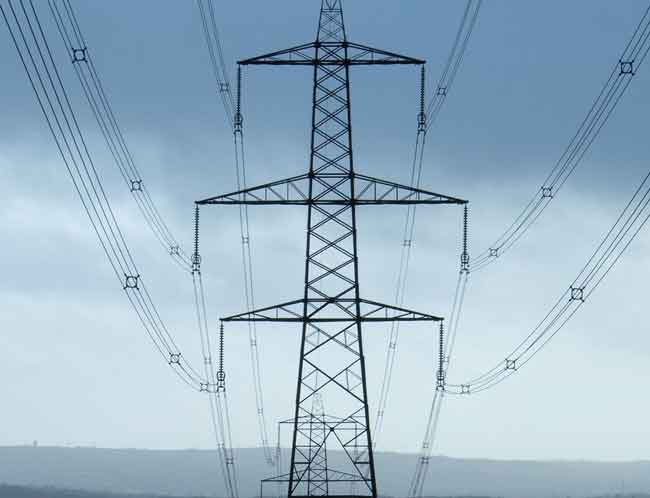
Amirali's comments came in a report filed in connection with San Diego Gas & Electric's proposed $1.3 billion Sunrise Powerlink transmission line, which would run 150 miles from El Centro to Carmel Valley. Featuring thick wires strung from steel towers p to 150 feet tall, the project would wind through Anza-Borrego Desert State Park, Santa Ysabel, Ramona and Rancho Penasquitos.

The reports, called testimony, help set the stage for California Public Utilities Commission hearings on the need for the line starting July 9 in San Diego. The commission is scheduled to decide whether to issue a permit for the line in January.

Scott Crider, public affairs manager for the Sunrise Powerlink, said, "It's no surprise that energy companies that want to build fossil fuel power plants in San Diego County are going to oppose a transmission line that is going to deliver renewable power from Imperial Valley."

Besides shoring up the region's electricity supplies, the Sunrise power line is being sold on the premise that it would plug San Diego County into the solar and geothermal power in Imperial Valley, helping the region comply with a state mandate to secur 20 percent of its supplies from non-fossil-fuel sources.

"What they're looking to do is to commit our customers to a local-generation-only strategy," Crider said.

"And that will commit our customers to a fossil-fuel future and limit our ability to increase the use of green energy." As for the specific charge that the line would be more costly, Crider said "the experts simply don't agree." He cited a study by the California Independent System Operator last summer that concluded the line would be the most efficient way to meet future electricity needs.

The line is sharply opposed by environmentalists and communities along the preferred route. In other testimony, Elizabeth Goldstein, president of the California State Parks Foundation, stated that building the power line through the 600,000-acre Anza-Borrego Desert State Park would establish a "dangerous" trend that could undermine one of the nation's most extensive state park systems.

She urged the state to reject the project, or order a route around the park. "The new transmission lines will be visible from great distances," she said. Goldstein said the proposed 140 towers in the park would require construction of 140 new spur roads that, besides providing utility workers access to the line for repairs, would subject pristine areas and archaeological sites to vandalism.

Crider said the foundation's objections "are really outside the scope of where we are at right now" and will be addressed in an environmental study released later this summer. In testimony on behalf of the Ramona community group Mussey Grade Alliance, consultant Joseph Mitchell stated that based on historical fire trends in California the Sunrise Powerlink could be expected to ignite a wildfire every 20 years.

Crider said the utility will analyze that estimate. Generally speaking, he said, "high-voltage transmission lines like Sunrise represent a very low fire risk to the region." Crider said the steel towers don't catch on fire and are built to withstand strong wind. On June 15, the utility is scheduled to submit testimony rebutting reports filed recently.

Related News
German renewables deliver more electricity than coal and nuclear power for the first time

Germany renewable energy milestone 2019 saw wind, solar, hydropower, and biomass outproduce coal and nuclear, as low gas prices and high CO2 costs under the EU ETS reshaped the electricity mix, per Fraunhofer ISE.


Key Points

It marks H1 2019 when renewables supplied 47.3% of Germany's electricity, surpassing coal and nuclear.

✅ Driven by high CO2 prices and cheap natural gas

✅ Wind and solar output rose; coal generation declined sharply

✅ Flexible gas plants outcompeted inflexible coal units


In Lippendorf, Saxony, the energy supplier EnBW is temporarily taking part of a coal-fired power plant offline. Not because someone ordered it — it simply wasn't paying off. Gas prices are low, CO2 prices are high, and with many hours of sunshine and wind, renewable methods are producing a great deal of electricity as part of Germany's energy transition now reshaping operations. And in the first half of the year there was plenty of sun and wind.

The result was a six-month period in which renewable energy sources, a trend echoed by the EU wind and solar record across the bloc, produced more electricity than coal and nuclear power plants together. For the first time 47.3% of the electricity consumers used came from renewable sources, while 43.4% came from coal-fired and nuclear power plants.

In addition to solar and wind power, renewable sources also include hydropower and biomass. Gas supplied 9.3%, reflecting how renewables are crowding out gas across European power markets, while the remaining 0.4% came from other sources, such as oil, according to figures published by the Fraunhofer Institute for Solar Energy Systems in July.

Fabian Hein from the think tank Agora Energiewende stresses that the situation is only a snapshot in time, with grid expansion woes still shaping outcomes. For example, the first half of 2019 was particularly windy and wind power production rose by around 20% compared to the first half of 2018.

Electricity production from solar panels rose by 6%, natural gas by 10%, while the share of nuclear power in German electricity consumption has remained virtually unchanged despite a nuclear option debate in climate policy.

Coal, on the other hand, declined. Black coal energy production fell by 30% compared to the first half of 2018, lignite fell by 20%. Some coal-fired power plants were even taken off the grid, even as coal still provides about a third of Germany's electricity. It is difficult to say whether this was an effect of the current market situation or whether this is simply part of long-term planning, says Hein.


Activists storm German mine in anti-coal protest

It is clear, however, that an increased CO2 price has made the ongoing generation of electricity from coal more expensive. Gas-fired power plants also emit CO2, but less than coal-fired power plants. They are also more efficient and that's why gas-fired power plants are not so strongly affected by the CO2 price

The price is determined at a European level and covers power plants and energy intensive industries in Europe. Other areas, such as heating or transport are not covered by the CO2 price scheme. Since a reform of CO2 emissions trading in 2017, the price has risen sharply. Whereas in September 2016 it was just over €5 ($5.6), by the end of June 2019 it had climbed to over €26.


Ups and downs

Gas as a raw material is generally more expensive than coal. But coal-fired power plants are more expensive to build. This is why operators want to run them continuously. In times of high demand, and therefore high prices, gas-fired power plants are generally started up, as seen when European power demand hit records during recent heatwaves, since it is worth it at these times.

Gas-fired power plants can be flexibly ramped up and down. Coal-fired power plants take 11 hours or longer to get going. That's why they can't be switched on quickly for short periods when prices are high, like gas-fired power plants. In the first half of the year, however, coal-fired power plants were also ramped up and down more often because it was not always worthwhile to let the power plant run around the clock.

Because gas prices were particularly low in the first half of 2019, some gas-fired power plants were more profitable than coal-fired plants. On June 29, 2019, the gas price at the Dutch trading point TTF was around €10 per megawatt hour. A year earlier, it had been almost €20. This is partly due to the relatively mild winter, as there is still a lot of gas in reserve, confirmed a spokesman for the Federal Association of the Energy and Water Industries (BDEW). There are also several new export terminals for liquefied natural gas. Additionally, weaker growth and trade wars are slowing demand for gas. A lot of gas comes to Europe, where prices are still comparatively high, reported the Handelsblatt newspaper.

The increase in wind and solar power and the decline in nuclear power have also reduced CO2 emissions. In the first half of 2019, electricity generation emitted around 15% less CO2 than in the same period last year, reported BDEW. However, the association demands that the further expansion of renewable energies should not be hampered. The target of 65% renewable energy can only be achieved if the further expansion of renewable energy sources is accelerated.


Related News

View more

Rolls-Royce signs MoU with Exelon for compact nuclear power stations

Rolls-Royce and Exelon UKSMR Partnership accelerates factory-built small modular reactors, nuclear power, clean energy, 440MW units, advanced manufacturing, fleet deployment, net zero goals, and resilient, low-cost baseload generation in the UK and globally.


Key Points

A partnership to deploy factory-built SMR stations, providing 440MW low-carbon baseload for the UK and export markets.

✅ 440MW factory-built SMR units with rapid modular assembly

✅ Exelon to operate and enhance high capacity factors

✅ Supports UK net zero, jobs, and export-led manufacturing


Rolls-Royce and Exelon Generation have signed a Memorandum of Understanding to pursue the potential for Exelon Generation to operate compact nuclear power stations both in the UK and internationally, including markets such as Canada where New Brunswick SMR questions are prompting public debate today.

Exelon Generation will be using their operational experience to assist Rolls Royce in the development and deployment of the UKSMR.

Rolls-Royce is leading a consortium that is designing a low-cost factory built nuclear power station, known as a small modular reactor (SMR), with UK mini-reactor approval anticipated as development progresses. Its standardised, factory-made components and advanced manufacturing processes push costs down, while the rapid assembly of the modules and components inside a weatherproof canopy on the power station site itself avoid costly schedule disruptions.

The consortium is working with its partners and UK Government to secure a commitment for a fleet of factory built nuclear power stations, each providing 440MW of electricity, to be operational within a decade, helping the UK meet its net zero obligations in line with the green industrial revolution policy set out by government. A fleet deployment in the UK will lead to the creation of new factories that will make the components and modules which will help the economy recover from the Covid-19 pandemic and pave the way for significant export opportunities as well.

The consortium members feature the best of nuclear engineering, construction and infrastructure expertise in Assystem, Atkins, BAM Nuttall, Jacobs, Laing O'Rourke, National Nuclear Laboratory, Nuclear Advanced Manufacturing Research Centre, Rolls-Royce and TWI. Exelon will add valuable operational experience to the team.

Tom Samson, interim Chief Executive Officer of the UKSMR consortium, said: 'Nuclear power is central to tackling climate change and economic recovery, but it must be affordable, reliable and investable and the way we manufacture and assemble our power station brings its cost down to be comparable with offshore wind.

'It's a compelling proposition that could draw new players into the UK's power generation landscape, improving choice for consumers and providing uninterrupted low carbon energy to homes and businesses.

'The opportunity to partner with Exelon is a very exciting prospect for our program, complementing our existing Consortium partnerships with one of the world's largest nuclear operator adds an important dimension to our growth ambitions, embodies the strength of the UK and USA alliance on nuclear matters and reflects wider international moves, such as a Canadian premiers' SMR initiative to accelerate technology development, and offers our future customers the ability to achieve the highest performance standards associated with Exelon's outstanding operational track record.'

The power stations will be built by the UKSMR consortium, before being handed over to be operated by power generation companies. Exelon Generation will work closely with the consortium during the pre-operation period. Exelon Nuclear operates 21 nuclear reactors in America, and U.S. regulators recently issued a final safety evaluation for a NuScale SMR that underscores momentum in the sector. The Exelon nuclear fleet is an integral part of the U.S. clean power mix; it produces more than 158 million megawatt-hours of clean electricity every year.

Bryan Hanson, EVP and COO of Exelon Generation said: 'We believe that SMRs are a crucial part of the world's clean energy mix, as projects like Darlington SMRs advance in Ontario. With our experience both in the US and internationally, Exelon is confident that we can help Rolls Royce ensure SMRs play a key role in the UK's energy future. We've had a very strong record of performance for 20 consecutive years, with a 2019 capacity factor of 95.7 percent. We will leverage this experience to achieve sustainably high capacity factors for the UKSMRs.'

Ralph Hunter, Managing Director of Exelon Nuclear Partners, who runs Exelon's international clean energy business, said: 'We have a strong track record of success to be the operator of choice for the UKSMR. We will help develop operational capability, training and human capacity development in the UK, as utilities such as Ontario Power Generation commit to SMRs abroad, ensuring localisation of skills and a strong culture of safety, performance and efficiency.'

By 2050 a full UK programme of a fleet of factory built nuclear power stations in the UK could create:

Up to 40,000 jobs GBP52BN of value to the UK economy GBP250BN of exports

The current phase of the programme has been jointly funded by all consortium members and UK Research and Innovation.


Related News

View more

Survivors of deadly tornadoes may go weeks without heat, water, electricity, Kentucky officials say

Kentucky Tornado Recovery details Mayfield damage, death toll, power outages, boil-water advisories, shelter operations, and emergency response across five states, as crews restore infrastructure, locate missing persons, and support displaced families in frigid temperatures.


Key Points

Overview of restoring utilities, repairing infrastructure, and sheltering survivors after Kentucky's tornado disaster.

✅ Power, water, and gas outages persist; boil-water advisories in effect.

✅ Mayfield hardest hit; factory casualties lower than first feared.

✅ Shelter provided in state park lodges; long-term recovery expected.


Residents of Kentucky counties where tornadoes killed several dozen people could be without heat, water or electricity in frigid temperatures for weeks or longer, state officials warned Monday, and experiences abroad like Kyiv's difficult winter underscore the risks as the toll of damage and deaths came into clearer focus in five states slammed by the swarm of twisters.

Authorities are still tallying the devastation from Friday's storms, though they believe the death toll will be lower than initially feared since it appeared many more people escaped a candle factory in Mayfield, Ky., than first thought.

At least 88 people — including 74 in Kentucky — were killed by the tornados which also destroyed a nursing home in Arkansas, heavily damaged an Amazon distribution centre in Illinois and spread their deadly effects into Tennessee and Missouri, while ongoing nuclear worker safety concerns highlighted vulnerabilities across critical facilities. Another 105 people were still unaccounted for in Kentucky as of Monday afternoon, Gov. Andy Beshear said.

As searches continued for those still missing, efforts also turned to repairing the power grid, downed line safety education, sheltering those whose homes were destroyed and delivering drinking water and other supplies.

"We're not going to let any of our families go homeless," Beshear said in announcing that lodges in state parks were being used to provide shelter.

In Bowling Green, Ky., 11 people died on the same street, including two infants found among the bodies of five relatives near a residence, Warren County coroner Kevin Kirby said. 

In Mayfield, one of the hardest hit towns, those who survived faced a high around 10 C and a low below freezing Monday without any utilities, and awareness of power strip fire risks is critical as residents turn to makeshift heating and power.

"Our infrastructure is so damaged. We have no running water. Our water tower was lost. Our waste water management was lost, and there's no natural gas to the city. So we have nothing to rely on there," Mayfield Mayor Kathy Stewart O'Nan said on CBS Mornings. "So that is purely survival at this point for so many of our people."

Across the state, about 26,000 homes and businesses were without electricity, according to poweroutage.us, including nearly all of those in Mayfield, and the U.S. grid warning during the pandemic underscored vulnerabilities in critical infrastructure.

More than 10,000 homes and businesses have no water, and another 17,000 are under boil-water advisories, Kentucky Emergency Management Director Michael Dossett told reporters.

Dossett warned that full recovery in the hardest-hit places could take not just months, but years, noting that utilities have at times contemplated on-site staffing to maintain operations during crises.

At least 74 people have been confirmed dead across Kentucky after tornadoes tore through the state, leaving some communities nearly totally destroyed and many residents wondering if they can afford to rebuild. 2:22
"This will go on for years to come," he said. 

Amid broader economic strain, recent debates over Kentucky miners' pay highlight ongoing financial vulnerabilities for workers affected by disasters as well.

Authorities are still trying to determine the total number of dead, and the storms made door-to-door searches impossible in some places. "There are no doors," said Beshear.

"We're going to have over 1,000 homes that are gone, just gone," he said.

Beshear had said Sunday morning that the state's toll could exceed 100. But he later said it might be as low as 50.

'Then he was gone'
Initially as many as 70 people were feared dead in the candle factory in Mayfield, but the company said Sunday that eight were confirmed dead and eight remained missing, while more than 90 others had been located.

"Many of the employees were gathered in the tornado shelter and after the storm was over they left the plant and went to their homes," said Bob Ferguson, a spokesman for the company. "With the power out and no landline they were hard to reach initially. We're hoping to find more of those eight unaccounted as we try their home residences."


Related News

View more

Alberta Electricity market needs competition

Alberta Electricity Market faces energy-only vs capacity debate as transmission, distribution, and administration fees surge; rural rates rise amid a regulated duopoly of investor-owned utilities, prompting calls for competition, innovation, and lower bills.


Key Points

Alberta's electricity market is an energy-only system with rising delivery charges and limited rural competition.

✅ Energy-only design; capacity market scrapped

✅ Delivery charges outpace energy on monthly bills

✅ Rural duopoly limits competition and raises rates


Last week, Alberta’s new Energy Minister Sonya Savage announced the government, through its new electricity rules, would be scrapping plans to shift Alberta’s electricity to a capacity market and would instead be “restoring certainty in the electricity system.”


The proposed transition from energy only to a capacity market is a contentious subject as a market reshuffle unfolds across the province that many Albertans probably don’t know much about. Our electricity market is not a particularly glamorous subject. It’s complicated and confusing and what matters most to ordinary Albertans is how it affects their monthly bills.


What they may not realize is that the cost of their actual electricity used is often just a small fraction of their bill amid rising electricity prices across the province. The majority on an average electricity bill is actually the cost of delivering that electricity from the generator to your house. Charges for transmission, distribution and franchise and administration fees are quickly pushing many Alberta households to the limit with soaring bills.


According to data from Alberta’s Utilities Consumer Advocate (UCA), and alongside policy changes, in 2004 the average monthly transmission costs for residential regulated-rate customers was below $2. In 2018 that cost was averaging nearly $27 a month. The increase is equally dramatic in distribution rates which have more than doubled across the province and range wildly, averaging from as low as $10 a month in 2004 to over $80 a month for some residential regulated-rate customers in 2018.


Where you live determines who delivers your electricity. In Alberta’s biggest cities and a handful of others the distribution systems are municipally owned and operated. Outside those select municipalities most of Alberta’s electricity is delivered by two private companies which operate as a regulated duopoly. In fact, two investor-owned utilities deliver power to over 95 per cent of rural Alberta and they continue to increase their share by purchasing the few rural electricity co-ops that remained their only competition in the market. The cost of buying out their competition is then passed on to the customers, driving rates even higher.


As the CEO of Alberta’s largest remaining electricity co-op, I know very well that as the price of materials, equipment and skilled labour increase, the cost of operating follows. If it costs more to build and maintain an electricity distribution system there will inevitably be a cost increase passed on to the consumer. The question Albertans should be asking is how much is too much and where is all that money going with these private- investor-owned utilities, as the sector faces profound change under provincial leadership?


The reforms to Alberta’s electricity system brought in by Premier Klein in the late 1900s and early 2000s contributed to a surge in investment in the sector and led to an explosion of competition in both electricity generation and retail. 


More players entered the field which put downward pressure on electricity rates, encouraged innovation and gave consumers a competitive choice, even as a Calgary electricity retailer urged the government to scrap the overhaul. But the legislation and regulations that govern rural electricity distribution in Alberta continue to facilitate and even encourage the concentration of ownership among two players which is certainly not in the interests of rural Albertans.


It is also not in the spirit of the United Conservative Party platform commitment to a “market-based” system. A market-based system suggests more competition. Instead, what we have is something approaching a monopoly for many Albertans. The UCP promised a review of the transition to a capacity market that would determine which market would be best for Alberta, and through proposed electricity market changes has decided that we will remain an energy-only market.
Consumers in rural Alberta need electricity to produce the goods that power our biggest industries. Instead of regulating and approving continued rate increases from private multinational corporations, we need to drive competition and innovation that can push rates down and encourage growth and investment in rural-based industries and communities.


Related News

View more

Opinion: Cleaning Up Ontario's Hydro Mess - Ford government needs to scrap the Fair Hydro Plan and review all options

Ontario Hydro Crisis highlights soaring electricity rates, costly subsidies, nuclear refurbishments, and stalled renewables in Ontario. Policy missteps, weak planning, and rising natural gas emissions burden ratepayers while energy efficiency and storage remain underused.


Key Points

High power costs and subsidies from policy errors, nuclear refurbishments, stalled efficiency and renewables in Ontario.

✅ $5.6B yearly subsidy masks electricity rates and deficits

✅ Nuclear refurbishments embed rising costs for decades

✅ Efficiency, storage, and DERs stalled amid weak planning


By Mark Winfield

While the troubled Site C and Muskrat Falls hydroelectric dam projects in B.C. and Newfoundland and Labrador have drawn a great deal of national attention over the past few months, Ontario has quietly been having a hydro crisis of its own.

One of the central promises in the 2018 platform of the Ontario Progressive Conservative party was to “clean up the hydro mess,” and then-PC leader Doug Ford vowed to fire Hydro One's leadership as part of that effort. There certainly is a mess, with the costs of subsidies taken from general provincial revenues to artificially lower hydro rates nearing $7 billion annually. That is a level approaching the province’s total pre-COVID-19 annual deficit. After only two years, that will also exceed total expected cost overruns of the Site C and Muskrat Falls projects, currently estimated at $12 billion ($6 billion each).

There is no doubt that Doug Ford’s government inherited a significant mess around the province’s electricity system from the previous Liberal governments of former premiers Dalton McGuinty and Kathleen Wynne. But the Ford government has also demonstrated a remarkable capacity for undoing the things its predecessors had managed to get right while doubling down on their mistakes.

The Liberals did have some significant achievements. Most notably: coal-fired electricity generation, which constituted 25 per cent of the province’s electricity supply in the early 2000s, was phased out in 2014. The phaseout dramatically improved air quality in the province. There was also a significant growth in renewable energy production. From  virtually zero in 2003, the province installed 4,500 MW of wind-powered generation, and 450 MW of solar photovoltaic by 2018, a total capacity more than double that of the Sir Adam Beck Generating Stations at Niagara Falls.

At the same time, public concerns over rising hydro rates flowing from a major reconstruction of the province’s electricity system from 2003 onwards became a central political issue in the province. But rather than reconsider the role of the key drivers of the continuing rate increases – namely the massively expensive and risky refurbishments of the Darlington and Bruce nuclear facilities, the Liberals adopted a financially ruinous Fair Hydro Plan. The central feature of the 2017 plan was a short-term 25 per cent reduction in hydro rates, financed by removing the provincial portion of the HST from hydro bills, and by extending the amortization period for capital projects within the system. The total cost of the plan in terms of lost revenues and financing costs has been estimated in excess of $40 billion over 29 years, with the burden largely falling on future ratepayers and taxpayers.


Decision-making around the electricity system became deeply politicized, and a secret cabinet forecast of soaring prices intensified public debate across Ontario. Legislation adopted by the Wynne government in 2016 eliminated the requirement for the development of system plans to be subject to any form of meaningful regulatory oversight or review. Instead, the system was guided through directives from the provincial cabinet. Major investments like the Darlington and Bruce refurbishments proceeded without meaningful, public, external reviews of their feasibility, costs or alternatives.

The Ford government proceeded to add more layers to these troubles. The province’s relatively comprehensive framework for energy efficiency was effectively dismantled in March, 2019, with little meaningful replacement. That was despite strong evidence that energy efficiency offered the most cost-effective strategy for reducing greenhouse gas emissions and electricity costs.

The Ford government basically retained the Fair Hydro Plan and promised further rate reductions, later tabling legislation to lower electricity rates as well. To its credit, the government did take steps to clarify real costs of the plan. Last year, these were revealed to amount to a de facto $5.6 billion-per-year subsidy coming from general revenues, and rising. That constituted the major portion of the province’s $7.4 billion pre-COVID-19 deficit. The financial hole was deepened further through November’s financial statement, with the addition of a further $1.3 billion subsidy to commercial and industrial consumers. The numbers can only get worse as the costs of the Darlington and Bruce refurbishments become embedded more fully into electricity rates.

The government also quietly dispensed with the last public vestige of an energy planning framework, relieving itself of the requirement to produce a Long-Term Energy Plan every three years. The next plan would normally have been due next month, in February.

Even the gains from the 2014 phaseout of coal-fired electricity are at risk. Major increases are projected in emissions of greenhouse gases, smog-causing nitrogen oxides and particulate matter from natural gas-fired power plants as the plants are run to cover electricity needs during the Bruce and Darlington refurbishments over the next decade. These developments could erode as much as 40 per cent of the improvements in air quality and greenhouse gas emission gained through the coal phaseout.

The province’s activities around renewable energy, energy storage and distributed energy resources are at a standstill, with exception of a few experimental “sandbox” projects, while other jurisdictions face profound electricity-sector change and adapt. Globally, these technologies are seen as the leading edge of energy-system development and decarbonization. Ontario seems to have chosen to make itself an energy innovation wasteland instead.

The overall result is a system with little or no space for innovation that is embedding ever-higher costs while trying to disguise those costs at enormous expense to the provincial treasury and still failing to provide effective relief to low-income electricity consumers.

The decline in electricity demand associated with the COVID-19 pandemic, along with the introduction of a temporary recovery rate for electricity, gives the province an opportunity to step back and consider its next steps with the electricity system. A phaseout of the Fair Hydro Plan electricity-rate reduction and its replacement with a more cost-effective strategy of targeted relief aimed at those most heavily burdened by rising hydro rates, particularly rural and low-income consumers, as reconnection efforts for nonpayment have underscored the hardship faced by many households, would be a good place to start.

Next, the province needs to conduct a comprehensive, public review of electricity options available to it, including additional renewables – the costs of which have fallen dramatically over the past decade – distributed energy resources, hydro imports from Quebec and energy efficiency before proceeding with further nuclear refurbishments.

In the longer term, a transparent, evidence-based process for electricity system planning needs to be established – one that is subject to substantive public and regulatory oversight and review. Finally, the province needs to establish a new organization to be called Energy Efficiency Ontario to revive its efforts around energy efficiency, developing a comprehensive energy-efficiency strategy for the province, covering electricity and natural gas use, and addressing the needs of marginalized communities.

Without these kinds of steps, the province seems destined to continue to lurch from contradictory decision after contradictory decision as the economic and environmental costs of the system’s existing trajectory continue to rise.

Mark Winfield is a professor of environmental studies at York University and co-chair of the university’s Sustainable Energy Initiative.


Related News

View more

Nova Scotia Power says it now generates 30 per cent of its power from renewables

Nova Scotia Power Renewable Energy delivers 30% in 2018, led by wind power, hydroelectric and biomass, with coal and natural gas declining, as Muskrat Falls imports from Labrador target 40% renewables to cut emissions.


Key Points

It is the utility's 30% 2018 renewable mix and plan to reach 40% via Muskrat Falls while reducing carbon emissions.

✅ 18% wind, 9% hydro and tidal, 3% biomass in 2018

✅ Coal reliance fell from 76% in 2007 to 52% in 2018

✅ 58% carbon emissions cut from 2005 levels projected by 2030


Nova Scotia's private utility says it has hit a new milestone in its delivery of electricity from renewable resources, a trend highlighted by Summerside wind generation in nearby P.E.I.

Nova Scotia Power says 30 per cent of the electricity it produced in 2018 came from renewable sources such as wind power.

The utility says 18 per cent came from wind turbines, nine per cent from hydroelectric and tidal turbines and three per cent by burning biomass.

However, over half of the province's electrical generation still comes from the burning of coal or petroleum coke. Another 13 per cent come from burning natural gas and five per cent from imports, even as U.S. renewable generation hits record shares.

The utility says that since 2007, the province's reliance on coal-fired plants has dropped from 76 per cent of electricity generated to 52 per cent last year, as Prairie renewables growth accelerates nationally.

It says it expects to meet the province's legislated renewable target of 40 per cent in 2020, when it begins accessing hydroelectricity from the Muskrat Falls project in Labrador.

"We have made greener, cleaner energy a priority," utility president and CEO Karen Hutt said in a news release.

"As we continue to achieve new records in renewable electricity, we remain focused on ensuring electricity prices stay predictable and affordable for our customers, including solar customers across the province."

Nova Scotia Power also projects achieving a 58 per cent reduction in carbon emissions from 2005 levels by 2030.


Related News

View more

Sign Up for Electricity Forum’s Newsletter

Stay informed with our FREE Newsletter — get the latest news, breakthrough technologies, and expert insights, delivered straight to your inbox.

Electricity Today T&D Magazine Subscribe for FREE

Stay informed with the latest T&D policies and technologies.
  • Timely insights from industry experts
  • Practical solutions T&D engineers
  • Free access to every issue

Live Online & In-person Group Training

Advantages To Instructor-Led Training – Instructor-Led Course, Customized Training, Multiple Locations, Economical, CEU Credits, Course Discounts.

Request For Quotation

Whether you would prefer Live Online or In-Person instruction, our electrical training courses can be tailored to meet your company's specific requirements and delivered to your employees in one location or at various locations.