U.S. Energy Bill Could Lead to Lower Natgas Prices

By Reuters


NFPA 70e Training - Arc Flash

Our customized live online or in‑person group training can be delivered to your staff at your location.
  • Live Online
  • 6 hours Instructor-led
  • Group Training Available
Regular Price:
$199
Coupon Price:
$149
Reserve Your Seat Today
Forecasts for a tight natural gas market later this decade may have to be revised if Congress passes an energy bill next year that could increase supplies and promote the use of other fuels to produce power, industry experts said.

During the 1990s, gas was touted as cheap, abundant and clean and became the fuel of choice for almost all new homes and power plants built in the last 10 years.

But with dwindling output from North American fields unable to keep up with demand, some experts, noting record prices this year, say the bill is needed to avoid even higher prices that could stifle economic expansion.

``The growth in gas-fired generation over the last 10 years has tightened the market, and without an energy bill, we could see supply get even tighter,'' said Don Murry at Oklahoma consultants C.H. Guernsey & Co.

The $31 billion package, the first major energy overhaul in more than a decade, passed the House of Representatives last month but failed to get Senate approval because of controversy over a fuel additive linked to water contamination.

Though doubts remain about its chances of passing during an election year, the Bush administration and Republicans have vowed to try again early next year.

FINDING MORE SUPPLY

Recent data from the U.S. Energy Information Administration projects that by 2015 gas consumption will be up more than 20 percent to 28 trillion cubic feet.

During that period, production is expected to rise by just 13 percent, with the gap expected to be filled by more imports of liquefied natural gas if companies make the $100 billion in new investment needed over the next 10 years.

``We got $7 (per mmBtu) gas this year even though there's a lot of gas in storage. Looking out longer term, something needs to be done to increase supply,'' said Ben Smith, partner at natural gas data firm Enercast.com in Denver.

Through the 1990s, gas prices averaged about $2 but have steadily climbed since then as supply and demand tightened.

One way the bill tries to tackle supply concerns is through an $18 billion loan guarantee to build a pipeline to ship Alaska's vast natural gas reserves to the Midwest.

It would also speed the siting of other pipelines and spur drilling by offering royalty relief for small producers and tax incentives for some drilling in the Gulf of Mexico, an area that already provides a quarter of the U.S. gas supply.

SLOWING GAS DEMAND

At the same time, the bill tries to slow the growth in gas demand by boosting the use of coal, nuclear and other fuels to meet rising electricity needs, key to any economic expansion.

``We believe these provisions promoting increased coal and nuclear energy use could be a long-term negative on natgas spot prices,'' a UBS investment research report said.

``While we expect no short-term impact on natural gas demand, this represents a marked shift from previous energy policy of almost exclusively promoting increased natural gas for fueling incremental power projects,'' noted UBS analyst Bill Featherston in another report.

The bill contains tax incentives to cut coal-fired power plant emissions and encourages the building of new coal and nuclear generating plants.

It also attempts to boost the use of renewable fuels like wind and solar power.

But with gas likely to remain the favored fuel for homes, industry and utilities for the near future, some experts question the bill's ability to rein in gas demand.

``Coal and nuclear still have a negative image. People like natural gas. It's the fuel of choice, and I don't see that changing,'' Enercast.com's Smith said.

Related News
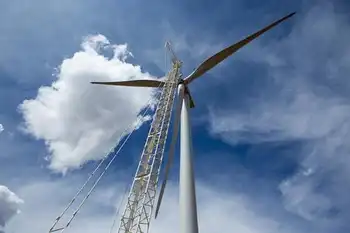
Worker injured after GE turbine collapse

GE Wind Turbine Collapse Brazil raises safety concerns at Omega Energia's Delta VI wind farm in Maranhe3o, with GE Renewable Energy probing root-cause of turbine failure after a worker injury and similar incidents in 2024.


Key Points

An SEO focus on the Brazil GE turbine collapse, its causes, safety investigation, and related 2024 incidents.

✅ Incident at Omega Energia's Delta VI, Maranhao; one worker injured

✅ GE Renewable Energy conducts root-cause investigation and containment

✅ Fifth GE turbine collapse in 2024 across Brazil and the United States


A GE Renewable Energy turbine collapsed at a wind farm in north-east Brazil, injuring a worker and sparking a probe into the fifth such incident this year, the manufacturer confirmed.

One of the manufacturer’s GE 2.72-116 turbines collapsed at Omega Energia’s Delta VI project in Maranhão, which was commissioned in 2018.

Three GE employees were on site at the time of the collapse on Tuesday (3 September), the US manufacturer confirmed, even as U.S. offshore wind developers signal growing competitiveness with gas. 

One worker was injured and is currently receiving medical treatment, GE added.

"We are working to determine the root cause of this incident and to provide proper support as needed," it said

The turbine collapse in Brazil is the fifth such incident involving GE turbines this year, even as the UK's biggest offshore windfarm begins power supply this week, underscoring broader sector momentum.

On 16 February, a turbine collapsed at NextEra Energy Resources’ Casa Mesa wind farm in New Mexico, US, while giant wind components were being transported to a project in Saskatchewan, Canada. The site uses GE’s 2.3-116 and 2.5-127 models.

The New Mexico incident was followed by another collapse in the US — as a Scottish North Sea wind farm resumed construction after Covid-19 — this time a GE 2.4-107 unit at Tradewind Energy’s Chisholm View 2 project in Oklahoma on 21 May.

Two GE turbines then collapsed at projects in July: a 2.5-116 unit at Invenergy’s Upstreamwind farm in Nebraska on 5 July, followed by a 1.7-103 model at the Actis Group-owned Ventos de São Clemente complex in Pernambuco, north-eastern Brazil, even as tidal power in Scotland generated enough electricity to power nearly 4,000 homes.

No employees were injured in the first four turbine collapses of the year, in contrast with concerns at a Hawaii geothermal plant over potential meltdown risk.

In response to the latest incident, GE Renewable Energy added: "It is too early to speculate about the root cause of this week’s turbine collapse.

"Based on our learnings from the previous turbine collapses, we have teams in place focused on containing and resolving these issues quickly, to ensure the safe and reliable operation of our turbines."


Related News

View more

Electricity retailer Griddy's unusual plea to Texas customers: Leave now before you get a big bill

Texas wholesale electricity price spike disrupts ERCOT markets as Griddy and other retail energy providers face surge pricing; customers confront spot market exposure, fixed-rate plan switching, demand response appeals, and deep-freeze grid constraints across Texas.


Key Points

An extreme ERCOT market surge sending real-time rates to caps, exposing Griddy users and driving provider-switch pleas.

✅ Wholesale index plans pass through $9,000/MWh scarcity pricing.

✅ Retailers urge switching; some halt enrollments amid volatility.

✅ Demand response incentives and conservation pleas reduce load.


Some retail power companies in Texas are making an unusual plea to their customers amid a winter storm that has sent electricity prices skyrocketing: Please, leave us.

Power supplier, Griddy, told all 29,000 of its customers that they should switch to another provider as spot electricity prices soared to as high as $9,000 a megawatt-hour. Griddy’s customers are fully exposed to the real-time swings in wholesale power markets, so those who don’t leave soon will face extraordinarily high electricity bills.

“We made the unprecedented decision to tell our customers — whom we worked really hard to get — that they are better off in the near term with another provider,” said Michael Fallquist, chief executive officer of Griddy. “We want what’s right by our consumers, so we are encouraging them to leave. We believe that transparency and that honesty will bring them back” once prices return to normal.

Texas is home to the most competitive electricity market in America. Homeowners and businesses shopping for electricity churn power providers there like credit cards. In the face of such cutthroat competition, retail power providers in the region have grown accustomed to offering new customers incredibly low rates, incentives and, at least in Griddy’s case, unusual plans that allow customers to pay wholesale power prices as opposed to fixed ones.

The ruthless nature of the business has power traders speculating over which firms might have been caught short this week in the most dramatic run-up in spot power prices they’ve ever seen, and even talk of a market bailout has surfaced.

Not all companies are asking customers to leave. Others are just pleading for them to cut back to reduce blackout risks during extreme weather.

Pulse Power, based in The Woodlands, Texas, is offering customers a chance to win a Tesla Model 3, or free electricity for up to a year if they reduce their power usage by 10% in the coming days. Austin-based Bulb is offering $2 per kilowatts-hour, up to $200, for any energy customers save.

Griddy, however, is in a different position. Its service is simple — and controversial. Members pay a $9.99 monthly fee and then pay the cost of spot power traded on Texas’s power grid based on the time of day they use it. Earlier this month, that meant customers were saving money — and at times even getting paid — to use electricity at night. But in recent days, the cost of their power has soared from about 5 to 6 cents a kilowatt-hour to $1 or more. That’s when Fallquist knew it was time to urge his customers to leave.

“I can tell you it was probably one of the hardest decisions we’ve ever made,” he said. “Nobody ever wants to see customers go.”

Griddy isn’t the only one out there actively encouraging its customers to leave. People were posting similar pleas on Twitter over the holiday weekend from other Texas utilities and retail power providers offering everything from $100 rebates to waived cancellation fees as incentives to switch.

Customers may not even be able to switch. Rizwan Nabi, president of energy consultancy Riz Energy in Houston, said several power providers in Texas have told him they aren’t accepting new customers due to this week’s volatile prices, while grid improvements are debated statewide.

Hector Torres, an energy trader in Texas, who is a Griddy customer himself, said he tried to switch services over the long weekend but couldn’t find a company willing to take him until Wednesday, when the weather is forecast to turn warmer.


Related News

View more

Big prizes awarded to European electricity prediction specialists

Electricity Grid Flow Prediction leverages big data, machine learning, and weather analytics to forecast power flows across smart grids, enhancing reliability, reducing blackouts and curtailment, and optimizing renewable integration under EU Horizon 2020 innovation.


Key Points

Short-term forecasting of power flows using big data, weather inputs, and machine learning to stabilize smart grids.

✅ Uses big data, weather, and ML for 6-hour forecasts

✅ Improves reliability, cuts blackouts and energy waste

✅ Supports smart grids, renewables, and grid balancing


Three European prediction specialists have won prizes worth €2 million for developing the most accurate predictions of electricity flow through a grid

The three winners of the Big Data Technologies Horizon Prize received their awards at a ceremony on 12th November in Austria.

The first prize of €1.2 million went to Professor José Vilar from Spain, while Belgians Sofie Verrewaere and Yann-Aël Le Borgne came in joint second place and won €400,000 each.

The challenge was open to individuals groups and organisations from countries taking part in the EU’s research and innovation programme, Horizon 2020.

Carlos Moedas, Commissioner for Research, Science and Innovation, said: “Energy is one of the crucial sectors that are being transformed by the digital grid worldwide.

“This Prize is a good example of how we support a positive transformation through the EU’s research and innovation programme, Horizon 2020.

“For the future, we have designed our next programme, Horizon Europe, to put even more emphasis on the merger of the physical and digital worlds across sectors such as energy, transport and health.”

The challenge for the applicants was to create AI-driven software that could predict the likely flow of electricity through a grid taking into account a number of factors including the weather and the generation source (i.e. wind turbines, solar cells, etc).

Using a large quantity of data from electricity grids, EU smart meters, combined with additional data such as weather conditions, applicants had to develop software that could predict the flow of energy through the grid over a six-hour period.

Commissioner for Digital Economy and Society Mariya Gabriel said: “The wide range of possible applications of these winning submissions could bring tangible benefits to all European citizens, including efforts to tackle climate change with machine learning across sectors.”

The decision to focus on energy grids for this particular prize was driven by a clear market need, including expanding HVDC technology capabilities.

Today’s energy is produced at millions of interconnected and dispersed unpredictable sites such as wind turbines, solar cells, etc., so it is harder to ensure that electricity supply matches the demand at all times.

This complexity means that huge amounts of data are produced at the energy generation sites, in the grid and at the place where the energy is consumed.

Being able to make accurate, short-term predictions about power grid traffic is therefore vital to reduce the risks of blackouts or, by enabling utilities to use AI for energy savings, limit waste of energy.

Reliable predictions can also be used in fields such as biology and healthcare. The predictions can help to diagnose and cure diseases as well as to allocate resources where they are most needed.

Ultimately, the winning ideas are set to be picked up by the energy sector in the hopes of creating smarter electricity infrastructure, more economic and more reliable power grids.


Related News

View more

Tunisia moves ahead with smart electricity grid

Tunisia Smart Grid Project advances with an AFD loan as STEG deploys smart meters in Sfax, upgrades grid infrastructure, boosts energy efficiency, curbs losses, and integrates renewable energy through digitalization and advanced communication systems.


Key Points

A national program funded by an AFD $131.7M loan to modernize STEG, deploy smart meters, and integrate renewable energy.

✅ 430,000 smart meters in Sfax during phase one

✅ 20-year AFD loan with 7-year grace period

✅ Cuts losses, improves efficiency, enables renewables


The Tunisian parliament has approved taking a $131.7 million loan from the French Development Agency for the implementation of a smart grid project.

Parliament passed legislation regarding the 400 million dinar ($131.7 million) loan plus a grant of $1.1 million.

The loan, to be repaid over 20 years with a grace period of up to 7 years, is part of the Tunisian government’s efforts to establish a strategy of energy switching aimed at reducing costs and enhancing operational efficiency.

The move to the smart grid had been postponed after the Tunisian Company of Electricity and Gas (STEG) announced in March 2017 that implementation of the first phase of the project would begin in early 2018 and cover the entire country by 2023.

STEG was to have received funding some time ago. Last year at the Africa Smart Grid Summit in Tunis, the company said it would initiate an international tender during the first quarter of 2019 to start the project.

The French funding is to be allocated to implementation of the first phase only, which will involve development of control and communication stations and the improvement of infrastructure, where regulatory outcomes such as the Hydro One T&D rates decision can influence investment planning in comparable markets.

It includes installation of 430,000 “intelligent” metres over three years in Sfax governorate in southern Tunisia. The second phase of the project is planned to extend the programme to the rest of the country.

Smart metres to be installed in homes and businesses in Sfax account for about 10% of the total number of metres to be deployed in Tunisia.

At the beginning of 2017, the Industrial Company of Metallic Articles (SIAM), a Tunisian industrial electrical equipment and machinery company, signed an agreement with Huawei for the Chinese company to supply smart electricity metres. The value of the deal was not disclosed.

The smart grid is designed to reduce power waste, reduce the number of unpaid bills, prevent consumer fraud such as power theft in India across distribution networks, improve the ecosystem and increase competitiveness in the electricity sector.

Experts said the main difference between the traditional and smart grids is the adoption of advanced infrastructure for measuring electricity consumption and for communication between the power plant and consumers. The data exchange allows power plants to coordinate electricity production with actual demand.

STEG previously indicated that it had implemented measures to ensure the transition to the smart grid, especially since digitalisation is playing an important role in the energy sector.

The project, which translates Tunisia’s energy plans in the form of a partnership between the public and private sectors, aims at reaching 30% of the country’s electricity need from renewable sources by 2025, even as entities like the TVA face climate goals scrutiny that can affect electricity rates in other markets.

The development of the smart grid will allow STEG to monitor consumption patterns, detect abuses and remotely monitor the grid’s power supply, at a time when regulators have questioned UK network profits to spur efficiency, underscoring the value of transparency.

“The smart grid will change the face of the energy system towards the use of renewable energies,” said Tunisian Industry Minister Slim Feriani. At the forum on alternative energies, he pointed out that energy sector digitisation requires investments in technology and a change in the consumption mentality, as new entrants consider roles like Tesla electricity retailer plans in advanced markets.

Official data indicate that Tunisia’s energy deficit accounts for one-third of the country’s annual trade deficit, which reached record levels of more than $6 billion last year.

STEG, whose debts have reached $329 million over the past eight years, a situation resembling Manitoba Hydro debt pressures in Canada, has not disclosed when and how funding would be secured for the completion of the second phase. The company insists it is working to prevent further losses and to collect its unpaid bills.

STEG CEO Moncef Harrabi, earlier this year, said: “The current situation of the company has forced us to take immediate action to reduce the worsening of the crisis and stop the financial bleeding caused by losses.”

He said the company had repeatedly asked the government to pay subsidy instalments due to the company and to enact binding decisions to force government institutions and departments to pay electricity bills, while elsewhere measures like Thailand power bill cuts have been used to support consumers.

The Tunisian government has yet to disburse the subsidy instalments due STEG for 2018 and 2019, which amount to $658 million. STEG also imports natural gas from Algeria for its power plants at a cost of $1.1 billion a year.


Related News

View more

Electricity restored to 75 percent of customers in Puerto Rico

Puerto Rico Power Restoration advances as PREPA, FEMA, and the Army Corps rebuild the grid after Hurricane Maria; 75% of customers powered, amid privatization debate, Whitefish contract fallout, and a continuing island-wide boil-water advisory.


Key Points

Effort to rebuild Puerto Rico's grid and restore power, led by PREPA with FEMA support after Hurricane Maria.

✅ 75.35% of customers have power; 90.8% grid generating

✅ PREPA, FEMA, and Army Corps lead restoration work

✅ Privatization debate, Whitefish contract scrutiny


Nearly six months after Hurricane Maria decimated Puerto Rico, the island's electricity has been restored to 75 percent capacity, according to its utility company, a contrast to California power shutdowns implemented for different reasons.

The Puerto Rico Electric Power Authority said Sunday that 75.35 percent of customers now have electricity. It added that 90.8 percent of the electrical grid, already anemic even before the Sept. 20 storm barrelled through the island, is generating power again, though demand dynamics can vary widely as seen in Spain's power demand during lockdowns.

Thousands of power restoration personnel made up of the Puerto Rico Electric Power Authority (PREPA), the Federal Emergency Management Agency (FEMA), industry workers from the mainland, and the Army Corps of Engineers have made marked progress in recent weeks, even as California power shutoffs highlight grid risks elsewhere.

Despite this, 65 people in shelters and an island-wide boil water advisory is still in effect even though almost 100 percent of Puerto Ricans have access to drinking water, local government records show.

The issue of power became controversial after Puerto Rico Gov. Ricardo Rossello recently announced plans to privatize PREPA after it chose to allocate a $300 million power restoration contract to Whitefish, a Montana-based company with only a few staffers, rather than put it through the mutual-aid network of public utilities usually called upon to coordinate power restoration after major disasters, and unlike investor-owned utilities overseen by regulators such as the Florida PSC on the mainland.

That contract was nixed and Whitefish stopped working in Puerto Rico after FEMA raised "significant concerns" over the procurement process, scrutiny mirrored by the fallout from Taiwan's widespread outage where the economic minister resigned.


Related News

View more

Utilities see benefits in energy storage, even without mandates

Utility Battery Storage Rankings measure grid-connected capacity, not ownership, highlighting MW, MWh, and watts per customer across PJM, MISO, and California IOUs, featuring Duke Energy, IPL, ancillary services, and frequency regulation benefits.


Key Points

Rankings that track energy storage connected to utility grids, comparing MW, MWh, and W/customer rather than ownership.

✅ Ranks by MW, MWh, and watts per customer, not asset ownership

✅ Highlights PJM, MISO cases and California IOUs' deployments

✅ Examples: Duke Energy, IPL, IID; ancillary services, frequency response


The rankings do not tally how much energy storage a utility built or owns, but how much was connected to their system. So while IPL built and owns the storage facility in its territory, Duke does not own the 16 MW of storage that connected to its system in 2016. Similarly, while California’s utilities are permitted to own some energy storage assets, they do not necessarily own all the storage facilities connected to their systems.

Measured by energy (MWh), IPL ranked fourth with 20 MWh, and Duke Energy Ohio ranked eighth with 6.1 MWh.

Ranked by energy storage watts per customer, IPL and Duke actually beat the California utilities, ranking fifth and sixth with 42 W/customer and 23 W/customer, respectively.

Duke ready for next step

Given Duke’s plans, including projects in Florida that are moving ahead, the utility is likely to stay high in the rankings and be more of a driving force in development. “Battery technology has matured, and we are ready to take the next step,” Duke spokesman Randy Wheeless told Utility Dive. “We can go to regulators and say this makes economic sense.”

Duke began exploring energy storage in 2012, and until now most of its energy storage efforts were focused on commercial projects in competitive markets where it was possible to earn revenues. Those included its 36 MW Notrees battery storage project developed in partnership with the Department of Energy in 2012 that provides frequency regulation for the Electric Reliability Council of Texas market and two 2 MW storage projects at its retired W.C. Beckjord plant in New Richmond, Ohio, that sells ancillary services into the PJM Interconnection market.

On the regulated side, most of Duke’s storage projects have had “an R&D slant to them,” Wheeless said, but “we are moving beyond the R&D concept in our regulated territory and are looking at storage more as a regulated asset.”

“We have done the demos, and they have proved out,” Wheeless said. Storage may not be ready for prime time everywhere, he said, but in certain locations, especially where it can it can be used to do more than one thing, it can make sense.

Wheeless said Duke would be making “a number of energy storage announcements in the next few months in our regulated states.” He could not provide details on those projects.

More flexible resources
Location can be a determining factor when building a storage facility. For IPL, serving the wholesale market was a driving factor in the rationale to build its 20 MW, 20 MWh storage facility in Indianapolis.

IPL built the project to address a need for more flexible resources in light of “recent changes in our resource mix,” including decreasing coal-fired generation and increasing renewables and natural gas-fired generation, as other regions plan to rely on battery storage to meet rising demand, Joan Soller, IPL’s director of resource planning, told Utility Dive in an email. The storage facility is used to provide primary frequency response necessary for grid stability.

The Harding Street storage facility in May. It was the first energy storage project in the Midcontinent ISO. But the regulatory path in MISO is not as clear as it is in PJM, whereas initiatives such as Ontario storage framework are clarifying participation. In November, IPL with the Federal Energy Regulatory Commission, asking the regulator to find that MISO’s rules for energy storage are deficient and should be revised.

Soller said IPL has “no imminent plans to install energy storage in the future but will continue to monitor battery costs and capabilities as potential resources in future Integrated Resource Plans.”

California legislative and regulatory push

In California, energy storage did not have to wait for regulations to catch up with technology. With legislative and regulatory mandates, including CEC long-duration storage funding announced recently, as a push, California’s IOUs took high places in SEPA’s rankings.

Southern California Edison and San Diego Gas & Electric were first and fourth (63.2 MW and 17.2 MW), respectively, in terms of capacity. SoCal Ed and SDG&E were first and second (104 MWh and 28.4 MWh), respectively, and Pacific Gas and Electric was fifth (17 MWh) in terms of energy.

But a public power utility, the Imperial Irrigation District (IID), ended up high in the rankings – second in capacity (30 MW) and third  in energy (20 MWh) – even though as a public power entity it is not subject to the state’s energy storage mandates.

But while IID was not under state mandate, it had a compelling regulatory reason to build the storage project. It was part of a settlement reached with FERC over a September 2011 outage, IID spokeswoman Marion Champion said.

IID agreed to a $12 million fine as part of the settlement, of which $9 million was applied to physical improvements of IID’s system.

IID ended up building a 30 MW, 20 MWh lithium-ion battery storage system at its El Centro generating station. The system went into service in October 2016 and in May, IID used the system’s 44 MW combined-cycle natural gas turbine at the generating station.

Passing savings to customers
The cost of the storage system was about $31 million, and based on its experience with the El Centro project, Champion said IID plans to add to the existing batteries. “We are continuing to see real savings and are passing those savings on to our customers,” she said.

Champion said the battery system gives IID the ability to provide ancillary services without having to run its larger generation units, such as El Centro Unit 4, at its minimum output. With gas prices at $3.59 per million British thermal units, it costs about $26,880 a day to run Unit 4, she said.

IID’s territory is in southeastern California, an area with a lot of renewable resources. IID is also not part of the California ISO and acts as its own balancing authority. The battery system gives the utility greater operational flexibility, in addition to the ability to use more of the surrounding renewable resources, Champion said.

In May, IID’s board gave the utility’s staff approval to enter into contract negotiations for a 7 MW, 4 MWh expansion of its El Centro storage facility. The negotiations are ongoing, but approval could come in the next couple months, Champion said.

The heart of the issue, though, is “the ability of the battery system to lower costs for our ratepayers,” Champion said. “Our planning section will continue to utilize the battery, and we are looking forward to its expansion,” she said.” I expect it will play an even more important role as we continue to increase our percentage of renewables.”


Related News

View more

Sign Up for Electricity Forum’s Newsletter

Stay informed with our FREE Newsletter — get the latest news, breakthrough technologies, and expert insights, delivered straight to your inbox.

Electricity Today T&D Magazine Subscribe for FREE

Stay informed with the latest T&D policies and technologies.
  • Timely insights from industry experts
  • Practical solutions T&D engineers
  • Free access to every issue

Download the 2025 Electrical Training Catalog

Explore 50+ live, expert-led electrical training courses –

  • Interactive
  • Flexible
  • CEU-cerified