By Loretta Smolenski 10176 Baltimore National Pike Suite 204 Ellicott City, Maryland 21042 410-465-7316 www.newton-evans.comlsmolenski@newton-evans.com


NFPA 70e Training - Arc Flash

Our customized live online or in‑person group training can be delivered to your staff at your location.
  • Live Online
  • 6 hours Instructor-led
  • Group Training Available
Regular Price:
$199
Coupon Price:
$149
Reserve Your Seat Today
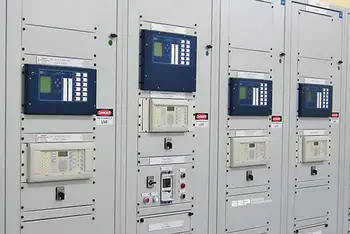
Biggest Obstacles to "Retrofit" Automation and Integration to Existing Substations Include "Lack of Funding" and Perception that "Benefits do not Outweigh the Costs." - The Newton-Evans Research Company has released preliminary findings from its summer long research study of North American utility substation officials. To date, tabulations of surveys from more than 115 utilities, representing about one third of North American transmission and distribution substations and related assets, suggest that the market for substation automation and integration products, software, systems and services is approaching $200 million for the current year. This amount includes portions of very large contracts covering related work spread over multiple years. Importantly, many utilities continue to buy from “best in class” suppliers, whether large or small companies. Further, many are buying individual components, equipment and products and “doing their own substation software development and integration,” rather than outsourcing this effort. The protocol issue continues to suggest that American and Canadian utilities will remain staunch advocates of DNP for use within the substation, and from the substation to external systems. Strong growth in use of UCA2/MMS is expected as well, starting from a small base, with new usage coming primarily from among the TOP 50 or so utilities. Communications architecture within North American substations currently consists primarily of serial links, with increasing use of LANs evident today, and strong indications of plans for continuing to implement LANs during the next three years. From a wide area networking perspective, serial links also remain prevalent, but a clear trend toward linking the substation to wide area network(s) is pointed to in the survey findings. RTUs are likely to remain the primary substation information processing task handler, according to this study, with programmable logic controllers next in terms of importance. By 2005, expect to see more PCs in substations. The use of third-party services for substation-related support activities continues to show promise, with training classes provided by suppliers and other outside service providers being especially important today. There is also evidence of strong interest in using external service organizations for configuration support for intelligent electronic devices, for equipment installation, and for commissioning and testing of new substations. A parallel study is now being conducted with international utility officials from each world region. Additional topics being covered in the North American study, Volume One of this series, include security issues and practices, voltage ranges used to power substation automation equipment, equipment types included in substation automation and integration programs, specific external systems linkages, preferred equipment suppliers, and an assessment of where North America’s substations are positioned along a five-stage path to complete automation. Additional information on the four volume study “Worldwide Market for Substation Automation and Integration Programs in Electric Utilities: 2002-2005” is available from the Newton-Evans Research Company.

For More Information Contact Jeanne Small 10176 Baltimore National Pike Suite 204 Ellicott City, Maryland 21042 410-465-7316www.newton-evans.com jsmall@newton-evans.com

Related News

Alberta Advances Electricity Plans with Rate of Last Resort

Alberta Rate of Last Resort provides a baseline electricity price, boosting energy reliability, affordability, and consumer protection amid market volatility, aligning with grid modernization, integration, pricing transparency, and oversight from the Alberta Utilities Commission.


Key Points

A fallback electricity rate ensuring affordable, reliable power and consumer protection during market volatility.

✅ Guarantees a stable baseline price when markets spike

✅ Supports vulnerable customers lacking competitive offers

✅ Overseen by AUC to balance protection and competition


The Alberta government has announced significant strides in its electricity market reforms, unveiling a new plan under new electricity rules that aims to enhance energy reliability and affordability for consumers. This initiative, highlighted by the introduction of a "rate of last resort," is a critical response to ongoing challenges in the province's electricity sector, particularly following recent market volatility and increasing consumer concerns about rising electricity prices across the province.

Understanding the Rate of Last Resort

The "rate of last resort" (RLR) is designed to ensure that all Albertans have access to affordable electricity, even when they face challenges securing a competitive rate in the open market. This measure is particularly beneficial for those who may not have the means or the knowledge to navigate complex energy contracts, such as low-income families or seniors.

Under this new plan, the RLR will serve as a safety net, guaranteeing a stable and predictable rate for customers who find themselves without a competitive provider. This move is seen as a crucial step in addressing the needs of vulnerable populations who might otherwise be at risk of being shut out of the energy market.

Market Volatility and Consumer Protection

Alberta's electricity market has faced significant fluctuations over the past few years, and is headed for a reshuffle as policymakers respond to unpredictability in pricing and service availability. The rise in energy costs has caused distress among consumers, with many advocating for stronger protections against sudden price hikes.

The government's recent decision to implement the RLR is a direct acknowledgment of these concerns. By creating a baseline rate, officials aim to provide consumers with peace of mind, knowing that there is a fallback option should market conditions turn unfavorable. This initiative complements other measures aimed at enhancing consumer protections, including improved transparency in pricing, the consumer price cap on power bills being advanced, and the regulation of energy suppliers.

Broader Implications for Alberta’s Energy Landscape

This plan is not only about consumer protection; it also represents a broader shift towards a more sustainable and stable energy market in Alberta, aligning with proposed electricity market changes under consideration. The introduction of the RLR is part of a comprehensive strategy that includes investments in renewable energy and infrastructure improvements. By modernizing the grid and promoting cleaner energy sources, the government aims to reduce dependency on fossil fuels while maintaining reliability and affordability.

Additionally, this move aligns with the province's goals to meet climate targets and transition to a more sustainable energy future as Alberta is changing how it produces and pays for electricity through policy updates. As the demand for clean energy grows, Alberta is positioning itself to be a leader in this transformation, appealing to both residents and businesses committed to sustainability.

Public and Industry Reactions

The announcement has garnered mixed reactions from various stakeholders. While consumer advocacy groups have largely praised the government's efforts to protect consumers and ensure affordable electricity, some industry experts express concerns about potential long-term impacts on competition, arguing the market needs competition to remain dynamic. They argue that while the RLR provides immediate relief, it could disincentivize companies from offering competitive rates, leading to a less dynamic market in the future.

The Alberta Utilities Commission (AUC) is expected to play a pivotal role in overseeing the implementation of the RLR, ensuring that it operates effectively and that any unintended consequences are addressed swiftly. This regulatory oversight will be crucial in balancing consumer protection with the need for a competitive energy market.

Conclusion

As Alberta forges ahead with its electricity market reforms, the introduction of the rate of last resort marks a significant step in enhancing consumer protection and ensuring energy affordability. While challenges remain, the government's proactive approach reflects a commitment to addressing the needs of all Albertans, particularly those most vulnerable to market fluctuations.

In this evolving energy landscape, the RLR will serve not only as a safety net for consumers but also as a foundation for a more sustainable and reliable electricity system. As Alberta continues to adapt to changing energy demands and climate considerations, the effectiveness of these measures will be closely monitored, shaping the future of the province’s electricity market.


Related News

View more

Electrification Of Vehicles Prompts BC Hydro's First Call For Power In 15 Years

BC Hydro Clean Power Call 2024 seeks utility-scale renewable energy, including wind and solar, to meet rising electricity demand, advance clean goals, expand grid, and support Indigenous participation through competitive procurement and equity opportunities.


Key Points

BC Hydro's 2024 bid to add zero-emission wind and solar to meet rising demand and support Indigenous equity.

✅ Competitive procurement for utility-scale wind and solar

✅ Targets 3,000 GWh new greenfield by fiscal 2029

✅ Encourages Indigenous ownership and equity stakes


The Government of British Columbia (the Government or Province) has announced that BC Hydro would be moving forward with a call for new sources of 100 percent clean, renewable emission-free electricity, notably including wind and solar, even as nuclear power remains a divisive option among residents. The call, expected to launch in spring 2024, is BC Hydro's first call for power in 15 years and will seek power from larger scale projects.

Over the past decade, British Columbia has experienced a growing economy and population as well as a move by the housing, business and transportation sectors towards electrification, with industrial demand from LNG facilities also influencing load growth. As the Government highlighted in their recent announcement, the number of registered light-duty electric vehicles in British Columbia increased from 5,000 in 2016 to more than 100,000 in 2023. Zero-emission vehicles represented 18.1 percent of new light-duty passenger vehicles sold in British Columbia in 2022, the highest percentage for any province or territory.

Ultimately, the Province now expects electricity demand in British Columbia to increase by 15 percent by 2030. BC Hydro elaborated on the growing need for electricity in their recent Signposts Update to the British Columbia Utilities Commission (BCUC), and noted additions such as new generating stations coming online to support capacity. BC Hydro implemented its Signposts Update process to monitor whether the "Near-term actions" established in its 2021 Integrated Resource Plan continue to be appropriate and align with the changing circumstances in electricity demand. Those actions outline how BC Hydro will meet the electricity needs of its customers over the next 20 years. The original Near-term actions focused on demand-side management and not incremental electricity production.

In its Update, BC Hydro emphasized that increased use of electricity and decreased supply, along with episodes of importing out-of-province fossil power during tight periods, has advanced the forecast of the province's need for additional renewable energy by three years. Accordingly, BC Hydro has updated its 2021 Integrated Resource Plan to, among other things:

accelerate the timing of several Near-term actions on energy efficiency, demand response, industrial load curtailment, electricity purchase agreement renewals and utility-scale batteries; and
add new Near-term actions for BC Hydro to acquire an additional 3,000 GWh per year of new clean, renewable energy from greenfield facilities in the province able to achieve commercial operation as early as fiscal 2029, as well as approximately 700 GWh per year of new clean, renewable energy from existing facilities prior to fiscal 2029.
The Province's predictions align with Canada Energy Regulator's (CER) "Canada's Energy Future 2023" flagship report (Report) released on June 20, 2023. The Report, which looks at Canadians' possible energy futures, includes two long-term scenarios modelled on Canada reaching net-zero by 2050. Under either scenario, the electricity sector is predicted to serve as the cornerstone of the net-zero energy system, with examples such as Hydro-Quebec's decarbonization strategy illustrating this shift as it transforms and expands to accommodate increasing electricity use.

Key Details of the Call
Though not finalized, the call for power will be a competitive process, with the exact details to be designed by BC Hydro and the Province, incorporating input from the recently-formed BC Hydro Task Force made up of Indigenous communities, industry and stakeholders. This is a shift from previous calls for power, which operated as a continuous-intake program with a standing offer at a fixed rate, after projects like the Siwash Creek project were left in limbo.

Drawing on advice from Indigenous and external energy experts, the Province seeks to advance Indigenous ownership and equity interest opportunities in the electricity sector, potentially with minimum requirements for Indigenous participation in new projects to be a condition of the competitive process. The Province has also committed $140 million to the B.C. Indigenous Clean Energy Initiative (BCICEI) to support Indigenous-led power projects and their ability to respond to future electricity demand, facilitating their ability to compete in the call for power, despite their smaller size.

BC Hydro expects to initiate the call in spring 2024, with the goal of acquiring new sources of electricity as early as 2028, even as clean electricity affordability features prominently in Ontario's election discourse.


Related News

View more

BC Hydro rebate and B.C. Affordability Credit coming as David Eby sworn in as premier

BC Affordability & BC Hydro Bill Credits provide inflation relief and cost of living support, lowering electricity bills for families and small businesses through automatic utility credits and income-tested tax rebates across British Columbia.


Key Points

BC relief lowering electricity bills and offering rebates to help families and businesses facing inflation.

✅ $100 credit for residential BC Hydro users; applied automatically.

✅ Avg $500 bill credit for small and medium commercial customers.

✅ Income-based BC Affordability Credit via CRA in January.


The new B.C. premier announced on Friday morning families and small businesses in B.C. will get a one-time cost of living credit on their BC Hydro bill this fall, and a new B.C. Affordability Credit in January.

Eby focused on the issue of affordability in his speech following being sworn in as B.C.’s 37th premier, including electricity costs addressed by BC Hydro review recommendations that aim to keep power affordable.

A BC Hydro bill credit of $100 will be provided to all eligible residential and commercial electricity customers, including those who receive their electricity service indirectly from BC Hydro through FortisBC or a municipal utility.

“People and small businesses across B.C. are feeling the squeeze of global inflation,” Eby said.

“It’s a time when people need their government to continue to be there for them. That’s why we’re focused on helping people most impacted by the rising costs we’re seeing around the world – giving people a bit of extra credit, especially at a time of year when expenses can be quick to add up.”

Eby takes over as premier of the province with a growing number of concerns piling up on his plate, even as the province advances grid development and job creation projects to support long-term growth.

Economists in the province have warned of turbulent economic times ahead due to global economic pressures and power supply challenges tied to green energy ambitions.

The one-time $100 cost of living credit works out to approximately one month of electricity for a family living in a detached home or more than two months of electricity for a family living in an apartment.

Commercial ratepayers, including small and medium businesses like restaurants and tourism operators, will receive a one-time bill credit averaging $500 as B.C. expands EV charging infrastructure to accelerate electrification.

The amount will be based on their prior year’s electricity consumption.

British Columbians will have the credit automatically applied to their electricity accounts.

BC Hydro customers will have the credit applied in early December. Customers of FortisBC and municipal utilities will likely begin to see their bill credits applied early in the new year.

‘I proudly and unreservedly turn to the tallest guy in the room’: John Horgan on David Eby

The B.C. Affordability Credit is separate and will be based on income.

Eligible people and families will automatically receive the new credit through the Canada Revenue Agency, the same way the enhanced Climate Action Tax Credit was received in October.

An eligible person making an income of up to $36,901 will receive the maximum BC Affordability Credit with the credit fully phasing out at $79,376.

An eligible family of four with a household income of $43,051 will get the maximum amount, with the credit fully phasing out by $150,051.

This additional support means a family of four can receive up to an additional $410 in early January 2023 to help offset some of the added costs people are facing, while EV owners can access more rebates for home and workplace charging to reduce transportation expenses.

“Look for B.C.’s new Affordability Credit in your bank account in January 2023,” Eby said.

“We know it won’t cover all the bills, but we hope the little bit extra helps folks out this winter.”

Eby’s swearing-in marks a change at the premier’s office but not a shift in focus.

The premier expects to continue on with former premier John Horgan’s mandate with a focus on affordability issues and clean growth supported by green energy investments from both levels of government.

In a ceremony held in the Musqueam Community Centre, Eby made a commitment to make meaningful improvements in the lives of British Columbians and continue work with First Nations communities, with clean-tech growth underscored by the B.C. battery plant announcement made with the prime minister.

The ceremony was the first-ever swearing-in hosted by a First Nation in British Columbia.

“British Columbia is a wonderful place to call home,” Eby said.

“At the same time, people are feeling uncertain about the future and worried about their families. I’m proud of the work done by John Horgan and our government to put people first. And there’s so much more to do. I’m ready to get to work with my team to deliver results that people will be able to see and feel in their lives and in their communities.”


Related News

View more

Warning: Manitoba Hydro can't service new 'energy intensive' customers

Manitoba Hydro capacity constraints challenge clean energy growth as industrial demand, hydrogen projects, EV batteries, and electrification strain the grid; limited surplus, renewables, storage, and transmission bottlenecks hinder new high-load connections.


Key Points

Limited surplus power blocks new energy-intensive loads until added generation and transmission expand Manitoba's grid.

✅ No firm commitments for new energy-intensive industrial customers

✅ Single large load could consume remaining surplus capacity

✅ New renewables need transmission; gas, nuclear face trade-offs


Manitoba Hydro lacks the capacity to provide electricity to any new "energy intensive" industrial customers, the Crown corporation warns in a confidential briefing note that undercuts the idea this province can lure large businesses with an ample supply of clean, green energy, as the need for new power generation looms for the utility.

On July 28, provincial economic development officials unveiled an "energy roadmap" that said Manitoba Hydro must double or triple its generating capacity, as electrical demand could double over the next two decades in order to meet industrial and consumer demand for electricity produced without burning fossil fuels.

Those officials said 18 potential new customers with high energy needs were looking at setting up operations in Manitoba — and warned the province must be careful to choose businesses that provide the greatest economic benefit as well as the lowest environmental impact.

In a briefing note dated Sept. 13, obtained by CBC News, Manitoba Hydro warns it doesn't have enough excess power to hook up any of these new heavy electricity-using customers to the provincial power grid.

There are actually 57 proposals to use large volumes of electricity, Hydro says in the note, including eight projects already in the detailed study phase and nine where the proponents are working on construction agreements.

"Manitoba Hydro is unable to offer firm commitments to prospective customers that may align with Manitoba's energy roadmap and/or provincial economic development objectives," Hydro warns in the note, explaining it is legally obliged to serve all existing customers who need more electricity.

"As such, Manitoba Hydro cannot reserve electric supply for particular projects."

Hydro says in the note its "near-term surplus electricity supply" is so limited amid a Western Canada drought that "a single energy-intensive connection may consume all remaining electrical capacity."

Adding more electrical generating capacity won't be easy, even with new turbine investments underway, and will not happen in time to meet demands from customers looking to set up shop in the province, Hydro warns.

The Crown corporation goes on to say it's grappling with numerous requests from existing and prospective energy-intensive customers, mainly for producing hydrogen, manufacturing electric vehicle batteries and switching from fossil fuels to electricity, such as to use electricity for heat in buildings.

In a statement, Hydro said it wants to ensure Manitobans know the corporation is not running out of power — just the ability to meet the needs of large new customers, and continues to provide clean energy to neighboring provinces today.

"The size of loads looking to come to Manitoba are significantly larger than we typically see, and until additional supply is available, that limits our ability to connect them," Hydro spokesperson Bruce Owen said in a statement.

Adding wind power or battery storage, for example, would require the construction of more transmission lines, and deals such as SaskPower's purchase depend on that interprovincial infrastructure as well.

Natural gas plants are relatively inexpensive to build but do not align with efforts to reduce carbon emissions. Nuclear power plants require at least a decade of lead time to build, and tend to generate local opposition.

Hydro has also ruled out building another hydroelectric dam on the Nelson River, where the Conawapa project was put on hold in 2014.


Related News

View more

Ontario Energy minister downplays dispute between auditor, electricity regulator

Ontario IESO Accounting Dispute highlights tensions over public sector accounting standards, auditor general oversight, electricity market transparency, KPMG advice, rate-regulated accounting, and an alleged $1.3B deficit understatement affecting Hydro bills and provincial finances.


Key Points

A PSAS clash between Ontario's auditor general and the IESO, alleging a $1.3B deficit impact and transparency failures.

✅ Auditor alleges deficit understated by $1.3B

✅ Dispute over PSAS vs US-style accounting

✅ KPMG support, transparency and co-operation questioned


The bad blood between the Ontario government and auditor general bubbled to the surface once again Monday, with the Liberal energy minister downplaying a dispute between the auditor and the Crown corporation that manages the province's electricity market, even as the government pursued legislation to lower electricity rates in the province.

Glenn Thibeault said concerns raised by auditor general Bonnie Lysyk during testimony before a legislative committee last week aren't new and the practices being used by the Independent Electricity System Operator are commonly endorsed by major auditing firms.

"(Lysyk) doesn't like the rate-regulated accounting. We've always said we've relied on the other experts within the field as well, plus the provincial controller," Thibeault said.

#google#

"We believe that we are following public sector accounting standards."

Thibeault said that Ontario Power Generation, Hydro One and many other provinces and U.S. states use the same accounting practices.

"We go with what we're being told by those who are in the field, like KPMG, like E&Y," he said.

But a statement from Lysyk's office Monday disputed Thibeault's assessment.

"The minister said the practices being used by the IESO are common in other jurisdictions," the statement said.

"In fact, the situation with the IESO is different because none of the six other jurisdictions with entities similar to the IESOuse Canadian Public Sector Accounting Standards. Five of them are in the United States and use U.S. accounting standards."

Lysyk said last week that the IESO is using "bogus" accounting practices and her office launched a special audit of the agency late last year after the agency changed their accounting to be more in line with U.S. accounting, following reports of a phantom demand problem that cost customers millions.

Lysyk said the accounting changes made by the IESO impact the province's deficit, understating it by $1.3 billion as of the end of 2017, adding that IESO "stalled" her office when it asked for information and was not co-operative during the audit.

Lysyk's full audit of the IESO is expected to be released in the coming weeks and is among several accounting disputes her office has been engaged in with the Liberal government over the past few years.

Last fall, she accused the government of purposely obscuring the true financial impact of its 25% hydro rate cut by keeping billions in debt used to finance that plan off the province's books. Lysyk had said she would audit the IESO because of its role in the hydro plan's complex accounting scheme.

"Management of the IESO and the board would not co-operate with us, in the sense that they continually say they're co-operating, but they stalled on giving us information," she said last week.

Terry Young, a vice-president with the IESO, said the agency has fully co-operated with the auditor general. The IESO opened up its office to seven staff members from the auditor's office while they did their work.

"We recognize the work that she's doing and to that end we've tried to fully co-operate," he said. "We've given her all of the information that we can."

Young said the change in accounting standards is about ensuring greater transparency in transactions in the energy marketplace.

"It's consistent with many other independent electricity system operators are doing," he said.

Lysyk also criticized IESO's accounting firm, KPMG, for agreeing with the IESO on the accounting standards. She was critical of the firm billing taxpayers for nearly $600,000 work with the IESO in 2017, compared to their normal yearly audit fee of $86,500.

KPMG spokeswoman Lisa Papas said the accounting issues that IESO addressed during 2017 were complex, contributing to the higher fees.

The accounting practices the auditor is questioning are a "difference of professional judgement," she said.

"The standards for public sector organizations such as IESO are principles-based standards and, accordingly, require the exercise of considerable professional judgement," she said in a statement.

"In many cases, there is more than one acceptable approach that is compliant with the applicable standards."

Progressive Conservative energy critic Todd Smith said the government isn't being transparent with the auditor general or taxpayers, aligning with calls for cleaning up Ontario's hydro mess in the sector.

"Obviously, they have some kind of dispute but the auditor's office is saying that the numbers that the government is putting out there are bogus.

Those are her words," he said. "We've always said that we believe the auditor general's are the true numbers for the
province of Ontario."

NDP energy critic Peter Tabuns said the Liberal government has decided to "play with accounting rules" to make its books look better ahead of the spring election, despite warnings that electricity prices could soar if costs are pushed into the future.


Related News

View more

Town of Gander forgives $250K debt from local curling club

Gander Curling Club Debt Forgiveness Agreement explained: town council tax relief, loan write-off conditions, community benefits, and economic impact, covering long-standing taxes and loans while protecting the facility with asset clauses and compliance terms.


Key Points

Town plan erasing 25 years of tax and loan debt, with conditions to keep the curling facility open for residents.

✅ Conditions: no borrowing against property without consent.

✅ Water and sewer taxes must be paid annually.

✅ If sold or use changes, debt due; transfer for $1.


Gander town council has agreed to forgive the local curling club's debt of over $250,000.

Gina Brown, chair of the town council's finance committee, says the agreement has been put in place to help the curling club survive, amid broader discussions on electricity affordability in Newfoundland and Labrador.

"When we took a look at this and realized there was a significant outstanding debt for Gander curling club … we have to mitigate," Brown told CBC Newfoundland Morning. "[Getting] what the taxpayers are owed, with also understanding and appreciating the role that that recreational facility plays in our community."

According to Brown, the debt comes from a combination of taxes and loans, going back about 25 years. She says the curling club understood there was debt, but didn't know the number was so high. The club has been in the black since 2007, but used their profits for other items like renovations.

"Like so many cases when you're dealing with an organization with a changing board, and the same for council … [people are] coming in and coming out," Brown said. "And as a result, my understanding from the curling club's perspective is they weren't aware of how much was outstanding."

Chris McLeod, president of the Gander Curling Club, told CBC the club had been trying to address the debt since he became president in 2014.

Terms of agreement
The town's agreement with the club comes with the following stipulations:

The club will not use the property as security for any form of borrowing without the town's consent.
 
The club will continue to pay water and sewer tax annually.
 
If the club sells the property, the town reserves the right to void the agreement and the debt will immediately become due in full.
 
If the club stops using the facility as a curling club, the property will be transferred to the town for $1.
McLeod says the club will not attempt to pay back the debt, as it is not part of the agreement. The only way the debt would be paid is if the building is sold, which McLeod says it won't be, and there are also no plans to use the building for anything other than a curling club.

"[The debt] is basically gone now," McLeod said.

McLeod says the move was made to help get the debt off the books, and make sure the curling club can be financially responsible in the future, similar to relief programs some utilities offered during the pandemic.

The curling club is something that encourages people. So we felt that this has to be maintained.
- Gina Brown

Brown says keeping the curling club in Gander is important for the town, and brings different benefits to the area, as regional power cooperation debates illustrate broader trends.

"They are servicing people from as young as Grade 1 to seniors," Brown said. "You need little to no equipment, you need no background. So for the town itself, for its social and health implications, as provinces advance emissions plans that can affect communities, is one. But the other thing is the economic benefit that comes from having this facility here."


The Gander Curling Club's debt forgiveness comes with several conditions. (Google Maps)
The curling club can help attract people into the community, as recreational facilities are often a key draw for families, she added, while other provinces are creating transition funds to support communities.

"When you're as a town, trying to attract people coming in … whether you're a doctor, nurse, anybody looking at the recreational facilities, the curling club is something that encourages people," Brown said. "So we felt that this has to be maintained."

Brown says the town understands they might be setting a precedent with other businesses in forgiving the debts of the curling club, as major infrastructure like B.C.'s Site C dam has faced budget overruns.

"That's another thing we had to consider, what kind of precedents are [we] establishing?" Brown said. "From our standpoint, I think one of the things about this agreement that we felt was beneficial to the town is that they have an asset, helping to avoid costly delays seen with large projects. And the asset is a great building. To us, the taxpayers are in a win-win situation."


Related News

View more

Sign Up for Electricity Forum’s Newsletter

Stay informed with our FREE Newsletter — get the latest news, breakthrough technologies, and expert insights, delivered straight to your inbox.

Electricity Today T&D Magazine Subscribe for FREE

Stay informed with the latest T&D policies and technologies.
  • Timely insights from industry experts
  • Practical solutions T&D engineers
  • Free access to every issue

Download the 2025 Electrical Training Catalog

Explore 50+ live, expert-led electrical training courses –

  • Interactive
  • Flexible
  • CEU-cerified