New Jersey Preps For Deregulation

By The Record Newspaper


Substation Relay Protection Training

Our customized live online or in‑person group training can be delivered to your staff at your location.

  • Live Online
  • 12 hours Instructor-led
  • Group Training Available
Regular Price:
$699
Coupon Price:
$599
Reserve Your Seat Today
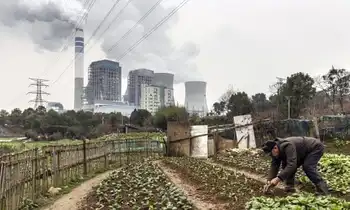
Welcome to the brave new world of energy.

Come Aug. 1, a century of rules, regulations, and predictable rates will be replaced by open-market competition, less regulatory control, and rates that could soar based on conditions in markets far removed from North Jersey.

When the journey toward deregulation began four years ago with passage of the historic Electric Discount and Energy Competition Act, advocates predicted customers would benefit from lower prices, increased choice, and technical innovations, much as happened when a federal judge forced the breakup of AT&T two decades earlier.

It hasn't happened quite as expected. Most rate cuts mandated by the new law will be wiped out when the phase-in period ends July 31, and only one non-utility generator - Green Mountain Energy Co., which seeks to capture the cleaner-air market while charging slightly more than the utilities - is actively competing for residential customers.

But that doesn't mean there has not been significant change since the law was passed in 1999, said Mark Sperduto, director of corporate issues at Public Service Electric and Gas Co., New Jersey's largest utility with nearly 2 million customers.

"A lot has happened that is not visible," but it has set the stage for what's ahead, Sperduto said.

Early on, customers saw a brief flurry of activity - billboards, direct mail, and telephone marketing by third-party generators seeking to sign up customers - followed by a rapid withdrawal by most marketers and claims that the structure of the process makes it impossible for them to make money.

"Retail competition hasn't done real well because the legislation and the [Board of Public Utilities] orders fixed the price for generation four years ago, and that's the price competitors had to compete against," Sperduto said.

"It hasn't worked out," he said. "Prices weren't very reflective of what was going on in the market." Come August, when the artificial price caps are lifted, "we'll have a market price, and there is going to be some encouragement for retail competition."

There will also be structural changes in aggregation rules, making it easier for communities and organizations to join together in purchasing power, said BPU President Jeanne Fox.

"I expect competition," she said.

Even so, the biggest change customers will see Aug. 1 will be higher prices that will wipe out most, if not all, of the double-digit rate cuts that have been phased in over the last four years.

Each of the utilities is seeking to recover deferred costs - money spent for power over and above what they could charge customers during the phase-in period - as allowed under the law.

In addition, they are seeking rate increases to cover expenses for their infrastructure, such as the $1.3 billion Jersey Central Power & Light has spent to upgrade its delivery system since its last increase 10 years ago.

Fox has promised to review the filings closely to make sure all claims are justified, but increases of around 10 per cent are quite possible by summer. PSE&G, for example, combines a series of cuts and increases that would raise rates by 9.5 per cent Aug. 1, but that would still be 5.5 per cent lower than four years earlier.

Rates are not the only thing changing. There is also a major structural change with the separation of the commodity - the electricity itself - and its delivery.

The utilities were encouraged to sell off their generating plants and to buy power from third-party sources, which is the route JCP&L, Orange & Rockland Utilities, and Conectiv took. PSE&G, however, elected to remain in the generating business, but it had to spin off its power division into a separate, unregulated unit.

As a result, power purchases are open to competition, with little regulation, leaving customers technically free to shop around for suppliers - if they can find one.

At the same time, delivery remains tied to geography, with customers having no choice among four companies that carve up most of the state. Also, delivery, as well as service, remain regulated by the Board of Public Utilities and the utilities are required to provide power for customers who decide not to switch suppliers.

Even though there has been little movement in the retail market, "the wholesale market is very competitive. ... and that will get the best price for consumers," Sperduto of PSE&G said.

That was shown in the spirited first-of-its-kind auction for electricity conducted in February among the four utilities. In a complex bidding process done over the Internet, the utilities locked up prices for all customers who remain with them for the 12 months that began Aug. 1, 2002.

The process worked so well the BPU approved an expanded auction for next year, with separate bidding for 10-month and 34-month periods, beginning in August.

By stabilizing prices in a volatile market, New Jersey set a benchmark for non-utility generators and avoided the problems experienced in other states, including New York, where monthly adjustments caused Consolidated Edison customers to be hit with massive rate increases whenever wholesale power prices surged.

Related News
Texas's new set of electricity regulators begins to take shape in wake of deep freeze, power outages

Texas PUC Appointments signal post-storm reform as Gov. Greg Abbott taps Peter Lake and advances Will McAdams for Senate confirmation, affecting ERCOT oversight, grid reliability, wholesale power pricing, and securitization for co-ops.


Key Points

Texas PUC appointments add Peter Lake and Will McAdams to steer ERCOT, grid reliability, and market policy.

✅ Peter Lake nominated chair to replace Arthur D'Andrea.

✅ Will McAdams advances toward Senate confirmation.

✅ Focus on ERCOT oversight, price cap debate, grid resilience.


A new set of Texas electricity regulators began to take shape Monday, as Gov. Greg Abbott nominated a finance expert to be the next chairman of the Public Utility Commission while his earlier choice of a PUC member moved toward Senate confirmation.

The Republican governor put forward Peter Lake of Austin, who has spent more than five years as an Abbott appointee to the Texas Water Development Board, as his second commission pick in as many weeks.

“I am confident he will bring a fresh perspective and trustworthy leadership to the PUC,” Abbott said of Lake, who once worked as a trader of futures and derivatives for a firm belonging to the Chicago Mercantile Exchange and more recently has eagerly promoted bonds for the State Water Implementation Fund for Texas.

“Peter’s expertise in the Texas energy industry and business management will make him an asset to the agency,” Abbott, who has touted grid readiness in recent months, said in a written statement. “I urge the Senate to swiftly confirm Peter’s appointment.”

On Monday, the Senate appeared to be moving quickly to confirm Abbott’s April 1 selection for the PUC, Will McAdams, president of Associated Builders and Contractors of Texas and a former legislative aide who helped write policy for regulated industries such as electricity.

McAdams was among the 129 nominees that the Senate Nominations Committee voted out, 8-0. His nomination heads now to the Senate floor.

All three of Abbott’s handpicked PUC commissioners who were in place before and during February’s calamitous winter storm have since quit or said they’re resigning, even as Sierra Club criticism of Abbott's demands intensified in the aftermath.

February’s polar vortex left in its wake physical and financial wreckage after a nonprofit grid operator answering to the PUC, amid calls for market reforms to avoid blackouts, shut off electricity to more than 4 million Texans, causing the deaths of at least 125 people, 13 of them in the Dallas-Fort Worth area.

Gov. Greg Abbott on Thursday named Will McAdams to the embattled Public Utility Commission of Texas. McAdams is a construction industry lobbyist with strong ties to the GOP-controlled Legislature. In Feb. 17 file photo, winter storm's snowfall andn large electrical transmission lines in South Arlington are pictured.

In a 45-minute confirmation hearing, McAdams, as lawmakers discussed ways to improve electricity reliability statewide, drew praise – and few tough questions.

McAdams, who previously worked for three GOP senators, testified that had he been on the commission in February, he would not have kept in place a controversial, $9,000-per-megawatt hour price cap on wholesale power for about 32 hours on Feb. 18-19.

“I don’t see myself making that decision,” he said.

McAdams, though, hedged slightly, saying he’s not privy to all information that the Electric Reliability Council of Texas, or ERCOT, and the PUC may have had at their disposal during the crisis.

The comments were notable because Lt. Gov. Dan Patrick and the Senate have fought with Abbott and the House over $16 billion in overcharges that, according to an independent market monitor, wrongly accrued near the end of the Feb. 15-19 outages.

Sen. Charles Schwertner, R-Georgetown, said the commission’s former chairwoman, DeAnn Walker, and Bill Magness, president of ERCOT, decided to hold the high cap in place because there “was still great concern about grid stability, even though there was significant reserves.”

He pressed McAdams to call that incorrect, which McAdams did.

“Given the fact pattern that I’m privy to, senator,” it wasn’t the right move, he said. “But again, there may be other facts out there. There probably are.”

McAdams acknowledged many homeowners and businesses were traumatized.

“The public’s confidence in the ability of the PUC to effectively regulate our electric markets has been badly damaged and shaken,” he said.

McAdams spoke favorably of renewable energy, calling wind and solar “absolutely valuable resources,” as the electricity sector faces profound change nationwide. To whatever extent those are not available, the PUC should “firm that up” with “dispatchable forms of generation,” such as gas, coal and nuclear, McAdams said.

He also called for lawmakers to consider providing electricity market bailout through “securitization,” or low-interest bond financing, to rural electric co-ops that were unable to pay the massive wholesale power bills they racked up during the February crisis.

“It would prevent those systems from having to front-load those costs onto their own members and smooth that out over a term of years,” while preventing an “uplift” of costs to other market participants who wisely hedged against soaring prices, McAdams said.

Noting that more than 400 bills have been filed to change ERCOT and how it’s governed, and as Texans prepare to vote on grid modernization funding this year, McAdams told the Senate panel, “It is clear to me that the Legislature wants meaningful changes to the status quo – to ensure that something positive comes out of this tragedy.”

Lake, who if confirmed by the Senate would replace Arthur D’Andrea as PUC chairman, grew up in Tyler. He attended prep school in New England and earned an undergraduate degree from the University of Chicago and a master of business administration degree from Stanford University.

He then worked for a commodities trading firm, a behavioral health company and as a business consultant before he became director of business development for Tyler-based Lake Ronel Oil Co. in 2014.

In late 2015, Abbott named Lake to the Texas Water Development Board and in February 2018 picked him to be the chairman of the three-member board that seeks to ensure water supplies for a fast-growing state.

Lake has steered the water board as it rolled out additional loans for water projects, approved by the Legislature and voters in 2013, and took the lead after Hurricane Harvey on flood control planning and infrastructure financing.

He’s posted exuberantly on Twitter as he toured agricultural water installations, lakes in West Texas and river authorities.

If confirmed, Lake and McAdams each would make $189,500 a year.


Related News

View more

Coronavirus could stall a third of new U.S. utility solar this year: report

U.S. Utility-Scale Solar Delays driven by the coronavirus pandemic threaten construction timelines, supply chains, and financing, with interconnection and commissioning setbacks, module sourcing risks in Southeast Asia, and tax credit deadline pressures impacting project delivery.


Key Points

Setbacks to large U.S. solar builds from COVID-19 impacting construction, supply, financing, and permitting.

✅ Construction, interconnection, commissioning site visits delayed

✅ Supply chain risks for modules from Southeast Asia

✅ Tax credit deadline extensions sought by developers


About 5 gigawatts (GW) of big U.S. solar energy projects, enough to power nearly 1 million homes, could suffer delays this year if construction is halted for months due to the coronavirus pandemic, as the Covid-19 crisis hits renewables across the sector, according to a report published on Wednesday.

The forecast, a worst-case scenario laid out in an analysis by energy research firm Wood Mackenzie, would amount to about a third of the utility-scale solar capacity expected to be installed in the United States this year, even as US solar and wind growth continues under favorable plans.

The report comes two weeks after the head of the top U.S. solar trade group called the coronavirus pandemic (as solar jobs decline nationwide) "a crisis here" for the industry. Solar and wind companies are pleading with Congress to extend deadlines for projects to qualify for sunsetting federal tax credits.

Even the firm’s best-case scenario would result in substantial delays, mirroring concerns that wind investments at risk across the industry. With up to four weeks of disruption, the outbreak will push out 2 GW of projects, or enough to power about 380,000 homes. Before factoring in the impact of the coronavirus, Wood Mackenzie had forecast 14.7 GW of utility-scale solar projects would be installed this year.

In its report, the firm said the projects are unlikely to be canceled outright. Rather, they will be pushed into the second half of 2020 or 2021. The analysis assumes that virus-related disruptions subside by the end of the third quarter.

Mid-stage projects that still have to secure financing and receive supplies are at the highest risk, Wood Mackenzie analyst Colin Smith said in an interview, adding that it was too soon to know whether the pandemic would end up altering long-term electricity demand and therefore utility procurement plans, where policy shifts such as an ITC extension could reshape priorities.

Currently, restricted travel is the most likely cause of project delays, the report said. Developers expect delays in physical site visits for interconnection and commissioning, and workers have had difficulty reaching remote construction sites.

For earlier-stage projects, municipal offices that process permits are closed and in-person meetings between developers and landowners or local officials have slowed down.

Most solar construction is proceeding despite stay at home orders in many states because it is considered critical infrastructure, and long-term proposals like a tenfold increase in solar could reshape the outlook, the report said, adding that “that could change with time.”

Risks to supplies of solar modules include potential manufacturing shutdowns in key producing nations in Southeast Asia such as Malaysia, Vietnam and Thailand. Thus far, solar module production has been identified as an essential business and has been allowed to continue.


Related News

View more

Hydro-Québec puts global ambitions on hold as crisis weighs on demand

Hydro-Que9bec COVID-19 M&A Pause signals a halt to international expansion as falling electricity demand, weaker exports, and revenue pressure shift capital to the Quebec economy, prioritizing domestic investment, strategic plan revisions, and risk management.


Key Points

Hydro-Que9bec COVID-19 M&A Pause halts overseas deals, shifting investment to Quebec as demand, exports and revenue fall.

✅ International M&A on hold; capital reallocated to Quebec projects

✅ Lower electricity demand reduces exports and spot prices

✅ Strategic plan and 2020 guidance revised downward


COVID-19 is forcing Hydro-Québec to pull the plug on its global ambitions — for now, even as its electricity ambitions have reopened old wounds in Newfoundland and Labrador in recent years.

Quebec’s state-owned power generator and distributor has put international mergers and acquisitions on hold for the foreseeable future because of the COVID-19 crisis, chief financial officer Jean-Hugues Lafleur said Friday.

Former chief executive officer Éric Martel, who left last month, had made foreign expansion a key tenet of his growth strategy.

“We’re in revision mode” as pertains to acquisitions, Lafleur told reporters on a conference call, as the company pursues a long-term strategy to wean the province off fossil fuels at home as well. “I don’t see how Hydro-Québec could take $5 billion now and invest it in Chile because we have an investment opportunity there. Instead, the $5 billion will be invested here to support the Quebec economy. We’re going to make sure the Quebec economy recovers the right way before we go abroad.”

Lafleur spoke after Hydro-Québec reported a 14-per-cent drop in first-quarter profit and warned full-year results will fall short of expectations as COVID-19 weighs on power demand.

Net income in the three-month period ended March 31 was $1.53 billion, down from $1.77 billion a year ago, Hydro-Québec said in a statement. Revenue fell about six per cent to $4.37 billion.

“Due to the economic downturn resulting from the current crisis, we’re anticipating lower electricity sales in all of our markets,” Lafleur said. “Consequently, the financial outlook for 2020 set out in the strategic plan 2020–2024, which also reflects the province’s no-nuclear stance, will be revised downward.”

It’s still too early to determine the scope of the revision, the company said in its quarterly report. Hydro-Québec was targeting net income of between $2.8 billion and $3 billion in 2020, according to its strategic plan.

The first quarter was the utility’s last under Martel, who quit to take over at jetmaker Bombardier Inc. Quebec appointed former Énergir CEO Sophie Brochu to replace him, effective April 6.

First-quarter results “weren’t significantly affected” by the pandemic, Lafleur said on a conference call with reporters. Electricity sales generated $294 million less than a year ago due primarily to milder temperatures, he said.

Results will start to reflect COVID-19’s impact in the second quarter, though NB Power has signed three deals to bring more Quebec electricity into the province that could cushion some exports.

Electricity consumption in Quebec has fallen five per cent in the past two months, paced by an 11-per-cent plunge for commercial and institutional clients, and cities such as Ottawa saw a demand plunge during closures.

Industrial customers such as pulp and paper producers have also curbed power use, and it’s hard to see demand rebounding this year, Lafleur said.

“What we’ve lost since the start of the pandemic is not coming back,” he said.

Demand on export markets, meanwhile, has shrunk between six per cent and nine per cent since mid-March. The drop has been particularly steep in Ontario, reaching as much as 12 per cent, after the province chose not to renew its electricity deal with Quebec earlier this year, compared with declines of up to five per cent in New England and eight per cent in New York.

Spot prices in the U.S. have retreated in tandem, falling this week to as low as 1.5 U.S. cents per kilowatt-hour, Lafleur said. Hydro-Québec’s hedging strategy — which involves entering into fixed-price sales contracts about a year ahead of time — allowed the company to export power for an average of 4.9 U.S. cents per kilowatt-hour in the first quarter, compared with the 2.2 cents it would have otherwise made.

Investments will decline this year as construction activity proceeds at reduced speed, Lafleur said. Hydro-Québec was initially planning to invest about $4 billion in the province, he said, as it works to increase hydropower capacity to more than 37,000 MW across its fleet.

Physical distancing measures “are having an impact on productivity,” Lafleur said. “We can’t work the way we wanted, and project costs are going to be affected. Anytime we send workers north on a plane, we need to leave an empty seat beside them.”


Related News

View more

Geothermal Power Plant In Hawaii Nearing Dangerous Meltdown?

Geothermal Power Plant Risks include hydrogen sulfide leaks, toxic gases, lava flow hazards, well blowouts, and earthquake-induced releases at sites like PGV and the Geysers, threatening public health, grid reliability, and environmental safety.


Key Points

Geothermal Power Plant Risks include toxic gases, lava impacts, well failures, and induced quakes that threaten health.

✅ Hydrogen sulfide exposure can cause rapid pulmonary edema.

✅ Lava can breach wells, venting toxic gases into communities.

✅ Induced seismicity may disrupt grids near PGV and the Geysers.


If lava reaches Hawaii’s PGV geothermal power plant, it could release of deadly hydrogen sulfide gas. That’s the latest potential danger from the Kilauea volcanic eruption in Hawaii. Residents now fear that lava flow will trigger a meltdown at the Puna Geothermal Venture (PGV) power plant that would release even more toxic gases into the air.

Nobody knows what will happen if lava engulfs the PGV because magma has never engulfed a geothermal power plant, Reuters reported. A geothermal power plant uses steam and gas heated by lava deep in the earth to run turbines that make electricity.

The PGV power plant produces 25% of the power used on Hawaii’s “Big Island.” The plant is considered a source of clean energy because geothermal plants burn no fossil fuels and produce little pollution under normal circumstances, even as nuclear retirements like Three Mile Island reshape low-carbon options.


The Potential Danger from Geothermal Energy

The fear is that the lava would release chemicals used to make electricity at the plant. The PGV has been shut down and authorities moved an estimated 60,000 gallons of flammable liquids away from the facility. They also shut down wells that extract steam and gas used to run the turbines.

Another potential danger is that lava would open the wells and release clouds of toxic gases from them. The wells are typically sealed to prevent the gas from entering the atmosphere.

The most significant threat is hydrogen sulfide, a highly toxic and flammable gas that is colorless. Hydrogen sulfide normally has a rotten egg smell which people might not detect when the air is full of smoke. That means people can breathe hydrogen sulfide in without realizing they have been exposed.

The greatest danger from hydrogen sulfide is pulmonary edema; the accumulation of fluid in the lungs, which causes a person to stop breathing. People have died of pulmonary edema after just a few minutes of exposure to hydrogen sulfide gas. Many victims become unconscious before the gas kills them. Long-term dangers that survivors of pulmonary edema face include brain damage.

Hydrogen sulfide can also cause burns to the skin that are similar to frostbite. Persons exposed to hydrogen sulfide can also suffer from nausea, headaches, severe eye burns, and delirium. Children are more vulnerable to hydrogen sulfide because it is a heavy gas that stays close to the ground.


Geothermal Danger Extends Far Beyond Hawaii

The danger from geothermal energy extends far beyond Hawaii. The world’s largest collection of geothermal power plants is located at the Geysers in California’s Wine Country, and regulatory timelines such as the postponed closure of three Southern California plants can affect planning.

The Geysers field contains 350 steam production wells and 22 power plants in Sonoma, Lake, and Mendocino counties. Disturbingly, the Geysers are located just north of the heavily-populated San Francisco Bay Area and just west of Sacramento, where preemptive electricity shutdowns have been used during extreme fire weather. Problems at the Geysers might lead to significant blackouts because the field supplies around 20% of the green energy used in California.

Another danger from geothermal power is earthquakes because many geothermal power plants inject wastewater into hot rock deep below to produce steam to run turbines, a factor under review as SaskPower explores geothermal in new settings. A geothermal project in Switzerland created Earthquakes by injecting water into the Earth, Zero Hedge reported. A theoretical threat is that quakes caused by injection would cause the release of deadly gases at a geothermal power plant.

The dangers from geothermal power might be much greater than its advocates admit, potentially increasing reliance on natural-gas-based electricity during supply shortfalls.


Related News

View more

Ukraine's parliament backs amendments to electricity market law

Ukraine Electricity Market Price Caps empower the regulator, the National Commission, to set marginal prices on day-ahead, intraday, and balancing markets, stabilize competition, support thermal plants, and sustain the heating season via green tariff obligations.


Key Points

Regulatory limits set by the National Commission to curb price spikes, ensure competition, and secure heat supply.

✅ Sets marginal prices for day-ahead, intraday, balancing markets

✅ Mitigates collusion risks; promotes effective competition

✅ Ensures TPP operation and heat supply during heating season


The Verkhovna Rada, Ukraine's parliament, has adopted at first reading a draft law that proposes giving the National Commission for State Regulation of Energy and Public Utilities the right to set marginal prices in the electricity market, amid EU market revamp plans that aim to reshape pricing, until 2023.

A total of 259 MPs voted for the document at a parliament meeting on Tuesday, November 12, amid electricity import pressures that have tested the grid, according to an Ukrinform correspondent.

Bill No. 2233 introducing amendments to the law on the electricity market provides for the legislative regulation of the mechanism for fulfilling special obligations for the purchase of electricity at a "green" tariff, preventing the uncontrolled growth of electricity prices due to the lack of effective competition, including recent price-fixing allegations that have raised concerns, ensuring heat supply to consumers during the heating period by regulating the issue of the functioning of thermal power plants in the new electricity market.

It is proposed to introduce respective amendments to the law of Ukraine on the electricity market, alongside steps toward synchronization with ENTSO-E to enhance system stability.

In particular, the draft law gives the regulator the right for the period until July 1, 2023 to set marginal prices on the day-ahead market, the intraday market and the balancing market for each trade zone, reflecting similar EU fixed-price contract initiatives being discussed, and to decide on the obligation for producers to submit proposals (applications) for the sale of electricity on the day-ahead market.

Lawmakers think that the adoption of the bill and empowering the regulator to set marginal prices in the relevant segments of the electricity market will prevent, even as rolling back prices in Europe remains difficult for policymakers, "an uncontrolled increase in electricity prices due to the lack of effective competition or collusion between market players, as well as regulate the issue of the functioning of thermal power plants during the autumn and winter period, which is a necessary prerequisite for providing heat to consumers during the heating period."

The new model of the electricity market was launched on July 1 as the UK weighs decoupling gas and power prices to shield consumers, in accordance with the provisions of the law on the electricity market, adopted in 2017.


Related News

View more

Energy minister unveils Ontario's plan to address growing energy needs

Powering Ontario's Growth accelerates clean electricity, pairing solar, wind, and hydro with energy storage, efficiency investments, and new nuclear, including SMRs, to meet rising demand and net-zero goals while addressing supply planning across the province.


Key Points

Ontario's clean energy plan adds renewables, storage, efficiency, and nuclear to meet rising electricity demand.

✅ Over $1B for energy-efficiency programs through 2030+

✅ Largest clean power procurement in Canadian history

✅ Mix of solar, wind, hydro, storage, nuclear, and SMRs


Energy Minister Todd Smith has announced a new plan that outlines the actions the government is taking to address the province's growing demand for electricity.

The government is investing over a billion dollars in "energy-efficiency programs" through 2030 and beyond, Smith said in Windsor.

Experts at Ontario's Independent Electricity System recommended the planning start early to meet demand they predict will require the province to be able to generate 88,000 megawatts (MW) in 20 years.

"That means all of our current supply ... would need to double to meet the anticipated demand by 2050," he said during the announcement.

"While we may not need to start building today, government and those in the energy sector need to start planning immediately, so we have new clean, zero emissions projects ready to go when we need them."

The project is called Powering Ontario's Growth and will advance new clean energy generation from a number of sources, including solar, hydroelectric and wind.

He said this would be the biggest acquisition of clean energy in Canada's history.

Smith made the announcement at Hydro One's Keith Transmission Station.

He said the new planned procurement of green power will pair well with recent energy storage procurements, so that power generated by solar panels, for example, can be stored and injected into the system when needed.

NDP Opposition Leader Marit Stiles said Monday's announcement lacks specifics.

"It's light on details, including key questions of cost, climate impact, waste management and financial risk," said Stiles.

"Ford's Conservatives should be playing catch-up after undermining clean energy in their first term. Instead, they're offering generalities and a vague sense of what they might do."

The Green Party criticized the move Monday afternoon, noting that clean, affordable electricity remains a key Ontario election issue today.

"Ontario is facing an energy crunch – and the Ford government is making it worse by choosing more expensive, dirtier options," said MPP for Guelph Mike Schreiner in the statement.

He said Premier Doug Ford has "grossly" mismanaged the province's energy supply by cancelling 750 renewable energy projects and slashing efficiency programs.

"Now, faced with an opportunity to become a leader in a world that's rapidly embracing renewable energy, this government has chosen to funnel taxpayer dollars into polluting fossil gas plants and expensive new nuclear that will take decades to come online," said Schreiner.

Smith announced last week the plan for three more small modular reactors at the site of the Darlington nuclear power plant. The province also shared its intention to add a third nuclear generating station to Bruce Power near Kincardine. 

"With this backwards approach, the Ford government is squandering a once-in-a-generation opportunity to make Ontario a global leader in attracting investment dollars and creating better jobs in the trillion-dollar clean energy sector," said Schreiner.


Related News

View more

Sign Up for Electricity Forum’s Newsletter

Stay informed with our FREE Newsletter — get the latest news, breakthrough technologies, and expert insights, delivered straight to your inbox.

Electricity Today T&D Magazine Subscribe for FREE

Stay informed with the latest T&D policies and technologies.
  • Timely insights from industry experts
  • Practical solutions T&D engineers
  • Free access to every issue

Live Online & In-person Group Training

Advantages To Instructor-Led Training – Instructor-Led Course, Customized Training, Multiple Locations, Economical, CEU Credits, Course Discounts.

Request For Quotation

Whether you would prefer Live Online or In-Person instruction, our electrical training courses can be tailored to meet your company's specific requirements and delivered to your employees in one location or at various locations.