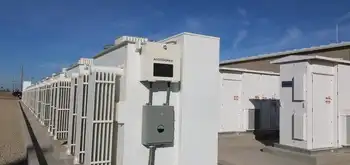
Substation Relay Protection Training

Our customized live online or in‑person group training can be delivered to your staff at your location.

  • Live Online
  • 12 hours Instructor-led
  • Group Training Available
Regular Price:
$699
Coupon Price:
$599
Reserve Your Seat Today
-- About 850 tonnes of Niagara's garbage is headed south of the border.

Public works committee members agreed to ship the trash to American Ref-Fuel in Niagara Falls, N.Y. as part of a pilot program. The so-called waste-to-energy facility burns residential garbage to produce steam which powers turbine generators to produce electricity. The electricity is sold to Niagara Mohawk Power Company. "This will provide sufficient information to see if this is actually feasible," Commissioner of Public Works Ian Neville said about the four-month project. Beginning in September, the project will investigate the feasibility of hauling the garbage over the border as a way of reducing the need for a landfill site. Specifically the project will look at difficulties crossing the border into the United States and the costs of getting the garbage there. Niagara-on-the-Lake Coun. Dave Eke applauded the initiative, saying "hopefully this could be one of our alternatives in the future." Regional Chairwoman Debbie Zimmerman agreed, saying "the last thing we want to do is continue to landfill."

Related News
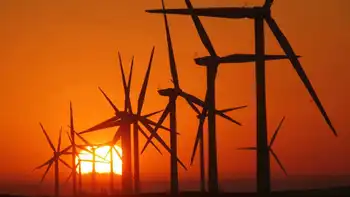
Rooftop Solar Grids

Rooftop solar grids transform urban infrastructure with distributed generation, photovoltaic panels, smart grid integration and energy storage, cutting greenhouse gas emissions, lowering utility costs, enabling net metering and community solar for low-carbon energy systems.


Key Points

Rooftop solar grids are PV systems on buildings that generate power, cut emissions, and enable smart grid integration.

✅ Lowers utility bills via net metering and demand offset

✅ Reduces greenhouse gases and urban air pollution

✅ Enables resiliency with storage, smart inverters, and microgrids


As urban areas expand and the climate crisis intensifies, cities are seeking innovative ways to integrate renewable energy sources into their infrastructure. One such solution gaining traction is the installation of rooftop solar grids. A recent CBC News article highlights the significant impact of these solar systems on urban environments, showcasing their benefits and the challenges they present.

Harnessing Unused Space for Sustainable Energy

Rooftop solar panels are revolutionizing how cities approach energy consumption and environmental sustainability. By utilizing the often-overlooked space on rooftops, these systems provide a practical solution for generating renewable energy in densely populated areas. The CBC article emphasizes that this approach not only makes efficient use of available space but also contributes to reducing a city's reliance on non-renewable energy sources.

The ability to generate clean energy directly from buildings helps decrease greenhouse gas emissions and, as scientists work to improve solar and wind power, promotes a shift towards a more sustainable energy model. Solar panels absorb sunlight and convert it into electricity, reducing the need for fossil fuels and lowering overall carbon footprints. This transition is crucial as cities grapple with rising temperatures and air pollution.

Economic and Environmental Advantages

The economic benefits of rooftop solar grids are considerable. For homeowners and businesses, installing solar panels can lead to substantial savings on electricity bills. The initial investment in solar technology is often balanced by long-term energy savings and financial incentives, such as tax credits or rebates, and evidence that solar is cheaper than grid electricity in Chinese cities further illustrates the trend toward affordability. According to the CBC report, these financial benefits make solar energy a compelling option for many urban residents and enterprises.

Environmentally, the advantages are equally compelling. Solar energy is a renewable and clean resource, and increasing the number of rooftop solar installations can play a pivotal role in meeting local and national renewable energy targets, as illustrated when New York met its solar goals early in a recent milestone. The reduction in greenhouse gas emissions from fossil fuel energy sources directly contributes to mitigating climate change and improving air quality.

Challenges in Widespread Adoption

Despite the clear benefits, the adoption of rooftop solar grids is not without its challenges. One of the primary hurdles is the upfront cost of installation. While prices for solar panels have decreased over time, the initial financial outlay remains a barrier for some property owners, and regions like Alberta have faced solar expansion challenges that highlight these constraints. Additionally, the effectiveness of solar panels can vary based on factors such as geographic location, roof orientation, and local weather patterns.

The CBC article also highlights the importance of supportive infrastructure and policies for the success of rooftop solar grids. Cities need to invest in modernizing their energy grids to accommodate the influx of solar-generated electricity, and, in the U.S., record clean energy purchases by Southeast cities have signaled growing institutional demand. Furthermore, policies and regulations must support solar adoption, including issues related to net metering, which allows solar panel owners to sell excess energy back to the grid.

Innovative Solutions and Future Prospects

The future of rooftop solar grids looks promising, thanks to ongoing technological advancements. Innovations in photovoltaic cells and energy storage solutions are expected to enhance the efficiency and affordability of solar systems. The development of smart grid technology and advanced energy management systems, including peer-to-peer energy sharing, will also play a critical role in integrating solar power into urban infrastructures.

The CBC report also mentions the rise of community solar projects as a significant development. These projects allow multiple households or businesses to share a single solar installation, making solar energy more accessible to those who may not have suitable rooftops for solar panels. This model expands the reach of solar technology and fosters greater community engagement in renewable energy initiatives.

Conclusion

Rooftop solar grids are emerging as a key element in the transition to sustainable urban energy systems. By leveraging unused rooftop space, cities can harness clean, renewable energy, reduce greenhouse gas emissions, and, as developers learn that more energy sources make better projects, achieve long-term economic savings. While there are challenges to overcome, such as initial costs and regulatory hurdles, the benefits of rooftop solar grids make them a crucial component of the future energy landscape. As technology advances and policies evolve, rooftop solar grids will play an increasingly vital role in shaping greener, more resilient urban environments.


Related News

View more

New England Is Burning the Most Oil for Electricity Since 2018

New England oil-fired generation surges as ISO New England manages a cold snap, dual-fuel switching, and a natural gas price spike, highlighting winter reliability challenges, LNG and pipeline limits, and rising CO2 emissions.


Key Points

Reliance on oil-burning power plants during winter demand spikes when natural gas is costly or constrained.

✅ Driven by dual-fuel switching amid high natural gas prices

✅ ISO-NE winter reliability rules encourage oil stockpiles

✅ Raises CO2 emissions despite coal retirements and renewables growth


New England is relying on oil-fired generators for the most electricity since 2018 as a frigid blast boosts demand for power and natural gas prices soar across markets. 

Oil generators were producing more than 4,200 megawatts early Thursday, accounting for about a quarter of the grid’s power supply, according to ISO New England. That was the most since Jan. 6, 2018, when oil plants produced as much as 6.4 gigawatts, or 32% of the grid’s output, said Wood Mackenzie analyst Margaret Cashman.  

Oil is typically used only when demand spikes, because of higher costs and emissions concerns. Consumption has been consistently high over the past three weeks as some generators switch from gas, which has surged in price in recent months. New England generators are producing power from oil at an average rate of almost 1.8 gigawatts so far this month, the highest for January in at least five years. 

Oil’s share declined to 16% Friday morning ahead of an expected snowstorm, which was “a surprise,” Cashman said. 

“It makes me wonder if some of those generators are aiming to reserve their fuel for this weekend,” she said.

During the recent cold snap, more than a tenth of the electricity generated in New England has been produced by power plants that haven’t happened for at least 15 years.

Burning oil for electricity was standard practice throughout the region for decades. It was once our most common fuel for power and as recently as 2000, fully 19% of the six-state region’s electricity came from burning oil, according to ISO-New England, more than any other source except nuclear power at the time.

Since then, however, natural gas has gotten so cheap that most oil-fired plants have been shut or converted to burn gas, to the point that just 1% of New England’s electricity came from oil in 2018, whereas about half our power came from natural gas generation regionally during that period. This is good because natural gas produces less pollution, both particulates and greenhouse gasses, although exactly how much less is a matter of debate.

But as you probably know, there’s a problem: Natural gas is also used for heating, which gets first dibs. Prolonged cold snaps require so much gas to keep us warm, a challenge echoed in Ontario’s electricity system as supply tightens, that there might not be enough for power plants – at least, not at prices they’re willing to pay.

After we came close to rolling brownouts during the polar vortex in the 2017-18 winter because gas-fired power plants cut back so much, ISO-NE, which has oversight of the power grid, established “winter reliability” rules. The most important change was to pay power plants to become dual-fuel, meaning they can switch quickly between natural gas and oil, and to stockpile oil for winter cold snaps.

We’re seeing that practice in action right now, as many dual-fuel plants have switched away from gas to oil, just as was intended.

That switch is part of the reason EPA says the region’s carbon emissions have gone up in the pandemic, from 22 million tons of CO2 in 2019 to 24 million tons in 2021. That reverses a long trend caused partly by closing of coal plants and partly by growing solar and offshore wind capacity: New England power generation produced 36 million tons of CO2 a decade ago.

So if we admit that a return to oil burning is bad, and it is, what can we do in future winters? There are many possibilities, including tapping more clean imports such as Canadian hydropower to diversify supply.

The most obvious solution is to import more natural gas, especially from fracked fields in New York state and Pennsylvania. But efforts to build pipelines to do that have been shot down a couple of times and seem unlikely to go forward and importing more gas via ocean tanker in the form of liquefied natural gas (LNG) is also an option, but hits limits in terms of port facilities.

Aside from NIMBY concerns, the problem with building pipelines or ports to import more gas is that pipelines and ports are very expensive. Once they’re built they create a financial incentive to keep using natural gas for decades to justify the expense, similar to moves such as Ontario’s new gas plants that lock in generation. That makes it much harder for New England to decarbonize and potentially leaves ratepayers on the hook for a boatload of stranded costs.


Related News

View more

Changes Coming For Ontario Electricity Consumers

Ontario Electricity Billing Changes include OEB-backed shifts to time-of-use or tiered pricing, landlord blanket elections, LDC implementation guidance, a customer choice webpage with a bill calculator, and ENDM rate mitigation messaging.


Key Points

They are OEB measures enabling TOU-to-tiered switching, landlord elections, LDC guidance, and ENDM bill messages.

✅ Option to switch from TOU to tiered pricing

✅ Landlord blanket elections on tenant turnover

✅ ENDM-led bill info and rate mitigation messaging


By David Stevens, Aird & Berlis LLP

Electricity consumers in Ontario may see a couple of electricity rate changes in their bills in the coming months.

First, as we have already discussed, as of November 1, 2020, regulated price plan customers will have the option to switch to "tiered pricing" instead of time-of-use (TOU) pricing structures. Those who switch to "tiered pricing" will see changes in their electricity bills.

The Ontario Energy Board (OEB) has now issued final amendments to the Standard Supply Service Code to support the customer election process necessary to switch from TOU pricing to tiered pricing. The main change from what was already published in previous OEB notices is that landlords will be permitted to make a "blanket election" between TOU pricing and tiered pricing that will apply each time a tenant's account reverts back to the landlord on turnover of the rental unit. In its most recent notice, the OEB acknowledges that implementing the new customer billing option as of Nov. 1 (less than two months from now) will be challenging and directs Local Distribution Companies (LDCs) who cannot meet this date to be immediately in touch with the OEB. Finally, the OEB indicates that there will be a dedicated "customer choice webpage for consumers, including a bill calculator" in place by early October.

Second, as of January 1, 2021 low-volume consumers will see additional messaging on their bills to inform them of available rate mitigation programs.

A recent proposal posted on Ontario's Regulatory Registry indicates that the Ministry of Energy, Northern Development and Mines (ENDM) proposes that LDCs and Utility Sub-Meter Providers will be required to include a new on-bill message for low-volume consumers that "will direct customers to ENDM's new web page for further information about how the province provides financial support to electricity consumers." This new requirement is planned to be in place as of January 1, 2021. In conjunction with this requirement, the ENDM plans to launch a new web page that will provide "up-to-date information about electricity bills," including information about rate mitigation programs available to consumers. Parties are invited to submit comments on the ENDM proposal by October 5, 2020.


Related News

View more

Hurricane Michael by the numbers: 32 dead, 1.6 million homes, businesses without power

Hurricane Michael Statistics track catastrophic wind speed, storm surge, rainfall totals, power outages, evacuations, and fatalities across Florida and the Southeast, detailing Category 4 intensity, Saffir-Simpson scale impacts, and emergency response resources.


Key Points

Hurricane Michael statistics detail wind speed, storm surge, rainfall, outages, and deaths from Category 4 landfall.

✅ 155 mph landfall winds; 14 ft storm surge; 12 in rainfall max

✅ 1.6M without power; 30,000 restoring crews; 6 states emergency

✅ 325k ordered evacuations; 32 deaths; FEMA and Guard deployed


Hurricane Michael, a historic Category 4 storm, struck the Florida Panhandle early Wednesday afternoon, unleashing heavy rain, high winds and a devastating storm surge.


Here is a look at the dangerous storm by the numbers:

155 mph: Wind speed -- nearly the highest possible for a Category 4 hurricane -- with which Michael made landfall near Mexico Beach and Panama City. A hurricane with 157 mph or higher is a Category 5, the strongest on the Saffir-Simpson hurricane wind scale.

129 mph: Peak wind gust reported Wednesday at Tyndall Air Force Base, which is about 12 miles southeast of Panama City, Florida.

32: Number of storm-related deaths attributed to Michael thus far, including an 11-year-old girl who local officials say was killed when part of a metal carport crashed into her family's mobile home in Lake Seminole, Georgia, and a 38-year-old man who was killed when a tree fell onto his moving car in Statesville, North Carolina.


Waves take over a house as Hurricane Michael comes ashore in Alligator Point, Fla., Oct. 10, 2018.

14 feet: Maximum height forecast for the storm surge when Michael's strong winds pushed the ocean water onto land. A storm surge just over 9 feet was reported Wednesday in Apalachicola, Florida.

12 inches: Isolated maximum amount of rain that Michael was expected to dump across the Florida Panhandle and the state's Big Bend region, as well as in southeast Alabama and parts of southwest and central Georgia.

9 inches: Maximum amount of rain that Michael could bring to isolated areas from Virginia to North Carolina.

1.6 million: Number of homes and businesses without power in Florida, Alabama, Georgia, South Carolina, North Carolina and Virginia as of Friday morning, a reminder that extended outages can persist after major disasters.

30,000: Number of workers mobilized from across the country to help restore power, underscoring the risks of field repairs such as line crew injuries during recovery.

6: Number of states that had emergency declarations in anticipation of Michael: Florida, Alabama, Georgia, South Carolina, North Carolina and Virginia.

325,000: Estimated number of people in the storm's path who were told to evacuate by local authorities.

6,000: Approximate number of people who stayed in the roughly 80 shelters across Florida, Alabama, Georgia, South Carolina and North Carolina on Wednesday night, while those sheltering at home were urged to avoid overheated power strips that can spark fires.

3,000: Number of personnel the Federal Emergency Management Agency deployed ahead of landfall, while utilities prepared on-site staffing plans to maintain operations during widespread disruptions.

35: Number of counties in Florida, of the state's 67, where Gov. Rick Scott declared a state of emergency prior to landfall, and grid reliability warnings often underscore systemic risks during national emergencies.

3,500: Number of Florida National Guard troops activated for pre-landfall coordination and planning, with an emphasis on high water and search-and-rescue operations.

600: Number of Florida state troopers assigned to the Panhandle and Big Bend region to assist with response and recovery efforts, including public reminders about downed line safety in affected communities.

500: Number of disaster relief workers that the American Red Cross was sending to affected areas in the Sunshine State.

200: Approximate number of patients being evacuated from at least two hospitals in Florida due to damage from the hurricane, highlighting how critical facilities depend on staff who have raised workforce safety concerns during other crises. Bay Medical Center Sacred Heart in Panama City said in a statement Thursday that its facility was damaged during the storm and thus is transferring more than 200 patients, including 39 who are critically ill, to regional hospitals. Gulf Coast Regional Medical Center, also in Panama City, announced in a statement Thursday that it's evacuating its roughly approximately patients, starting with the most critically ill, "because of the infrastructure challenges in our community."


Related News

View more

Neo-Nazi, woman accused of plotting 'hate-fueled attacks' on power stations, federal complaint says

Baltimore Substation Attack Plot highlights alleged neo-Nazi plans targeting electrical substations and the power grid, as FBI and DHS warn of domestic extremism threats to critical infrastructure, with arrests in Maryland disrupting potential sniper attacks.


Key Points

An alleged extremist plot to disable Baltimore's power grid by shooting substations, thwarted by federal arrests.

✅ Two suspects charged in Maryland conspiracy

✅ Targets included five substations around Baltimore

✅ FBI cites domestic extremism threat to infrastructure


A neo-Nazi in Florida and a Maryland woman conspired to attack several electrical substations in the Baltimore area, federal officials say.

Sarah Beth Clendaniel and Brandon Clint Russell were arrested and charged in a conspiracy to disable the power grid by shooting out substations via "sniper attacks," according to a criminal complaint from the U.S. Attorney's Office for the District of Maryland.

Clendaniel allegedly said she wanted to "completely destroy this whole city" and was planning to target five substations situated in a "ring" around Baltimore, the complaint said. Russell is part of a violent extremist group that has cells in multiple states, and he previously planned to attack critical infrastructure in Florida, the complaint said.

"This planned attack threatened lives and would have left thousands of Marylanders in the cold and dark," Maryland U.S. Attorney Erek Barron said in a press release. "We are united and committed to using every legal means necessary to disrupt violence, including hate-fueled attacks."

The news comes as concerns grow about an increase in targeted substation attacks on U.S. substations tied to domestic extremism.


What to know about substation attacks

Federal data shows vandalism and suspicious activities at electrical facilities soared nationwide last year, and cyber actors have accessed utilities' control rooms as well.

At the end of the year, attacks or potential attacks were reported on more than a dozen substations and one power plant across five states, and Symantec documented Russia-linked Dragonfly activity targeting the energy sector earlier. Several involved firearms.

In December, targeted attacks on substations in North Carolina left tens of thousands without power amid freezing temperatures, spurring renewed focus on protecting the U.S. power grid among officials. The FBI is investigating.

Vandalism at facilities in Washington left more than 21,000 without electricity on Christmas Day, even as hackers breached power-plant systems in other states. Two men were arrested, and one told police he planned to disrupt power to commit a burglary.

The Department of Homeland Security last year said domestic extremists had been developing "credible, specific plans" since at least 2020 and would continue to "encourage physical attacks against electrical infrastructure," and the U.S. government has condemned Russia for power grid hacking as well.

Last February, three neo-Nazis pleaded guilty to federal crimes related to a scheme to attack the grid with rifles, with each targeting a substation in a different region of the U.S., even as reports that Russians hacked into US electric utilities drew widespread attention.


Related News

View more

Trump's Vision of U.S. Energy Dominance Faces Real-World Constraints

U.S. Energy Dominance envisions deregulation, oil and gas growth, LNG exports, pipelines, and geopolitical leverage, while facing OPEC pricing power, infrastructure bottlenecks, climate policy pressures, and accelerating renewables in global markets.


Key Points

U.S. policy to grow fossil fuel output and exports via deregulation, bolstering energy security, geopolitical influence.

✅ Deregulation to expand drilling, pipelines, and export capacity

✅ Exposed to OPEC pricing, global shocks, and cost competitiveness

✅ Faces infrastructure, ESG finance, and renewables transition risks


Former President Donald Trump has consistently advocated for “energy dominance” as a cornerstone of his energy policy. In his vision, the United States would leverage its abundant natural resources to achieve energy self-sufficiency, flood global markets with cheap energy, and undercut competitors like Russia and OPEC nations. However, while the rhetoric resonates with many Americans, particularly those in energy-producing states, the pursuit of energy dominance faces significant real-world challenges that could limit its feasibility and impact.

The Energy Dominance Vision

Trump’s energy dominance strategy revolves around deregulation, increased domestic production of oil and gas, and the rollback of climate-oriented restrictions. During his presidency, he emphasized opening federal lands to drilling, accelerating the approval of pipelines, and, through an executive order, boosting uranium and nuclear energy initiatives, as well as withdrawing from international agreements like the Paris Climate Accord. The goal was not only to meet domestic energy demands but also to establish the U.S. as a major exporter of fossil fuels, thereby reducing reliance on foreign energy sources.

This approach gained traction during Trump’s first term, with the U.S. achieving record levels of oil and natural gas production. Energy exports surged, making the U.S. a net energy exporter for the first time in decades. Yet, critics argue that this policy prioritizes short-term economic gains over long-term sustainability, while supporters believe it provides a roadmap for energy security and geopolitical leverage.

Market Realities

The energy market is complex, influenced by factors beyond the control of any single administration, with energy crisis impacts often cascading across sectors. While the U.S. has significant reserves of oil and gas, the global market sets prices. Even if the U.S. ramps up production, it cannot insulate itself entirely from price shocks caused by geopolitical instability, OPEC production cuts, or natural disasters.

For instance, despite record production in the late 2010s, American consumers faced volatile gasoline prices during an energy crisis driven by $5 gas and external factors like tensions in the Middle East and fluctuating global demand. Additionally, the cost of production in the U.S. is often higher than in countries with more easily accessible reserves, such as Saudi Arabia. This limits the competitive advantage of U.S. energy producers in global markets.

Infrastructure and Environmental Concerns

A major obstacle to achieving energy dominance is infrastructure. Expanding oil and gas production requires investments in pipelines, export terminals, and refineries. However, these projects often face delays due to regulatory hurdles, legal challenges, and public opposition. High-profile pipeline projects like Keystone XL and Dakota Access have become battlegrounds between industry proponents and environmental activists, and cross-border dynamics such as support for Canadian energy projects amid tariff threats further complicate permitting, highlighting the difficulty of reconciling energy expansion with environmental and community concerns.

Moreover, the transition to cleaner energy sources is accelerating globally, with many countries committing to net-zero emissions targets. This trend could reduce the demand for fossil fuels in the long run, potentially leaving U.S. producers with stranded assets if global markets shift more quickly than anticipated.

Geopolitical Implications

Trump’s energy dominance strategy also hinges on the belief that U.S. energy exports can weaken adversaries like Russia and Iran. While increased American exports of liquefied natural gas (LNG) to Europe have reduced the continent’s reliance on Russian gas, achieving total energy independence for allies is a monumental task. Europe’s energy infrastructure, designed for pipeline imports from Russia, cannot be overhauled overnight to accommodate LNG shipments.

Additionally, the influence of major producers like Saudi Arabia and the OPEC+ alliance remains significant, even as shifts in U.S. policy affect neighbors; in Canada, some viewed Biden as better for the energy sector than alternatives. These countries can adjust production levels to influence prices, sometimes undercutting U.S. efforts to expand its market share.

The Renewable Energy Challenge

The growing focus on renewable energy adds another layer of complexity. Solar, wind, and battery storage technologies are becoming increasingly cost-competitive with fossil fuels. Many U.S. states and private companies are investing heavily in clean energy to align with consumer preferences and global trends, amid arguments that stepping away from fossil fuels can bolster national security. This shift could dampen the domestic demand for oil and gas, challenging the long-term viability of Trump’s energy dominance agenda.

Moreover, international pressure to address climate change could limit the expansion of fossil fuel infrastructure. Financial institutions and investors are increasingly reluctant to fund projects perceived as environmentally harmful, further constraining growth in the sector.

While Trump’s call for U.S. energy dominance taps into a desire for economic growth and energy security, it faces numerous challenges. Global market dynamics, infrastructure bottlenecks, environmental concerns, and the transition to renewable energy all pose significant barriers to achieving the ambitious vision.

For the U.S. to navigate these challenges effectively, a balanced approach that incorporates both traditional energy sources and investments in clean energy is likely needed. Striking this balance will require careful policymaking that considers not just immediate economic gains but also long-term sustainability and global competitiveness.


Related News

View more

Sign Up for Electricity Forum’s Newsletter

Stay informed with our FREE Newsletter — get the latest news, breakthrough technologies, and expert insights, delivered straight to your inbox.

Electricity Today T&D Magazine Subscribe for FREE

Stay informed with the latest T&D policies and technologies.
  • Timely insights from industry experts
  • Practical solutions T&D engineers
  • Free access to every issue

Download the 2025 Electrical Training Catalog

Explore 50+ live, expert-led electrical training courses –

  • Interactive
  • Flexible
  • CEU-cerified