CSA Z462 Arc Flash Training - Electrical Safety Compliance
Our customized live online or in‑person group training can be delivered to your staff at your location.

- Live Online
- 6 hours Instructor-led
- Group Training Available
Regular Price:
$249
Coupon Price:
$199
China says North Korea has agreed to rejoin six-country nuclear disarmament talks. The surprise diplomatic breakthrough comes just three weeks after North Korea conducted its first known atomic test explosion.
The Chinese Foreign Ministry says North Korea agreed to return to the six-country negotiations after a day of unpublicized talks in Beijing involving China, the United States and the North.
No formal date for the resuming the talks has been set. China says only that the talks will be held "at the earliest convenient time."
The agreement is one of the first signs of easing tensions since North Korea conducted the underground detonation on Oct. 9, defying warnings from the United States and Japan as well as its staunchest ally, China.
If the six-party talks resume, it would mark a diplomatic victory for China.
Beijing argued in the wake of the test against punishing North Korea too harshly, saying it wanted to leave open a path for diplomacy.
South Korea welcomed the announcement.
"The government hopes that the six-party talks will resume at an early date as agreed and that an agreement will be reached on how to implement" a prior accord under which Pyongyang pledged to abandon its nuclear program, South Korean Foreign Ministry spokesman Choo Kyu-ho said.
Seoul has been trying to strike a delicate balance in punishing the North for its nuclear test; seeking to avoid aggravating its volatile neighbour while imposing sanctions according to an unanimous UN Security Council resolution.
The UN resolution calls for a ban on the sale of major arms to Pyongyang and inspection of cargo entering and leaving the country. It also calls for the freezing of assets of businesses supplying North Korea's nuclear and ballistic weapons programs, as well as restrictions on sales of luxury goods and travel bans on North Korean officials.
The six-country arms talks were last held in November 2005, where no progress was made on implementing the September 2005 agreement where the North pledged to abandon its nuclear program in exchange for security guarantees and aid.
Just after that agreement, the North had demanded a nuclear reactor for power — a request that was quickly rejected by the other sides at the talks.
However, the North then argued that it wouldn't return to the negotiations until the U.S. desisted from a campaign to sever it from the international financial system for Pyongyang's alleged complicity in counterfeiting and money laundering to sell weapons of mass destruction. The North viewed those measures as proof of Washington's "hostile" policy against it and thinly veiled desire for regime change.
The U.S. refused and said the issue was unrelated. To try and press its case, the North launched a series of missile tests in July — including a long-range model believed capable of reaching parts of the continental U.S.
A UN committee has been determining how to implement the sanctions over the atomic test, measures banning the North's weapons trade.
Washington has been seeking to gather support for the sanctions, and getting the North's top two trading partners — China and South Korea — to pressure the regime.
North Korea is believed to have enough enriched material to make about a half-dozen bombs, but estimates vary due to limited intelligence about its nuclear program.
The apparent North Korean agreement came amid a day of tough talks from Pyongyang recently.
North Korea said the United States had been "scared" by the nuclear test and had conducted some 200 spy flights over the communist country during October.
"The... aerial espionage underscores the need for the army and the people of the (North Korea) to bolster the war deterrent for self-defence in every way to foil the U.S. imperialists' moves for a war of aggression," the North's official Korean Central News Agency said.
North Korea also warned South Korea against participating in a U.S.-led international drive to stop and search ships carrying weapons of mass destruction, saying involvement would bring about unspecified "catastrophic consequences."
The warning released by Pyongyang's official news agency came as South Korea is considering whether to fully participate in the U.S.-led Proliferation Security Initiative aimed at interdicting shipments of weapons of mass destruction and other suspected cargo.
Seoul has been reluctant to take full part in the initiative out of concern it may anger North Korea and complicate efforts to resolve the international standoff.
Instead, it has sent observers to drills and attended briefings.
Related News

Bill Gates’ Nuclear Startup Unveils Mini-Reactor Design Including Molten Salt Energy Storage
Natrium small modular reactor pairs a sodium-cooled fast reactor with molten salt storage to deliver…
View more

Energy chief says electricity would continue uninterrupted if coal phased out within 30 years
Australia Energy Policy Debate highlights IPCC warnings, Paris Agreement goals, coal phase-out, emissions reduction, renewables,…
View more

Only one in 10 utility firms prioritise renewable electricity – global study
Utility Renewable Investment Gap highlights Oxford study in Nature Energy: most electric utilities favor fossil…
View more
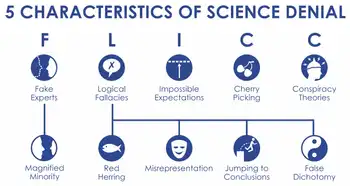
$1 billion per year is being spent to support climate change denial
Climate Change Consensus and Disinformation highlights the 97% peer-reviewed agreement on human-caused warming, IPCC warnings,…
View more

Canadian Gov't and PEI invest in new transmission line to support wind energy production
Skinners Pond Transmission Line expands PEI's renewable energy grid, enabling wind power integration, grid reliability,…
View more
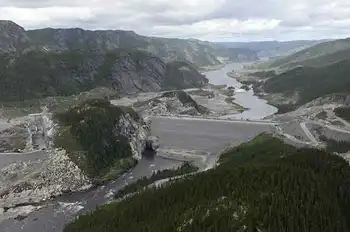
Quebec premier inaugurates La Romaine hydroelectric complex
La Romaine Hydroelectric Complex anchors Quebec's hydropower expansion, showcasing Hydro-Québec ingenuity, clean energy, electrification, and…
View more
Sign Up for Electricity Forum’s Newsletter
Stay informed with our FREE Newsletter — get the latest news, breakthrough technologies, and expert insights, delivered straight to your inbox.
Electricity Today T&D Magazine Subscribe for FREE

Stay informed with the latest T&D policies and technologies.
- Timely insights from industry experts
- Practical solutions T&D engineers
- Free access to every issue

