NS Power Employees Adopt Safety Plan

By Nova Scotia Power


NFPA 70e Training - Arc Flash

Our customized live online or in‑person group training can be delivered to your staff at your location.
  • Live Online
  • 6 hours Instructor-led
  • Group Training Available
Regular Price:
$199
Coupon Price:
$149
Reserve Your Seat Today
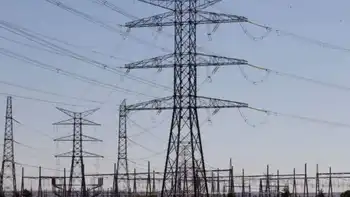
Employees with Nova Scotia Power will soon have a strengthened risk assessment process to guide them when working around power lines. A team of Nova Scotia Power employees, with representation from across the province, has been working for several months on improving the process of recognizing and minimizing workplace hazards, known as risk assessment. The employees are introducing a new job safety plan that considers work site complexity, looks beyond immediate hazards, and provides workers with a step-by-step planning process.

"We have a good risk assessment process in place. We have good standard work procedures. We have the tools. Now, we're taking it to the next level. We want to ingrain values and beliefs among ourselves and our co-workers that will help us see the big picture and foster an even safer working environment," said Dan Muldoon, Director of Regional Operations.

The employee team was motivated directly by the death of lineman Mike Murrin, and a subsequent internal investigation. Mr. Muldoon noted that the incident caused Nova Scotia to scrutinize the risk assessment process. "It confirmed that we were on the right track with risk assessment and that what we needed to do was strengthen the process."

Mr. Muldoon noted that employees at Nova Scotia Power constantly look for ways to improve safety. "We're taking action to improve safety. That's part of our goal to reach safety excellence. Safety is a never ending journey of commitment and improvement," said Mr. Muldoon.

Nova Scotia Power Inc. is the largest subsidiary of Emera, a diversified regional energy company, and the principal supplier of electricity in Nova Scotia with 440,000 residential, commercial and industrial customers. The NSPI system is province-wide and provides over 95% of the generation, transmission, and distribution of electric power throughout the province.

Related News

Warren Buffett-linked company to build $200M wind power farm in Alberta

Rattlesnake Ridge Wind Project delivers 117.6 MW in southeast Alberta for BHE Canada, a Berkshire Hathaway Energy subsidiary, using 28 turbines near Medicine Hat under a long-term PPA, supplying renewable power to 79,000 homes.


Key Points

A 117.6 MW Alberta wind farm by BHE Canada supplying 79,000 homes via 28 turbines and a long-term PPA.

✅ 28 turbines near Medicine Hat, 117.6 MW capacity

✅ Long-term PPA with a major Canadian corporate buyer

✅ Developed with RES; no subsidies; competitive pricing


A company linked to U.S. investor Warren Buffett says it will break ground on a $200-million, 117.6-megawatt wind farm in southeastern Alberta next year.

In a release, Calgary-based BHE Canada, a subsidiary of Buffett's Berkshire Hathaway Energy, says its Rattlesnake Ridge Wind project will be located southwest of Medicine Hat and will produce enough energy to supply the equivalent of 79,000 homes.

"We felt that it was time to make an investment here in Alberta," said Bill Christensen, vice-president of corporate development for BHE Canada, in an interview with the Calgary Eyeopener.

"The structure of the markets here in Alberta, including frameworks for selling renewable energy, make it so that we can invest, and do it at a profit that works for us, and at a price that works for the off-taker," Christensen explained.

Berkshire Hathaway Energy also owns AltaLink, the regulated transmission company that supplies electricity to more than 85 per cent of the Alberta population.

BHE Canada says an unnamed large Canadian corporate partner has signed a long-term power purchase agreement, similar to RBC's solar purchase arrangements, for the majority of the energy output generated by the 28 turbines at Rattlesnake Ridge.

"If you look at just the raw power price that power is going for in Alberta right now, it's averaged around $55 a megawatt hour, or 5.5 cents a kilowatt hour. And we're selling the wind power to this customer at substantially less than that, reflecting wind power's competitiveness in the market, and there's been no subsidies," Christensen said.


Positive energy outlook

Christensen said he sees a good future for Alberta's renewable energy industry, not just in wind but also in solar power growth, particularly in the southeast of the province.

But he says BHE Canada is interested in making investments in traditional energy in Alberta, too, as the province is a powerhouse for both green energy and fossil fuels overall.

"It's not a choice of one or the other. I think there is still opportunity to make investments in oil and gas," he said.

"We're really excited about having this project and hope to be able to make other investments here in Alberta to help support the economy here, amid a broader renewable energy surge across the province."

The project is being developed by U.K.-based Renewable Energy Systems, part of a trend where more energy sources make better projects for developers, which is building two other Alberta wind projects totalling 134.6 MW this year and has 750 MW of renewable energy installed or currently under construction in Canada.

BHE Canada and RES are also looking for power purchase partners for the proposed Forty Mile Wind Farm in southeastern Alberta. They say that with generation capacity of 398.5 MW, it could end up being the largest wind power project in Canada.


Related News

View more

Ontario Ministry of Energy proposes growing hydrogen economy through reduced electricity rates

Ontario Hydrogen Strategy accelerates green hydrogen via electrolysis, reduced electricity rates, and IESO pilots, leveraging ICI, interruptible rates, and surplus power to grow clean tech, low-carbon energy, and export markets across Ontario.


Key Points

A provincial plan to scale green hydrogen with electricity costs, IESO pilots, and surplus power to boost tech.

✅ Amends ICI to admit hydrogen producers from 50 kW demand

✅ Enables co-located electrolysers to use surplus curtailed power

✅ Offers interruptible rates via IESO pilot for flexible loads


The Ontario Ministry of Energy is seeking input on accelerating Ontario’s hydrogen economy. The province has been promoting growth in the clean tech sector, including low-carbon energy production and the Hydrogen Innovation Fund, as an avenue for post-COVID-19 economic recovery. Hydrogen produced through electrolysis (or “green hydrogen”) has been central to these efforts, complimenting both federal and provincial initiatives to create vibrant domestic and export markets for the energy as a principal alternative to conventional fossil fuels.

On April 14, 2022, the Ministry filed a proposal (the Proposal) on the Environmental Registry of Ontario (ERO) to gather input from stakeholders, aligning with the province’s industrial electricity pricing consultation underway. As part of Ontario’s Hydrogen Strategy, the Ministry is considering several options that would provide reduced electricity rates for green hydrogen producers to make production more economically competitive with other energies. To date, the relatively high production cost of green hydrogen has been a challenge facing its adoption, both domestically and internationally.

The Proposal features three options:

  • Amending the rules for the Industrial Conservation Initiative (ICI) applicable to hydrogen producers;
  • Enabling onsite hydrogen production using electricity that would otherwise be curtailed; and
  • Providing an interruptible electricity rate for hydrogen producers.

Option 1: Amending the ICI rules

Option 1 would amend the ICI rules to allow all hydrogen producers with an average monthly peak demand of 50kW to participate. Hydrogen producers’ facilities could qualify for ICI in the first year of operation with a peak demand factor determined based on a deemed consumption profile, using a method yet to be determined by the Ministry. At the end of the first year, their global adjustment (GA) charges would be reconciled based on their actual consumption pattern. As set out in our prior article, GA was introduced by the province in January 2005 to ensure reliable, sustainable and a diverse supply of power at stable and competitive prices, aligning with plans to rely on battery storage to meet rising energy demand. The Ministry’s current proposal would require hydrogen producers to place a security deposit for their facilities’ first year of operation with the Independent Electricity System Operator (IESO) or their Local Distribution Company (LDC) to ensure other consumer would not be adversely affected.

Option 2: Enable onsite hydrogen production using surplus electricity

Option 2 would allow businesses to co-locate hydrogen electrolysers at electricity generation facilities, drawing on recent electrolyzer investment trends, to make use of what would become curtailed generation. Under this option in the Proposal, the developer for the hydrogen production facility would be required to be a separate legal entity from the one that owns or operates the electricity generation facility. Based on this required level of independence, the hydrogen developer would be required to pay the electricity generator for the electricity supply.

At this stage, it is not clear whether, or how the generator would be required to share the revenue with other consumers. The next steps of the Proposal may require regulatory amendments, and/or amendments to electricity generator’s contracts, consistent with efforts enabling storage in Ontario's electricity system to integrate flexible resources.

Option 3: Interruptible electricity rates for hydrogen producers

In 2021, the Ministry posted a proposal on the ERO including an Interruptible Rate Pilot that was to be developed in conjunction with the IESO in order to address stakeholder feedback received during the 2019 Industrial Consultation specific to the challenges of identifying and responding to peak demand events while participating in the ICI. The pilot was targeted towards large electricity consumers, where participants were charged GA at a reduced rate in exchange for agreeing to reduce consumption during system or local reliability events, as identified by IESO.

Option 3 would allow for the introduction for a dedicated stream for hydrogen producers into the interruptible rate pilot, which is currently under development with the IESO. This would take into account the unique circumstances of hydrogen producers, as well as the importance of the hydrogen sector in Ontario’s Low-Carbon Hydrogen Strategy. Under the pilot, participants would be given advance notice by the IESO to reduce demand over a fixed number of hours, several times each year, and emerging vehicle-to-grid models where EV owners can sell electricity back to the grid highlight additional flexibility options. Ultimately, the pilot would support low-carbon hydrogen production by offering large electricity consumers, such as hydrogen producers, reduced electricity rates in exchange for reduces consumption during system or local reliability events.

Following this initial development work, the Ministry intends to consult with stakeholders later this year to determine design details, as well as the timing for the potential roll out of the proposed pilot.

Key takeaways

The design options are not meant to be mutually exclusive, and might be pursued by the Ministry in combination. Ultimately, Ontario is focusing on ways to reduce electricity rates in an attempt to make the province a leader in the adoption of green hydrogen, as made clear in the Ontario Hydrogen Strategy, even as an electricity supply crunch looms, underscoring the urgency. Stakeholders will want to participate in this process given its long-term implications for both the hydrogen and power sectors.


Related News

View more

Nuclear plant workers cite lack of precautions around virus

Millstone COVID-19 safety concerns center on a nuclear refueling outage in Connecticut, temporary workers, OSHA complaints, PPE shortages, and disinfecting protocols, as Dominion Energy addresses virus precautions, staffing, and cybersecurity for safe voting infrastructure.


Key Points

Employee and union claims about PPE, cleaning, and OSHA compliance during a refueling outage at the nuclear plant.

✅ 10 positive cases; 750 temporary workers during refueling outage

✅ Union cites PPE gaps, partitions, and disinfectant effectiveness

✅ Dominion Energy notes increased cleaning, communication, staffing


Workers at Connecticut's only nuclear power plant worry that managers are not taking enough precautions against the coronavirus, as some utilities weigh on-site staffing measures to maintain operations, after 750 temporary employees were brought in to help refuel one of the two active reactors.

Ten employees at the Millstone Power Station in Waterford have tested positive for the virus, and, amid a U.S. grid pandemic warning, the arrival of the temporary workers alarms some of the permanent employees, The Day newspaper reported Sunday.

"Speaking specifically for the guard force, there's a lot of frustration, there's a lot of concern, and I would say there's anger," said Millstone security officer Jim Foley.

Foley, vice president of the local chapter of the United Government Security Officers of America, noted broader labor concerns such as unpaid wages for Kentucky miners while saying security personnel have had to fight for personal protective equipment and for partitions at access points to separate staff from security.

Foley also has filed a complaint with the Occupational Safety and Health Administration saying Millstone staff are using ineffective cleaning materials and citing a lack of cleaning and sanitizing, as telework limits at the EPA drew scrutiny during the pandemic, he said.

Officials at Millstone, owned by Dominion Energy, have not heard internal criticism about the plant's virus precautions, Millstone spokesman Kenneth Holt said.

"We've actually gotten a lot of compliments from employees on the steps we've taken," he said. "We've stepped up communications with employees to let them know what's going on."

As another example of communication efforts, COVID-19 updates at Site C have been published to keep workers informed.

Millstone recently increased cleaning staff on the weekends, Holt said, and there is regular disinfecting at the plant.

Separately, utility resilience remains a concern, as extended outages for tornado survivors in Kentucky may last weeks, affecting essential services.

Responding to the complaint about ineffective cleaning materials, Holt said staff members early in the pandemic went to a Home Depot and got a bottle of disinfectant that wasn't approved by the federal government as effective against the coronavirus. An approved disinfectant was brought in the next day, he said.

The deaths of nearly 2,500 Connecticut residents have been linked to COVID-19, the disease caused by the virus. More than 29,000 state residents have tested positive. As of Sunday, hospitalizations had declined for 11 consecutive days, to over 1,480.

With more people working remotely, utilities have reported higher residential electricity use during the pandemic, affecting household bills.

For most people, the coronavirus causes mild or moderate symptoms, such as fever and cough, that clear up in two to three weeks. For some, especially older adults and people with existing health problems, it can cause more severe illness, including pneumonia, and death.

In other developments related to the coronavirus:

SAFE VOTING

Secretary of the State Denise Merrill released a plan Monday aimed at making voting safe during the Aug. 11 primary and Nov. 3 general election.

Merrill said her office is requiring all cities and towns in the state to submit plans for the two elections that include a list of cleaning and safety products to be used, a list of polling locations, staffing levels at each polling location, and the names of polling workers and moderators.

Municipalities will be eligible for grants to cover the extra costs of holding elections during a pandemic, including expenses for cleaning products and increased staffing.

Merrill also announced her office and the Connecticut National Guard will perform a high-level cybersecurity assessment of the election infrastructure of all 169 towns in the state to guard against malicious actors.

Merrill's office also will provide network upgrades to the election infrastructures of 20 towns that have had chronic problems with connecting to the elections system.


Related News

View more

Hydro wants B.C. residents to pay an extra $2 a month for electricity

BC Hydro Rate Increase proposes a 2.3% hike from April, with BCUC review, aligning below inflation and funding clean energy, electrification, and grid upgrades across British Columbia while keeping electricity prices among North America's lowest.


Key Points

A proposed 2.3% BC Hydro hike from April, under BCUC review, funds clean energy and keeps average bills below inflation.

✅ Adds about $2 per month to average residential bill

✅ Sixth straight increase below inflation since 2018

✅ Supports renewable projects and grid modernization


The British Columbia government says the province’s Crown power utility is applying for a 2.3-per-cent rate increase starting in April, with higher BC Hydro rates previously outlined, adding about $2 a month to the average residential bill.

A statement from the Energy Ministry says it’s the sixth year in a row that BC Hydro has applied for an increase below the rate of inflation, similar to a 3 per cent rise noted in a separate approval, which still trailed inflation.

It says rates are currently 15.6 per cent lower than the cumulative rate of inflation over the last seven years, starting in 2017-2018, with a provincial rate freeze among past measures, and 12.4 per cent lower than the 10-year rates plan established by the previous government in 2013.

The ministry says the “modest” rate increase application comes after consideration of a variety of options and their long-term impacts, including scenarios like a 3.75% two-year path evaluated alongside others, and the B.C. Utilities Commission is expected to decide on the plan by the end of February.

Chris O’Riley, president of BC Hydro, says the rates application would keep electricity costs in the province among the lowest in North America, even as a BC Hydro fund surplus prompted calls for changes, while supporting investments in clean energy to power vehicles, homes and businesses.

Energy Minister Josie Osborne says it’s more important than ever to keep electricity bills down, especially as Ontario hydro rates increase in a separate jurisdiction, as the cost of living rises at rates that are unsustainable for many.

“Affordable, stable BC Hydro rates are good for people, businesses and climate as we work together to power our growing economy with renewable energy instead of fossil fuels,” Osborne says in a statement issued Monday.

Earlier this year, the ministry said BC Hydro provided $315 million in cost-of-living bill credits, while in another province Manitoba Hydro scaled back an increase to ease pressure, to families and small businesses in the province, including those who receive their electricity service from FortisBC or a municipal utility.


Related News

View more

Learn how fees and usage impacts your electricity bill in new online CER tool

CER Interactive Electricity Bill Tool compares provincial electricity prices, fees, taxes, and usage. Explore household appliance costs, hydroelectric generation, and consumption trends across Canada with interactive calculators and a province-by-province breakdown.


Key Points

An online CER report with calculators comparing electricity prices, fees, and usage to explain household energy costs.

✅ Province-by-province bill, price, and consumption comparison

✅ Calculator for appliance and electronics energy costs

✅ Explains fees, taxes, regulation, and generation sources


Canadians have a new way to assess their electricity bill in a new, interactive online report released by the Canada Energy Regulator (CER).

The report titled What is in a residential electricity bill? features a province-to-province comparison of electricity bills, generation and consumption. It also explains electricity prices across the country, including how Calgary electricity prices have changed, allowing people to understand why costs vary depending on location, fees, regulation and taxes.  

Learn how fees and usage impacts your electricity bill in new online CER tool
Interactive tools allow people to calculate the cost of household appliances and electronic use for each province and territory, and to understand how Ontario rate increases may affect monthly bills. For example, an individual can use the tools to find out that leaving a TV on for 24-hours in Quebec costs $5.25 per month, while that same TV on for a whole day would cost $12.29 per month in Saskatchewan, $20.49 per month in the Northwest Territories, and $15.30 per month in Nova Scotia.

How Canadians use energy varies as much as how provinces and territories produce it, especially in regions like Nunavut where unique conditions influence costs. Millions of Canadians rely on electricity to power their household appliances, charge their electronics, and heat their homes. Provinces with abundant hydro-electric resources like Quebec, B.C., Manitoba, and Newfoundland and Labrador use electricity for home heating and tend to consume the most electricity.

By gathering data from various sources, this report is the first Canadian publication that features interactive tools to allow for a province-by-province comparison of electricity bills while highlighting different elements within an electricity bill, a helpful context as Canada faces a critical supply crunch in the years ahead.

The CER monitors energy markets and assesses Canadian energy requirements and trends, including clean electricity regulations developments that shape pricing. This report is part of a portfolio of publications on energy supply, demand and infrastructure that the CER publishes regularly as part of its ongoing market monitoring.

"No matter where you go in the country, Canadians want to know how much they pay for power and why, especially amid price spikes in Alberta this year," says lead author Colette Craig. "This innovative, interactive report really explains electricity bills to help everyone understand electricity pricing and consumption across Canada."

Quick Facts

  • Quebec ranks first in electricity consumption per capita at 21.0 MW.h, followed by Saskatchewan at 20.0 MW.h, Newfoundland and Labrador at 19.3 MW.h.
  • About 95% of Quebec's electricity is produced from hydroelectricity.
  • Provinces that use electricity for home heating tend to consume the most electricity.
  • Canada's largest consuming sector for electricity was industrial at 238 TW.h. The residential and commercial sectors consumed 168 TW.h and 126 TW.h, respectively.
  • In 2018, Canada produced 647.7 terawatt hours (TW.h) of electricity. More than half of the electricity in Canada (61%) is generated from hydro sources. The remainder is produced from a variety of sources, such as fossil fuels (natural gas and petroleum), nuclear, wind, coal, biomass, solar.
  • Canada is a net exporter of electricity. In 2019, net exports to the U.S. electricity market totaled 47.0 TW.h.
  • The total value of Canada's electricity exports was $2.5 billion Canadian dollars and the value of imports was $0.6 billion Canadian dollars, resulting in 2019 net exports of $1.9 billion.
  • All regions in Canada are reflected in this report but it does not include data that reflects the COVID-19 lockdown and its effects on residential electricity bills.


Related News

View more

Renewables surpass coal in US energy generation for first time in 130 years

Renewables Overtake Coal in the US, as solar, wind, and hydro expand grid share; EIA data show an energy transition accelerated by COVID-19, slashing emissions, displacing fossil fuels, and reshaping electricity generation and climate policy.


Key Points

It refers to the milestone where US renewable energy generation surpassed coal, marking a pivotal energy transition.

✅ EIA data show renewables topped coal consumption in 2019.

✅ Solar, wind, and hydro displaced aging, costly coal plants.

✅ COVID-19 demand drop accelerated the energy transition.


Solar, wind and other renewable sources have toppled coal in energy generation in the United States for the first time in over 130 years, with the coronavirus pandemic accelerating a decline in coal that has profound implications for the climate crisis.

Not since wood was the main source of American energy in the 19th century has a renewable resource been used more heavily than coal, but 2019 saw a historic reversal, building on wind and solar reaching 10% of U.S. generation in 2018, according to US government figures.

Coal consumption fell by 15%, down for the sixth year in a row, while renewables edged up by 1%, even as U.S. electricity use trended lower. This meant renewables surpassed coal for the first time since at least 1885, a year when Mark Twain published The Adventures of Huckleberry Finn and America’s first skyscraper was erected in Chicago.

Electricity generation from coal fell to its lowest level in 42 years in 2019, with the US Energy Information Administration (EIA) forecasting that renewables will eclipse coal as an electricity source this year, while a global eclipse by 2025 is also projected. On 21 May, the year hit its 100th day in which renewables have been used more heavily than coal.

“Coal is on the way out, we are seeing the end of coal,” said Dennis Wamsted, analyst at the Institute for Energy Economics and Financial Analysis. “We aren’t going to see a big resurgence in coal generation, the trend is pretty clear.”

The ongoing collapse of coal would have been nearly unthinkable a decade ago, when the fuel source accounted for nearly half of America’s generated electricity, even as a brief uptick in 2021 was anticipated. That proportion may fall to under 20% this year, with analysts predicting a further halving within the coming decade.

A rapid slump since then has not been reversed despite the efforts of the Trump administration, which has dismantled a key Barack Obama-era climate rule to reduce emissions from coal plants and eased requirements that prevent coal operations discharging mercury into the atmosphere and waste into streams.

Coal releases more planet-warming carbon dioxide than any other energy source, with scientists warning its use must be rapidly phased out to achieve net-zero emissions globally by 2050 and avoid the worst ravages of the climate crisis.

Countries including the UK and Germany are in the process of winding down their coal sectors, and in Europe renewables are increasingly crowding out gas as well, although in the US the industry still enjoys strong political support from Trump.

“It’s a big moment for the market to see renewables overtake coal,” said Ben Nelson, lead coal analyst at Moody’s. “The magnitude of intervention to aid coal has not been sufficient to fundamentally change its trajectory, which is sharply downwards.”

Nelson said he expects coal production to plummet by a quarter this year but stressed that declaring the demise of the industry is “a very tough statement to make” due to ongoing exports of coal and its use in steel-making. There are also rural communities with power purchase agreements with coal plants, meaning these contracts would have to end before coal use was halted.

The coal sector has been beset by a barrage of problems, predominantly from cheap, abundant gas that has displaced it as a go-to energy source. The Covid-19 outbreak has exacerbated this trend, even as global power demand has surged above pre-pandemic levels. With plunging electricity demand following the shutting of factories, offices and retailers, utilities have plenty of spare energy to choose from and coal is routinely the last to be picked because it is more expensive to run than gas, solar, wind or nuclear.

Many US coal plants are ageing and costly to operate, forcing hundreds of closures over the past decade. Just this year, power companies have announced plans to shutter 13 coal plants, including the large Edgewater facility outside Sheboygan, Wisconsin, the Coal Creek Station plant in North Dakota and the Four Corners generating station in New Mexico – one of America’s largest emitters of carbon dioxide.

The last coal facility left in New York state closed earlier this year.

The additional pressure of the pandemic “will likely shutter the US coal industry for good”, said Yuan-Sheng Yu, senior analyst at Lux Research. “It is becoming clear that Covid-19 will lead to a shake-up of the energy landscape and catalyze the energy transition, with investors eyeing new energy sector plays as we emerge from the pandemic.”

Climate campaigners have cheered the decline of coal but in the US the fuel is largely being replaced by gas, which burns more cleanly than coal but still emits a sizable amount of carbon dioxide and methane, a powerful greenhouse gas, in its production, whereas in the EU wind and solar overtook gas last year.

Renewables accounted for 11% of total US energy consumption last year – a share that will have to radically expand if dangerous climate change is to be avoided. Petroleum made up 37% of the total, followed by gas at 32%. Renewables marginally edged out coal, while nuclear stood at 8%.

“Getting past coal is a big first hurdle but the next round will be the gas industry,” said Wamsted. “There are emissions from gas plants and they are significant. It’s certainly not over.”


Related News

View more

Sign Up for Electricity Forum’s Newsletter

Stay informed with our FREE Newsletter — get the latest news, breakthrough technologies, and expert insights, delivered straight to your inbox.

Electricity Today T&D Magazine Subscribe for FREE

Stay informed with the latest T&D policies and technologies.
  • Timely insights from industry experts
  • Practical solutions T&D engineers
  • Free access to every issue

Download the 2025 Electrical Training Catalog

Explore 50+ live, expert-led electrical training courses –

  • Interactive
  • Flexible
  • CEU-cerified