OEA Questions Ontario Budget

By


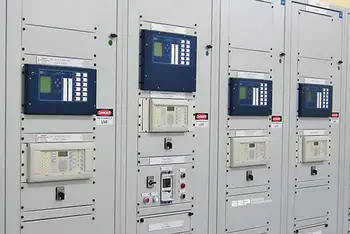
Substation Relay Protection Training

Our customized live online or in‑person group training can be delivered to your staff at your location.
  • Live Online
  • 12 hours Instructor-led
  • Group Training Available
Regular Price:
$699
Coupon Price:
$599
Reserve Your Seat Today
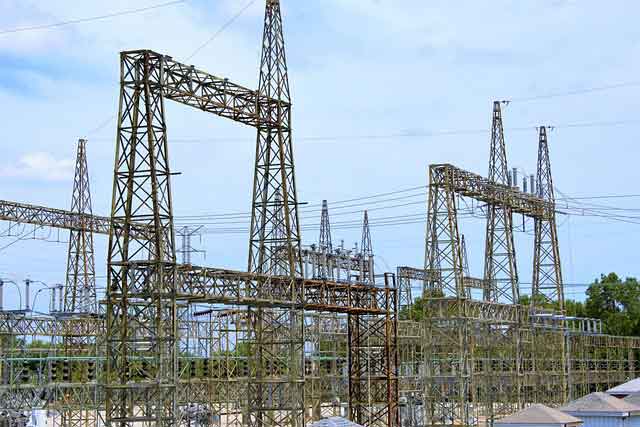
The recent Ontario Budget contains some good news for the energy industry, including additional tax rebates for alternative and renewable power, a transfer tax exemption to encourage consolidation among public distribution companies. In particular, the OEA applauds the decision to extend tax benefits to self-generation projects to create a level playing field with new merchant generation; these projects can deliver efficiency benefits, cost savings and environmental improvements.

The tax exemption on transfers of assets among Local Distribution Companies will encourage rationalization in the public sector, but the decision to shut out private investors is disappointing. "The energy measures in the budget are positive," said Peter Budd, Chair of the OEA. "The government and the industry must now focus on creating the conditions for progress toward a fully competitive market." Bernard Jones, President and Chief Executive Officer of the OEA, added, "We must put place more predictable and efficient regulation under an independent regulator. Market competition in electricity and fair and reasonable regulation of both natural gas and electricity utilities and marketers will make it feasible to restore customer choice in Ontario, which ultimately is the key to balancing demand and supply at reasonable prices." The Ontario Energy Association's mission is to proactively foster a business environment conducive to a prosperous and sustainable energy industry. We represent the companies that do business in Ontario's energy industry, serving homes, farms and businesses across the Province.

"The energy measures in the budget are positive," said Peter Budd, Chair of the OEA. "The government and the industry must now focus on creating the conditions for progress toward a fully competitive market."

Bernard Jones, President and Chief Executive Officer of the OEA, added, "We must put place more predictable and efficient regulation under an independent regulator. Market competition in electricity and fair and reasonable regulation of both natural gas and electricity utilities and marketers will make it feasible to restore customer choice in Ontario, which ultimately is the key to balancing demand and supply at reasonable prices."

The Ontario Energy Association's mission is to proactively foster a business environment conducive to a prosperous and sustainable energy industry. We represent the companies that do business in Ontario's energy industry, serving homes, farms and businesses across the Province.

Related News

Is a Resurgence of Nuclear Energy Possible in Germany?

Germany Nuclear Phase-Out reflects a decisive energy policy shift, retiring reactors as firms shun new builds amid high costs, radioactive waste challenges, climate goals, insurance gaps, and debate over small modular reactors and subsidies.


Key Points

Germany's policy to end nuclear plants and block new builds, emphasizing safety, waste, climate goals, and viability.

✅ Driven by safety risks, waste storage limits, and insurance gaps

✅ High capital costs and subsidies make new reactors uneconomic

✅ Political debate persists; SMRs raise cost and proliferation concerns


A year has passed since Germany deactivated its last three nuclear power plants, marking a significant shift in its energy policy.

Nuclear fission once heralded as the future of energy in Germany during the 1960s, was initially embraced with minimal concern for the potential risks of nuclear accidents. As Heinz Smital from Greenpeace recalls, the early optimism was partly driven by national interest in nuclear weapon technology rather than energy companies' initiatives.

Jochen Flasbarth, State Secretary in the Ministry of Development, reflects on that era, noting Germany's strong, almost naive, belief in technology. Germany, particularly the Ruhr region, grappled with smog-filled skies at that time due to heavy industrialization and coal-fired power plants. Nuclear energy presented a "clean" alternative at the time.

This sentiment was also prevalent in East Germany, where the first commercial nuclear power plant came online in 1961. In total, 37 nuclear reactors were activated across Germany, reflecting a widespread confidence in nuclear technology.

However, the 1970s saw a shift in attitudes. Environmental activists protested the construction of new power plants, symbolizing a generational rift. The 1979 Three Mile Island incident in the US, followed by the catastrophic Chornobyl disaster in 1986, further eroded public trust in nuclear energy.

The Chornobyl accident, in particular, significantly dampened Germany's nuclear ambitions, according to Smital. Post-Chernobyl, plans for additional nuclear power plants in Germany, once numbering 60, drastically declined.

The emergence of the Green Party in 1980, rooted in anti-nuclear sentiment, and its subsequent rise to political prominence further influenced Germany's energy policy. The Greens, joining forces with the Social Democrats in 1998, initiated a move away from nuclear energy, facing opposition from the Christian Democrats (CDU) and Christian Social Union (CSU).

However, the Fukushima disaster in 2011 prompted a policy reversal from CDU and CSU under Chancellor Angela Merkel, leading to Germany's eventual nuclear phase-out in March 2023, after briefly extending nuclear power amid the energy crisis.

Recently, the CDU and CSU have revised their stance once more, signaling a potential U-turn on the nuclear phaseout, advocating for new nuclear reactors and the reactivation of the last shut-down plants, citing climate protection and rising fossil fuel costs. CDU leader Friedrich Merz has lamented the shutdown as a "black day for Germany." However, these suggestions have garnered little enthusiasm from German energy companies.

Steffi Lemke, the Federal Environment Minister, isn't surprised by the companies' reluctance, noting their longstanding opposition to nuclear power, which she argues would do little to solve the gas issue in Germany, due to its high-risk nature and the long-term challenge of radioactive waste management.

Globally, 412 reactors are operational across 32 countries, even as Europe is losing nuclear power during an energy crunch, with the total number remaining relatively stable over the years. While countries like China, France, and the UK plan new constructions, there's a growing interest in small, modern reactors, which Smital of Greenpeace views with skepticism, noting their potential military applications.

In Germany, the unresolved issue of nuclear waste storage looms large. With temporary storage facilities near power plants proving inadequate for long-term needs, the search for permanent sites faces resistance from local communities and poses financial and logistical challenges.

Environment Minister Lemke underscores the economic impracticality of nuclear energy in Germany, citing prohibitive costs and the necessity of substantial subsidies and insurance exemptions.

As things stand, the resurgence of nuclear power in Germany appears unlikely, with economic factors playing a decisive role in its future.


Related News

View more

$1 billion per year is being spent to support climate change denial

Climate Change Consensus and Disinformation highlights the 97% peer-reviewed agreement on human-caused warming, IPCC warnings, and how fossil fuel lobbying, misinformation, and astroturf tactics echo tobacco denial to mislead media and voters.


Key Points

Explains the 97% scientific consensus and the disinformation that obscures IPCC findings and misleads the public.

✅ 97% peer-reviewed consensus on human-caused climate change

✅ Fossil fuel funding drives denial and media misinformation

✅ IPCC and major scientific bodies confirm severe impacts


Orson Johnson says there is no scientific consensus on climate change. He’s wrong. A 2015 study by Drexel University’s Robert Brulle found that nearly $1 billion per year is being spent to support climate change denial. Electric utilities, fossil fuel and transportation sectors outspent environmental and renewable energy sectors by more than 10-to-1, undermining efforts to achieve net-zero electricity emissions globally. It is virtually the same strategy that tobacco companies used to deny the dangers of tobacco smoke, spending hundreds of millions of dollars to delay recognition of harm from tobacco smoke for decades, and today Trump's oil policies can similarly influence Wall Street's energy strategy. These are the same debunked sources Johnson quotes in his commentary.

The authors of six independent peer-reviewed papers on the consensus for human-caused climate change examined “the available studies and conclude that the finding of 97% consensus in published climate research is robust and consistent with other surveys of climate scientists and peer-reviewed studies,” according to an abstract in Environmental Research Letters, and public support for action is strong, with most Americans willing to contribute financially to climate solutions. Of the 30,000 scientists (people with a bachelor’s degree or higher in science) Johnson cites, only 39 specialized in climate science.

A new study by the U.N. Intergovernmental Panel on Climate Change draws on momentum from the Katowice climate summit to warn that “The consequences for nature and humanity are sweeping and severe.”

California’s Office of Planning and Research says: “Every major scientific organization in the United States with relevant expertise has confirmed the IPCC’s conclusion, including the National Academy of Sciences, the American Meteorological Society, the American Geophysical Union, and the American Association for the Advancement of Science. The list of international scientific organizations affirming the worldwide consensus on climate change is even longer.”

Former President Obama argued that decarbonization is irreversible as the clean-energy transition accelerates.

This issue is a symptom of an even larger problem. Recently, Facebook announced it would continue to allow political ads that contain obvious lies. America’s corporate news media has been following the same policy for years. Printing stories and commentary with information that is clearly not true or where data has been cherry-picked to strongly imply a lie, such as claims that Ottawa is making electricity more expensive for Albertans, sets up a false equivalence fallacy in which two incompatible arguments appear to be logically equivalent when, in fact, they are not.

Conservatives focus exclusively on progressive income taxes to argue that rich people pay a disproportionate share of taxes while ignoring that they take a disproportionate share of income, and federal income taxes account for less than half of taxes collected, with almost all of the other taxes being heavily regressive. Critics of single-payer healthcare disregard that almost every other developed country on earth has been using single-payer for decades to provide better care with universal coverage at roughly half the cost. Other examples abound, including recent policy milestones like the historic U.S. climate deal that nevertheless become targets of misinformation. We live in a society where truth is no longer truth, reality is supplanted by alternative facts and where crippling polarization is driven by the inability to agree on basic facts.


Related News

View more

Rolls-Royce expecting UK approval for mini nuclear reactor by mid-2024

Rolls-Royce SMR UK Approval underscores nuclear innovation as regulators review a 470 MW factory-built modular reactor, aiming for grid power by 2029 to boost energy security, cut fossil fuels, and accelerate decarbonization.


Key Points

UK regulatory clearance for Rolls-Royce's 470 MW modular reactor, targeting grid power by 2029 to support clean energy.

✅ UK design approval expected by mid 2024

✅ First 470 MW unit aims for grid power by 2029

✅ Modular, factory-built; est. £1.8b per 10-acre site


A Rolls-Royce (RR.L) design for a small modular nuclear reactor (SMR) will likely receive UK regulatory approval by mid-2024, reflecting progress seen in the US NRC safety evaluation for NuScale as a regulatory benchmark, and be able to produce grid power by 2029, Paul Stein, chairman of Rolls-Royce Small Modular Reactors.

The British government asked its nuclear regulator to start the approval process in March, in line with the UK's green industrial revolution agenda, having backed Rolls-Royce’s $546 million funding round in November to develop the country’s first SMR reactor.

Policymakers hope SMRs will help cut dependence on fossil fuels and lower carbon emissions, as projects like Ontario's first SMR move ahead in Canada, showing momentum.

Speaking to Reuters in an interview conducted virtually, Stein said the regulatory “process has been kicked off, amid broader moves such as a Canadian SMR initiative to coordinate development, and will likely be complete in the middle of 2024.

“We are trying to work with the UK Government, and others to get going now placing orders, echoing expansions like Darlington SMR plans in Ontario, so we can get power on grid by 2029.”

In the meantime, Rolls-Royce will start manufacturing parts of the design that are most unlikely to change, while advancing partnerships like a MoU with Exelon to support deployment, Stein added.

Each 470 megawatt (MW) SMR unit costs 1.8 billion pounds ($2.34 billion) and would be built on a 10-acre site, the size of around 10 football fields, though projects in New Brunswick SMR debate have prompted questions about costs and timelines.

Unlike traditional reactors, SMRs are cheaper and quicker to build and can also be deployed on ships and aircraft. Their “modular” format means they can be shipped by container from the factory and installed relatively quickly on any proposed site.


Related News

View more

No public details for Newfoundland electricity rate mitigation talks

Muskrat Falls rate mitigation progresses as Newfoundland and Labrador and Ottawa align under the updated Atlantic Accord, targeting affordable electricity rates through federal involvement, PUB input, and potential financing solutions with Nalcor, Emera, and lenders.


Key Points

An initiative by NL and Ottawa to keep electricity rates affordable via federal support, PUB input, and financing options.

✅ Federal-provincial talks under the updated Atlantic Accord

✅ PUB process integrated for independent oversight

✅ Possible roles for Nalcor, Emera, and project lenders


At the announcement of an updated Atlantic Accord between the provincial and federal governments, Newfoundland and Larbrador Premier Dwight Ball gave notice federal Finance Minister Bill Morneau will be in St. John’s to talk about the cost of Muskrat Falls and how Labrador power flows through Quebec to market.

“We look forward to welcoming Minister Morneau and his team to advance discussions on federal financing and rate mitigation,” read a statement from the premier’s office Tuesday, in response to questions about that coming meeting and federal-provincial work on rate mitigation.

At the announcement, Ball specifically said the plan is to “finalize federal involvement for making sure electricity rates remain affordable,” such as shielding ratepayers from overruns through federal-provincial measures, with Ball and MP Seamus O’Regan trumpeting the provincial-federal relationship.

The provincial and federal governments are not the only two parties involved in provincial power rates and handling of Muskrat Falls, even as electricity users have started paying for the project across Newfoundland and Labrador, but The Telegram is told details of meetings on rate mitigation are not being released, down to the list of attendees.

The premier’s office was asked specifically about the involvement of Nalcor Energy, including a recent financial update during the pandemic, Emera, Goldman, TD or any others involved in project financing. The response was that the plan is not to indicate what is being explored and who might be involved, until there is something more concrete to speak about.

The government’s plan is to have something to feed into the ongoing work of the Public Utilities Board, to develop a more complete response for rate mitigation, including lump-sum credits on electricity bills and other tools, for the PUB’s final report, due in 2020, even as regulators in Nova Scotia weigh a 14% rate hike in a separate proceeding.


Related News

View more

Ottawa hands N.L. $5.2 billion for troubled Muskrat Falls hydro project

Muskrat Falls funding deal delivers federal relief to Newfoundland and Labrador: Justin Trudeau outlines loan guarantees, transmission investment, Hibernia royalties, and $10-a-day child care to stabilize hydroelectric costs and curb electricity rate hikes.


Key Points

A $5.2b federal plan aiding NL hydro via loan guarantees, transmission funds, and Hibernia royalties to curb power rates.

✅ $1b for transmission and $1b in federal loan guarantees

✅ $3.2b via Hibernia royalty transfers through 2047

✅ Limits power rate hikes; adds $10-a-day child care in NL


Prime Minister Justin Trudeau was in Newfoundland and Labrador Wednesday to announce a $5.2-billion ratepayer protection plan to help the province cover the costs of a troubled hydroelectric project ahead of an expected federal election call.

Trudeau's visit to St. John's, N.L., wrapped up a two-day tour of Atlantic Canada that featured several major funding commitments, and he concluded his day in Newfoundland and Labrador by announcing the province will become the fourth to strike a deal with Ottawa for a $10-a-day child-care program.

As he addressed reporters, the prime minister was flanked by the six Liberal members of Parliament from the province. He alluded to the mismanagement that led the over-budget Muskrat Falls hydroelectric project to become what Liberal Premier Andrew Furey has called an "anchor around the collective souls" of the province.

"The pressures and challenges faced by Newfoundlanders and Labradorians for mistakes made in the past is something that Canadians all needed to step up on, and that's exactly what we did," Trudeau said.

Furey, who joined Trudeau for the two announcements and was effusive in his praise for the federal government, said the federal funding will help Newfoundland and Labrador avoid a spike in electricity rates as customers start paying for Muskrat Falls ahead of when the project begins generating power this November.

"Muskrat Falls has been the No. 1 issue facing Newfoundlanders and Labradorians now for well over a decade," Furey said, adding that he is regularly asked by people whether their electricity rates are going to double, a concern other provinces address through rate legislation in Ontario as well.

"We landed on a deal today that I think -- I know -- is a big deal for Newfoundland and Labrador and will finally get the muskrat off our back," he said.

The agreement-in-principle between the two governments includes a $1-billion investment from Ottawa in a transmission through Quebec portion of the project, as well as $1 billion in loan guarantees. The rest will come from annual transfers from Ottawa equivalent to its annual royalty gains from its share in the Hibernia offshore oilfield, which sits off the coast of St. John's. Those transfers are expected to add up to about $3.2 billion between now and 2047, when the oilfield is expected to run dry.

The money will help cover costs set to come due when the Labrador project comes online, preventing rate increases that would have been needed to pay the bills, and officials have discussed a lump-sum bill credit to help households. Though electricity rates in the province will still rise, to 14.7 cents per kilowatt hour from the current 12.5 cents, that's well below the projected 23 cents that officials had said would be needed to cover the project's costs.

Muskrat Falls was commissioned in 2012 at a cost of $7.4 billion, but its price tag has since ballooned to $13.1 billion. Ottawa previously backed the project with billions of dollars in loan guarantees, and in December, Trudeau announced he had appointed Serge Dupont, former deputy clerk of the Privy Council, to oversee rate mitigation talks with the province about financially restructuring the project.

Its looming impact on the provincial budget is set against an already grim financial situation: the province projected an $826-million deficit in its latest budget, and a recent financial update from the provincial energy corporation reflected pandemic impacts, coupled with $17.2 billion in net debt.

After visiting with children from a daycare centre in the College of the North Atlantic, Trudeau and Furey announced that in 2023, the average cost of regulated child care in the province for children under six would be cut to $10 a day from $25 a day. Trudeau said that within five years, almost 6,000 new daycare spaces would be created in the province.

"As part of the agreement, a new full-day, year-round pre-kindergarten program for four-year-olds will also start rolling out in 2023," the prime minister told reporters. "For parents, this agreement is huge."

Newfoundland and Labrador is the fourth province, after Prince Edward Island, Nova Scotia and British Columbia, to sign on to the federal government's child-care program.


Related News

View more

Energy Vault Secures $28M for California Green Hydrogen Microgrid

Calistoga Resiliency Centre Microgrid delivers grid resilience via green hydrogen and BESS, providing island-mode backup during PSPS events, wildfire risk, and outages, with black-start and grid-forming capabilities for reliable community power.


Key Points

A hybrid green hydrogen and BESS facility ensuring resilient, islanded power for Calistoga during PSPS and outages.

✅ 293 MWh capacity with 8.5 MW peak for critical backup

✅ Hybrid lithium-ion BESS plus green hydrogen fuel cells

✅ Island mode with black-start and grid-forming support


Energy Vault, a prominent energy storage and technology company known for its gravity storage, recently secured US$28 million in project financing for its innovative Calistoga Resiliency Centre (CRC) in California. This funding will enable the development of a microgrid powered by a unique combination of green hydrogen and battery energy storage systems (BESS), marking a significant step forward in enhancing grid resilience in the face of natural disasters such as wildfires.

Located in California's fire-prone regions, the CRC is designed to provide critical backup power during Public Safety Power Shutoff (PSPS) events—periods when utility companies proactively cut power to prevent wildfires. These events can leave communities without electricity for extended periods, making the need for reliable, independent power sources more urgent as many utilities see benefits in energy storage today. The CRC, with a capacity of 293 MWh and a peak output of 8.5 MW, will ensure that the Calistoga community maintains power even when the grid is disconnected.

The CRC features an integrated hybrid system that combines lithium-ion batteries and green hydrogen fuel cells, even as some grid-scale projects adopt vanadium flow batteries for long-duration needs. During a PSPS event or other grid outages, the system will operate in "island mode," using hydrogen to generate electricity. This setup not only guarantees power supply but also contributes to grid stability by supporting black-start and grid-forming functions. Energy Vault's proprietary B-VAULT DC battery technology complements the hydrogen fuel cells, enhancing the overall performance and resilience of the microgrid.

One of the key aspects of the CRC project is the utilization of green hydrogen. Unlike traditional hydrogen, which is often produced using fossil fuels, green hydrogen is generated through renewable energy sources like solar or wind power, with large-scale initiatives such as British Columbia hydrogen project accelerating supply, making it a cleaner and more sustainable alternative. This aligns with California’s ambitious clean energy goals and is expected to reduce the carbon footprint of the region’s energy infrastructure.

The CRC project also sets a precedent for future hybrid microgrid deployments across California and other wildfire-prone areas, with utilities like SDG&E Emerald Storage highlighting growing adoption. Energy Vault has positioned the CRC as a model for scalable, utility-scale microgrids that can be adapted to various locations facing similar challenges. Following the success of this project, Energy Vault is expanding its portfolio with additional projects in Texas, where it anticipates securing up to US$25 million in financing.

The funding for the CRC also includes the sale of an investment tax credit (ITC), a key component of the financing structure that helps make such ambitious projects financially viable. This structure is crucial as it allows companies to leverage government incentives to offset development costs, including CEC long-duration storage funding, thus encouraging further investment in green energy infrastructure.

Despite some skepticism regarding the transportation of hydrogen rather than producing it onsite, the project has garnered strong support. California’s Public Utilities Commission (CPUC) acknowledged the potential risks of transporting green hydrogen but emphasized that it is still preferable to using more harmful fuel sources. This recognition is important as it validates Energy Vault’s approach to using hydrogen as part of a broader strategy to transition to clean, reliable energy solutions.

Energy Vault's shift from its traditional gravity-based energy storage systems to battery energy storage systems, such as BESS in New York, reflects the company's adaptation to the growing demand for versatile, efficient energy solutions. The hybrid approach of combining BESS with green hydrogen represents an innovative way to address the challenges of energy storage, especially in regions vulnerable to natural disasters and power outages.

As the CRC nears mechanical completion and aims for full commercial operations by Q2 2025, it is poised to become a critical part of California’s grid resilience strategy. The microgrid's ability to function autonomously during emergencies will provide invaluable benefits not only to Calistoga but also to other communities that may face similar grid disruptions in the future.

Energy Vault’s US$28 million financing for the Calistoga Resiliency Centre marks a significant milestone in the development of hybrid microgrids that combine the power of green hydrogen and battery energy storage. This project exemplifies the future of energy resilience, showcasing a forward-thinking approach to mitigating the impact of natural disasters and ensuring a reliable, sustainable energy future for communities at risk. With its innovative use of renewable energy sources and cutting-edge technology, the CRC sets a strong example for future energy storage projects worldwide.


Related News

View more

Sign Up for Electricity Forum’s Newsletter

Stay informed with our FREE Newsletter — get the latest news, breakthrough technologies, and expert insights, delivered straight to your inbox.

Electricity Today T&D Magazine Subscribe for FREE

Stay informed with the latest T&D policies and technologies.
  • Timely insights from industry experts
  • Practical solutions T&D engineers
  • Free access to every issue

Live Online & In-person Group Training

Advantages To Instructor-Led Training – Instructor-Led Course, Customized Training, Multiple Locations, Economical, CEU Credits, Course Discounts.

Request For Quotation

Whether you would prefer Live Online or In-Person instruction, our electrical training courses can be tailored to meet your company's specific requirements and delivered to your employees in one location or at various locations.