By -- Source, Reuters


Substation Relay Protection Training

Our customized live online or in‑person group training can be delivered to your staff at your location.

  • Live Online
  • 12 hours Instructor-led
  • Group Training Available
Regular Price:
$699
Coupon Price:
$599
Reserve Your Seat Today
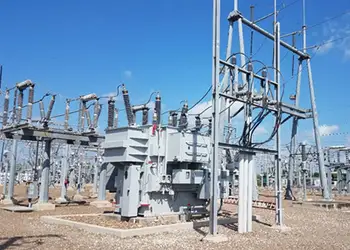
COLUMBUS, Ohio - An Ohio state board on Monday approved three new power plant projects estimated to cost $1.32 billion that would add almost 2,000 megawatts to the state grid -- enough to light 2 million homes.

The plants, approved for construction by the Ohio Power Siting Board, would be built by units of Cogentrix Energy Inc., Global Energy Inc. and Aquila Inc.((ILA.N)), the board said in a statement.

Utility holding company Aquila previously announced plans to buy privately held power producer Cogentrix Energy for $415 million in cash and notes.

The Cogentrix project would be a 1,100 MW natural gas-fired plant in Center Township, Ohio, expected to cost $660 million with a target start-up date of June 2004.

The Ohio board also gave the go-ahead to Global Energy's Lima Energy unit to build a 580 MW plant in Lima, Ohio.

The Global Energy project would generate electricity by burning coal waste to produce gases to power the electric generators.

This project is expected to cost about $500 million.

The third plant is a $160 million, 300 MW gas-fired peaking project to be built by Aquila Fulton County Power near Metamora, Ohio.

Peaking plants typically are used to generate electricity for use during periods of high demand for power.

The Ohio Power Siting Board includes representatives of the Public Utilities Commission of Ohio, state departments and legislature, and the public.

Related News

Was there another reason for electricity shutdowns in California?

PG&E Wind Shutdown and Renewable Reliability examines PSPS strategy, wildfire risk, transmission line exposure, wind turbine cut-out speeds, grid stability, and California's energy mix amid historic high-wind events and supply constraints across service areas.


Key Points

An overview of PG&E's PSPS decisions, wildfire mitigation, and how wind cut-out limits influence grid reliability.

✅ Wind turbines reach cut-out near 55 mph, reducing generation.

✅ PSPS mitigates ignition from damaged transmission infrastructure.

✅ Baseload diversity improves resilience during high-wind events.


According to the official, widely reported story, Pacific Gas & Electric (PG&E) initiated power shutoffs across substantial portions of its electric transmission system in northern California as a precautionary measure.

Citing high wind speeds they described as “historic,” the utility claims that if it didn’t turn off the grid, wind-caused damage to its infrastructure could start more wildfires.

Perhaps that’s true. Perhaps. This tale presumes that the folks who designed and maintain PG&E’s transmission system are unaware of or ignored the need to design it to withstand severe weather events, and that the Federal Energy Regulatory Commission (FERC) and North American Electric Reliability Corp. (NERC) allowed the utility to do so.

Ignorance and incompetence happens, to be sure, but there’s much about this story that doesn’t smell right—and it’s disappointing that most journalists and elected officials are apparently accepting it without question.

Take, for example, this statement from a Fox News story about the Kincade Fires: “A PG&E meteorologist said it’s ‘likely that many trees will fall, branches will break,’ which could damage utility infrastructure and start a fire.”

Did you ever notice how utilities cut wide swaths of trees away when transmission lines pass through forests? There’s a reason for that: When trees fall and branches break, the grid can still function, and even as the electric rhythms of New York City shifted during COVID-19, operators planned for variability.

So, if badly designed and poorly maintained infrastructure isn’t the reason PG&E cut power to millions of Californians, what might have prompted them to do so? Could it be that PG&E’s heavy reliance on renewable energy means they don’t have the power to send when a “historic” weather event occurs, especially as policymakers weigh the postponed closure of three power plants elsewhere in California?


Wind Speed Limits

The two most popular forms of renewable energy come with operating limitations, which is why some energy leaders urge us to keep electricity options open when planning the grid. With solar power, the constraint is obvious: the availability of sunlight. One doesn’t generate solar power at night and energy generation drops off with increasing degrees of cloud cover during the day.

The main operating constraint of wind power is, of course, wind speed, and even in markets undergoing 'transformative change' in wind generation, operators adhere to these technical limits. At the low end of the scale, you need about a 6 or 7 miles-per-hour wind to get a turbine moving. This is called the “cut-in speed.” To generate maximum power, about a 30 mph wind is typically required. But, if the wind speed is too high, the wind turbine will shut down. This is called the “cut-out speed,” and it’s about 55 miles per hour for most modern wind turbines.

It may seem odd that wind turbines have a cut-out speed, but there’s a very good reason for it. Each wind turbine rotor is connected to an electric generator housed in the turbine nacelle. The connection is made through a gearbox that is sized to turn the generator at the precise speed required to produce 60 Hertz AC power.

The blades of the wind turbine are airfoils, just like the wings of an airplane. Adjusting the pitch (angle) of the blades allows the rotor to maintain constant speed, which, in turn, allows the generator to maintain the constant speed it needs to safely deliver power to the grid. However, there’s a limit to blade pitch adjustment. When the wind is blowing so hard that pitch adjustment is no longer possible, the turbine shuts down. That’s the cut-out speed.

Now consider how California’s power generation profile has changed. According to Energy Information Administration data, the state generated 74.3 percent of its electricity from traditional sources—fossil fuels and nuclear, amid debates over whether to classify nuclear as renewable—in 2001. Hydroelectric, geothermal, and biomass-generated power accounted for most of the remaining 25.7 percent, with wind and solar providing only 1.98 percent of the total.

By 2018, the state’s renewable portfolio had jumped to 43.8 percent of total generation, with clean power increasing and wind and solar now accounting for 17.9 percent of total generation. That’s a lot of power to depend on from inherently unreliable sources. Thus, it wouldn’t be at all surprising to learn that PG&E didn’t stop delivering power out of fear of starting fires, but because it knew it wouldn’t have power to deliver once high winds shut down all those wind turbines


Related News

View more

Ontario introduces new fixed COVID-19 hydro rate

Ontario Electricity COVID-19 Recovery Rate sets a fixed price of 12.8 cents/kWh, replacing time-of-use billing and aligning costs across off-peak, mid-peak, and on-peak periods per Ontario Energy Board guidance through Oct. 31.


Key Points

A flat 12.8 cents/kWh electricity price in Ontario that temporarily replaces time-of-use rates from June 1 to Oct. 31.

✅ Fixed 12.8 cents/kWh, all hours, June 1 to Oct. 31

✅ Higher than off-peak 10.1, lower than mid/on-peak

✅ Based on Ontario Energy Board average cost


Ontario residents will now have to pay a fixed electricity price that is higher than the off-peak hydro rate many in the province have been allowed to pay so far due to the pandemic. 

The announcement, which was made in a news release on Saturday, comes after the Ontario government suspended the normal “time-of-use” billing system on March 24 and as electricity rates are about to change across Ontario. 

The government moved all customers onto the lowest winter rate in response to the pandemic as emergency measures meant more people would be at home during the middle of the day when electricity costs are the highest. 

Now, the government has introduced a new “COVID-19 recovery rate” of 12.8 cents per kilowatt hour at all times of the day. The fixed price will be in place from June 1 to Oct. 31. 

The fixed price is higher than the winter off-peak price, which stood at 10.1 per kilowatt hour. However, it is lower than the mid-peak rate of 14.4 per kilowatt hour and the high-peak rate of 20.8 per kilowatt hour, even though typical bills may rise as fixed pricing ends for many households. 

“Since March 24, 2020, we have invested just over $175 million to deliver emergency rate relief to residential, farm and small business electricity consumers by suspending time-of-use electricity pricing,” Greg Rickford, the minister of energy, northern development and mines, said in a news release. 

“This investment was made to protect the people of Ontario from a marked increase in electricity rates as they did their part by staying home to prevent the further spread of the virus.”

Rickford said that the COVID-19 recovery rate is based on the average cost of electricity set by the Ontario Energy Board. 

“This fixed rate will continue to suspend time-of-use prices in a fiscally responsible manner,” he said. "Consumers will have greater flexibility to use electricity when they need it without paying on-peak and mid-peak prices, and some may benefit from ultra-low electricity rates under new time-of-use options."


Related News

View more

Electricity restored to 75 percent of customers in Puerto Rico

Puerto Rico Power Restoration advances as PREPA, FEMA, and the Army Corps rebuild the grid after Hurricane Maria; 75% of customers powered, amid privatization debate, Whitefish contract fallout, and a continuing island-wide boil-water advisory.


Key Points

Effort to rebuild Puerto Rico's grid and restore power, led by PREPA with FEMA support after Hurricane Maria.

✅ 75.35% of customers have power; 90.8% grid generating

✅ PREPA, FEMA, and Army Corps lead restoration work

✅ Privatization debate, Whitefish contract scrutiny


Nearly six months after Hurricane Maria decimated Puerto Rico, the island's electricity has been restored to 75 percent capacity, according to its utility company, a contrast to California power shutdowns implemented for different reasons.

The Puerto Rico Electric Power Authority said Sunday that 75.35 percent of customers now have electricity. It added that 90.8 percent of the electrical grid, already anemic even before the Sept. 20 storm barrelled through the island, is generating power again, though demand dynamics can vary widely as seen in Spain's power demand during lockdowns.

Thousands of power restoration personnel made up of the Puerto Rico Electric Power Authority (PREPA), the Federal Emergency Management Agency (FEMA), industry workers from the mainland, and the Army Corps of Engineers have made marked progress in recent weeks, even as California power shutoffs highlight grid risks elsewhere.

Despite this, 65 people in shelters and an island-wide boil water advisory is still in effect even though almost 100 percent of Puerto Ricans have access to drinking water, local government records show.

The issue of power became controversial after Puerto Rico Gov. Ricardo Rossello recently announced plans to privatize PREPA after it chose to allocate a $300 million power restoration contract to Whitefish, a Montana-based company with only a few staffers, rather than put it through the mutual-aid network of public utilities usually called upon to coordinate power restoration after major disasters, and unlike investor-owned utilities overseen by regulators such as the Florida PSC on the mainland.

That contract was nixed and Whitefish stopped working in Puerto Rico after FEMA raised "significant concerns" over the procurement process, scrutiny mirrored by the fallout from Taiwan's widespread outage where the economic minister resigned.


Related News

View more

Latvia eyes electricity from Belarus nuclear plant

Latvia Astravets electricity imports weigh AST purchases from the Belarusian nuclear plant, impacting the Baltic grid, Lithuania market, energy security, and cross-border trading as Latvia seeks to mitigate supply risks and stabilize power flows.


Key Points

Proposed AST purchases of power from Belarus's Astravets plant to bolster Baltic grid supply via Lithuania.

✅ AST evaluates imports to mitigate supply risk

✅ Energy could enter Lithuania via existing trading route

✅ Debate centers on nuclear safety and Baltic grid impacts


Latvia’s electricity transmission system operator, AST, is looking at the possibility of purchasing electricity from the soon-to-be completed Belarusian nuclear power plant in Astravets, at a time when Ukraine's electricity exports have resumed in the region, long criticised by the Lithuanian government, Belsat TV has reported.

According to the Latvian media, the Latvian government is seeking to mitigate the risk of a possible drop in electricity supplies amid price spikes in Ireland highlighting dispatchable power concerns, given that energy trading between the Baltic states and third parties is currently carried out only through the Belarusian-Lithuanian border, including Latvian imports from Lithuania.

If AST starts importing electricity from the Belarusian plant to Latvia, in a pattern similar to Georgia's electricity imports during peak demand, the energy is expected to enter the Lithuanian market as well.

Such cross-border flows also mirror responses to Central Asia's electricity shortages seen recently.

The Lithuanian government has repeatedly criticised the nuclear power over national security and environmental safety concerns, as well as a number of emergencies that took place during construction, particularly as Europe is losing nuclear power and confronting energy security challenges.

Debates over infrastructure and safety have also intensified by projects like power lines to reactivate Zaporizhzhia in Ukraine.

The first Astravets reactor, which is being built close to the Lithuanian border in the Hrodno region, is expected to be operational by the end of 2019, a year that saw Belgium's nuclear exports rise across Europe.


Related News

View more

Nova Scotia can't order electric utility to lower power rates, minister says

Nova Scotia Power Rate Regulation explains how the privately owned utility is governed by the Utility Review Board, limiting government authority, while COVID-19 relief measures include suspended disconnections, waived fees, payment plans, and emergency assistance.


Key Points

URB oversight where the board, not the province, sets power rates, with COVID-19 relief pausing disconnections and fees.

✅ Province lacks authority to order rate cuts

✅ URB regulates Nova Scotia Power rates

✅ Relief: no disconnections, waived fees, payment plans


The province can't ask Nova Scotia Power to lower its rates to ease the financial pressure on out-of-work residents because it lacks the authority to take that kind of action, even as the Nova Scotia regulator approved a 14% hike in a separate proceeding, the provincial energy minister said Thursday.

Derek Mombourquette said he is in "constant contact" with the privately owned utility.

"The conversations are ongoing with Nova Scotia Power," he said after a cabinet meeting.

When asked if the Liberal government would order the utility to lower electricity rates as households and businesses struggle with the financial fallout from the COVID-19 pandemic, Mombourquette said there was nothing he could do.

"We don't have the regulatory authority as a government to reduce the rates," he told reporters during a conference call.

"They're independent, and they are regulated through the (Nova Scotia Utility Review Board). My conversations with Nova Scotia Power essentially have been to do whatever they can to support Nova Scotians, whether it's residents or businesses in this very difficult time."

Asked if the board would take action, the minister said: "I'm not aware of that," despite the premier's appeals to regulators in separate rate cases.

However, the minister noted that the utility, owned by Emera Inc., has suspended disconnections for bill non-payment for at least 90 days, a step similar to reconnection efforts by Hydro One announced in Ontario.

It has also relaxed payment timelines and waived penalties and fees, while some jurisdictions offered lump-sum credits to help with bills.

Nova Scotia Power CEO Wayne O'Connor has also said the company is making additional donations to a fund available to help low-income individuals and families pay their energy bills.

In late March, Ontario cut electricity rates for residential consumers, farms and small businesses in response to a surge in people forced to work from home as a result of the pandemic, alongside bill support measures for ratepayers.

Premier Doug Ford said there would be a 45-day switch to off-peak rates, later moving to a recovery rate framework, which meant electricity consumers would be paying the lowest rate possible at any time of day.

The change was expected to cost the province about $162 million.


Related News

View more

Canada's First Commercial Electric Flight

Canada's First Commercial Electric Flight accelerates sustainable aviation, showcasing electric aircraft, pilot training, battery propulsion, and noise reduction, aligning with net-zero goals and e-aviation innovation across commercial, regional, and training operations.


Key Points

Canada's electric flight advances sustainable aviation, proving e-aircraft viability and pilot training readiness.

✅ Battery-electric propulsion cuts emissions and noise

✅ New curricula prepare pilots for electric systems and procedures

✅ Supports net-zero goals through green aviation infrastructure


Canada, renowned for its vast landscapes and pioneering spirit, has achieved a significant milestone in aviation history with its first commercial electric flight. This groundbreaking achievement marks a pivotal moment in the transition towards sustainable aviation and an aviation revolution for the sector, highlighting Canada's commitment to reducing carbon emissions and embracing innovative technologies.

The inaugural commercial electric flight in Canada not only showcases the capabilities of electric aircraft, with examples like Harbour Air's prototype flight demonstrating feasibility, but also underscores the importance of pilot training in advancing e-aviation. As the aviation industry explores cleaner and greener alternatives to traditional fossil fuel-powered aircraft, pilot training plays a crucial role in preparing aviation professionals for the future of sustainable flight.

Electric aircraft, powered by batteries instead of conventional jet fuel, offer numerous environmental benefits, including lower greenhouse gas emissions and reduced noise pollution, though Canada's 2019 electricity mix still included some fossil generation that can affect lifecycle impacts. These advantages align with Canada's ambitious climate goals and commitment to achieving net-zero emissions by 2050. By investing in e-aviation, Canada aims to lead by example in the global effort to decarbonize the aviation sector and mitigate the impacts of climate change.

The success of Canada's first commercial electric flight is a testament to collaborative efforts between industry stakeholders, government support, and technological innovation. Electric aircraft manufacturers have made significant strides in developing reliable and efficient electric propulsion systems, with research investment helping advance prototypes and certification, paving the way for broader adoption of e-aviation across commercial and private sectors.

Pilot training programs tailored for electric aircraft are crucial in ensuring the safe and effective operation of these advanced technologies, as operators target first electric passenger flights across regional routes. Canadian aviation schools and training institutions are at the forefront of integrating e-aviation into their curriculum, equipping future pilots with the skills and knowledge needed to navigate electric aircraft systems and procedures.

Moreover, the introduction of commercial electric flights in Canada opens new opportunities for aviation enthusiasts, environmental advocates, and stakeholders interested in sustainable transportation solutions. The shift towards e-aviation represents a paradigm shift in how air travel is perceived and executed, emphasizing efficiency, environmental stewardship, and technological innovation.

Looking ahead, Canada's role in advancing e-aviation extends beyond pilot training to include research and development, infrastructure investment, and policy support. Collaborative initiatives with industry partners and international counterparts, including Canada-U.S. collaboration on electrification, will be essential in accelerating the adoption of electric aircraft and establishing a robust framework for sustainable aviation practices.

In conclusion, Canada's first commercial electric flight marks a significant milestone in the journey towards sustainable aviation. By pioneering e-aviation through pilot training and technological innovation, Canada sets a precedent for global leadership in reducing carbon emissions and shaping the future of air transportation. As electric aircraft become more prevalent in the skies, Canada's commitment to sustainability and ambitious EV goals at the national level will continue to drive progress towards a cleaner, greener future for aviation worldwide.


Related News

View more

Sign Up for Electricity Forum’s Newsletter

Stay informed with our FREE Newsletter — get the latest news, breakthrough technologies, and expert insights, delivered straight to your inbox.

Electricity Today T&D Magazine Subscribe for FREE

Stay informed with the latest T&D policies and technologies.
  • Timely insights from industry experts
  • Practical solutions T&D engineers
  • Free access to every issue

Live Online & In-person Group Training

Advantages To Instructor-Led Training – Instructor-Led Course, Customized Training, Multiple Locations, Economical, CEU Credits, Course Discounts.

Request For Quotation

Whether you would prefer Live Online or In-Person instruction, our electrical training courses can be tailored to meet your company's specific requirements and delivered to your employees in one location or at various locations.