Ohio firms warned blackouts in early 2003

By Associated Press


NFPA 70e Training - Arc Flash

Our customized live online or in‑person group training can be delivered to your staff at your location.

  • Live Online
  • 6 hours Instructor-led
  • Group Training Available
Regular Price:
$199
Coupon Price:
$149
Reserve Your Seat Today
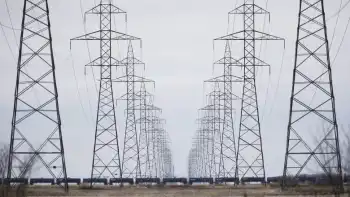
Two Ohio companies at the centre of the investigation into the worst blackout in the United States and Ontario warned state regulators five months ago that their power systems could overload if the grid linking U.S. and Canadian utilities had problems.

FirstEnergy Corp. and American Electric Power said in long-term forecast reports that they didn't expect any of their own transmission lines to fail this summer.

But both companies said that widespread outages were possible if the spaghetti-like system that links eastern states and Canada experienced changes in the flows of electricity, transfers of power between regions, unexpected demand increases and extreme weather.

Those are just the sorts of power grid disturbances that swept across eight states and Ontario on Aug. 14, spreading the outage to 50 million people.

Akron-based FirstEnergy is at the centre of a U.S.-Canada inquiry of what caused the outage. The most prominent theory is that a FirstEnergy power plant in Eastlake, Ohio, and some of its electricity transmission lines failed, including one that sagged into a tree.

The resulting surge of power in Ohio spread, rocketing across transmission lines in Indiana, Michigan, Ontario and New York that set off automatic power shutdowns.

The two Ohio power companies say the Public Utilities Commission of Ohio has heard the same grid overload warnings from them for years and there is nothing that state regulators could have done with that information to prevent the blackout.

"It's just a statement of reality. It's a recognition of the fact that we are all interconnected and that there are strengths and weaknesses to that," Ralph DiNicola, a FirstEnergy spokesman, said recently.

"The good is that being interconnected enhances reliability. The not-so-good is that what happens on adjacent systems could impact our system," DiNicola added.

In Indiana on Monday, state utility regulators were pressing James P. Torgerson, chief executive of the Midwest Transmission System Operator, to find out exactly what problems the grid manager saw before the blackout, and not just in Ohio.

FirstEnergy and AEP say investigators must look at what was occurring on the entire grid inside and outside Ohio in the hours before the blackout because abnormal activity elsewhere could have impacted their power systems' operations.

The Public Utilities Commission of Ohio asked power companies in an Oct. 15, 2002, letter to say in their annual long-term forecasts which transmission lines or substations were most likely to be overloaded and under what conditions. FirstEnergy and AEP filed their reports in April.

FirstEnergy identified none of its transmission infrastructure as prone to failure. Parts of its report were sealed from the public because the company had marked certain documents confidential. The utilities commission has asked it and other utilities to explain why the documents should not be released.

AEP's report indicated that a transformer at its South Canton facility in northeast Ohio was the most likely to overload if other utilities on the grid had unexpected outages or heavy demand.

The Columbus-based company said it would install a higher-capacity transformer before this summer to prevent problems, but it wasn't clear whether AEP did the upgrade. The company didn't immediately return a phone call seeking comment.

About 30 minutes before the Aug. 14 blackout, a line co-owned by FirstEnergy and AEP tripped as too much electricity coursed over it. The line is connected to the South Canton facility, where FirstEnergy's grid interconnects with AEP's neighbouring grid.

Other missed or ignored warnings have surfaced since the blackout.

The grid watchdog in the U.S., the North American Electric Reliability Council, issued a report three months ago singling out the Midwest as the only part of the country that risked such a devastating event. And more than a year ago the Federal Energy Regulatory Commission raised concerns that the region's fractured market threatened reliability.

Related News

Group to create Canadian cyber standards for electricity sector IoT devices

Canadian Industrial IoT Cybersecurity Standards aim to unify device security for utilities, smart grids, SCADA, and OT systems, aligning with NERC CIP, enabling certification, trust marks, compliance testing, and safer energy sector deployments.


Key Points

National standards to secure industrial IoT for utilities and grids, enabling certification and NERC CIP alignment.

✅ Aligns with NERC CIP and NIST frameworks for energy sector security

✅ Defines certification, testing tools, and a trusted device repository

✅ Enhances OT, SCADA, and smart grid resilience against cyber threats


The Canadian energy sector has been buying Internet-connected sensors for monitoring a range of activities in generating plants, distribution networks facing harsh weather risks and home smart meters for several years. However, so far industrial IoT device makers have been creating their own security standards for devices, leaving energy producers and utilities at their mercy.

The industry hopes to change that by creating national cybersecurity standards for industrial IoT devices, with the goal of improving its ability to predict, prevent, respond to and recover from cyber threats, such as emerging ransomware attacks across the grid.

To help, the federal government today announced an $818,000 grant support a CIO Strategy Council project oversee the setting of standards.

In an interview council executive director Keith Jansa said the money will help a three-year effort that will include holding a set of cross-country meetings with industry, government, academics and interest groups to create the standards, tools to be able to test devices against the standards and the development of product repository of IoT safe devices companies can consult before making purchases.

“The challenge is there are a number of these devices that will be coming online over the next few years,” Jansa said. “IoT devices are designed for convenience and not for security, so how do you ensure that a technology an electricity utility secures is in fact safeguarded against cyber threats? Currently, there is no associated trust mark or certification that gives confidence associated with these devices.”

He also said the council will work with the North American Electric Reliability Corporation (NERC), which sets North American-wide utility safety procedural standards and informs efforts on protecting the power grid across jurisdictions. The industrial IoT standards will be product standards.

According to Robert Wong, vice-president and CIO of Toronto Hydro, all the big provincial utilities are subject to adhering to NERC CIP standards which have requirements for both cyber and physical security. Ontario is different from most provinces in that it has local distribution companies — like Toronto Hydro — which buy electricity in bulk and resell it to customers.  These LDCs don’t own or operate critical infrastructure and therefore don’t have to follow the NERC CIP standards.

Regional reforms, such as regulatory changes in Atlantic Canada, aim to bring greener power options to the grid.

Electricity is considered around the world as one of a country’s critical national infrastructure. Threats to the grid can be used for ransom or by a country for political pressure. Ukraine had its power network knocked offline in 2015 and 2016 by what were believed to be Russian-linked attackers operating against utilities.

All the big provincial utilities operate “critical infrastructure” and are subject to adhering to NERC CIP (critical infrastructure protection) standards, which have requirements for both cyber and physical security, as similar compromises at U.S. electric utilities have highlighted recently.  There are audited on a regular basis for compliance and can face hefty fines if they fail to meet the requirements.  The LDCs in Ontario don’t own or operate “critical infrastructure” and therefore are not required to adopt NERC CIP standards (at least for now).

The CIO Strategy Council is a forum for chief information officers that is helping set standards in a number of areas. In January it announced a partnership with the Internet Society’s Canada Chapter to create standards of practice for IoT security for consumer devices. As part of the federal government’s updated national cybersecurity strategy it is also developing a national cybersecurity standard for small and medium-sized businesses. That strategy would allow SMBs to advertise to customers that they meet minimum security requirements.

“The security of Canadians and our critical infrastructure is paramount,” federal minister of natural resources Seamus O’Regan said in a statement with today’s announcement. “Cyber attacks are becoming more common and dangerous. That’s why we are supporting this innovative project to protect the Canadian electricity sector.”

The announcement was welcomed by Robert Wong, Toronto Hydro’s vice-president and CIO. “Any additional investment towards strengthening the safeguards against cyberattacks to Canada’s critical infrastructure is definitely good news.  From the perspective of the electricity sector, the convergence of IT and OT (operational technology) has been happening for some time now as the traditional electricity grid has been transforming into a Smart Grid with the introduction of smart meters, SCADA systems, electronic sensors and monitors, smart relays, intelligent automated switching capabilities, distributed energy resources, and storage technologies (batteries, flywheels, compressed air, etc.).

“In my experience, many OT device and system manufacturers and vendors are still lagging the traditional IT vendors in incorporating Security by Design philosophies and effective security features into their products.  This, in turn, creates greater risks and challenges for utilities to protecting their critical infrastructures and ensuring a reliable supply of electricity to its customers.”

The Ontario Energy Board, which regulates the industry in the province, has led an initiative for all utilities to adopt the National Institute of Standards and Technology (NIST) Cybersecurity Framework, along with the ES-C2M2 maturity and Privacy By Design models, he noted.  Toronto Hydro has been managing its cybersecurity practice in adherence to these standards, as the city addresses growing electricity needs as well, he said.

“Other jurisdictions, such as Israel, have invested heavily on a national level in developing its cybersecurity capabilities and are seen as global leaders.  I am confident that given the availability of talent, capabilities and resources in Canada (especially around the GTA) if we get strong support and leadership at a federal level we can also emerge as a leader in this area as well.”


Related News

View more

Global electric power demand surges above pre-pandemic levels

Global Power Sector CO2 Surge 2021 shows electricity demand outpacing renewable energy, with coal and fossil fuels rebounding, undermining green recovery goals and climate change targets flagged by the IEA and IPCC.


Key Points

Record rise in power sector CO2 in 2021 as demand outpaced renewables and coal rebounded, undermining a green recovery.

✅ Electricity demand rose 5% above pre-pandemic levels

✅ Fossil fuels supplied 61% of power; coal led the rebound

✅ Wind and solar grew 15% but lagged demand


Carbon dioxide emissions from the global electric power sector surged past pre-pandemic levels to record highs in the first half of 2021, according to new research by London-based environmental think tank Ember.

Electricity demand and emissions are now 5% higher than where they were before the Covid-19 outbreak, which prompted worldwide lockdowns that led to a temporary drop in global greenhouse gas emissions. Electricity demand also surpassed the growth of renewable energy, and surging electricity demand is putting power systems under strain, the analysis found.

The findings signal a failure of countries to achieve a so-called “green recovery” that would entail shifting away from fossil fuels toward renewable energy, though European responses to Covid-19 have accelerated the electricity system transition by about a decade, to avoid the worst consequences of climate change.

The report found that 61% of the world’s electricity still came from fossil fuels in 2020. Five G-20 countries had more than 75% of their electricity supplied from fossil fuels last year, with Saudi Arabia at 100%, South Africa at 89%, Indonesia at 83%, Mexico at 75% and Australia at 75%.

Coal generation did fall a record 4% in 2020, but overall coal supplied 43% of the additional energy demand between 2019 and 2020, with soaring electricity and coal use underscoring persistent demand pressures. Asia currently generates 77% of the world’s coal electricity and China alone generates 53%, up from 44% in 2015.

The world’s transition out of coal power, which contributes to roughly 30% of the world’s greenhouse gas emissions, is happening far too slowly to avoid the worst impacts of climate change, the study warned. And the International Energy Agency forecasts coal generation will rebound in 2021 as electricity demand picks up again, even as renewables are poised to eclipse coal by 2025 according to other analyses.

“Progress is nowhere near fast enough. Despite coal’s record drop during the pandemic, it still fell short of what is needed,” Ember lead analyst Dave Jones said in a statement.

Jones said coal power usage must collapse by 80% by the end of the decade to avoid dangerous levels of global warming above 1.5 degrees Celsius (2.7 degrees Fahrenheit).

“We need to build enough clean electricity to simultaneously replace coal and electrify the global economy,” Jones said. “World leaders have yet to wake up to the enormity of the challenge.”

The findings come ahead of a major U.N. climate conference in Glasgow, Scotland, in November, where negotiators will push for more ambitious climate action and emissions reduction pledges from nations.

Without immediate, rapid and large-scale reductions to global emissions, scientists of the Intergovernmental Panel on Climate Change warn that the average global temperature will likely cross the 1.5 degrees Celsius threshold within 20 years.

The study also highlighted some upsides. Wind and solar generation, for instance, rose by 15% in 2020, and low-emissions sources are set to cover almost all the growth in global electricity demand in the next three years, producing nearly a tenth of the world’s electricity last year and doubling production since 2015.

Some countries now get about 10% of their electricity from wind and solar, including India, China, Japan, Brazil. The U.S. and Europe have experienced the biggest growth in wind and solar, and in the EU, wind and solar generated more electricity than gas last year, with Germany at 33% and the U.K. leads the G20 for wind power at 29%.


Related News

View more

Tesla Electric is preparing to expand in the UK

Tesla Electric UK Expansion signals retail energy entry, leveraging Powerwall VPPs for grid services, dynamic pricing, and energy trading, building on Texas success and Octopus Energy ties to buy and sell electricity automatically.


Key Points

Tesla's plan to launch Tesla Electric in the UK, using Powerwall VPPs to retail energy, trade power, and hedge peaks.

✅ Retail energy model built on Powerwall VPP aggregation

✅ Automated buy-sell arbitrage with dynamic pricing

✅ Leverages prior UK approval and Octopus Energy ties


According to a new job posting, Tesla Electric, Tesla’s new electric utility division, is preparing to expand in the United Kingdom as regions such as California grid planners look to electric vehicles for stability to manage demand.

Late last year, after gaining experience through its virtual power plants (VPPs), including response during California blackouts that pressured the grid, Tesla took things a step further with the launch of “Tesla Electric.”

Instead of reacting to specific “events” and providing services to your local electric utilities through demand response programs, as Tesla Powerwall owners have done in VPPs in California, Tesla Electric is actively and automatically buying and selling electricity for Tesla Powerwall owners – providing a buffer against peak prices.

The company is essentially becoming an energy retailer, aligning with a major future for its energy business envisioned by leadership.

Tesla Electric is currently only available to Powerwall owners in Texas, but the company has plans to expand its products through this new division.

We recently reported on Tesla Electric customers in Texas making as much as $150 a day selling electricity back to the grid through the program.

Now Tesla is looking to expand Tesla Electric to the UK, where grid capacity for rising EV demand remains a key consideration.

The company has listed a new job posting for a role called “Head of Operations, Tesla Electric – Retail Energy.”

This has been in the works for a while now. Tesla used to have a partnership with Octopus Energy in the UK for special electricity rates for its owners, during a period when UK EV inquiries surged amid a fuel supply crisis, but it seemed to be a stepping stone before it would itself become an energy provider in the market.

In 2020, Tesla was officially approved as an electricity retailer in the UK. Now it looks like Tesla is going to use this approval with the launch of Tesla Electric.


Related News

View more

New fuel cell concept brings biological design to better electricity generation

Quinone-mediated fuel cell uses a bio-inspired organic shuttle to carry electrons and protons to a nearby cobalt catalyst, improving hydrogen conversion, cutting platinum dependence, and raising efficiency while lowering costs for clean electricity.


Key Points

An affordable, bio-inspired fuel cell using an organic quinone shuttle and cobalt catalyst to move electrons efficiently

✅ Organic quinone shuttles electrons to a separate cobalt catalyst

✅ Reduces platinum use, lowering cost of hydrogen power

✅ Bio-inspired design aims to boost efficiency and durability


Fuel cells have long been viewed as a promising power source. But most fuel cells are too expensive, inefficient, or both. In a new approach, inspired by biology, a team has designed a fuel cell using cheaper materials and an organic compound that shuttles electrons and protons.

Fuel cells have long been viewed as a promising power source. These devices, invented in the 1830s, generate electricity directly from chemicals, such as hydrogen and oxygen, and produce only water vapor as emissions. But most fuel cells are too expensive, inefficient, or both.

In a new approach, inspired by biology and published today (Oct. 3, 2018) in the journal Joule, a University of Wisconsin-Madison team has designed a fuel cell using cheaper materials and an organic compound that shuttles electrons and protons.

In a traditional fuel cell, the electrons and protons from hydrogen are transported from one electrode to another, where they combine with oxygen to produce water. This process converts chemical energy into electricity. To generate a meaningful amount of charge in a short enough amount of time, a catalyst is needed to accelerate the reactions.

Right now, the best catalyst on the market is platinum -- but it comes with a high price tag, and while advances like low-cost heat-to-electric materials show promise, they address different conversion pathways. This makes fuel cells expensive and is one reason why there are only a few thousand vehicles running on hydrogen fuel currently on U.S. roads.

Shannon Stahl, the UW-Madison professor of chemistry who led the study in collaboration with Thatcher Root, a professor of chemical and biological engineering, says less expensive metals can be used as catalysts in current fuel cells, but only if used in large quantities. "The problem is, when you attach too much of a catalyst to an electrode, the material becomes less effective," he says, "leading to a loss of energy efficiency."

The team's solution was to pack a lower-cost metal, cobalt, into a reactor nearby, where the larger quantity of material doesn't interfere with its performance. The team then devised a strategy to shuttle electrons and protons back and forth from this reactor to the fuel cell.

The right vehicle for this transport proved to be an organic compound, called a quinone, that can carry two electrons and protons at a time. In the team's design, a quinone picks up these particles at the fuel cell electrode, transports them to the nearby reactor filled with an inexpensive cobalt catalyst, and then returns to the fuel cell to pick up more "passengers."

Many quinones degrade into a tar-like substance after only a few round trips. Stahl's lab, however, designed an ultra-stable quinone derivative. By modifying its structure, the team drastically slowed down the deterioration of the quinone. In fact, the compounds they assembled last up to 5,000 hours -- a more than 100-fold increase in lifetime compared to previous quinone structures.

"While it isn't the final solution, our concept introduces a new approach to address the problems in this field," says Stahl. He notes that the energy output of his new design produces about 20 percent of what is possible in hydrogen fuel cells currently on the market. On the other hand, the system is about 100 times more effective than biofuel cells that use related organic shuttles.

The next step for Stahl and his team is to bump up the performance of the quinone mediators, allowing them to shuttle electrons more effectively and produce more power. This advance would allow their design to match the performance of conventional fuel cells, but with a lower price tag.

"The ultimate goal for this project is to give industry carbon-free options for creating electricity, including thermoelectric materials that harvest waste heat," says Colin Anson, a postdoctoral researcher in the Stahl lab and publication co-author. "The objective is to find out what industry needs and create a fuel cell that fills that hole."

This step in the development of a cheaper alternative could eventually be a boon for companies like Amazon and Home Depot that already use hydrogen fuel cells to drive forklifts in their warehouses.

"In spite of major obstacles, the hydrogen economy, with efforts such as storing electricity in pipelines in Europe, seems to be growing," adds Stahl, "one step at a time."

Financial support for this project was provided by the Center for Molecular Electrocatalysis, an Energy Frontier Research Center funded by the U.S. Department of Energy, Office of Science, Office of Basic Energy Sciences, and by the Wisconsin Alumni Research Foundation (WARF) through the WARF Accelerator Program.


Related News

View more

Major U.S. utilities spending more on electricity delivery, less on power production

U.S. Utility Spending Shift highlights rising transmission and distribution costs, grid modernization, and smart meters, while generation expenses decline amid fuel price volatility, capital and labor pressures, and renewable integration across the power sector.


Key Points

A decade-long trend where utilities spend more on delivery and grid upgrades, and less on electricity generation costs.

✅ Delivery O&M, wires, poles, and meters drive rising costs

✅ Generation spending declines amid fuel price changes and PPI

✅ Grid upgrades add reliability, resilience, and renewable integration


Over the past decade, major utilities in the United States have been spending more on delivering electricity to customers and less on producing that electricity, a shift occurring as electricity demand is flat across many regions.

After adjusting for inflation, major utilities spent 2.6 cents per kilowatthour (kWh) on electricity delivery in 2010, using 2020 dollars. In comparison, spending on delivery was 65% higher in 2020 at 4.3 cents/kWh, and residential bills rose in 2022 as inflation persisted. Conversely, utility spending on power production decreased from 6.8 cents/kWh in 2010 (using 2020 dollars) to 4.6 cents/kWh in 2020.

Utility spending on electricity delivery includes the money spent to build, operate, and maintain the electric wires, poles, towers, and meters that make up the transmission and distribution system. In real 2020 dollar terms, spending on electricity delivery increased every year from 1998 to 2020 as utilities worked to replace aging equipment, build transmission infrastructure to accommodate new wind and solar generation amid clean energy transition challenges that affect costs, and install new technologies such as smart meters to increase the efficiency, reliability, resilience, and security of the U.S. power grid.

Spending on power production includes the money spent to build, operate, fuel, and maintain power plants, as well as the cost to purchase power in cases where the utility either does not own generators or does not generate enough to fulfill customer demand. Spending on electricity production includes the cost of fuels including natural gas prices alongside capital, labor, and building materials, as well as the type of generators being built.

Other utility spending on electricity includes general and administrative expenses, general infrastructure such as office space, and spending on intangible goods such as licenses and franchise fees, even as electricity sales declined in recent years.

The retail price of electricity reflects the cost to produce and deliver power, the rate of return on investment that regulated utilities are allowed, and profits for unregulated power suppliers, and, as electricity prices at 41-year high have been reported, these components have drawn increased scrutiny.

In 2021, demand for consumer goods and the energy needed to produce them has been outpacing supply, though power demand sliding in 2023 with milder weather has also been noted. This difference has contributed to higher prices for fuels used by electric generators, especially natural gas. The increased cost for fuel, capital, labor, and building materials, as seen in the U.S. Bureau of Labor Statistics’ Producer Price Index, is increasing the cost of power production for 2021. U.S. average electricity prices have been higher every month of this year compared with 2020, according to our Monthly Electric Power Industry Report.


Related News

View more

Europe's largest shore power plant opens

AIDAsol shore power Rostock-Warnemfcnde delivers cold ironing for cruise ships, up to 20 MVA at berths P7 and P8, cutting port emissions during berthing and advancing AIDA's green cruising strategy across European ports.


Key Points

Rostock-Warnemfcnde shore power supplies two cruise ships up to 20 MVA, enabling cold ironing and cutting emissions.

✅ Up to 20 MVA; powers two cruise ships at berths P7 and P8

✅ Enables cold ironing for AIDA fleet to reduce berth emissions

✅ Part of AIDA green cruising with fuel cells and batteries


In a ceremony held in Rostock-Warnemünde yesterday during Germany’s 12th National Maritime Conference, the 2,174-passenger cruise ship AIDAsol inaugurated Europe’s largest shore power plants for ships.

The power plant has been established under a joint agreement between AIDA Cruises, a unit of Carnival Corporation & plc (NYSE/LSE: CCL; NYSE: CUK), the state government of Mecklenburg-Western Pomerania, the city of Rostock and the Port of Rostock.

“With our green cruising strategy, we have been investing in a sustainable cruise market for many years,” said AIDA Cruises President Felix Eichhorn. “The shore power plant in Rostock-Warnemünde is another important step — after the facility in Hamburg — on our way to an emission-neutral cruise that we want to achieve with our fleet. I would like to thank the state government of Mecklenburg-Western Pomerania and all partners involved for the good and trusting cooperation. Together, we are sending out an important signal, not just in Germany, but throughout Europe.”

CAN POWER TWO CRUISE SHIPS AT A TIME
The shore power plant, which was completed in summer 2020, is currently the largest in Europe and aligns with port electrification efforts such as the all-electric berth at London Gateway in the UK. With an output of up to 20 megavolt amperes (MVA), two cruise ships can be supplied with electricity at the same time at berths P7 and P8 in Warnemünde.

In regular passenger operation AIDAsol needs up to 4.5 megawatts per hour (MWh) of electricity.

The use of shore power to supply ships with energy is a decisive step in AIDA Cruises’ plans to reduce local emissions to zero during berthing, complementing recent progress with electric ships on the B.C. coast, as a cruise ship typically stays in port around 40% of its operating time.

As early as 2004, when the order for the construction of AIDAdiva was placed, and for all other ships put into service in subsequent years, the company has considered the use of shore power as an option for environmentally friendly ship operation.

Since 2017, AIDA Cruises has been using Europe’s first shore power plant in Hamburg-Altona, where AIDAsol is in regular operation, while operators like BC Ferries add hybrid ferries to expand low-emission service in Canada. Currently, 10 ships in the AIDA fleet can either use shore power where available or are technically prepared for it.

The aim is to convert all ships built from 2000 onwards, supporting future solutions like offshore charging with wind power.

With AIDA Cruises starting a cruise season from Kiel, Germany, on May 22, AIDAsol will also be the first cruise ship to complete the final tests on a newly built shore power plant there, as innovations such as Berlin’s electric flying ferry highlight the broader shift toward electrified waterways. Construction of that plant is the result of a joint initiative by the state government of Schleswig-Holstein, the city and the port of Kiel and AIDA Cruises. AIDAsol is scheduled to arrive in Kiel on the afternoon of May 13.

As part of its green cruising strategy, AIDA Cruises has been investing in a sustainable cruise operation for many years, paralleling urban shifts toward zero-emission bus fleets in Berlin. Other steps on the path to the zero emission ship of the future are already in preparation. This year, AIDAnova will receive the first fuel cell to be used on an ocean-going cruise ship. In 2022, the largest battery storage system to date in cruise shipping will go into operation on board an AIDA ship, similar to advances in battery-electric ferries in the U.S. In addition, the company is already addressing the question of how renewable fuels can be used on board cruise ships in the future.


Related News

View more

Sign Up for Electricity Forum’s Newsletter

Stay informed with our FREE Newsletter — get the latest news, breakthrough technologies, and expert insights, delivered straight to your inbox.

Electricity Today T&D Magazine Subscribe for FREE

Stay informed with the latest T&D policies and technologies.
  • Timely insights from industry experts
  • Practical solutions T&D engineers
  • Free access to every issue

Download the 2025 Electrical Training Catalog

Explore 50+ live, expert-led electrical training courses –

  • Interactive
  • Flexible
  • CEU-cerified