



By -- Source, Market News Publishing


NFPA 70e Training - Arc Flash

Our customized live online or in‑person group training can be delivered to your staff at your location.

  • Live Online
  • 6 hours Instructor-led
  • Group Training Available
Regular Price:
$199
Coupon Price:
$149
Reserve Your Seat Today
Toronto, Ontario -- Brighton Beach Power L.P., a partnership formed by ATCO Power Ltd. and Ontario Power Generation (OPG), has signed an energy conversion agreement with Coral Energy Canada Inc. for the proposed Brighton Beach Power Station in Windsor, Ontario. Coral will deliver natural gas to the plant and will own, market and trade all the electricity produced. Brighton Beach Power L.P. will construct a 580 megawatt (MW) combined cycle natural gas fired power plant in west Windsor. Coral expects to sell power from the plant into the Ontario electricity market, which is scheduled to open May 1, 2002. The project will be built on the site of the former J.C. Keith Generating Station, providing ready access to existing electricity transmission lines. It will create approximately 500 direct jobs at the peak of construction and 25 to 30 full-time operating positions. "The Brighton Beach Power Station is Coral's first long-term commitment to generation capacity in Ontario. We have been active in the Ontario natural gas market for several years, and now with power from the Brighton Beach plant we are preparing to compete in the new electricity market. Coral views the Ontario electricity market as a very attractive opportunity," said Debbie Wernet, President of Coral Energy. "This project is a significant, cost-effective new supply of electricity generation for Ontario. The Ontario government's commitment to open the electricity market on May 1 has created the opportunity for proven new participants such as ATCO Power and Coral to enter the Ontario electricity market," said Gary Bauer, President of ATCO Power. "Ontario Power Generation is very pleased to be investing in this project with ATCO. This agreement is a significant step toward the success of a project that will help increase competition and customer choice in the Ontario electricity marketplace. It will also greatly benefit the community of Windsor by providing jobs and enhancing electricity supply reliability in the area," said Graham Brown, Chief Operating Officer of OPG. The proposed Brighton Beach plant will consist of two state-of-the-art gas turbines coupled with electricity generators, a heat recovery system and a single steam turbine coupled with a third electricity generator. The waste heat from the gas turbines is captured in the heat recovery system and used to produce steam which runs a steam turbine connected to a generator. This high efficiency configuration, referred to as "combined-cycle" meets or betters all provincial environmental regulations. The project is currently in the process of obtaining environmental approvals under the Ministry of Environment's Environmental Assessment Process for electricity projects. Construction of the project is slated to begin early in 2002 and the plant is scheduled to be in-service in the spring of 2004. Coral Energy Canada Inc. is a full service energy marketing and trading company with offices in Waterloo, Ontario, Calgary, Alberta and Halifax, Nova Scotia. Coral's Waterloo office is currently being expanded and enhanced to operate in the new electricity market. Coral Energy Canada Inc. is part of the Shell Trading global network, which is an affiliate of the Royal Dutch/Shell Group of Companies. ATCO Power is a world leader in the development of environmentally progressive generation facilities. It has built, owns and operates power plants in Canada, the United Kingdom and Australia. ATCO Power operates 12 natural gas turbine plants worldwide and three coal-fired generating stations in Alberta with a total capacity of over 3600 megawatts. It currently has another four projects, totaling in excess of 600 megawatts, under construction. ATCO Power is a member of the ATCO Group, an Alberta based corporation with a worldwide organization of companies engaged in Utilities, Power Generation, Technologies, Industrials and Logistics & Energy Services. Ontario Power Generation is a major electricity generating company, based in Ontario. As a commercial business, its core function is the generation and sale of electricity to customers in Ontario and to interconnected markets. Its focus is on producing reliable electricity from competitive generation assets, power trading and commercial energy sales activities.

-- Source, Market News Publishing

Related News

CT leads New England charge to overhaul electricity market structure

New England Grid Reform Initiative aligns governors with ISO New England to reshape market design, boost grid reliability, accelerate renewable energy and offshore wind, explore carbon pricing and forward clean energy markets, and bolster accountability.


Key Points

Five states aim to reform ISO New England markets, prioritize renewables and reliability, and test carbon pricing.

✅ Governors seek market design aligned with clean energy mandates

✅ ISO-NE accountability and stakeholder engagement prioritized

✅ Explore carbon pricing and forward clean energy market options


Weeks after initiating a broad overhaul of utility regulation within its borders, Connecticut has recruited four New England states, as Maine debates a 145-mile transmission line project to rework the regional grid that is overseen by ISO New England, the independent system operator charged with ensuring a reliable supply of electricity from power plants.

In a written statement Thursday morning, Gov. Ned Lamont said the current structure “has actively hindered” states’ efforts to phase out polluting power plants in favor of renewable sources like wind turbines and solar panels, while increasing costs “to fix market design failures” in his words. Lamont’s energy policy chief Katie Dykes has emerged as a vocal critic of ISO New England’s structure and priorities, in her role as commissioner of the Connecticut Department of Energy and Environmental Protection.

“When Connecticut opted to deregulate our electricity market, we wanted the benefits of competition — to achieve lower-cost energy, compatible with meeting our clean-energy goals,” Dykes said in a telephone interview Thursday afternoon. “We have a partner [in] ISO New England, to manage this grid and design a market that is not thwarting our clean-energy goals, but achieving them; and not ignoring consumers’ concerns. ... That’s really what we are looking to do — reclaim the benefits of competition and regional cooperation.”

Lamont and his counterparts in Massachusetts, Rhode Island, Vermont and Maine plan to release a “vision document” in their words on Friday through the New England States Committee on Electricity, after New Hampshire rejected a Quebec-Massachusetts transmission proposal that sought to import Canadian hydropower.

The initial documents made no mention of New Hampshire, which likewise obtains electricity through the wholesale markets managed by ISO New England and has seen clashes over the Northern Pass hydropower project in recent years; and whose Seabrook Station is one two nuclear power plants in New England alongside Dominion Energy’s Millstone Power Station in Waterford. Gov. Chris Sununu’s office did not respond immediately to a query on why New Hampshire is not participating.

Connecticut and the four other states outlined a few broad goals that they will hone over the coming months. Those include creating a better market structure and planning process supporting the conversion to renewables; improving grid reliability, with measures such as an emergency fuel stock program considered; and increasing the accountability of ISO New England to the states and by extension their ratepayer households and businesses.

ISO New England spokesperson Matt Kakley indicated the Holyoke, Mass.-based nonprofit will “engage with the states and our stakeholders” on the governors’ proposal, in an email response to a query. He did not elaborate on any immediate opportunities or challenges inherent in the governors’ proposal.

“Maintaining reliable, competitively-priced electricity through the clean energy transition will require broad collaboration,” Kakley stated. “The common vision of the New England governors will play an important role in the discussions currently underway on the future of the grid.”


Renewable revolution
ISO New England launched operations in 1999, running auctions through which power plant operators bid to supply electricity, including against long-term projections for future needs that can only be met through the construction or installation of new generation capacity.

ISO New England falls under the jurisdiction of the Federal Energy Regulatory Commission rather than the states whose electricity supplies it is tasked with ensuring. That has led to pointed criticism from Dykes and Connecticut legislators that ISO New England is out of touch with the state’s push to switch to renewable sources of electricity.

Entering October, ISO New England published an updated outlook that revealed 60 percent of proposed power generators in the region’s future “queue” are wind farms, primarily offshore installations like the proposed Park City Wind project of Avangrid and Revolution Wind from Eversource. But Dykes recently criticized as unnecessary an NTE Energy plant approved already by ISO New England for eastern Connecticut, which will be fueled by natural gas if all other regulatory approvals are granted.

The six New England states participate in the Regional Greenhouse Gas Initiative that caps carbon emissions by individual power plants, while allowing them to purchase unused allowances from each other with that revenue funneled to the states to support renewable energy and conservation programs. FERC is now considering the concept of carbon pricing, which would levy a tax on power plants based on their emissions, and it also faces pressure to act on aggregated DERs from lawmakers.

ISO New England is investigating the concepts of net carbon pricing and a “forward clean energy market” that would borrow elements of the existing forward capacity market, but designed to meet individual state objectives for the percentage of renewable power they want generated while ensuring adequate electricity is in place when weather does not cooperate.

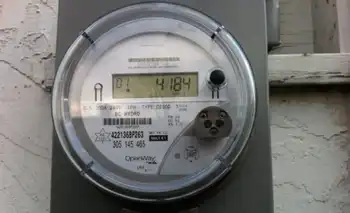
The Connecticut Public Utilities Regulatory Authority is collecting on its own initiative industry input on modernization proposals, as New York regulators open a formal review of retail energy markets for comparison, that would add up to hundreds of millions of dollars, including utility-scale batteries to store power generated by offshore wind farms and solar arrays; and “smart” meters in homes and businesses to help electricity customers better manage their power use.

The New England Power Pool serves as a central forum for plant operators, commercial users and others like the Connecticut Office of Consumer Counsel, amid Massachusetts solar demand charge debates that affect distributed generation policy, with NEPOOL’s chair stating Thursday morning the group was still reviewing the governors’ announcement.

“NEPOOL has been engaged this year in meetings ... exploring the transition to a future grid in New England and potential pathways forward to support that transition,” stated Nancy Chafetz, chair of NEPOOL, in an email.

Connecticut’s issues with ISO New England boiled over this summer on the heels of a power-purchase agreement between Millstone owner Dominion and transmission grid operators Eversource and United Illuminating, which contributed to a sharp increase in customer bills.

A few weeks ago, Lamont signed into law a “Take Back the Grid” act that allows the Connecticut Public Utilities Regulatory Authority to factor in Eversource’s and Avangrid subsidiary United Illuminating’s past performance in maintaining electric reliability, in addition to any future needs for revenue based on needed upgrades. The law included an element for Connecticut to initiate a study of ISO New England’s role.

Eversource and Avangrid have voiced support for the switch to “performance-based” regulation in Connecticut. Eversource spokesperson Mitch Gross on Thursday cited the company’s view that any changes to the operation of New England’s wholesale power markets should occur within the existing ISO New England structure.

“We also recommend any examination of potential alternatives includes a thorough evaluation that ensures unfair costs would not be imposed on customers,” Gross stated in an email.

In a statement forwarded by Avangrid spokesperson Ed Crowder, the United Illuminating parent indicated it intends to have “a voice in this process” with the goal of continued grid reliability amid increased adoption of clean energy sources.


Related News

View more

As peak wildfire season nears, SDG&E completes work on microgrid in Ramona

SDG&E Ramona Microgrid delivers renewable energy and battery storage for wildfire mitigation, grid resilience, and PSPS support, powering the Cal Fire Air Attack Base with a 500 kW, 2,000 kWh lithium-ion system during outages.


Key Points

A renewable, battery-backed microgrid powering Ramona's Air Attack Base, boosting wildfire response and PSPS resilience.

✅ 500 kW, 2,000 kWh lithium-ion storage replaces diesel

✅ Keeps Cal Fire and USFS aircraft operations powered

✅ Supports PSPS continuity and rural water reliability


It figures to be another dry year — with the potential to spark wildfires in the region. But San Diego Gas & Electric just completed a renewable energy upgrade to a microgrid in Ramona that will help firefighters and reduce the effects of power shutoffs to backcountry residents.

The microgrid will provide backup power to the Ramona Air Attack Base, helping keep the lights on during outages, home to Cal Fire and the U.S. Forest Service's fleet of aircrafts that can quickly douse fires before they get out of hand.

"It gives us peace of mind to have backup power for a critical facility like the Ramona Air Attack Base, especially given the fact that fire season in California has become year-round," Cal Fire/San Diego County Fire Chief Tony Mecham said in a statement.

The air attack base serves as a hub for fixed-wing aircraft assigned to put out fires. Cal Fire staffs the base throughout the year with one two airtankers and one tactical aircraft. The base also houses the Forest Service's Bell 205 A++ helicopter and crew to protect the Cleveland National Forest. Aircraft for both CalFire and the Forest Service can also be mobilized to help fight fires throughout the state.

This summer, the Ramona microgrid won't have to rely on diesel generation. Instead, the facility next to the town's airport will be powered by a 500 kilowatt and 2,000 kilowatt-hour lithium-ion battery storage system that won't generate any greenhouse gas emissions.

"What's great about it, besides that it's a renewable resource, is that it's a permanent installation," said Jonathan Woldemariam, SDG&E's director of wildfire mitigation and vegetation management. "In other words, we don't have to roll a portable generator out there. It's something that can be leveraged right there because it's already installed and ready to go."

Microgrids have taken on a larger profile across the state because they can operate independently of the larger electric grid, where repairing California's grid is an ongoing challenge, thus allowing small areas or communities to keep the power flowing for hours at a time during emergencies.

That can be crucial in wildfire-prone areas affected by Public Safety Power Shutoffs, or PSPS, the practice in which investor-owned utilities in California de-energize electrical power lines in a defined area when conditions are dry and windy in order to reduce the risk of a power line falling and igniting a wildfire, while power grid upgrades move forward statewide.

Rural and backcountry communities are particularly hard hit when the power is pre-emptively cut off because many homes rely on water from wells powered by electricity for their homes, horses and livestock.

In addition to Ramona, SDG&E has established microgrids in three other areas in High Fire Threat Districts:

The microgrids in Butterfield Ranch and Shelter Valley run on diesel power but the utility plans to complete solar and battery storage systems for each locale by the end of next year, as other regions develop new microgrid rules to guide deployment.

SDG&E has a fifth microgrid in operation — in Borrego Springs, which in 2013 became the first utility-scale microgrid in the country. It provides grid resiliency to the roughly 2,700 residents of the desert town and serves as a model for integrated microgrid projects elsewhere in delivering local electricity. While the Borrego Springs microgrid is not located in a High Fire Threat District, "when and if any power is turned off, especially the power transmission feed that goes to Borrego, we can support the customers using the microgrid out there," Woldemariam said.

Microgrid costs can be higher than conventional energy systems, even as projected energy storage revenue grows over the next decade, and the costs of the SDG&E projects are passed on to ratepayers. As per California Public Utilities Commission rules, the financial details for each of microgrid are kept confidential for at least three years.

SDG&E's microgrids are part of the utility's larger plan to reduce wildfire risk that SDG&E files with the utilities commission. In its wildfire plan for 2020 through 2022, SDG&E expected to spend $1.89 billion on mitigation measures.


Related News

View more

Coalition pursues extra $7.25B for DOE nuclear cleanup, job creation

DOE Environmental Management Funding Boost seeks $7.25B to accelerate nuclear cleanup, upgrade Savannah River Site infrastructure, create jobs, and support small businesses, echoing ARRA 2009 results and expediting DOE EM waste remediation nationwide.


Key Points

A proposed $7.25B stimulus for DOE's EM to accelerate nuclear cleanup, modernize infrastructure, and create jobs.

✅ $7.25B one-time stimulus for DOE EM cleanup and infrastructure.

✅ Targets Savannah River Site; supports jobs and small businesses.

✅ Builds on ARRA 2009; accelerates nuclear waste remediation.


A bloc of local governments and nuclear industry, nuclear innovation efforts, labor and community groups are pressing Congress to provide a one-time multibillion-dollar boost to the U.S. Department of Energy Office of Environmental Management, the remediation-focused Savannah River Site landlord.

The organizations and officials -- including Citizens For Nuclear Technology Awareness Executive Director Jim Marra and Savannah River Site Community Reuse Organization President and CEO Rick McLeod -- sent a letter Friday to U.S. House and Senate leadership "strongly" supporting a $7.25 billion funding injection, even as ACORE challenges coal and nuclear subsidies in separate regulatory proceedings, arguing it "will help reignite the national economy," help revive small businesses and create thousands of new jobs despite the novel coronavirus crisis.

More than 30 million Americans have filed unemployment claims in the past two months, with additional clean energy job losses reported, too. Hundreds of thousands of claims have been filed in South Carolina since mid-March, compounding issues like unpaid utility bills in neighboring states.

The requested money could, too, speed Environmental Management's nuclear waste cleanup missions and be used to fix ailing infrastructure and strengthen energy security for rural communities nationwide -- some of which dates back to the Cold War -- at sites across the country. That's a "rare" opportunity, reads the letter, which prominently features the Energy Communities Alliance logo and its chairman's signature.

Similar funding programs, like what was done with the 2009 American Recovery and Reinvestment Act and recent clean energy funding initiatives, have been successful.

At the time, amid a staggering economic downturn nationwide, Environmental Management contractors "hired over 20,000 new workers," putting them "to work to reduce the overall cleanup complex footprint by 688 square miles while strengthening local economies," the Friday letter reads.

The Energy Department's cleanup office estimates the $6 billion investment years ago reduced its environmental liability by $13 billion, according to a 2012 report.

Such a leap forward, the coalition believes, is repeatable, a view reflected in current plans to revitalize coal communities with clean energy projects across the country.

"We are confident that DOE can successfully manage increased funding and leverage it for future economic development as it has in the past," the letter states. It continues: "We take pride in working together to support jobs and development of infrastructure and work that make our country stronger and assists us to recover from the impacts of COVID-19."

As of Monday afternoon, 8,942 cases of COVID-19, the disease caused by the novel coronavirus, have been logged in South Carolina. Aiken County is home to 155 of those cases.


Related News

View more

EDP Plans to Reject $10.9 Billion-China Three Gorges Bid

EDP Takeover Bid Rejection signals pushback on China Three Gorges' acquisition bid, as investors, shareholders, and analysts cite low premium, valuation concerns, and strategic renewables assets across Portugal, the US, Brazil, and Europe utilities.


Key Points

EDP's board views China Three Gorges' 3.26 euro per share offer as too low, citing valuation and renewables exposure.

✅ Bid premium 4.8% above close seen as inadequate.

✅ Stock surged above offer; market expects higher price.

✅ Advisors UBS and Morgan Stanley guiding EDP.


EDP-Energias de Portugal SA is poised to reject a 9.1 billion euro ($10.9 billion) takeover offer from China Three Gorges Corp. on the grounds that it undervalues Portugal’s biggest energy company, according to people with knowledge of the matter.

The board of EDP, which may meet as early as this week, views the current bid of 3.26 euros a share as too low as it indicates a premium of 4.8 percent over Friday’s close, said the people, asking not to be identified because the discussions are private. EDP is also working with advisers including UBS Group AG and Morgan Stanley on the potential deal, they said.

Representatives for EDP, UBS and Morgan Stanley declined to comment. Representatives for Three Gorges didn’t immediately respond to requests for comment.

#google#

Shares of EDP surged the most in a decade to above the bid level on Monday, signaling that investors expect the Chinese utility, which is its biggest investor, to sweeten the offer to gain full control. For Three Gorges, which spent two decades building a hydro-power plant spanning China’s Yangtze River, the deal would bolster its efforts to expand abroad and give it deeper access to markets in Europe, the U.S. and Brazil.

China’s biggest renewable-energy developer already is the largest shareholder of EDP with a 23 percent stake and now is seeking more than 50 percent. While the government in Lisbon has indicated it’s comfortable with the Chinese offer, EDF electricity price deal illustrates policy dynamics in the region and it holds out little incentive for shareholders to tender their stock.


Stock Jumps

Shares of EDP rose 9.3 percent to 3.40 euros in Lisbon on Monday, even as rolling back European electricity prices remains challenging, after earlier jumping by the most since October 2008.

“We believe the price offered is too low for China Three Gorges to achieve full control of a vehicle that provides, among other things, a strategic footprint into U.S. renewables,” Javier Garrido, an analyst at JPMorgan Chase & Co., said in a note. “We expect management and minorities to claim a higher price.”

The offer adds to a wave of investments China has made overseas, both to earn a yield on its cash and to gain expertise in industries ranging from energy to telecommunications and transport. Concern about those deals has been mounting in the U.S. regulatory arena recently. European Union governments have been divided in their response, with Portugal among those most supportive of inward investment.

“China Three Gorges is an ambitious company, with expansion already in international hydro, Chinese onshore wind and floating solar, and European offshore wind,” said Angus McCrone, a senior analyst at Bloomberg New Energy Finance in London. “It may have to do better on bid price than the 5 percent premium so far offered for EDP.”


Fortum’s Troubles

The low premium offered by Three Gorges echoes the struggle Fortum Oyj had in winning over investors in its bid for Uniper SE last year, while North American deals such as Hydro One’s Avista bid faced customer backlash as well, highlighting parallels. The Finnish utility offered 8 billion euros to buy out the remainder of Uniper in September, immediately sending shares of the German power generator above the offer prices. At least for now, Fortum has settled for a 47 percent stake it bought in Uniper from EON SE, and most other shareholders decided to keep their stake.

The EDP transaction would advance a wave of consolidation among Europe’s leading utilities, which are acquiring assets and development skills in renewables as governments across the region crack down on pollution. EDP is one of Europe’s leading developers of renewable energy, building mainly wind farms and hydro plants, and has expanded in markets including Brazil and the U.S. electrification market.


Related News

View more

B.C. Commercial electricity consumption plummets during COVID-19 pandemic

BC Hydro COVID-19 Relief Fund enables small businesses to waive electricity bills for commercial properties during the pandemic, offering credits, rate support, and applications for eligible customers forced to temporarily close.


Key Points

A program that lets eligible small businesses waive up to three months of BC Hydro bills during COVID-19 closures.

✅ Eligible small general service BC Hydro accounts

✅ Up to 3 months of waived electricity charges

✅ Must be temporarily closed due to the pandemic


Businesses are taking advantage of a BC Hydro relief fund that allows electricity bills for commercial properties to be waived during the COVID-19 pandemic.

More than 3,000 applications have already been filed since the program launched on Wednesday, allowing commercial properties forced to shutter during the crisis to waive the expense for up to three months, while Ontario rate reductions are taking effect for businesses under separate measures. 

“To be eligible for the COVID-19 Relief Fund, business customers must be on BC Hydro’s small general service rate and have temporarily closed or ceased operation due to the COVID-19 pandemic,” BC Hydro said in a statement. “BC Hydro estimates that around 40,000 small businesses in the province will be eligible for the program.”

The program builds off a similar initiative BC Hydro launched last week for residential customers who have lost employment or income because of COVID-19, and parallels Ontario's subsidized hydro plan introduced to support ratepayers. So far, 57,000 B.C. residents have applied for the relief fund, which amounts to an estimated $16 million in credits, amid scrutiny over deferred BC Hydro operating costs reported by the auditor general.

Electricity use across B.C. has plummeted since the outbreak began. 

According to BC Hydro, daily consumption has fallen 13% in the first two weeks of April, aligning with electricity demand down 10% reports, compared to the three-year average for the same time period.

Electricity use has fallen 30% for recreation facilities, 29% in the restaurant sector and 27% in hotels, while industry groups such as Canadian Manufacturers & Exporters have supported steps to reduce prices. 

For more information about the COVID-19 Relief Fund and advice on avoiding BC Hydro scam attempts, go to bchydro.com/covid19relief.


Related News

View more

COVID-19 closures: It's as if Ottawa has fallen off the electricity grid

Ontario Electricity Demand Drop During COVID-19 reflects a 1,000-2,000 MW decline as IESO balances the grid, shifts peak demand later, throttles generators and baseload nuclear, and manages exports amid changing load curves.


Key Points

An about 10% reduction in Ontario's load, shifting peaks and requiring IESO grid balancing measures.

✅ Demand down 1,000-2,000 MW; roughly 10% below normal.

✅ Peak shifts later in morning as home use rises.

✅ IESO throttles generators; baseload nuclear stays online.


It’s as if the COVID-19 epidemic had tripped a circuit breaker, shutting off all power to a city the size of Ottawa.

Virus-induced restrictions that have shut down large swaths of normal commercial life across Canada has led to a noticeable drop in demand for power in Ontario and reflect a global demand dip according to reports, insiders said on Friday.

Terry Young, vice-president with the Independent Electricity System Operator, said planning was underway for further declines in usage and for whether Ontario will embrace more clean power in the long term, given the delicate balance that needs to be maintained between supply and demand.

“We’re now seeing demand that is running about 1,000 to 2,000 megawatts less than we would normally see,” Young said. “You’re essentially seeing a city the size of Ottawa drop off demand during the day.”

At the high end, a 2,000 megawatt reduction would be close to the equivalent peak demand of Ottawa and London, Ont., combined.

The decline, in the order of 10 per cent from the 17,000 to 18,000 megawatts of usage that might normally be expected and similar to the UK’s 10% drop reported during lockdowns, began last week, Young said. The downward trend became more noticeable as governments and health authorities ordered non-essential businesses to close and people to stay home. However, residential and hospital usage has climbed.

Experts say frequent hand-washing and staying away from others is the most effective way to curb the spread of the highly contagious coronavirus, which poses a special risk to older people and those with underlying health conditions. As a result, factories and other big users have reduced production or closed entirely.

Because electricity cannot be stored, generators need to throttle back their output as domestic demand shrinks and exports to places such as the United States, including New York City, which is also being hit hard by the coronavirus, fall.

“We’re watching this carefully,” Young said. “We’re able to manage this drop, but it’s something we obviously have to keep watching…and making sure we’re not over-generating electricity.”

Turning off generation, especially for nuclear plants, is an intensive process, as are restarts and would likely happen only if the downward demand trend intensifies significantly, amid concerns over Ontario’s electricity getting dirtier if baseload is displaced. However, one of North America’s largest generators, Bruce Power near Kincardine, Ont., said it had a large degree of flexibility to scale down or up.

“We have the ability to provide one-third of our output as a dynamic response, which is unique to our facility,” said James Scongack, an executive vice-president with Bruce Power. “We developed this coming out of the 2008 downturn and it’s been a critical system asset for the last decade.”

“We don’t see there being a scenario where our baseload will not be needed,” he said, even as some warn Ontario may be short of electricity in the coming years.

The province’s publicly owned Ontario Power Generation said it was also in conversations with the system operator, which provides direction to generators, and is often cited in the Ontario election discussion.

One clear shift in normal work-day usage with so many people staying at home has been the change in demand patterns. Typically, Young said, there’s a peak from about 7 a.m. to 8 a.m. as people wake and get ready to go to work or school. The peak is now occurring later in the morning, Young said.


Related News

View more

Sign Up for Electricity Forum’s Newsletter

Stay informed with our FREE Newsletter — get the latest news, breakthrough technologies, and expert insights, delivered straight to your inbox.

Electricity Today T&D Magazine Subscribe for FREE

Stay informed with the latest T&D policies and technologies.
  • Timely insights from industry experts
  • Practical solutions T&D engineers
  • Free access to every issue

Download the 2025 Electrical Training Catalog

Explore 50+ live, expert-led electrical training courses –

  • Interactive
  • Flexible
  • CEU-cerified