By -- Source, Reuters


Substation Relay Protection Training

Our customized live online or in‑person group training can be delivered to your staff at your location.

  • Live Online
  • 12 hours Instructor-led
  • Group Training Available
Regular Price:
$699
Coupon Price:
$599
Reserve Your Seat Today
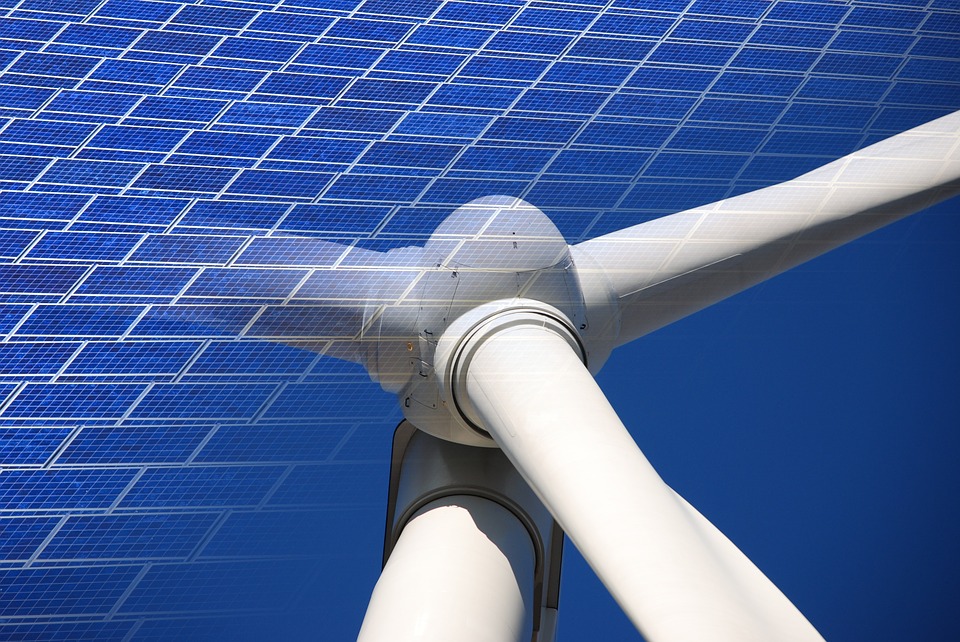
OTTAWA - The Canadian government launched a C$260 million ($170 million) initiative on Wednesday to develop wind energy to combat climate change.

The government will provide a financial incentive for the installation of 1,000 megawatts of new wind generating capacity over the next five years, on top of the 200 megawatts installed in the past decade.

The added capacity would be enough to power 250,000 homes.

Under the initiative, the broad outlines of which were announced in the federal budget in December, producers would receive 0.8 to 1.2 Canadian cents for every kilowatt hour generated during the first 10 years of operation.

The program is part of the government's C$1.5 billion commitment since 2000 to address climate change. Wind-generated power is considered a green source of electricity because of its low environmental impact.

($1=$1.53 Canadian)

Related News

Snohomish PUD Hikes Rates Due to Severe Weather Impact

Snohomish PUD rate increase addresses storm recovery after a bomb cyclone and extended cold snap, stabilizing finances and grid reliability while offering assistance programs, payment plans, and energy efficiency for customers.


Key Points

Temp 5.8% residential hike in Feb 2025 to recover storm costs, meet cold snap demand, and uphold reliable service.

✅ 5.8% residential increase effective Feb 2025

✅ Driven by bomb cyclone damage and cold snap demand

✅ Aid includes payment plans, efficiency rebates, low income support


In early February 2025, the Snohomish County Public Utility District (PUD) announced a temporary increase in electricity rates to offset the financial impact of severe weather events, including a bomb cyclone and an extended cold snap, that occurred in late 2024. This decision aims to stabilize the utility's finances, a pattern seen at other utilities such as Florida Power & Light, which pursued a hurricane surcharge to recover storm costs, while ensuring continued service reliability for its customers.

Background of the Weather Events

In November 2024, the Pacific Northwest experienced a powerful bomb cyclone—a rapidly intensifying storm characterized by a significant drop in atmospheric pressure. This event brought heavy rainfall, strong winds, and widespread power outages across the region. Compounding the situation, a prolonged cold weather period in December 2024 and January 2025 led to increased energy demand, and similar conditions drove up Pennsylvania power rates in the same winter season, as residents and businesses relied heavily on heating systems.

Impact on Snohomish PUD

The combination of the bomb cyclone and the subsequent cold weather placed considerable strain on the Snohomish PUD's infrastructure and financial resources. The utility incurred substantial costs for emergency repairs, restoration efforts, and the procurement of additional electricity to meet the heightened demand during the cold snap. These unforeseen expenses prompted the PUD to seek a temporary rate adjustment to maintain financial stability and continue providing reliable service to its customers.

Details of the Rate Increase

Effective February 2025, the Snohomish PUD implemented a temporary electricity rate increase of 5.8% for residential customers, compared with a 3% BC Hydro increase in the same region for context. This adjustment is designed to recover the additional costs incurred during the severe weather events. The PUD has communicated that this rate increase is temporary and will be reevaluated after a specified period to determine if further adjustments are necessary.

Customer Impact and Assistance Programs

While the rate increase is intended to be temporary, it may still pose a financial burden for some customers, even as some markets expect rates to stabilize in 2025 in other jurisdictions. To mitigate this impact, the Snohomish PUD has outlined several assistance programs:

  • Payment Plans: Customers facing financial hardship can enroll in extended payment plans to spread the cost of the increased rates over a longer period.

  • Energy Efficiency Programs: The PUD offers incentives and resources to help customers reduce energy consumption, potentially lowering their overall bills.

  • Low-Income Assistance: Eligible low-income customers may qualify for additional support through state and federal assistance programs.

The utility encourages customers to contact their customer service department to explore these options and find the best solutions for their individual circumstances.

Community Response and Future Considerations

The announcement of the rate increase has elicited mixed reactions from the community. Some residents express understanding, recognizing the necessity of maintaining infrastructure and service reliability. Others have voiced concerns about the financial impact, particularly among vulnerable populations, a debate also seen with higher BC Hydro rates in nearby British Columbia.

Looking ahead, the Snohomish PUD is committed to enhancing its infrastructure to better withstand future extreme weather events, an approach aligned with other utilities' multi-year rate proposals to fund upgrades. This includes investing in grid modernization, implementing advanced weather forecasting tools, and developing comprehensive emergency response plans. The utility also plans to engage with the community through public forums and surveys to gather feedback and collaboratively develop strategies that balance financial sustainability with customer affordability.

The temporary electricity rate increase by the Snohomish County Public Utility District reflects the financial challenges posed by severe weather events and parallels regional trends, including BC Hydro's 3.75% over two years adjustments, and underscores the importance of proactive infrastructure investment and community engagement. While the rate adjustment aims to stabilize the utility's finances, the PUD remains focused on supporting its customers through assistance programs and ongoing efforts to enhance service reliability and resilience against future climate-related events.


Related News

View more

Independent power project announced by B.C. Hydro now in limbo

Siwash Creek Hydroelectric Project faces downsizing under a BC Hydro power purchase agreement, with run-of-river generation, high grid interconnection costs, First Nations partnership, and surplus electricity from Site C reshaping clean energy procurement.


Key Points

A downsized run-of-river plant in BC, co-owned by Kanaka Bar and Green Valley, selling power via a BC Hydro PPA.

✅ Approved at 500 kW under a BC Hydro clean-energy program

✅ Grid interconnection initially quoted at $2.1M

✅ Joint venture: Kanaka Bar and Green Valley Power


A small run-of-river hydroelectric project recently selected by B.C. Hydro for a power purchase agreement may no longer be financially viable.

The Siwash Creek project was originally conceived as a two-megawatt power plant by the original proponent Chad Peterson, who holds a 50-per-cent stake through Green Valley Power, with the Kanaka Bar Indian Band holding the other half.

The partners were asked by B.C. Hydro to trim the capacity back to one megawatt, but by the time the Crown corporation announced its approval, it agreed to only half that — 500 kilowatts — under its Standing Order clean-energy program.

“Hydro wanted to charge us $2.1 million to connect to the grid, but then they said they could reduce it if we took a little trim on the project,” said Kanaka Bar Chief Patrick Michell.

The revenue stream for the band and Green Valley Power has been halved to about $250,000 a year. The original cost of running the $3.7-million plant, including financing, was projected to be $273,000 a year, according to the Kanaka Bar economic development plan.

“By our initial forecast, we will have to subsidize the loan for 20 years,” said Michell. “It doesn’t make any sense.”

The Kanaka Band has already invested $450,000 in feasibility, hydrology and engineering studies, with a similar investment from Green Valley.

B.C. Hydro announced it would pursue five purchase agreements last March with five First Nations projects — including Siwash Creek — including hydro, solar and wind energy projects, as two new generating stations were being commissioned at the time. A purchase agreement allows proponents to sell electricity to B.C. Hydro at a set price.

However, at least ten other “shovel-ready” clean energy projects may be doomed while B.C. Hydro completes a review of its own operations and its place in the energy sector, where legal outcomes like the Squamish power project ruling add uncertainty, including B.C.’s future power needs.

With the 1,100-megawatt Site C Dam planned for completion in 2024, and LNG demand cited to justify it, B.C. Hydro now projects it will have a surplus of electricity until the early 2030s.

Even if British Columbians put 300,000 electric vehicles on the road over the next 12 years, amid BC Hydro’s first call for power, they will require only 300 megawatts of new capacity, the company said.

A long-term surplus could effectively halt all small-scale clean energy development, according to Clean Energy B.C., even as Hydro One’s U.S. coal plant remains online in the region.

“(B.C. Hydro) dropped their offer down to 500 kilowatts right around the time they announced their review,” said Michell. “So we filled out the paperwork at 500 kilowatts and (B.C. Hydro) got to make its announcement of five projects.”

In the new few weeks, Kanaka and Green Valley will discuss whether they can move forward with a new financial model or shelve the project, he said.

B.C. Hydro declined to comment on the rationale for downsizing Siwash Creek’s power purchase agreement.

The Kanaka Bar Band successfully operates a 49.9-megawatt run-of-river plant on Kwoiek Creek with partners Innergex Renewable Energy.


Related News

View more

Soaring Electricity And Coal Use Are Proving Once Again, Roger Pielke Jr's "Iron Law Of Climate"

Global Electricity Demand Surge underscores rising coal generation, lagging renewables deployment, and escalating emissions, as nations prioritize reliable power; nuclear energy and grid decarbonization emerge as pivotal solutions to the electricity transition.


Key Points

A rapid post-lockdown rise in power consumption, outpacing renewables growth and driving higher coal use and emissions.

✅ Coal generation rises faster than wind and solar additions

✅ Emissions increase as economies prioritize reliable baseload power

✅ Nuclear power touted for rapid grid decarbonization


By Robert Bryce

As the Covid lockdowns are easing, the global economy is recovering and that recovery is fueling blistering growth in electricity use. The latest data from Ember, the London-based “climate and energy think tank focused on accelerating the global electricity transition,” show that global power demand soared by about 5% in the first half of 2021. That’s faster growth than was happening back in 2018 when electricity use was increasing by about 4% per year.

The numbers from Ember also show that despite lots of talk about the urgent need to reduce greenhouse gas emissions, coal demand for power generation continues to grow and emissions from the electric sector continue to grow: up by 5% over the first half of 2019. In addition, they show that while about half of the growth in electricity demand was met by wind and solar, as low-emissions sources are set to cover almost all new demand over the next three years, overall growth in electricity use is still outstripping the growth in renewables. 

The soaring use of electricity, and increasing emissions from power generation confirm the sage wisdom of Rasheed Wallace, the volatile former power forward with the Detroit Pistons and other NBA teams, and now an assistant coach at the  University of Memphis, who coined the catchphrase: “Ball don’t lie.” If Wallace or one of his teammates was called for a foul during a basketball game that he thought was undeserved, and the opposing player missed the ensuing free throws, Wallace would often holler, “ball don’t lie,” as if the basketball itself was pronouncing judgment on the referee’s errant call. 

I often think about Wallace’s catchphrase while looking at global energy and power trends and substitute my own phrase: numbers don’t lie.

Over the past few weeks Ember, BP, and the International Energy Agency have all published reports which come to the same two conclusions: that countries all around the world — and China's electricity sector in particular — are doing whatever they need to do to get the electricity they need to grow their economies. Second, they are using lots of coal to get that juice. 

As I discuss in my recent book, A Question of Power: Electricity and the Wealth of Nations, Electricity is the world’s most important and fastest-growing form of energy. The Ember data proves that. At a growth rate of 5%, global electricity use will double in about 14 years, and as surging electricity demand is putting power systems under strain around the world, the electricity sector also accounts for the biggest single share of global carbon dioxide emissions: about 25 percent. Thus, if we are to have any hope of cutting global emissions, the electricity sector is pivotal. Further, the soaring use of electricity shows that low-income people and countries around the world are not content to stay in the dark. They want to live high-energy lives with access to all the electronic riches that we take for granted.  

 Ember’s data clearly shows that decarbonizing the global electric grid will require finding a substitute for coal. Indeed, coal use may be plummeting in the U.S. and western Europe, where U.S. electricity consumption has been declining, but over the past two years, several developing countries including Mongolia, China, Bangladesh, Vietnam, Kazakhstan, Pakistan, and India, all boosted their use of coal. This was particularly obvious in China, where, between the first half of 2019 and the first half of 2021, electricity demand jumped by about 14%. Of that increase, coal-fired generation provided roughly twice as much new electricity as wind and solar combined. In Pakistan, electricity demand jumped by about 7%, and coal provided more than three times as much new electricity as nuclear and about three times as much as hydro. (Wind and solar did not grow at all in Pakistan over that period.) 

Hate coal all you like, but its century-long persistence in power generation proves its importance. That persistence proves that climate change concerns are not as important to most consumers and policymakers as reliable electricity. In 2010, Roger Pielke Jr. dubbed this the Iron Law of Climate Policy which says “When policies on emissions reductions collide with policies focused on economic growth, economic growth will win out every time.” Pielke elaborated on that point, saying the Iron Law is a “boundary condition on policy design that is every bit as limiting as is the second law of thermodynamics, and it holds everywhere around the world, in rich and poor countries alike. It says that even if people are willing to bear some costs to reduce emissions (and experience shows that they are), they are willing to go only so far.”

Over the past five years, I’ve written a book about electricity, co-produced a feature-length documentary film about it (Juice: How Electricity Explains the World), and launched a podcast that focuses largely on energy and power. I’m convinced that Pielke’s claim is exactly right and should be extended to electricity and dubbed the Iron Law of Electricity which says, “when forced to choose between dirty electricity and no electricity, people will choose dirty electricity every time.” I saw this at work in electricity-poor places all over the world, including India, Lebanon, and Puerto Rico. 

Pielke, a professor at the University of Colorado as well as a highly regarded author on the politics of climate change and sports governance, has since elaborated on the Iron Law. During an interview in Juice, he explained it thusly: “The Iron Law says we’re not going to reduce emissions by willingly getting poor. Rich people aren't going to want to get poorer, poor people aren't going to want to get poorer.” He continued, “If there is one thing that we can count on it is that policymakers will be rewarded by populations if they make people wealthier. We're doing everything we can to try to get richer as nations, as communities, as individuals. If we want to reduce emissions, we really have only one place to go and that's technology.”

Pielke’s point reminds me of another of my favorite energy analysts, Robert Rapier, who made a salient point in his Forbes column last week. He wrote, “Despite the blistering growth rate of renewables, it’s important to keep in mind that overall global energy consumption is growing. Even though global renewable energy consumption has increased by about 21 exajoules in the past decade, overall energy consumption has increased by 51 exajoules. Increased fossil fuel consumption made up most of this growth, with every category of fossil fuels showing increased consumption over the decade.” 

The punchline here – despite my tangential reference to Rasheed Wallace — is obvious: The claims that massive reductions in global carbon dioxide emissions must happen soon are being mocked by the numbers. Countries around the world are acting in their interest, particularly when it comes to their electricity needs and that is resulting in big increases in emissions. As Ember concludes in their report, wind and solar are growing, and some analyses suggest renewables could eclipse coal by 2025, but the “electricity transition” is “not happening fast enough.”

Ember explains that in the first half of 2021, wind and solar output exceeded the output of the world’s nuclear reactors for the first time. It also noted that over the past two years, “Nuclear generation fell by 2% compared to pre-pandemic levels, as closures at older plants across the OECD, especially amid debates over European nuclear trends, exceeded the new capacity in China.” While that may cheer anti-nuclear activists at groups like Greenpeace and Friends of the Earth, the truth is obvious: the only way – repeat, the only way – the electric sector will achieve significant reductions in carbon dioxide emissions is if we can replace lots of coal-fired generation with nuclear reactors and do so in relatively short order, meaning the next decade or so. Renewables are politically popular and they are growing, but they cannot, will not, be able to match the soaring demand for the electricity that is needed to sustain modern economies and bring developing countries out of the darkness and into modernity. 

Countries like China, Vietnam, India, and others need an alternative to coal for power generation. They need new nuclear reactors that are smaller, safer, and cheaper than the existing designs. And they need it soon. I will be writing about those reactors in future columns.


Related News

View more

Britons could save on soaring bills as ministers plan to end link between gas and electricity prices

UK Electricity-Gas Price Decoupling aims to reform wholesale electricity pricing under the Energy Security Bill, shielding households from gas price spikes, supporting renewables, and easing the cost-of-living crisis through market redesign and transparent tariffs.


Key Points

Policy to decouple power prices from gas via the Energy Security Bill, stabilizing bills and reflecting renewables

✅ Breaks gas-to-power pricing link to cut electricity costs

✅ Reduces volatility; shields households from global gas shocks

✅ Highlights benefits of renewables and market transparency


Britons could be handed relief on rocketing household bills under Government plans to sever the link between the prices of gas and electricity, including proposals to restrict energy prices in the market, it has emerged.

Ministers are set to bring forward new laws under the Energy Security Bill to overhaul the UK's energy market in the face of the current cost-of-living crisis.

They have promised to provide greater protection for Britons against global fluctuations in energy prices, through a price cap on bills among other measures.

The current worldwide crisis has been exacerbated by the Ukraine war, which has sent gas prices spiralling higher.

Under the current make-up of Britain's energy market, soaring natural gas prices have had a knock-on effect on electricity costs.

But it has now been reported the new legislation will seek to prevent future shocks in the global gas market having a similar impact on electricity prices.

Yet the overhaul might not come in time to ease high winter energy costs for households ahead of this winter.

According to The Times, Business Secretary Kwasi Kwarteng will outline proposals for reforms in the coming weeks.

These will then form part of the Energy Security Bill to be introduced in the autumn, with officials anticipating a decrease in energy bills by April.

The newspaper said the plans will end the current system under which the wholesale cost of gas effectively determines the price of electricity for households.

Although more than a quarter of Britain's electricity comes from renewable sources, under current market rules it is the most expensive megawatt needed to meet demand that determines the price for all electricity generation.

This means that soaring gas prices have driven up all electricity costs in recent months, even though only around 40% of UK electricity comes from gas power stations.

Energy experts have compared the current market to train passengers having to pay the peak-period price for every journey they make.

One Government source told The Times: 'In the past it didn’t really matter because the price of gas was reasonably stable.

'Now it seems completely crazy that the price of electricity is based on the price of gas when a large amount of our generation is from renewables.'

It was also claimed ministers hope the reforms will make the market more transparent and emphasise to consumers the benefits of decarbonisation, amid an ongoing industry debate over free electricity for consumers.

A Government spokesperson said: 'The high global gas prices and linked high electricity prices that we are currently facing have given added urgency to the need to consider electricity market reform.


Related News

View more

Class-action lawsuit: Hydro-Québec overcharged customers up to $1.2B

Hydro-QuE9bec Class-Action Lawsuit alleges overbilling and monopoly abuse, citing RE9gie de l'E9nergie rate increases, Quebec Superior Court filings, and calls for refunds on 2008-2013 electricity bills to residential and business customers.


Key Points

Quebec class action alleging Hydro-QuE9bec overbilled customers in 2008-2013, seeking court-ordered refunds.

✅ Filed in Quebec Superior Court; certification pending.

✅ Alleges up to $1.2B in overcharges from 2008-2013.

✅ Questions RE9gie de l'E9nergie rate approvals and data.


A group representing Hydro-Québec customers has filed a motion for a class-action lawsuit against the public utility, alleging it overcharged customers over a five-year period.

Freddy Molima, one of the representatives of the Coalition Peuple allumé, accuses Hydro-Québec of "abusing its monopoly."

The motion, which was filed in Quebec Superior Court, claims Hydro-Québec customers paid more than they should have for electricity between 2008 and 2013, to the tune of nearly $1.2 billion, even as Hydro-Québec later refunded $535 million to customers in a separate case. 

The coalition has so far recruited nearly 40,000 participants online as part of its plan to sue the public utility.

A lawyer representing the group said Quebec's energy board, the Régie de l'énergie, also recently approved Hydro-Québec rate increases for residential and business customers without knowing all the facts, even as Manitoba Hydro hikes face opposition in regulatory hearings.

"There's certain information provided to the Régie that isn't true," said Bryan Furlong. "Hydro-Québec has not been providing the Régie the proper numbers."

In its motion, the group asks that overcharged clients be retroactively reimbursed.

Hydro-Québec denies allegations

Hydro-Québec, for its part, denies it ever overbilled any of its clients, while other utilities such as Hydro One plan to redesign bills to improve clarity.

"All our efficiencies have been returned to the government through our profits, and to Quebecers we have billed exactly what we agreed to bill," said spokesperson Serge Abergel, adding that the utility won't seek a rate hike next year according to its current plans.

Quebec Energy Minister Pierre Moreau also came to the public utility's defence, saying it has no choice but to comply with the  energy board's regulations, while customer protections are in focus as Hydro One moves to reconnect 1,400 customers in Ontario.

The group says the public utility has overbilled clients by up to $1.2 billion. (Radio-Canada)

It would be "shocking" if customers were charged too much money, he added.

"I know for a fact that Hydro-Québec is respecting the decision of this body," he said.

While the motion has been filed, the group cannot say how much each customer would receive if the class-action lawsuit goes ahead because it all depends on how much electricity was consumed by each client over that five-year period.

The coalition plans to present its motion to a judge next February.


Related News

View more

Georgia Power customers to see $21 reduction on June bills

Georgia Power June bill credit delivers PSC-approved savings, lower fuel rates, and COVID-19 relief for residential customers, driven by natural gas prices and 2018 earnings, with typical 1,000 kWh users seeing June bill reductions.


Key Points

A PSC-approved one-time credit and lower fuel rates reducing June bills for Georgia Power residential customers.

✅ $11.29 credit for 1,000 kWh usage on June bills

✅ Fuel rate cut saves $10.26 per month from June to September 2020

✅ PSC-approved $51.5M credit based on Georgia Power's 2018 results


Georgia Power announced that the typical residential customer using 1,000-kilowatt hours will receive an $11.29 credit on their June bill, reflecting a lump-sum credit model also used elsewhere.

This reflects implementation of a one-time $51.5 million credit for customers, similar to Gulf Power's bill decrease efforts, approved by the Georgia Public Service Commission, as a result of

Georgia Power's 2018 financial results.

Pairing the June credit with new, lower fuel rates recently announced, the typical residential customer would see a reduction of $21.55 in June, even as some regions face increases like Pennsylvania's winter price hikes elsewhere.

The amount each customer receives will vary based on their 2018 usage. Georgia Power will apply the credit to June bills for customers who had active accounts as of Dec. 31, 2018, and are still active or receiving a final bill as of June 2020, and the company has issued pandemic scam warnings to help customers stay informed.

Fuel rate lowered 17.2 percent

In addition to the approved one-time credit in June, the Georgia PSC recently approved Georgia Power’s plan to reduce its fuel rates by 17.2 percent and total billings by approximately $740 million over a two-year period. The implementation of a special interim reduction will provide customers additional relief during the COVID-19 pandemic through even lower fuel rates over the upcoming 2020 summer months. The lower fuel rate and special interim reduction will lower the total bill of a typical residential customer using an average of 1,000-kilowatt hours by a total of $10.26 per month from June through September 2020.

The reduction in the company’s fuel rate is driven primarily by lower natural gas prices, even as FPL proposed multiyear rate hikes in Florida, as a result of increased natural gas supplies, which the company is able to take advantage of to benefit customers due to its diverse generation sources.

February bill credit due to tax law savings

Georgia Power completed earlier this year the third and final bill credit associated with the Tax Cuts and Jobs Act of 2017, resulting in credits totaling $106 million. The typical residential customer using an average of 1,000 kilowatt-hours per month received a credit of approximately $22 on their February Georgia Power bill, a helpful offset as U.S. electric bills rose 5% in 2022 according to national data.


Related News

View more

Sign Up for Electricity Forum’s Newsletter

Stay informed with our FREE Newsletter — get the latest news, breakthrough technologies, and expert insights, delivered straight to your inbox.

Electricity Today T&D Magazine Subscribe for FREE

Stay informed with the latest T&D policies and technologies.
  • Timely insights from industry experts
  • Practical solutions T&D engineers
  • Free access to every issue

Download the 2025 Electrical Training Catalog

Explore 50+ live, expert-led electrical training courses –

  • Interactive
  • Flexible
  • CEU-cerified