BC Hydro shows zero tolerance for pot growers

By CBC News Online


Protective Relay Training - Basic

Our customized live online or in‑person group training can be delivered to your staff at your location.
  • Live Online
  • 12 hours Instructor-led
  • Group Training Available
Regular Price:
$699
Coupon Price:
$599
Reserve Your Seat Today
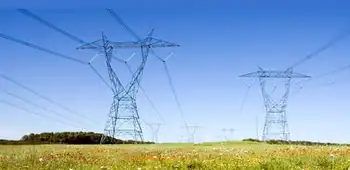
BC Hydro is concerned that too much of its money is going up in pot smoke, and wants its customers to help police sniff out marijuana grow operations.

The provincial utility says it's losing millions of dollars because pot growers steal electricity, often by bypassing the power meters.

Even when huge power bills are racked up and get paid, there's little the power company can do about the grow ops, because privacy laws keep it from tipping off the cops about suspicious power usage.

"Unfortunately there are cases where there are grow operations taking place where hydro is being paid for, but we are unable to provide RCMP with that information," said Elisha Moreno, a spokesperson with the utility.

So BC Hydro customers are getting a pamphlet in their bills, teaching them how to spot a grow house in their neighbourhood, and encouraging them to call the police.

The grow ops are considered a public danger because they use large amounts of electricity, often with large amounts of rewiring done inside.

Police agree with the utility that such cases are accidents waiting to happen. They work closely together when operations are found.

"And that's huge when we get to a grow operation where somebody has bypassed the electrical system and is basically playing with electricity and putting at risk the safety of officers as well as residents," said Vancouver Police Const. Sarah Bloor.

BC Hydro's Moreno says the mail-out campaign costs just pennies per customer, and is worth the effort to stop the losses to pot growers stealing power.

Related News
Hydro One deal to buy Avista receives U.S. antitrust clearance

Hydro One-Avista Acquisition secures U.S. antitrust clearance under Hart-Scott-Rodino, pending approvals from state utility commissions, the FCC, and CFIUS, with prior FERC approval and shareholder vote supporting the cross-border utility merger.


Key Points

A $6.7B cross-border utility merger cleared under HSR, still awaiting state, FCC, and CFIUS approvals; FERC approved earlier.

✅ HSR waiting period expired; U.S. antitrust clearance obtained

✅ Approvals pending: state commissions, FCC, and CFIUS

✅ FERC and Avista shareholders have approved the transaction


Hydro One Ltd. says it has received antitrust clearance in the United States for its deal to acquire U.S. energy company Avista Corp., even as it sought to redesign customer bills in Ontario.

The Ontario-based utility says the 30-day waiting period under the Hart-Scott-Rodino Antitrust Improvements Act expired Thursday night.

Hydro One announced the friendly deal to acquire Avista last summer, amid customer backlash in some service areas, in an agreement that valued the company at $6.7 billion.

The deal still requires several other approvals, including those from utility commissions in Washington, Idaho, Oregon, Montana and Alaska.

Analysts also warned of political risk for Hydro One during this period, reflecting concerns about provincial influence.

The U.S. Federal Communications Commission must also sign off on the transaction, and although U.S. regulators later rejected the $6.7B takeover following review, clearance is required by the Committee on Foreign Investment in the United States.

The agreement has received approval from the U.S. Federal Energy Regulatory Commission as well as Avista shareholders, and it mirrored other cross-border deals such as Algonquin Power's acquisition of Empire District that closed in the sector.


Related News

View more

Solar changing shape of electricity prices in Northern Europe

EU Solar Impact on Electricity Prices highlights how rising solar PV penetration drives negative pricing, shifts peak hours, pressures wholesale markets, and challenges grid balancing, interconnection, and flexibility amid changing demand and renewables growth.


Key Points

Explains how rising solar PV cuts wholesale prices, shifts negative-price hours, and strains grid flexibility.

✅ Negative pricing events surge with higher solar penetration.

✅ Afternoon price dips replace night-time wind-led lows.

✅ Grid balancing, interconnectors, and flexibility become critical.


The latest EU electricity market report has confirmed the affect deeper penetration of solar is having on wholesale electricity prices more broadly.

The Quarterly Report on European Electricity Markets for the final three months of last year noted the number of periods of negative electricity pricing doubled from 2019, to almost 1,600 such events, as global renewables set new records in deployment across markets.

Having experienced just three negative price events in 2019, the Netherlands recorded almost 100 last year “amid a dramatic increase in solar PV capacity,” in the nation, according to the report.

Whilst stressing the exceptional nature of the Covid-19 pandemic on power consumption patterns, the quarterly update also noted a shift in the hours during which negative electric pricing occurred in renewables poster child Germany. Previously such events were most common at night, during periods of high wind speed and low demand, but 2020 saw a switch to afternoon negative pricing. “Thus,” stated the report, “solar PV became the main driver behind prices falling into negative territory in the German market in 2020, as Germany's solar boost accelerated, and also put afternoon prices under pressure generally.”

The report also highlighted two instances of scarce electricity–in mid September and on December 9–as evidence of the problems associated with accommodating a rising proportion of intermittent clean energy capacity into the grid, and called for more joined-up cross-border power networks, amid pushback from Russian oil and gas across the continent.

Rising solar generation–along with higher gas output, year on year–also helped the Netherlands generate a net surplus of electricity last year, after being a net importer “for many years.” The EU report also noted a beneficial effect of rising solar generation capacity on Hungary‘s national electricity account, and cited a solar “boom” in that country and Poland, mirroring rapid solar PV growth in China in recent years.

With Covid-19 falls in demand helping renewables generate more of Europe's electricity (39%) than fossil fuels (36%) for the first time, as renewables surpassed fossil fuels across Europe, the market report observed the 5% of the bloc's power produced from solar closed in on the 6% accounted for by hard coal. In the final three months of the year, European solar output rose 12%, year on year, to 18 TWh and “the increase was almost single-handedly driven by Spain,” the study added.

With coal and lignite-fired power plunging 22% last year across the bloc, it is estimated the European power sector reduced its carbon footprint 14% as part of Europe's green surge although the quarterly report warned cold weather, lower wind speeds and rising gas prices in the opening months of this year are likely to see carbon emissions rebound.

There was good news on the transport front, though, with the report stating the scale of the European “electrically-charged vehicle” fleet doubled in 2020, to 2 million, with almost half a million of the new registrations arriving in the final months of the year. That meant cars with plug sockets accounted for a remarkable 17% of new purchases in Q4, twice the proportion seen in China and a slice of the pie six times bigger than such products claimed in the U.S.


Related News

View more

Northvolt Affirms Continuation of EV Battery Plant Project Near Montreal

Northvolt Montreal EV Battery Plant advances as a Quebec clean energy hub, leveraging hydroelectric power to supply EV batteries, strengthen North American supply chains, and support automakers' electrification with sustainable manufacturing and regional distribution.


Key Points

A Quebec-based EV battery facility using hydroelectric power to scale sustainable production for North America.

✅ Powered by Quebec hydro for lower-carbon cell manufacturing

✅ Strengthens North American EV supply chain resilience

✅ Creates local jobs, R&D, and advanced manufacturing skills


Northvolt, a prominent player in the electric vehicle (EV) battery industry, has reaffirmed its commitment to proceed with its battery plant project near Montreal as originally planned. This development marks a significant step forward in Northvolt's expansion strategy and signals confidence in Canada's role in the global EV market.

The decision to move forward with the EV battery plant project near Montreal underscores Northvolt's strategic vision to establish a strong foothold in North America's burgeoning electric vehicle sector. The plant is poised to play a crucial role in meeting the growing demand for sustainable battery solutions as automakers accelerate their transition towards electrification.

Located strategically in Quebec, a province known for its abundant hydroelectric power and supportive government policies towards clean energy initiatives, including major Canada-Quebec investments in battery assembly, the battery plant project aligns with Canada's commitment to promoting green technology and reducing carbon emissions. By leveraging Quebec's renewable energy resources, Northvolt aims to produce batteries with a lower carbon footprint compared to traditional manufacturing processes.

The EV battery plant is expected to contribute significantly to the local economy by creating jobs, stimulating economic growth, and fostering technological innovation in the region, much as a Niagara Region battery plant is catalyzing development in Ontario. As Northvolt progresses with its plans, collaboration with local stakeholders, including government agencies, educational institutions, and industry partners, will be pivotal in ensuring the project's success and maximizing its positive impact on the community.

Northvolt's decision to advance the battery plant project near Montreal also reflects broader trends in the global battery manufacturing landscape. With increasing emphasis on sustainability and supply chain resilience, companies like Northvolt are investing in diversified production capabilities, including projects such as a $1B B.C. battery plant, to meet regional market demands and reduce dependency on overseas suppliers.

Moreover, the EV battery plant project near Montreal represents a milestone in Canada's efforts to strengthen its position in the global electric vehicle supply chain, with EV assembly deals helping put the country in the race. By attracting investments from leading companies like Northvolt, Canada aims to build a robust ecosystem for electric vehicle manufacturing and innovation, driving economic competitiveness and environmental stewardship.

The plant's proximity to key markets in North America further enhances its strategic value, enabling efficient distribution of batteries to automotive manufacturers across the continent. This geographical advantage positions Northvolt to capitalize on the growing demand for electric vehicles in Canada, the United States, and beyond, supporting Canada-U.S. collaboration on supply chains and market growth.

Looking ahead, Northvolt's commitment to advancing the EV battery plant project near Montreal underscores its long-term vision and dedication to sustainable development. As the global electric vehicle market continues to evolve, alongside the U.S. auto sector's pivot to EVs, investments in battery manufacturing infrastructure will play a critical role in shaping the industry's future landscape and accelerating the adoption of clean transportation technologies.

In conclusion, Northvolt's affirmation to proceed with the EV battery plant project near Montreal represents a significant milestone in Canada's transition towards sustainable mobility solutions. By harnessing Quebec's renewable energy resources and fostering local partnerships, Northvolt aims to establish a state-of-the-art manufacturing facility that not only supports the growth of the electric vehicle sector but also contributes to Canada's leadership in clean technology innovation, bolstered by initiatives like Nova Scotia vehicle-to-grid pilots that strengthen grid readiness nationwide. As the project moves forward, its impact on economic growth, job creation, and environmental sustainability is expected to resonate positively both locally and globally.


Related News

View more

Reliability of power winter supply puts Newfoundland 'at mercy of weather': report

Labrador Island Link Reliability faces scrutiny as Nalcor Energy and General Electric address software issues; Liberty Consulting warns of Holyrood risks, winter outages, grid stability concerns, and PUB oversight for Newfoundland and Labrador.


Key Points

It is the expected dependability of the link this winter, currently uncertain due to GE software and Holyrood risks.

✅ GE software delays may hinder reliable in-service by mid-November.

✅ Holyrood performance issues increase winter outage risk.

✅ PUB directs Hydro to plan contingencies and improve assets.


An independent consultant is questioning if the brand new Labrador Island link can be counted on to supply power to Newfoundland this coming winter.

In June, Nalcor Energy confirmed it had successfully sent power from Churchill Falls to the Avalon Peninsula through its more than 1500-kilometre link, but now the Liberty Consulting Group says it doesn't expect the link will be up and running consistently this winter.

"What we have learned supports a conclusion that the Labrador Island Link is unlikely to be reliably in commercial operation at the start of the winter," says the report dated Aug. 30, 2018.

The link relies on software provided by General Electric but Liberty says there are lingering questions about GE's ability to ensure the necessary software will be in place this fall.

"At an August meeting, company representatives did not express confidence in GE's ability to meet an in-service date for the Labrador Island Link of mid-November," says the report.

Liberty also says testing the link for a brief period this spring and fall doesn't demonstrate long-term reliability.

"The link will remain prone to the uncertainties any new major facility faces early in its operating life, especially one involving technology new to the operating company," according to the report.

Holyrood trouble

The report goes on to say island residents should also be worried about the reliability of the troubled Holyrood facility — a facility that's important when demand for energy is high during winter months.

Liberty says "poor performance at the Holyrood thermal generating station increases the risk of outages considerably."

The group's report concludes the deteriorating condition of Holyrood is a major threat to the island's power supply and Liberty says that threat "could produce very severe consequences when the Labrador Island Link is unavailable."

The consultant says questions about the Labrador Island Link's readiness combined with concerns about the reliability of Holyrood may mean power outages, and for vulnerable customers, debates over hydro disconnections policies often intensify during winter.

"This all suggests that, for at least part of this winter, the island interconnected system may be at the mercy of the weather, where severe events can test utilities' storm response efforts further."

The consultant's report also includes five recommendations to the PUB, reflecting the kind of focused nuclear alert investigation follow-up seen elsewhere.

In essence, Liberty is calling for the board to direct Newfoundland and Labrador Hydro to make plans for the possibility that the link won't be available this winter. It's also calling on hydro to do more to improve the reliability of its other assets, such as Holyrood, as some operators have even contemplated locking down key staff to maintain operations during crises.

Response to Liberty's report

Nalcor CEO Stan Marshall defended the Crown corporation's winter preparedness in an email statement to CBC.

"The right level of planning and investment has been made for our existing equipment so we can continue to meet all of our customer electricity needs for this coming winter season," he wrote.

Regarding the Labrador Island Link, Marshall called for patience.

"This is new technology for our province and integrating the new transmission assets into our current electricity system is complex work that takes time," he said.

There is also a more detailed response from Newfoundland and Labrador Hydro which was sent to the province's Public Utiltiies Board.

Hydro says it will keep testing the Labrador Island Link and increasing the megawatts that are wheeled through it. It also says in October it will begin to give the PUB regular reports on the link's anticipated in-service date.


Related News

View more

Europe Stores Electricity in Natural Gas Pipes

Power-to-gas converts surplus renewable electricity into green hydrogen or synthetic methane via electrolysis and methanation, enabling seasonal energy storage, grid balancing, hydrogen injection into gas pipelines, and decarbonization of heat, transport, and industry.


Key Points

Power-to-gas turns excess renewable power into hydrogen or methane for storage, grid support, and clean fuel.

✅ Enables hydrogen injection into existing natural gas networks

✅ Balances grids and provides seasonal energy storage capacity

✅ Supplies low-carbon fuels for industry, heat, and heavy transport


Last month Denmark’s biggest energy firm, Ørsted, said wind farms it is proposing for the North Sea will convert some of their excess power into gas. Electricity flowing in from offshore will feed on-shore electrolysis plants that split water to produce clean-burning hydrogen, with oxygen as a by-product. That would supply a new set of customers who need energy, but not as electricity. And it would take some strain off of Europe’s power grid as it grapples with an ever-increasing share of hard-to-handle EU wind and solar output on the grid.

Turning clean electricity into energetic gases such as hydrogen or methane is an old idea that is making a comeback as renewable power generation surges and crowds out gas in Europe. That is because gases can be stockpiled within the natural gas distribution system to cover times of weak winds and sunlight. They can also provide concentrated energy to replace fossil fuels for vehicles and industries. Although many U.S. energy experts argue that this “power-to-gas” vision may be prohibitively expensive, some of Europe’s biggest industrial firms are buying in to the idea.

European power equipment manufacturers, anticipating a wave of renewable hydrogen projects such as Ørsted’s, vowed in January that, as countries push for hydrogen-ready power plants across Europe, all of their gas-fired turbines will be certified by next year to run on up to 20 percent hydrogen, which burns faster than methane-rich natural gas. The natural gas distributors, meanwhile, have said they will use hydrogen to help them fully de-carbonize Europe’s gas supplies by 2050.

Converting power to gas is picking up steam in Europe because the region has more consistent and aggressive climate policies and evolving electricity pricing frameworks that support integration. Most U.S. states have goals to clean up some fraction of their electricity supply; coal- and gas-fired plants contribute a little more than a quarter of U.S. greenhouse gas emissions. In contrast, European countries are counting on carbon reductions of 80 percent or more by midcentury—reductions that will require an economywide switch to low-carbon energy.

Cleaning up energy by stripping the carbon out of fossil fuels is costly. So is building massive new grid infrastructure, including transmission lines and huge batteries, amid persistent grid expansion woes in parts of Europe. Power-to-gas may be the cheapest way forward, complementing Germany’s net-zero roadmap to cut electricity costs by a third. “In order to reach the targets for climate protection, we need even more renewable energy. Green hydrogen is perceived as one of the most promising ways to make the energy transition happen,” says Armin Schnettler, head of energy and electronics research at Munich-based electric equipment giant Siemens.

Europe already has more than 45 demonstration projects to improve power-to-gas technologies and their integration with power grids and gas networks. The principal focus has been to make the electrolyzers that convert electricity to hydrogen more efficient, longer-lasting and cheaper to produce.

The projects are also scaling up the various technologies. Early installations converted a few hundred kilowatts of electricity, but manufacturers such as Siemens are now building equipment that can convert 10 megawatts, which would yield enough hydrogen each year to heat around 3,000 homes or fuel 100 buses, according to financial consultancy Ernst & Young.

The improvements have been most dramatic for proton-exchange membrane electrolyzers, which are akin to the fuel cells used in hydrogen vehicles (but optimized to produce hydrogen rather than consume it). The price of proton-exchange electrolyzers has dropped by roughly 40 percent during the past decade, according to a study published in February in Nature Energy. They are also five times more compact than older alkaline electrolysis plants, enabling onsite hydrogen production near gas consumers, and they can vary their power consumption within seconds to operate on fluctuating wind and solar generation.

Many European pilot projects are demonstrating “methanation” equipment that converts hydrogen to methane, too, which can be used as a drop-in replacement for natural gas. Europe’s electrolyzer plants, however, are showing that methanation is not as critical to the power-to-gas vision as advocates long believed. Many electrolyzers are injecting their hydrogen directly into natural gas pipelines—something that U.S. gas firms forbid—and they are doing so without impacting either the gas infrastructure or natural gas consumers.

Europe’s first large-scale hydrogen injection began in eastern Germany in 2013 at a two-megawatt electrolyzer installed by Essen-based power firm E.ON. Germany has since ratcheted up the amount of hydrogen it allows in natural gas lines from an initial 2 percent by volume to 10 percent, in a market where renewables now outpace coal and nuclear in Germany, and other European states have followed suit with their own hydrogen allowances. Christopher Hebling, head of hydrogen technologies at the Freiburg-based Fraunhofer Institute for Solar Energy Systems, predicts that such limits will rise to the 20-percent level anticipated by Europe’s turbine manufacturers.

Moving renewable hydrogen and methane via natural gas pipelines promises to cut the cost of switching to renewable energy. For example, gas networks have storage caverns whose reserves could be tapped to run gas-fired electric generation power plants during periods of low wind and solar output. Hebling notes that Germany’s gas network can store 240 terawatt-hours of energy—roughly 25 times more energy than global power grids can presently store by pumping water uphill to refill hydropower reservoirs. Repurposing gas infrastructure to help the power system could save European consumers 138 billion euros ($156 billion) by 2050, according to Dutch energy consultancy Navigant (formerly Ecofys).

For all the pilot plants and promise, renewable hydrogen presently supplies a tiny fraction of Europe’s gas. And, globally, around 4 percent of hydrogen is supplied via electrolysis, with the bulk refined from fossil fuels, according to the International Renewable Energy Agency.

Power-to-gas is catching up, however. According to the February Nature Energy study, renewable hydrogen already pays for itself in some niche applications, and further electrolyzer improvements will progressively extend its market. “If costs continue to decline as they have done in recent years, power-to-gas will become competitive at large scale within the next decade,” says study co-author Gunther Glenk, an economist at the Technical University of Munich.

Glenk says power-to-gas could scale up faster if governments guaranteed premium prices for renewable hydrogen and methane, as they did to mainstream solar and wind power.

Tim Calver, an energy storage researcher turned consultant and Ernst & Young’s executive director in London, agrees that European governments need to step up their support for power-to-gas projects and markets. Calver calls the scale of funding to date, “not proportionate to the challenge that we face on long-term decarbonization and the potential role of hydrogen.”


Related News

View more

Tens of Thousands Left Without Power as 'Bomb Cyclone' Strikes B.C. Coast

British Columbia Bomb Cyclone disrupts coastal travel with severe wind gusts, heavy rainfall, widespread power outages, ferry cancellations, flooding, and landslides across Vancouver Island, straining emergency services and transport networks during the early holiday season.


Key Points

A rapidly intensifying storm hitting B.C.'s coast, causing damaging winds, heavy rain, power outages, and ferry delays.

✅ Wind gusts over 100 km/h and well above normal rainfall

✅ Power outages, flooded roads, and downed trees across the coast

✅ Ferry cancellations isolating communities and delaying supplies


A powerful storm, dubbed a "bomb cyclone," recently struck the British Columbia coast, wreaking havoc across the region. This intense weather system led to widespread disruptions, including power outages affecting tens of thousands of residents and the cancellation of ferry services, crucial for travel between coastal communities. The bomb cyclone is characterized by a rapid drop in pressure, resulting in extremely strong winds and heavy rainfall. These conditions caused significant damage, particularly along the coast and on Vancouver Island, where flooding and landslides led to fallen trees blocking roads, further complicating recovery efforts.

The storm's ferocity was especially felt in coastal areas, where wind gusts reached over 100 km/h, and rainfall totals were well above normal. The Vancouver region, already susceptible to storms during the winter months, faced dangerous conditions as power lines were downed, and transportation networks struggled to stay operational. Emergency services were stretched thin, responding to multiple weather-related incidents, including fallen trees, damaged infrastructure, and local flooding.

The ferry cancellations further isolated communities, especially those dependent on these services for essential supplies and travel. With many ferry routes out of service, residents had to rely on alternative transportation methods, which were often limited. The storm's timing, close to the start of the holiday season, also created additional challenges for those trying to make travel arrangements for family visits and other festive activities.

As cleanup efforts got underway, authorities warned that recovery would take time, particularly due to the volume of downed trees and debris. Crews worked to restore power and clear roads, while local governments urged people to stay indoors and avoid unnecessary travel, and BC Hydro's winter payment plan provided billing relief during outages. For those without power, the storm brought cold temperatures, and record electricity demand in 2021 showed how cold snaps strain the grid, making it crucial for families to find warmth and supplies.

In the aftermath of the bomb cyclone, experts highlighted the increasing frequency of such extreme weather events, driven in part by climate change and prolonged drought across the province. With the potential for more intense storms in the future, the region must be better prepared for these rapid weather shifts. Authorities are now focused on bolstering infrastructure to withstand such events, as all-time high demand has strained the grid recently, and improving early warning systems to give communities more time to prepare.

In the coming weeks, as British Columbia continues to recover, lessons learned from this storm will inform future responses to similar weather systems. For now, residents are advised to remain vigilant and prepared for any additional weather challenges, with recent blizzard and extreme cold in Alberta illustrating how conditions can deteriorate quickly.


Related News

View more

Sign Up for Electricity Forum’s Newsletter

Stay informed with our FREE Newsletter — get the latest news, breakthrough technologies, and expert insights, delivered straight to your inbox.

Electricity Today T&D Magazine Subscribe for FREE

Stay informed with the latest T&D policies and technologies.
  • Timely insights from industry experts
  • Practical solutions T&D engineers
  • Free access to every issue

Live Online & In-person Group Training

Advantages To Instructor-Led Training – Instructor-Led Course, Customized Training, Multiple Locations, Economical, CEU Credits, Course Discounts.

Request For Quotation

Whether you would prefer Live Online or In-Person instruction, our electrical training courses can be tailored to meet your company's specific requirements and delivered to your employees in one location or at various locations.