By -- Source, E&E Publishing


Electrical Testing & Commissioning of Power Systems

Our customized live online or in‑person group training can be delivered to your staff at your location.
  • Live Online
  • 12 hours Instructor-led
  • Group Training Available
Regular Price:
$599
Coupon Price:
$499
Reserve Your Seat Today
Energy companies are reconsidering many of their planned new power plants due to concerns about the low wholesale utility prices and energy-mogul Enron's collapse last month.

As recession continues, energy companies are scaling back development and shedding assets in an attempt to keep investors happy and debts low. Last month's plant cancellation announcements was the first time in recent memory where cancellations surpassed new project announcements. And new data shows that about 18 percent of new projects are unlikely to proceed, an attrition rate nearly double that of a year ago.

The high attrition rate may cause problems when the U.S. emerges from the recession and electricity demands increase, for new plants not only replace older, dirtier plants, but also support economic growth. Most plants that will debut in 2002 and 2003 are still on schedule, but plants with completion dates beyond that are subject to cancellation. Four major projects, and nearly two dozen smaller plants were cancelled in California. New York lost one major plant.

Last year 10 percent of all planned power plant projects were cancelled. The combined cancellations leave the future energy supply in question. Because there is no national master plan for power plant construction, there is no guarantee that plants will be built in states where they are most needed

Related News
U.S. power companies face supply-chain crisis this summer

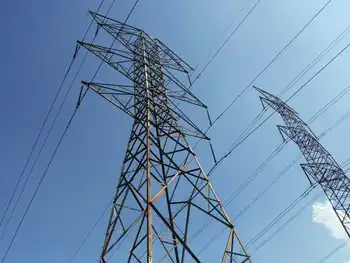
U.S. Power Grid Supply Shortages strain reliability as heat waves, hurricanes, and drought drive peak demand; transformer scarcity, gas constraints, and renewable delays raise outage risks across ERCOT and MISO, prompting FERC warnings.


Key Points

They are equipment and fuel constraints that, amid extreme weather and peak demand, elevate outage risks.

✅ Transformer shortages delay storm recovery and repairs.

✅ Record gas burn, low hydro tighten generation capacity.

✅ ERCOT and MISO warn of rolling outages in heat waves.


U.S. power companies are facing supply crunches amid the U.S. energy crisis that may hamper their ability to keep the lights on as the nation heads into the heat of summer and the peak hurricane season.

Extreme weather events such as storms, wildfires and drought are becoming more common in the United States. Consumer power use is expected to hit all-time highs this summer, reflecting unprecedented electricity demand across the Eastern U.S., which could strain electric grids at a time when federal agencies are warning the weather could pose reliability issues.

Utilities are warning of supply constraints for equipment, which could hamper efforts to restore power during outages. They are also having a tougher time rebuilding natural gas stockpiles for next winter, after the Texas power system failure highlighted cold-weather vulnerabilities, as power generators burn record amounts of gas following the shutdown of dozens of coal plants in recent years and extreme drought cuts hydropower supplies in many Western states.

"Increasingly frequent cold snaps, heat waves, drought and major storms continue to challenge the ability of our nation’s electric infrastructure to deliver reliable affordable energy to consumers," Richard Glick, chairman of the U.S. Federal Energy Regulatory Commission (FERC), said earlier this month.

Federal agencies responsible for power reliability like FERC have warned that grids in the western half of the country could face reliability issues this summer as consumers crank up air conditioners to escape the heat, with nationwide blackout risks not limited to Texas. read more

Some utilities have already experienced problems due to the heat. Texas' grid operator, the Electric Reliability Council of Texas (ERCOT), was forced to urge customers to conserve energy as the Texas power grid faced another crisis after several plants shut unexpectedly during an early heat wave in mid-May. read more

In mid-June, Ohio-based American Electric Power Co (AEP.O) imposed rolling outages during a heat wave after a storm damaged transmission lines and knocked out power to over 200,000 homes and businesses.

The U.S. Midwest faces the most severe risk because demand is rising while nuclear and coal power supplies have declined. read more

The Midcontinent Independent System Operator (MISO), which operates the grid from Minnesota to Louisiana, warned that parts of its coverage area are at increased risk of temporary outages to preserve the integrity of the grid.

Supply-chain issues have already delayed the construction of renewable energy projects across the country, and the aging U.S. grid is threatening progress on renewables and EVs. Those renewable delays coupled with tight power in the Midwest prompted Wisconsin's WEC Energy Group Inc (WEC.N) and Indiana's NiSource Inc (NI.N) to delay planned coal plant shutdowns in recent months.

BRACING FOR SUPPLY SHORTAGES
Utility operators are conserving their inventory of parts and equipment as they plan to prevent summer power outages during severe storms. Over the last several months, that means operators have been getting creative.

"We’re doing a lot more splicing, putting cables together, instead of laying new cable because we're trying to maintain our new cable for inventory when we need it," Nick Akins, chief executive of AEP, said at the CERAWeek energy conference in March.

Transformers, which often sit on top of electrical poles and convert high-voltage energy to the power used in homes, are in short supply.

New Jersey-based Public Service Enterprise Group Inc (PSEG) (PEG.N) Chief Executive Ralph Izzo told Reuters the company has had to look at alternate supply options for low voltage transformers.

"You don’t want to deplete your inventory because you don't know when that storm is coming, but you know it's coming," Izzo said.

Some utilities are facing waiting times of more than a year for transformer parts, the National Rural Electric Cooperative Association and the American Public Power Association told U.S. Energy Secretary Jennifer Granholm in a May letter.

Summer is just starting, but U.S. weather so far this year has already been about 21% warmer than the 30-year norm, according to data provider Refinitiv.

"If we have successive days of 100-degree-heat, those pole top transformers, they start popping like Rice Krispies, and we would not have the supply stack to replace them," Izzo said.


Related News

View more

Freezing Rain Causes Widespread Power Outages in Quebec

Quebec Ice Storm 2025 disrupted power across Laurentians and Lanaudiere as freezing rain downed lines; Hydro-QuE9bec crews accelerated grid restoration, emergency response, and infrastructure resilience amid ongoing outages and severe weather alerts.


Key Points

Quebec Ice Storm 2025 brought freezing rain, outages, and grid damage, hitting Laurentians and Lanaudiere hardest.

✅ Peak: 62,000 Hydro-QuE9bec customers without electricity

✅ Most outages in Laurentians and Lanaudiere regions

✅ Crews repairing lines; restoration updates ongoing


A significant weather event struck Quebec in late March 2025, as a powerful ice storm caused widespread power outages across the province. The storm led to extensive power outages, affecting tens of thousands of residents, particularly in the Lanaudière and Laurentians regions. ​

Impact on Power Infrastructure

The freezing rain accumulated on power lines and vegetation, leading to numerous power outages across the network. Hydro-Québec reported that at its peak, over 62,000 customers were without electricity, with the majority of outages concentrated in the Laurentians and Lanaudière regions. By the afternoon, the number decreased to approximately 30,000, and further to just under 18,500 by late afternoon. 

Comparison with Previous Storms

While the March 2025 ice storm caused significant disruptions, it was less severe compared to the catastrophic ice storm of April 2023, which left 1.1 million Hydro-Québec customers without power. Nonetheless, the 2025 storm's impact was considerable, leading to the closure of municipal facilities and posing challenges for local economies, a pattern echoed when Toronto outages persisted for hundreds after a spring storm.

Ongoing Challenges

As of April 1, 2025, some areas continued to experience power outages, and incidents such as a manhole fire left thousands without service in separate cases. Hydro-Québec and municipal authorities worked diligently to restore services and address the aftermath of the storm, while Hydro One crews restored power to more than 277,000 customers after damaging storms in Ontario. Residents were advised to stay updated through official channels for restoration timelines and safety information.

Future Preparedness

The recurrence of such severe weather events highlights the importance of robust infrastructure and emergency preparedness, as seen in BC Hydro's storm response to an 'atypical' event that demanded extensive coordination. Both utility companies and residents must remain vigilant, especially during seasons prone to unpredictable weather patterns, with local utilities like Sudbury Hydro crews working to reconnect service after regional storms.


Related News

View more

Nuclear alert investigation won't be long and drawn out, minister says

Pickering Nuclear False Alert Investigation probes Ontario's emergency alert system after a provincewide cellphone, radio, and TV warning, assessing human error, Pelmorex safeguards, Emergency Management Ontario oversight, and communication delays.


Key Points

An Ontario probe into the erroneous Pickering nuclear alert, focusing on human error, system safeguards, and oversight.

✅ Human error during routine testing suspected

✅ Pelmorex safeguards and EMO protocols under review

✅ Two-hour all-clear delay prompts communication fixes


An investigation into a mistaken Pickering alert warning of an incident at the Pickering Nuclear Generating Station will be completed fairly quickly, Ontario's solicitor general said.

Sylvia Jones tapped the chief of Emergency Management Ontario to investigate how the alert warning of an unspecified problem at the facility was sent in error to cellphones, radios and TVs across the province at about 7:30 a.m. Sunday.

"It's very important for me, for the people of Ontario, to know exactly what happened on Sunday morning," said Jones. "Having said that, I do not anticipate this is going to be a long, drawn-out investigation. I want to know what happened and equally important, I want some recommendations on insurances and changes we can make to the system to make sure it doesn't happen again."


Initial observations suggest human error was responsible for the alert that was sent out during routine tests of the emergency alert, Jones said.

"This has never happened in the history of the tests that they do every day, twice a day, but I do want to know exactly all of the issues related to it, whether it was one human error or whether it was a series of things."

Martin Belanger, the director of public alerting for Pelmorex, a company that operates the alert system, said there are a number of safeguards built in, including having two separate platforms for training and live alerts.

"The software has some steps and some features built in to minimize that risk and to make sure that users will be able to know whether or not they're sending an alert through the...training platform or whether they're accessing the live system in the case of a real emergency," he said.

Only authorized users have access to the system and the province manages that, Belanger said. Once in the live system, features make the user aware of which platform they are using, with various prompts and messages requiring the user's confirmation. There is a final step that also requires the user to confirm their intent of issuing an alert to cellphones, radio and TVs, Belanger said.

On Sunday, a follow-up alert was sent to cellphones nearly two hours after the original notification, and similar grid alerts in Alberta underscore timing and public expectations.

NDP energy critic Peter Tabuns is critical of that delay, noting that ongoing utility scam warnings can further erode public trust.

"That's a long time for people to be waiting to find out what's really going on," he said. "If people lose confidence in this system, the ability to use it when there is a real emergency will be impaired. That's dangerous."

Treasury Board President Peter Bethlenfalvy, who represents the riding of Pickering-Uxbridge, said getting that alert Sunday morning was "a shock to the system," and he too wants the investigation to address the reason for the all-clear delay.

"We all have a lot of questions," he said. "I think the public has every right to know exactly what went on and we feel exactly the same way."

People in the community know the facility is safe, Bethlenfalvy said.

"We have some of the safest nuclear assets in the world -- the safest -- at 60 per cent of Ontario's electricity," he said.

A poll released Monday found that 82 per cent of Canadians are concerned about spills from nuclear reactors contaminating drinking water and 77 per cent are concerned about neighbourhood safety and security risks for those living close to nuclear plants. Oraclepoll Research surveyed 2,094 people across the country on behalf of Friends of the Earth between Jan. 2 and 12, the day of the false alert. The have a margin of error of plus or minus 2.1 per cent, 19 times out of 20.

The wording of Sunday's alert caused much initial confusion, and events like a power outage in London show how morning disruptions can amplify concern, warning residents within 10 kilometres of the plant of "an incident," though there was no "abnormal" release of radioactivity and residents didn't need to take protective steps, but emergency crews were responding.

In the event of a real emergency, the wording would be different, Jones said.

"There are a number of different alerts that are already prepared and are ready to go," she said. "We have the ability to localize it to the communities that are impacted, but because this was a test, it went provincewide."

Jones said she expects the results of the probe to be made public.

The Pickering nuclear plant has been operating since 1971, and had been scheduled to be decommissioned this year, but the former Liberal government -- and the current Progressive Conservative government -- committed to keeping it open until 2024. Decommissioning is now set to start in 2028.

It operates six CANDU reactors, generates 14 per cent of Ontario's electricity and is responsible for 4,500 jobs across the region, according to OPG, and OPG's credit rating remains stable.

During the COVID-19 pandemic, Hydro One employees supported the Province of Ontario in the fight against COVID-19.

The Green party is calling on the province to use this opportunity to review its nuclear emergency response plan, including pandemic staffing contingencies, last updated in 2017 and subject to review every five years.

Toronto Mayor John Tory praised Ontario for swiftly launching an investigation, but said communication between city and provincial officials wasn't what it should have been under the circumstances.

"It was a poor showing and I think everybody involved knows that," he said. "We've got to make sure it's not repeated."


Related News

View more

Covid-19 crisis hits solar and wind energy industry

COVID-19 Impact on US Renewable Energy disrupts solar and wind projects, dries up tax equity financing, strains supply chains, delays construction, and slows jobs growth amid limited federal stimulus and uncertain investor appetite.


Key Points

COVID-19 has slowed US clean energy growth by curbing tax equity, disrupting supply chains, and delaying projects.

✅ Tax equity dries up as investor profits fall

✅ Supply chain and construction face pandemic delays

✅ Policy aid and credit extensions sought by industry


Swinerton Renewable Energy had everything it needed to build a promising new solar farm in Texas. It lined up more than 2,000 acres for the $109 million project estimated to generate 400 jobs while under construction. By its completion date, the solar farm was expected to produce 200 megawatts of energy — enough to power about 25,000 homes — and generate big tax breaks for its investors as part of a government program to incentivize clean energy.

But the coronavirus pandemic put everything on hold. The solar farm’s backers aren’t sure they will make enough money from other investments during the pandemic-fueled downturn for those tax breaks to be worth it. So the project has been delayed at least six months.

“This is not a shortage of materials. It is not a pricing issue,” said George Hershman, president of Swinerton Renewable Energy. “Everything was pointing to successful projects.”

The coronavirus crisis is not only battering the oil and gas industry. It’s drying up capital and disrupting supply chains for businesses trying to move the country toward cleaner sources of energy.

While President Trump has promised lifelines for airlines and oil companies struggling with a drastic decrease in demand as Americans remain under stay-at-home orders, there is little focus in Washington on economic relief for this sector, despite a power coalition's call for action to address the pandemic — unlike during the Great Recession a decade ago, when Congress and the Obama administration earmarked an unprecedented sum for renewable energy and more efficient automobiles in a stimulus bill.

“We don’t want to lose our great oil companies,” Trump said during an April 1 news briefing. He so far has not made a similar promise to help wind and solar firms, and none of the four economic rescue and stimulus packages that Congress has passed to respond to the coronavirus crisis set aside any money for renewable energy specifically.

Sign up for our Coronavirus Updates newsletter to track the outbreak. All stories linked in the newsletter are free to access.

The impact of the crisis is already clear: About 106,000 clean-energy workers have already filed for unemployment in March alone, according to an analysis of Bureau of Labor Statistics data by Environmental Entrepreneurs, an advocacy group.

The layoffs are a blow to a sector that has prided itself on official projections that solar installers and wind turbine technicians would be the two fastest growing occupations over the next decade.

The job losses include not just wind and solar construction workers, but also those assembling electric cars and installing energy-efficient appliances, lighting, heating and air conditioning.

“These aren’t left-wing coastal hippies,” said Bob Keefe, executive director of Environmental Entrepreneurs. “These are construction workers who get up every day and lace up their boots and pull on their gloves and go to work putting insulation in our attics.”

Despite the economic turmoil, climate experts say the coronavirus pandemic could be an opportunity to make drastic shifts in the energy landscape, with green investments potentially driving a robust recovery. They say governments around the world should help fund renewable energy and use the turmoil in energy markets to remake the industry and slash carbon dioxide emissions, which will tumble 8 percent this year, according to the International Energy Agency.

The agency said that while global energy demand fell 3.8 percent in the first quarter, renewables were the only source to post an increase in demand, rising 1.5 percent thanks to new renewable power plants, low operating costs and priority on some electricity grids.

But many investors, who rely on a broad mix of investments, are spooked. “Everything is quiet because people want to see where we land with the current crisis, and people are holding on to cash,” said Daniel Klier, the global head of sustainable finance at HSBC bank. “As soon as people have a bit of confidence that the market is recovering, they can get projects going.”

Social distancing and the country’s stay-at-home orders are also having a deep effect on daily operations. The areas hardest hit are installing solar panels on rooftops and adding energy-efficiency measures inside homes — work that often requires face-to-face interactions. Sungevity, once one of the nation’s leading solar-installation companies, laid off 377 workers, most of its workforce, in late March, according to filings with California’s Employment Development Department. The company, which had emerged from a 2017 bankruptcy, cited economic conditions.

The push to promote a more fuel-efficient automobile fleet has also veered off track. The electric car maker Tesla was forced to shut down its factory in Fremont, Calif., just as it was turning up production on its new crossover vehicle, the Model Y.

Lockdown orders across the country led Tesla’s outspoken chief executive, Elon Musk, to launch into an expletive-laden rant during an earnings call last week in which Tesla posted a lukewarm profit of $16 million.

“To say that they cannot leave their house and they will be arrested if they do,” Musk said, “this is fascist.”

Sungevity and Tesla represent only a sliver of the economic pain in this sector across the country. The Solar Energy Industries Association had anticipated a growth in solar jobs, from 250,000 to 300,000, over the course of the year, said the group’s president, Abigail Ross Hopper. Now, she said, half the workforce is at risk.

“Shelter in place puts limitations on how people can work,” she said. “Literally, people don’t want other people inside their houses to fix electrical boxes. And there are no door-to-door sales.”

Bigger projects are also grappling with the pandemic economy, though not as severely. Hopper said the industry was geared up to increase the number of new solar farms, in part to take advantage of federal tax credits. “We were on track to do almost 20 gigawatts, which would have been the highest year yet,” Hopper said. That would have been enough to power about 3.7 million homes. Now she expects new projects will come closer to last year’s 13.27 gigawatts’ worth of new construction, after a report on utility-scale solar delays warned of widespread slowdowns, enough to run approximately 2.5 million homes.

Wind energy companies, too, are bracing for lost progress unless the federal government steps in. The American Wind Energy Association said projects that would add 25 gigawatts of wind power to the U.S. grid are at risk of being scaled back or canceled outright over the next two years because of the pandemic. Altogether, that work represents about 35,000 jobs.

“2019 was a good year for the wind industry,” said Tom Kiernan, the association’s chief executive. “We were expecting 2020 to be an even stronger year.”

One project put on the back burner: an enormous 9 gigawatt offshore wind venture led by the New York State Energy Research and Development Authority set to be completed by 2035.

With New York City besieged by coronavirus cases, the authority said it would comply with an executive order from Gov. Andrew M. Cuomo (D), “pausing” all on-site work on clean-energy projects until at least May 15. Michigan, New Jersey and Pennsylvania also delayed wind turbine projects by deeming construction on them nonessential.

The Danish offshore wind firm Orsted said that plans for offshore U.S. wind installations would move “at a slower pace than originally expected due to a combination of the Bureau of Ocean Energy Management’s prolonged analysis of the cumulative impacts from the build-out of US offshore wind projects, and now also COVID-19 effects.” The company told investors it expects delays on projects off the coasts of New York, New Jersey and Rhode Island totaling almost 3 gigawatts.

The supply chains have also taken a hit during the pandemic: Even if contractors can get the money to erect wind turbines or lay solar arrays, that doesn’t mean they will have the parts. At least two factories that make wind turbine parts — one in North Dakota and another in Iowa — were forced to pause production because of coronavirus outbreaks. Factory shutdowns in China have constrained solar supplies, too.

The key reason for delaying most big solar and wind projects is the use of tax credits known as “tax equity.” These allow investors, such as banks, to use the credits to directly offset their overall tax burdens. But if an investor doesn’t have enough profit to offset the credits, the tax equity could become worthless.

“If your profitability is going down, you don’t have the same appetite,” Hopper said.

Solar and wind industry leaders are pressing Congress and the Trump administration to extend the eligibility period for tax credits that are due to expire, with senators urging support for clean energy in relief packages, and to make the tax credits refundable, meaning the government would issue a check to investors who do not have enough profit to justify their investments.

Currently, big wind turbines get a 1.5 cents per kilowatt hour tax credit if construction begins before the end of this year. Tax credits for residential renewable energy — solar panels and small wind — phase out by the end of 2021, and debate over a potential solar ITC extension continues to shape expectations in the wind market.

The lack of attention to renewables in Congress’s relief efforts so far is in stark contrast to 2009, when the United States spent $112 billion to boost “green” energy, according to the World Resources Institute. The government’s package then provided a mixture of grants and loans for a variety of renewable energy ventures — including a $465 million loan Tesla used to get its Fremont factory off the ground.

This year, a handful of clean-energy firms, including a Connecticut-based manufacturer of fuel cells and an Ohio-based maker of energy-efficient lighting systems, took money from a federal small-business lending program, before funds ran dry in the middle of last month. Broadwind Energy, a maker of steel wind energy towers based outside Chicago, received $9.5 million in small-business loans, one of the biggest totals in the program.

So far, the Trump administration has shown far more eagerness to help American petroleum producers that the president said were “ravaged” by a sharp drop in energy demand. Last month, Trump met with oil executives at the White House, and Energy Secretary Dan Brouillette has floated the idea of bridge loans for struggling oil firms.

During negotiations for the last relief package, congressional Democrats tried to strike a deal to refill the nation’s Strategic Petroleum Reserve in exchange for extending the clean-energy incentives, but Senate Majority Leader Mitch McConnell (R-Ky.) rebuffed those calls.

“Democrats won’t let us fund hospitals or save small businesses unless they get to dust off the Green New Deal,” McConnell said in March.

Already, Democrats are signaling they will make a push again in the next round of stimulus spending.

“Relief and recovery legislation will shape our society for years to come,” said Rep. A. Donald McEachin (D-Va.), vice chair of the House Sustainable Energy and Environment Coalition, a caucus that supports renewable energy resources. “We must use these bills to build in a climate-smart way.”

But it remains unclear how much appetite the GOP will have for a deal. “I just don’t know how to handicap that at this point,” said Grant Carlisle, an analyst at the Natural Resources Defense Council, a major environmental group.

Kiernan, the head of the American Wind Energy Association, said his group has “gotten a very good reception with the administration and with the Hill” when it comes to coronavirus relief, but he declined to go into specifics.

In other parts of the world, governments have been providing support for renewables. The European Union has its own Green New Deal, and China is expected to support wind and solar to get the economy moving more quickly.

Some energy analysts note that big oil companies don’t have to wait for government stimulus. The price of oil is so low that they would be better off investing in wind and solar, they say.

“For all these oil companies, the returns on these renewable projects are better than what they can do in the oil and gas industry,” said Sarah Ladislaw, director of the energy program at the Center for Strategic and International Studies. “Now is a good time to do that and tell their investors.”

This fits in with their broader goals, analysts contend. After all, Royal Dutch Shell recently matched BP’s earlier promise to aim to be net-zero for carbon emissions by 2050.

Shell’s chief executive Ben van Beurden has said the company would try to protect its low-carbon Integrated Gas and New Energies division from the largest spending cuts as it sought to weather the pandemic. “We must maintain focus on the long term,” he said in a video message. “Society expects nothing less.”


Related News

View more

Wind and solar make more electricity than nuclear for first time in UK

UK Renewables Surpass Nuclear Milestone as wind farms and solar panels outpace atomic output, cutting greenhouse gas emissions. BEIS data show low-carbon power generation rising while onshore wind subsidies and auction timelines face policy debate.


Key Points

It is the quarter when UK wind and solar generated more electricity than nuclear, signaling cleaner, low-carbon growth.

✅ BEIS reports wind and solar at 18.33 TWh vs nuclear 16.69 TWh

✅ Energy sector emissions fell 8% as coal use dropped

✅ Calls grow to reopen onshore wind support via CFD auctions


Wind farms and solar panels, with wind leading the power mix during key periods, produced more electricity than the UK’s eight nuclear power stations for the first time at the end of last year, official figures show.

Britain’s greenhouse gas emissions also continued to fall, dropping 3% in 2017, as coal use fell and the use of renewables climbed, though low-carbon generation stalled in 2019 according to later data.

Energy experienced the biggest drop in emissions of any UK sector, of 8%, while pollution from transport and businesses stayed flat.

Energy industry chiefs said the figures showed that the government should rethink its ban on onshore wind subsidies, a move that ministers have hinted could happen soon.

Lawrence Slade, chief executive of the big six lobby group Energy UK, said: “We need to keep up the pace ... by ensuring that the lowest cost renewables are no longer excluded from the market.”

Across the whole year, low-carbon sources of power – wind, solar, biomass and nuclear – provided a record 50.4% of electricity, up from 45.7% in 2016, when wind beat coal for the first time.

But in the fourth quarter of 2017, high wind speeds, new renewables installations and lower nuclear output saw wind and solar becoming the second biggest source of power for the first time.

Wind and solar generated 18.33 terawatt hours (TWh), with nuclear on 16.69TWh, and the UK later set a new record for wind power during 2019, the figures published by the Department for Business, Energy and Industrial Strategy show.

But renewables still have a long way to go to catch up with gas, the UK’s top source of electricity at 36.12TWh, which saw its share of generation fall slightly, though at times wind became the main source as capacity expanded.

Greenpeace said the figures showed the government should capitalise on its lead in renewables and “stop wasting time and money propping up nuclear power”.

Horizon Nuclear Power, a subsidiary of the Japanese conglomerate Hitachi, is in talks with Whitehall officials for a financial support package from the government, which it says it needs by midsummer.

By contrast, large-scale solar and onshore wind projects are not eligible for support, after the Conservative government cut subsidies in 2015.

However the energy minister, Claire Perry, recently told House Magazine that “we will have another auction that brings forward wind and solar, we just haven’t yet said when”.


Related News

View more

Opp Leader calls for electricity market overhaul to favor consumers over generators

Labor National Electricity Market Reform aims to rebalance NEM rules, support a fair-dinkum clean energy target, enable renewable zones, bolster storage and grid reliability, empower households, and unlock CEFC investment via the Finkel review.


Key Points

Labor's plan to overhaul NEM rules for households, clean energy targets, renewable zones, storage, and CEFC investment.

✅ Revises NEM rules to curb big generators' market power

✅ Backs a clean energy target informed by the Finkel review

✅ Expands renewable zones, storage, and CEFC finance


Australia's Labor leader Bill Shorten has called for significant changes to the rules governing the national electricity market, saying they are biased in favour of big energy generators, leaving households worse off even with measures like a WA electricity bill credit in place.

He said the national electricity market (NEM) rules are designed to help the big companies recoup the money they spent on purchasing government assets, a dynamic echoed in debates like a Calgary market overhaul dispute unfolding in Canada, rather than encourage households to generate their own power, and they need to change faster to adapt to consumer needs.

His comments hint at a possible overhaul of the NEM’s governance structure under a future Labor government, because the current rule-making process is too cumbersome and slow, with suggested rules changes taking years to be introduced.

Daniel Andrews defends claims that civil liberties a 'luxury' in fight against terrorism

Labor had promoted a similar idea in the lead-up to the 2016 election, with its call for an electricity modernization review, but now the Finkel review has been released it would be used to guide such a review.

In a speech to the Australian Financial Review’s National Energy Summit in Sydney on Monday, Shorten recommitted Labor to negotiating a “fair-dinkum” clean energy target with the Turnbull government, amid modelling that a strong clean energy target can lower electricity prices, saying “it’s time to put away the weapons of the climate change wars” and work together to find a way forward.

He said the media and business can all share the blame for Australia’s lost decade of energy policy development, with examples abroad showing how leadership steers change, such as in Alberta where Kenney's influence on power policy has been pronounced, but “we need to stop spoiling for a fight and start seeking a solution”.

“The scare campaigns and hyper-partisanship that got Australia into this mess, will not get us out of it,” he will say.

“That’s why, a bit over four months ago, before the chief scientist released his report, I wrote to the prime minister offering an olive branch.

“I said Labor was prepared to move from our preferred position of an emissions intensity scheme and negotiate a fair-dinkum clean energy target.

“That offer was greeted with some cynicism in the media. But let me be crystal clear – I made that offer in good faith, and that offer still stands.”

Shorten said Australia needs to resolve the current “gas crisis” and do more to drive investment in renewable energy that delivers more reliable electricity, a priority underscored by the IEA's warning that falling global energy investment risks shortages, and if Labor wins the next election it will organise Australia into a series of renewable energy zones – as recommended by the chief scientist, Alan Finkel – that identify wind, solar, pumped hydro and geothermal resources, and connect them to the existing network.

“These zones would be based on both existing generation and storage in the area – and the potential for future development,” he said.

Australia's politics only barrier to clean energy system, report finds

“Identifying these zones – from eastern Queensland, north-east New South Wales, west Victoria, the Eyre Peninsula in South Australia and the entire state of Tasmania – will also plant a flag for investors – signalling future sites for job-creating projects.”

Shorten also said Labor will free up the Clean Energy Finance Corporation to invest in more generation and more storage.

“Under Labor, the return benchmark for the CEFC was set at the weighted average of the Australian government bond rate.

“Under this government, it was initially increased to the weighted average plus 4% to 5% and is now set at the average plus 3% to 4%.

“Setting the return benchmark too high defeats the driving purpose of the CEFC and it holds back the crucial investment Australia needs – right now – in new generation and storage.

“This is why a Labor government would restore the original benchmark return of the Clean Energy Finance Corporation, to invest in more generation, more storage and more jobs.”


Related News

View more

Sign Up for Electricity Forum’s Newsletter

Stay informed with our FREE Newsletter — get the latest news, breakthrough technologies, and expert insights, delivered straight to your inbox.

Electricity Today T&D Magazine Subscribe for FREE

Stay informed with the latest T&D policies and technologies.
  • Timely insights from industry experts
  • Practical solutions T&D engineers
  • Free access to every issue

Live Online & In-person Group Training

Advantages To Instructor-Led Training – Instructor-Led Course, Customized Training, Multiple Locations, Economical, CEU Credits, Course Discounts.

Request For Quotation

Whether you would prefer Live Online or In-Person instruction, our electrical training courses can be tailored to meet your company's specific requirements and delivered to your employees in one location or at various locations.