By


CSA Z463 Electrical Maintenance -

Our customized live online or in‑person group training can be delivered to your staff at your location.

  • Live Online
  • 6 hours Instructor-led
  • Group Training Available
Regular Price:
$249
Coupon Price:
$199
Reserve Your Seat Today
-- Spot power prices across the region rose today as temperatures were forecast to increase over the weekend. Northeast cooling demand was expected to be 43 percent above normal next Tuesday, according to Weather Derivatives Inc., of Belton, Missouri.

Temperatures in Boston were scheduled to top 77 degrees Fahrenheit on Tuesday, compared to 66 degrees today, Lexington, Massachusetts-based Meteorlogix said. Spot electricity prices in the New England Power Pool rose $11.75 a megawatt hour, to average $47.50.

"The ECP (Energy Clearing Price) is weak this morning,'' a New England-based trader cited as another reason why spot prices were higher today.

Spot power prices also rose in all three New York hubs today. Zone J prices rose $11.25 to $65.00, while zone G prices averaged $46.25, up $7.25 from yesterday.

Entergy Corp's Indian Point 3 980 megawatt nuclear power plant reduced its output to 75 percent of capacity today, according to the Nuclear Regulatory Commission. No date was given when the plant would resume full capacity.

Temperatures in New York City were forecast by Metorlogix to rise all weekend and reach highs of 84 degrees on Tuesday.

Spot power prices in the Pennsylvania-New Jersey-Maryland Interconnection had the biggest gain of the day, up $13.73 to $40.35, according to Bloomberg data.

Meteorlogix showed temperatures in Baltimore were scheduled to hit 85 degrees on Tuesday, up 8 degrees from today.

From Bloomberg PowerLines. Bloomberg Energy market coverage is available on the Internet at www.bloomberg.com/energy

Source: Bloomberg

Related News

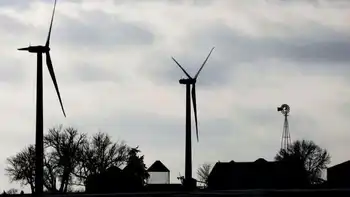
Proposed underground power line could bring Iowa wind turbine electricity to Chicago

SOO Green Underground Transmission Line proposes an HVDC corridor buried along Canadian Pacific railroad rights-of-way to deliver Iowa wind energy to Chicago, enhance grid interconnection, and reduce landowner disruption from new overhead lines.


Key Points

A proposed HVDC project burying lines along a railroad to move Iowa wind power to Chicago and link two grids.

✅ HVDC link from Mason City, IA, to Plano, IL

✅ Buried in Canadian Pacific railroad right-of-way

✅ Connects MISO and PJM grids for renewable exchange


The company behind a proposed underground transmission line that would carry electricity generated mostly by wind turbines in Iowa to the Chicago area said Monday that the $2.5 billion project could be operational in 2024 if regulators approve it, reflecting federal transmission funding trends seen recently.

Direct Connect Development Co. said it has lined up three major investors to back the project. It plans to bury the transmission line in land that runs along existing Canadian Pacific railroad tracks, hopefully reducing the disruption to landowners. It's not unusual for pipelines or fiber optic lines to be buried along railroad tracks in the land the railroad controls.

CEO Trey Ward said he "believes that the SOO Green project will set the standard regarding how transmission lines are developed and constructed in the U.S."

A similar proposal from a different company for an overhead transmission line was withdrawn in 2016 after landowners raised concerns, even as projects like the Great Northern Transmission Line advanced in the region. That $2 billion Rock Island Clean Line was supposed to run from northwest Iowa into Illinois.

The new proposed line, which was first announced in 2017, would run from Mason City, Iowa, to Plano, Ill., a trend echoed by Canadian hydropower to New York projects. The investors announced Monday were Copenhagen Infrastructure Partners, Jingoli Power and Siemens Financial Services.

The underground line would also connect two different regional power operating grids, as seen with U.S.-Canada cross-border transmission approvals in recent years, which would allow the transfer of renewable energy back and forth between customers and producers in the two regions.

More than 36 percent of Iowa's electricity comes from wind turbines across the state.

Jingoli Power CEO Karl Miller said the line would improve the reliability of regional power operators and benefit utilities and corporate customers in Chicago, even amid debates such as Hydro-Quebec line opposition in the Northeast.


Related News

View more

Ontario’s Electricity Future: Balancing Demand and Emissions 

Ontario Electricity Transition faces surging demand, GHG targets, and federal regulations, balancing natural gas, renewables, battery storage, and grid reliability while pursuing net-zero by 2035 and cost-effective decarbonization for industry, EVs, and growing populations.


Key Points

Ontario Electricity Transition is the province's shift to a reliable, low-GHG grid via renewables, storage, and policy.

✅ Demand up 75% by 2050; procurement adds 4,000 MW capacity.

✅ Gas use rises to 25% by 2030, challenging GHG goals.

✅ Tripling wind and solar with storage can cut costs and emissions.


Ontario's electricity sector stands at a pivotal crossroads. Once a leader in clean energy, the province now faces the dual challenge of meeting surging demand while adhering to stringent greenhouse gas (GHG) reduction targets. Recent developments, including the expansion of natural gas infrastructure and proposed federal regulations, have intensified debates about the future of Ontario's energy landscape, as this analysis explains in detail.

Rising Demand and the Need for Expansion

Ontario's electricity demand is projected to increase by 75% by 2050, equivalent to adding four and a half cities the size of Toronto to the grid. This surge is driven by factors such as industrial electrification, population growth, and the transition to electric vehicles. In response, as Ontario confronts a looming shortfall in the coming years, the provincial government has initiated its most ambitious energy procurement plan to date, aiming to secure an additional 4,000 megawatts of capacity by 2030. This includes investments in battery storage and natural gas generation to ensure grid reliability during peak demand periods.

The Role of Natural Gas: A Controversial Bridge

Natural gas has become a cornerstone of Ontario's strategy to meet immediate energy needs. However, this reliance comes with environmental costs. The Independent Electricity System Operator (IESO) projects that by 2030, natural gas will account for 25% of Ontario's electricity supply, up from 4% in 2017. This shift raises concerns about the province's ability to meet its GHG reduction targets and to embrace clean power in practice. 

The expansion of gas-fired plants, including broader plans for new gas capacity, such as the Portlands Energy Centre in Toronto, has sparked public outcry. Environmental groups argue that these expansions could undermine local emissions reduction goals and exacerbate health issues related to air quality. For instance, emissions from the Portlands plant have surged from 188,000 tonnes in 2017 to over 600,000 tonnes in 2021, with projections indicating a potential increase to 1.65 million tonnes if the expansion proceeds as planned. 

Federal Regulations and Economic Implications

The federal government's proposed clean electricity regulations aim to achieve a net-zero electricity sector by 2035. However, Ontario's government has expressed concerns that these regulations could impose significant financial burdens. An analysis by the IESO suggests that complying with the new rules would require doubling the province's electricity generation capacity, potentially adding $35 billion in costs by 2050, while other estimates suggest that greening Ontario's grid could cost $400 billion over time. This could result in higher residential electricity bills, ranging from $132 to $168 annually starting in 2033.

Pathways to a Sustainable Future

Experts advocate for a diversified approach to decarbonization that balances environmental goals with economic feasibility. Investments in renewable energy sources, such as new wind and solar resources, along with advancements in energy storage technologies, are seen as critical components of a sustainable energy strategy. Additionally, implementing energy efficiency measures and modernizing grid infrastructure can enhance system resilience and reduce emissions. 

The Ontario Clean Air Alliance proposes phasing out gas power by 2035 through a combination of tripling wind and solar capacity and investing in energy efficiency and storage solutions. This approach not only aims to reduce emissions but also offers potential cost savings compared to continued reliance on gas-fired generation. 

Ontario's journey toward a decarbonized electricity grid is fraught with challenges, including balancing reliability, clean, affordable electricity, and environmental sustainability. While natural gas currently plays a significant role in meeting the province's energy needs, its long-term viability as a bridge fuel remains contentious. The path forward will require careful consideration of technological innovations, regulatory frameworks, and public engagement to ensure a clean, reliable, and economically viable energy future for all Ontarians.


Related News

View more

Hydro One stock has too much political risk to recommend, Industrial Alliance says

Hydro One Avista merger faces regulatory scrutiny in Washington, Oregon, and Idaho, as political risk outweighs defensive utilities fundamentals like stable cash flow, rate base growth, EPS outlook, and a near 5% dividend yield.


Key Points

A planned Hydro One-Avista acquisition awaiting key state approvals amid elevated political and regulatory risk.

✅ Hold rating, $24 price target, 28.1% implied return

✅ EPS forecast: $1.27 in 2018; $1.38 in 2019

✅ Defensive utility: stable cash flow, 4-6% rate base growth


A seemingly positive development for Hydro One is overshadowed by ongoing political and regulatory risk, as seen after the CEO and board ouster, Industrial Alliance Securities analyst Jeremy Rosenfield says.

On October 4, staff from the Washington Utilities and Transportation Commission filed updated testimony in support of the merger of Hydro One and natural gas distributor Avista, which had previously received U.S. antitrust clearance from federal authorities.

The merger, which was announced in July of 2017 has received the green light from federal and key states, with Washington, Oregon and Idaho being exceptions, though the companies would later seek reconsideration from U.S. regulators in the process.

But Rosenfield says even though decisions from Oregon and Idaho are expected by December, there are still too many unknowns about Hydro One to recommend investors jump into the stock.


Hydro One stock defensive but risky

“We continue to view Hydro One as a fundamentally defensive investment, underpinned by (1) stable earnings and cash flows from its regulated utility businesses (2) healthy organic rate base and earning growth (4-6%/year through 2022) and (3) an attractive dividend (~5% yield, 70-80% target payout),” the analyst says. “In the meantime, and ahead of key regulatory approvals in the AVA transaction, we continue to see heightened political/regulatory risk as an overhand on the stock, outweighing Hydro One’s fundamentals in the near term.”

In a research update to clients today, Rosenfield maintained his “Hold” rating and one year price target of $24.00 on Hydro One, implying a return of 28.1 per cent at the time of publication.

Rosenfield thinks Hydro One will generate EPS of $1.27 per share in fiscal 2018, even though its Q2 profit plunged 23% as electricity revenue fell. He expects that number will improve to EPS of $1.38 a share the following year.


Related News

View more

Hydro-Quebec begins talks for $185-billion strategy to wean the province off fossil fuels

Hydro-Québec $185-Billion Clean Energy Plan accelerates hydroelectric upgrades, wind power expansion, solar and battery storage, pumped storage, and 5,000 km transmission lines to decarbonize Quebec, boost grid resilience, and attract bond financing and Indigenous partnerships.


Key Points

Plan to grow renewables, harden the grid, and fund Quebec's decarbonization with major investments.

✅ $110B new generation, $50B grid resilience by 2035

✅ Triple wind, add solar, batteries, and pumped storage

✅ 5,000 km lines, bond financing, Indigenous partnerships


Hydro-Québec is in the preliminary stages of dialogue with various financiers and potential collaborators to strategize the implementation of a $185-billion initiative aimed at transitioning Quebec away from fossil fuel dependency.

As the leading hydroelectric power producer in Canada, Hydro-Québec is set to allocate up to $110 billion by 2035 towards the development of new clean energy facilities, building on its hydropower capacity expansion in recent years, with an additional $50 billion dedicated to enhancing the resilience of its power grid, as revealed in a strategy announced last November. The remainder of the projected expenditure will cover operational costs.

This ambitious initiative has garnered significant interest from the financial sector, with the province's recent electricity for industrial projects also drawing attention, as noted by CEO Michael Sabia during a conference call with journalists where the utility's annual financial outcomes were discussed. Sabia reported receiving various proposals to fund the initiative, though specific partners were not disclosed. He expressed confidence in securing the necessary capital for the project's success.

Sabia highlighted three immediate strategies to increase power output: identifying new sites for hydroelectric projects while upgrading turbines at existing facilities, such as the Carillon Generating Station upgrade now underway for enhanced efficiency, expanding wind energy production threefold, and promoting energy conservation among consumers to optimize current power usage.

Additionally, Hydro-Québec aims to augment its solar and battery energy production and is planning to establish a pumped-storage hydroelectric plant to support peak demand periods. The utility also intends to construct 5,000 kilometers of new transmission lines, address Quebec-to-U.S. transmission constraints where feasible, and is set to double its capital expenditure to $16 billion annually, a significant increase from the investment levels during the James Bay hydropower project construction in the 1970s and 1980s.

To fund part of this expansive plan, Hydro-Québec will continue to access the bond market, having issued $3.7 billion in notes to investors last year despite facing several operational hurdles due to adverse weather conditions.

For the year 2023, Hydro-Québec reported a net income of $3.3 billion, marking a 28% decrease from the previous year's record of $4.56 billion. Factors such as insufficient snow cover, reduced spring runoff, and higher temperatures resulted in lower water levels in reservoirs, leading to a reduction in power exports and a $547-million decrease in external market sales compared to the previous year.

The utility experienced its lowest export volume in a decade but managed to leverage hedging strategies to secure 10.3 cents per kWh for exported power to markets including New Brunswick via recent NB Power agreements that expand interprovincial deliveries, nearly twice the average market rate, through forward contracts that cover up to half of its export volume for about a year in advance.

The success of Sabia's plan will partly depend on the cooperation of First Nations communities, as the proposed infrastructure developments are likely to traverse their ancestral territories. Relationships with some communities are currently tense, exemplified by the Innu of Labrador's $4-billion lawsuit against Hydro-Québec for damages related to land flooding for reservoir construction, and broader regional tensions in Newfoundland and Labrador that persist in the power sector.

Sabia has committed to involving First Nations and Inuit communities as partners in clean energy ventures, offering them ongoing financial benefits rather than one-off settlements, a principle he refers to as "economic reconciliation."

Recently, the Quebec government reached an agreement with the Innu of Pessamit, pledging $45 million to support local community development. This agreement outlines solutions for managing a nearby hydropower reservoir, such as the La Romaine complex in the region, and includes commitments for wind energy development.

Sabia is optimistic about building stronger, more positive relationships with various Indigenous communities, anticipating significant progress in the coming months and viewing this year as a potential milestone in transforming these relationships for the better.


Related News

View more

Daimler Details Gigantic Scope of Its Electrification Plan

Daimler Electric Strategy drives EV adoption with global battery factories, Mercedes-Benz electrified models, battery cells procurement, and major investments spanning vans, buses, trucks, and production capacity across Europe, Asia, and the USA.


Key Points

Daimler Electric Strategy is a multi-billion EV roadmap for batteries, factories, and 130 electrified Mercedes models.

✅ Eight battery factories across three continents

✅ EUR 10B for EV lineup; EUR 20B for battery cells

✅ 130 electrified variants plus vans, buses, trucks


Throughout 2018, we all witnessed the unprecedented volume of promises for a better future made by the giants of the auto industry. All say they've committed billions so that, within a decade, combustion engines will be on their way out.

The most active of all companies when talking about promises is Volkswagen, which, amid German plant closures, time and time again has said it will do this or that and completely change the meaning of car in the coming years. But there are other planning the same thing, possibly with even vaster resources.

Planning to end the year on a high note, Daimler detailed its plan for the electric future once again on Tuesday, this time making no secret of its gigantic size and scope.

As announced before, Daimler plans to build electric cars, but also manufacture electric batteries for its own and others’ use, and has launched a US energy storage company to support this strategy. These batteries will eventually be produced by Daimler in eight factories on three continents.

Batteries are already rolling off the lines in Kamenz, and a second facility will begin doing so next year. Two more factories will be built in Stuttgart-Untertürkheim, one at the company’s Sindelfingen site, and one each at the sites in Beijing (China), Bangkok (Thailand) and Tuscaloosa (USA).

In all, one billion EUR will be invested in the expansion of the global battery production network, but that is nothing compared to the 10 billion to be poured into the expansion of the Mercedes-Benz car fleet.

On top of that, 20 billion EUR will go towards the purchase of battery cells from producers all around the world, echoing other automakers' battery sourcing strategies worldwide over the next 12 years.

“After investing billions of euros in the development of the electric fleet and the expansion of our global battery network, we are now taking the next step,” said in a statement Dieter Zetsche, Daimler chairman of the board.

“With the purchase of battery cells for more than 20 billion euros, we are systematically pushing forward with the transformation into the electric future of our company.”

By 2022, the carmaker plans to launch 130 electrified variants of its cars, as cheaper, more powerful batteries become available, adding to them electric vans, buses and trucks. That pretty much means all the models and variants sold by Daimler globally will be at least partially powered by electricity.


Related News

View more

Alberta gives $40M to help workers transition from coal power jobs

Alberta Coal Transition Support offers EI top-ups, 75% wage replacement, retraining, tuition vouchers, and on-site advice for workers leaving thermal coal mines and coal-fired power plants during the provincial phase-out.


Key Points

Alberta Coal Transition Support is a $40M program providing EI top-ups, retraining, and tuition vouchers to coal workers.

✅ 75% EI top-up; province requests federal alignment

✅ Tuition vouchers and retraining for displaced workers

✅ On-site transition services; about 2,000 workers affected


Alberta is putting aside $40 million to help workers losing their jobs as the province transitions away from thermal coal mines and coal-fired power plants, a shift connected to the future of work in the electricity sector over the next decade.

Labour Minister Christina Gray says the money will top up benefits to 75 per cent of a worker’s previous earnings during the time they collect employment insurance, amid regional shifts such as how COVID-19 reshaped Saskatchewan in recent months.

Alberta is asking the federal government to not claw back existing benefits as the province tops up those EI benefits, as utilities face pressures like Manitoba Hydro cost-cutting during the pandemic, while also extending EI benefits for retiring coal workers.

Gray says even if the federal government does not step up, the province will provide the funds to match that 75 per cent threshold, a contrast to problems such as Kentucky miners' cold checks seen elsewhere.

There will also be help for workers in the form of tuition vouchers, retraining programs like the Nova Scotia energy training program that connects youth to the sector, and on-site transitioning advice.

The province estimates there are 2,000 workers affected.


Related News

View more

Sign Up for Electricity Forum’s Newsletter

Stay informed with our FREE Newsletter — get the latest news, breakthrough technologies, and expert insights, delivered straight to your inbox.

Electricity Today T&D Magazine Subscribe for FREE

Stay informed with the latest T&D policies and technologies.
  • Timely insights from industry experts
  • Practical solutions T&D engineers
  • Free access to every issue

Download the 2025 Electrical Training Catalog

Explore 50+ live, expert-led electrical training courses –

  • Interactive
  • Flexible
  • CEU-cerified