By -- Source, the Providence Journal


Substation Relay Protection Training

Our customized live online or in‑person group training can be delivered to your staff at your location.

  • Live Online
  • 12 hours Instructor-led
  • Group Training Available
Regular Price:
$699
Coupon Price:
$599
Reserve Your Seat Today
PROVIDENCE, R.I.--The state Senate yesterday passed a bill, 44 to 0, that attempts to reform the landmark 1996 Utilities Restructuring Act that changed the way electricity is sold in the state.

The measure, sponsored by Senate Majority Leader Williams V. Irons, D-East Providence, would give Narragansett Electric greater flexibility in purchasing power for customers who receive the so-called "last-resort" service.

They are those who left Narragansett Electric to buy power from a competitor, but later decided to return to the utility. New customers since 1998 are also put on last resort.

Last-resort prices have generally been higher than those charged to most other customers who receive the "standard offer."

That's partly because Narragansett Electric purchased long-term contracts for standard-offer customers, assuring a level of stability. The power it buys for last-resort customers is purchased much more frequently, making its price volatile.

There were about 1,050 commercial and industrial customers who received last-resort service as of last month.

Irons' bill would allow Narragansett Electric to buy long-term contracts for last-resort service, said Ken Payne, senior policy adviser to the Senate. That, in turn, should make last-resort prices more stable.

The bill would also allow more flexibility in buying power for standard-offer service as well, Payne said.

Another major change proposed in the bill would allow customers who are on the last-resort service to return to standard offer under certain conditions.

For that to happen, the Public Utilities Commission would have to determine that a competitive market for electricity doesn't exist. Residential customers would be allowed to return to standard-offer service as long as they committed to staying for a set period of time; industrial and commercial customers would be returned to something like standard offer, although they could be charged more.

Payne said the cost to the utility would be "minimal" to move these customers off last-resort service.

One of the key beneficiaries of such a bill could be entities like the League of Cities and Towns, Payne said.

That organization has entered into a five-year contract to buy electricity for the municipal use of 34 of Rhode Island's 39 cities and towns. When that contract expires in 2004, the League might have to go to last-resort service if it can't negotiate a new deal with another supplier.

On the House side, key legislators have been working on a more ambitious bill that would allow municipalities to buy electricity for residents and would create a pilot program of new rate options -- including time-of-use and "green power." The bill also addresses backup power rates, the amount a large industrial customer that generates its own electricity must pay to have the utility maintain a backup power connection.

That bill, which is sponsored by House Speaker John B. Harwood, D-Pawtucket, and Rep. Brian Kennedy, D-Hopkinton, is still being revised by the House Corporations Committee, which he chairs.

Kennedy is planning to meet with Irons this week to discuss the House and Senate bills, said John O'Toole, director of the Legislative Press Bureau.

Related News
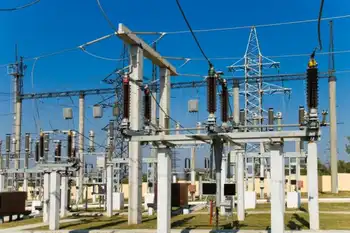
Cannes Film Festival Power Outage Under Investigation 

Cannes Film Festival Power Outage disrupts Alpes-Maritimes as an electrical substation fire and a fallen high-voltage line trigger blackouts; arson probe launched, grid resilience tested, traffic and trains snarled, Palais des Festivals on backup power.


Key Points

A May 24, 2025 blackout in Cannes disrupting events, under arson probe, exposing grid risks across Alpes-Maritimes.

✅ Substation fire and fallen high-voltage line triggered blackouts

✅ Palais des Festivals ran on independent backup power

✅ Authorities probe suspected arson; security measures reviewed


A significant power outage on May 24, 2025, disrupted the final day of the Cannes Film Festival in southeastern France. The blackout, which affected approximately 160,000 households in the Alpes-Maritimes region, including the city of Cannes, occurred just hours before the highly anticipated Palme d'Or ceremony. French authorities are investigating the possibility that the outage was caused by arson.

Details of the Outage

The power disruption began early on Saturday morning with a fire at an electrical substation near Cannes. This incident weakened the local power grid. Shortly thereafter, a high-voltage line fell at another location, further exacerbating the situation. The combined events led to widespread power outages, affecting not only the festival but also local businesses, traffic systems, and public transportation, echoing Heathrow Airport outage warnings raised days before a separate disruption. Traffic lights in parts of Cannes and the nearby city of Antibes stopped working, leading to traffic jams and confusion in city centers. Most shops along the Croisette remained closed, and local food kiosks were only accepting cash. Train service in Cannes was also disrupted. 

Impact on the Festival

Despite the challenges, festival organizers managed to keep the main venue, the Palais des Festivals, operational by switching to an independent power supply. They confirmed that all scheduled events and screenings, including the Closing Ceremony, would proceed as planned, a reminder of how grid operators sometimes avoid rolling blackouts to keep essential services running. The power was restored around 3 p.m. local time, just hours before the ceremony, allowing music to resume and the event to continue without further incident.

Investigations and Suspected Arson

French authorities, including the national gendarmerie, are investigating the possibility that the power outage was the result of arson, aligning with grid attack warnings issued by intelligence services. The prefect for the Alpes-Maritimes region, Laurent Hottiaux, condemned the "serious acts of damage to electrical infrastructures" and stated that all resources are mobilized to identify, track down, arrest, and bring to justice the perpetrators of these acts.

While investigations are ongoing, no official conclusions have been drawn regarding the cause of the outage. Authorities are working to determine whether the incidents were isolated or part of a coordinated effort, a question that also arises when utilities implement PG&E wildfire shutoffs to prevent cascading damage.

Broader Implications

The power outage at the Cannes Film Festival underscores the vulnerability of critical infrastructure to potential acts of sabotage. While the immediate impact on the festival was mitigated, the incident raises concerns about the resilience of energy systems, especially during major public events, and amid severe weather like a B.C. bomb cyclone that leaves tens of thousands without power. It also highlights the importance of having contingency plans in place to ensure the continuity of essential services in the face of unexpected disruptions.

As investigations continue, authorities are urging the public to remain vigilant and report any suspicious activities, while planners also prepare for storm-driven outages that compound emergency response. The outcome of this investigation may have implications for future security measures at large-scale events and the protection of critical infrastructure.

While the Cannes Film Festival was able to proceed with its closing events, the power outage serves as a reminder of the potential threats to public safety, as seen when a Western Washington bomb cyclone left hundreds of thousands without power, and the importance of robust security measures to safeguard against such incidents.


Related News

View more

Ontario’s Electricity Future: Balancing Demand and Emissions 

Ontario Electricity Transition faces surging demand, GHG targets, and federal regulations, balancing natural gas, renewables, battery storage, and grid reliability while pursuing net-zero by 2035 and cost-effective decarbonization for industry, EVs, and growing populations.


Key Points

Ontario Electricity Transition is the province's shift to a reliable, low-GHG grid via renewables, storage, and policy.

✅ Demand up 75% by 2050; procurement adds 4,000 MW capacity.

✅ Gas use rises to 25% by 2030, challenging GHG goals.

✅ Tripling wind and solar with storage can cut costs and emissions.


Ontario's electricity sector stands at a pivotal crossroads. Once a leader in clean energy, the province now faces the dual challenge of meeting surging demand while adhering to stringent greenhouse gas (GHG) reduction targets. Recent developments, including the expansion of natural gas infrastructure and proposed federal regulations, have intensified debates about the future of Ontario's energy landscape, as this analysis explains in detail.

Rising Demand and the Need for Expansion

Ontario's electricity demand is projected to increase by 75% by 2050, equivalent to adding four and a half cities the size of Toronto to the grid. This surge is driven by factors such as industrial electrification, population growth, and the transition to electric vehicles. In response, as Ontario confronts a looming shortfall in the coming years, the provincial government has initiated its most ambitious energy procurement plan to date, aiming to secure an additional 4,000 megawatts of capacity by 2030. This includes investments in battery storage and natural gas generation to ensure grid reliability during peak demand periods.

The Role of Natural Gas: A Controversial Bridge

Natural gas has become a cornerstone of Ontario's strategy to meet immediate energy needs. However, this reliance comes with environmental costs. The Independent Electricity System Operator (IESO) projects that by 2030, natural gas will account for 25% of Ontario's electricity supply, up from 4% in 2017. This shift raises concerns about the province's ability to meet its GHG reduction targets and to embrace clean power in practice. 

The expansion of gas-fired plants, including broader plans for new gas capacity, such as the Portlands Energy Centre in Toronto, has sparked public outcry. Environmental groups argue that these expansions could undermine local emissions reduction goals and exacerbate health issues related to air quality. For instance, emissions from the Portlands plant have surged from 188,000 tonnes in 2017 to over 600,000 tonnes in 2021, with projections indicating a potential increase to 1.65 million tonnes if the expansion proceeds as planned. 

Federal Regulations and Economic Implications

The federal government's proposed clean electricity regulations aim to achieve a net-zero electricity sector by 2035. However, Ontario's government has expressed concerns that these regulations could impose significant financial burdens. An analysis by the IESO suggests that complying with the new rules would require doubling the province's electricity generation capacity, potentially adding $35 billion in costs by 2050, while other estimates suggest that greening Ontario's grid could cost $400 billion over time. This could result in higher residential electricity bills, ranging from $132 to $168 annually starting in 2033.

Pathways to a Sustainable Future

Experts advocate for a diversified approach to decarbonization that balances environmental goals with economic feasibility. Investments in renewable energy sources, such as new wind and solar resources, along with advancements in energy storage technologies, are seen as critical components of a sustainable energy strategy. Additionally, implementing energy efficiency measures and modernizing grid infrastructure can enhance system resilience and reduce emissions. 

The Ontario Clean Air Alliance proposes phasing out gas power by 2035 through a combination of tripling wind and solar capacity and investing in energy efficiency and storage solutions. This approach not only aims to reduce emissions but also offers potential cost savings compared to continued reliance on gas-fired generation. 

Ontario's journey toward a decarbonized electricity grid is fraught with challenges, including balancing reliability, clean, affordable electricity, and environmental sustainability. While natural gas currently plays a significant role in meeting the province's energy needs, its long-term viability as a bridge fuel remains contentious. The path forward will require careful consideration of technological innovations, regulatory frameworks, and public engagement to ensure a clean, reliable, and economically viable energy future for all Ontarians.


Related News

View more

Hitachi freezes British nuclear project, books $2.8bn hit

Hitachi UK Nuclear Project Freeze reflects Horizon Nuclear Power's suspended Anglesey plant amid Brexit uncertainty, investor funding gaps, rising safety regulation costs, and a 300 billion yen write-down, impacting Britain's low-carbon electricity plans.


Key Points

Hitachi halted Horizon's Anglesey nuclear plant over funding and Brexit risks, recording a 300 billion yen write-down.

✅ 3 trillion yen UK nuclear project funding stalled

✅ 300 billion yen impairment wipes Horizon asset value

✅ Brexit, safety rules raised costs and investor risk


Japan’s Hitachi Ltd said on Thursday it has decided to freeze a 3 trillion yen ($28 billion) British nuclear power project and will consequently book a write down of 300 billion yen.

The suspension comes as Hitachi’s Horizon Nuclear Power failed to find private investors for its plans to build a plant in Anglesey, Wales, where local economic concerns have been raised, which promised to provide about 6 percent of Britain’s electricity.

“We’ve made the decision to freeze the project from the economic standpoint as a private company,” Hitachi said in a statement.

Hitachi had called on the British government to boost financial support for the project to appease investor anxiety, but turmoil over the country’s impending exit from the European Union limited the government’s capacity to compile plans, people close to the matter previously said.

Hitachi had called on the British government to boost financial support for the project to appease investor anxiety, but turmoil over the country’s impending exit from the European Union and setbacks at Hinkley Point C limited the government’s capacity to compile plans, people close to the matter previously said.

Hitachi had banked on a group of Japanese investors and the British government each taking a one-third stake in the equity portion of the project, the people said. The project would be financed one-third by equity and rest by debt.

The nuclear writedown wipes off the Horizon unit’s asset value, which stood at 296 billion yen as of September-end.

Hitachi stopped short of scrapping the northern Wales project. The company will continue to discuss with the British government on nuclear power, it said.

However, industry sources said hurdles to proceed with the project are high considering tighter safety regulations since a meltdown at Japan’s Fukushima nuclear power plant in 2011 drove up costs, even as Europe’s nuclear decline strains energy planning.

Analysts and investors viewed the suspension as an effective withdrawal and saw the decision as a positive step that has removed uncertainties for the Japanese conglomerate.

Hitachi bought Horizon in 2012 for 696 million pounds ($1.12 billion), fromE.ON and RWE as the German utilities decided to sell their joint venture following Germany’s nuclear exit after the Fukushima accident.

Hitachi’s latest decision further dims Japan’s export prospects, even as some peers pursue UK offshore wind investments to diversify.

Toshiba Corp last year scrapped its British NuGen project after its US reactor unit Westinghouse went bankrupt, while Westinghouse in China reported no major impact, and it failed to sell NuGen to South Korea’s KEPCO.

Mitsubishi Heavy Industries Ltd has effectively abandoned its Sinop nuclear project in Turkey, a person involved in the project previously told Reuters, as cost estimates had nearly doubled to around 5 trillion yen.


Related News

View more

EU outlines $300 billion plan to dump Russian energy

REPowerEU Plan accelerates the EU's shift from Russian fossil fuels with renewable energy, energy efficiency, solar, wind, heat pumps, faster permits, and energy security measures by 2027, backed by grants, loans, and grid investments.


Key Points

EU plan to quit Russian fossil fuels via renewables and efficiency, with faster permits, by 2027.

✅ €300bn in grants and loans for efficiency and renewables

✅ Streamlined permits; solar mandate on new buildings

✅ Targets 2027 independence; cuts Russian gas, oil, coal


The European Union’s executive arm moved Wednesday to jump-start plans for the 27-nation bloc to abandon Russian energy amid the Kremlin’s war in Ukraine, proposing a nearly 300 billion-euro ($315 billion) package that includes more efficient use of fuels and faster rollout of renewable power, even as rolling back electricity prices remains challenging.

The European Commission’s investment initiative is meant to help the 27 EU countries start weaning themselves off Russian fossil fuels this year, a move many see as a wake-up call to ditch fossil fuels across Europe. The goal is to deprive Russia, the EU’s main supplier of oil, natural gas and coal, of tens of billions in revenue and strengthen EU climate policies.

“We are taking our ambition to yet another level to make sure that we become independent from Russian fossil fuels as quickly as possible,” European Commission President Ursula von der Leyen said in Brussels when announcing the package, dubbed REPowerEU.

With no end in sight to Russia’s war in Ukraine and European energy security shaken, amid what some describe as an energy nightmare for the region, the EU is rushing to align its geopolitical and climate interests for the coming decades. It comes amid troubling signs that have raised concerns about energy supplies that the EU relies on and have no quick replacements for, including Russia cutting off member nations Poland and Bulgaria after they refused a demand to pay for natural gas in rubles.

The bloc’s dash to ditch Russian energy stems from a combination of voluntary and mandatory actions. Both reflect the political discomfort of helping fund Russia’s military campaign in a country that neighbors the EU and wants to join the bloc.

An EU ban on coal from Russia is due to start in August, and the bloc has pledged to try to reduce demand for Russian gas by two-thirds by year's end, while debating gas price cap strategies to curb volatility. Meanwhile, a proposed EU oil embargo has hit a roadblock from Hungary and other landlocked countries that worry about the cost of switching to alternative sources.

In a bid to swing Hungary behind the oil phaseout, the REPowerEU package expects oil investment funding of around 2 billion euros for member nations highly dependent on Russian oil.

Energy savings and renewables form the cornerstones of the package, which would be funded mainly by an economic stimulus program put in place to help member countries overcome the slump triggered by the coronavirus pandemic.

The European Commission said the price tag for abandoning Russian fossil fuels completely by a 2027 target date is 210 billion euros. Its package includes 56 billion euros for energy efficiency and 86 billion euros for renewables.

Von der Leyen cited a total funding pot of 72 billion euros in grants and 225 billion euros for loans.

The European Commission also proposed ways to streamline the approval processes in EU countries for renewable projects, which can take up to a decade to get through red tape, as part of a broader effort to revamp the electricity market across Europe. The commission said approval times need to fall to as little as a year or less.

It put forward a specific plan on solar energy, seeking to double photovoltaic capacity by 2025 and pushing for a phased-in obligation to install solar panels on new buildings.

Simone Tagliapietra, an energy expert at the Bruegel think tank in Brussels, called REPowerEU a “jumbo package” whose success will ultimately depend on political will in the bloc’s national capitals, with examples such as Germany’s 200 billion euro energy price shield illustrating the scale of national responses.

“Most of the actions entailed in the plan require either national implementation or strong coordination among member states,” Tagliapietra said. “The extent to which countries really engage is going to be defining.”

The German energy think tank Agora Energiewende said the EU’s plan “gives too little attention to concrete initiatives that reduce fossil fuel demand in the short term and thereby misses the opportunity to simultaneously enhance Europe’s energy security and meet Europe’s climate objectives.”

The group's research shows rapidly expanding solar, wind parks and use of heat pumps for low-temperature heat in industry and buildings could be done faster than constructing new liquefied natural gas terminals or gas infrastructure, said Matthias Buck, its director for Europe.

The European Commission’s recommendations on short-term national actions to cut demand for Russian energy, which include potential emergency measures to limit electricity prices as well, coincide with deliberations underway in the bloc since last year on setting more ambitious EU energy-efficiency and renewable targets for 2030.

Those targets, being negotiated by the European Parliament and national governments, are part of the bloc’s commitments to a 55% cut in greenhouse gases by decade's end, compared with 1990 emissions, and to climate neutrality by 2050.

Von der Leyen urged the European Parliament and national governments to deepen the commission’s July proposal for an energy efficiency target of 9% and renewable energy goal of 40% by 2030. She said those objectives should be 13% and 45%, respectively.

Belgium, the Netherlands, Germany and Denmark plan to build North Sea wind farms to help cut carbon emissions.


Related News

View more

Looming Coal and Nuclear Plant Closures Put ‘Just Transition’ Concept to the Test

Just Transition for Coal and Nuclear Workers explains policy frameworks, compensation packages, retraining, and community support during decarbonization, plant closures, and energy shifts across Europe and the U.S., including Diablo Canyon and Uniper strategies.


Key Points

A policy approach to protect and retrain legacy power workers as coal and nuclear plants retire during decarbonization.

✅ Germany and Spain fund closures with compensation and retraining.

✅ U.S. lacks federal support; Diablo Canyon is a notable exception.

✅ Firms like Uniper convert coal sites to gas and clean energy roles.


The coronavirus pandemic has not changed the grim reality facing workers at coal and nuclear power plants in the U.S. and Europe. How those workers will fare in the years ahead will vary greatly based on where they live and the prevailing political winds.

In Europe, the retirement of aging plants is increasingly seen as a matter of national concern. Germany this year agreed to a €40 billion ($45 billion) compensation package for workers affected by the country's planned phaseout of coal generation by 2038, amid its broader exit from nuclear power as part of its energy transition. Last month the Spanish authorities agreed on a just transition plan affecting 2,300 workers across 12 thermal power plants that are due to close this year.

In contrast, there is no federal support plan for such workers in the U.S., said Tim Judson, executive director at the Maryland-based Nuclear Information and Resource Service, which lobbies for an end to nuclear and fossil-fuel power.

For all of President Donald Trump’s professed love of blue-collar workers in sectors such as coal, “where there are economic transitions going on, we’re terrible at supporting workers and communities,” Judson said of the U.S. Even at the state level, support for such workers is "almost nonexistent,” he said, “although there are a lot of efforts going on right now to start putting in place just transition programs, especially for the energy sector.”

One example that stands out in the U.S. is the support package secured for workers at utility PG&E's Diablo Canyon Power Plant, California's last operating nuclear power plant that is scheduled for permanent closure in 2025. “There was a settlement between the utility, environmental groups and labor unions to phase out that plant that included a very robust just transition package for the workers and the local community,” Judson said.

Are there enough clean energy jobs to replace those being lost?
Governments are more likely to step in with "just transition" plans where they have been responsible for plant closures in the first place. This is the case for California, Germany and Spain, all moving aggressively to decarbonize their energy sectors and pursue net-zero emissions policy goals.

Some companies are beginning to take a more proactive approach to helping their workers with the transition. German energy giant Uniper, for example, is working with authorities to save jobs by seeking to turn coal plants into lower-emissions gas-fired units.

Germany’s coal phaseout will force Uniper to shut down 1.5 gigawatts of hard-coal capacity by 2022, but the company has said it is looking at "forward-looking" options for its plants that "will be geared toward tomorrow's energy world and offer long-term employment prospects."

Christine Bossak, Uniper’s manager of external communications, told GTM this approach would be adopted in all the countries where Uniper operates coal plants.

Job losses are usually inevitable when a plant is closed, Bossak acknowledged. “But the extent of the reduction depends on the alternative possibilities that can be created at the site or other locations. We will take care of every single employee, should he or she be affected by a closure. We work with the works council and our local partners to find sustainable solutions.”

Diana Junquera Curiel, energy industry director for the global union federation IndustriALL, said such corporate commitments looked good on paper — but the level of practical support depends on the prevailing political sentiment in a country, as seen in Germany's nuclear debate over climate strategy.

Even in Spain, where the closure of coal plants was being discussed 15 years ago, a final agreement had to be rushed through at the last minute upon the arrival of a socialist government, Junquera Curiel said. An earlier right-wing administration had sat on the plan for eight years, she added.

The hope is that heel-dragging over just transition programs will diminish as the scale of legacy plant closures grows.

Nuclear industry facing a similar challenge as coal
One reason why government support is so important is there's no guarantee a burgeoning clean energy economy will be able to absorb all the workers losing legacy generation jobs. Although the construction of renewable energy projects requires large crews, it often takes no more than a handful of people to operate and maintain a wind or solar plant once it's up and running, Junquera Curiel observed.

Meanwhile, the job losses are unlikely to slow. In Europe, Austria and Sweden both closed their last coal-fired units recently, even as Europe loses nuclear capacity in key markets.

In the U.S., the Energy Information Administration's base-case prediction is that coal's share of power generation will fall from 24 percent in 2019 to 13 percent in 2050, while nuclear's will fall from 20 percent to 12 percent over that time horizon. The EIA has long underestimated the growth trajectory of renewables in the mix; only in 2020 did it concede that renewables will eventually overtake natural gas as the country's largest source of power.

The Institute for Energy Economics and Financial Analysis has predicted that even a coronavirus-inspired halt to renewables is unlikely to stop a calamitous drop in coal’s contribution to U.S. generation.

The nuclear sector faces a similar challenge as coal, albeit over a longer timeline. Last year saw the nuclear industry starting to lose capacity worldwide in what could be the beginning of a terminal decline, highlighted by Germany's shutdown of its last three reactors in 2023. Last week, the Indian Point Energy Center closed permanently after nearly half a century of cranking out power for New York City.*

“Amid ongoing debates over whether to keep struggling reactors online in certain markets, the industry position would be that governments should support continued operation of existing reactors and new build as part of an overall policy to transition to a sustainable clean energy system,” said Jonathan Cobb, senior communication manager at the World Nuclear Association.

If this doesn’t happen, plant workers will be hoping they can at least get a Diablo Canyon treatment. Based on the progress of just transition plans so far, that may depend on how they vote just as much as who they work for.


Related News

View more

A robot is killing weeds by zapping them with electricity

Electric weed-zapping farm robots enable precision agriculture, using autonomous mapping, per-plant targeting, and robotics to reduce pesticides, improve soil health, boost biodiversity, and lower costs with data-driven, selective weeding and seed-planting workflows.


Key Points

Autonomous machines that map fields, electrocute weeds per plant, and plant seeds, cutting pesticides, inputs, and costs.

✅ Precision agriculture: per-plant targeting reduces pesticide use up to 95%.

✅ Autonomous mapping robot surveys 20 hectares per day for weed data.

✅ Electric weeding and seeding improve soil health, biodiversity, and ROI.


On a field in England, three robots have been given a mission: to find and zap weeds with electricity, as advances in digitizing the electrical system continue to modernize power infrastructure, before planting seeds in the cleared soil.

The robots — named Tom, Dick and Harry — were developed by Small Robot Company to rid land of unwanted weeds with minimal use of chemicals and heavy machinery, complementing emerging options like electric tractors that aim to cut on-farm emissions.
The startup has been working on its autonomous weed killers since 2017, and this April launched Tom, its first commercial robot which is now operational on three UK farms. The other robots are still in the prototype stage, undergoing testing.

Small Robot says robot Tom can scan 20 hectares (49 acres) a day, collecting data, with AI-driven analysis guiding Dick, a "crop-care" robot, to zap weeds. Then it's robot Harry's turn to plant seeds in the weed-free soil.

Using the full system, once it is up and running, farmers could reduce costs by 40% and chemical usage by up to 95%, the company says, and integration with virtual power plants could further optimize energy use on electrified farms.

According to the UN Food and Agriculture Organization six million metric tons of pesticides were traded globally in 2018, valued at $38 billion.

"Our system allows farmers to wean their depleted, damaged soils off a diet of chemicals," says Ben Scott-Robinson, Small Robot's co-founder and CEO.

Zapping weeds
Small Robot says it has raised over £7 million ($9.9 million). Scott-Robinson says the company hopes to launch its full system of robots by 2023, which will be offered as a service at a rate of around £400 ($568) per hectare. The monitoring robot is placed at a farm first and the weeding and planting robots delivered only when the data shows they're needed — a setup that ultimately relies on a resilient grid, where research into preventing ransomware attacks is increasingly relevant.

To develop the zapping technology, Small Robot partnered with another UK-based startup, RootWave, while innovations like electricity from snow highlight the breadth of emerging energy tech.

"It creates a current that goes through the roots of the plant through the soil and then back up, which completely destroys the weed," says Scott-Robinson. "We can go to each individual plant that is threatening the crop plants and take it out."

"It's not as fast as it would be if you went out to spray the entire field," he says. "But you have to bear in mind we only have to go into the parts of the field where the weeds are." Plants that are neutral or beneficial to the crops are left untouched.

Small Robot calls this "per plant farming" — a type of precise agriculture where every plant is accounted for and monitored.

A business case
For Kit Franklin, an agricultural engineering lecturer from Harper Adams University, efficiency remains a hurdle, even as utilities use AI to adapt to electricity demands that could support wider on-farm electrification.

"There is no doubt in my mind that the electrical system works," he tells CNN Business. "But you can cover hundreds of hectares a day with a large-scale sprayer ... If we want to go into this really precise weed killing system, we have to realize that there is an output reduction that is very hard to overcome."

But Franklin believes farmers will adopt the technology if they can see a business case.

"There's a realization that farming in an environmentally friendly way is also a way of farming in an efficient way," he says. "Using less inputs, where and when we need them, is going to save us money and it's going to be good for the environment and the perception of farmers."

As well as reducing the use of chemicals, Small Robot wants to improve soil quality and biodiversity.

"If you treat a living environment like an industrial process, then you are ignoring the complexity of it," Scott-Robinson says. "We have to change farming now, otherwise there won't be anything to farm."


Related News

View more

Sign Up for Electricity Forum’s Newsletter

Stay informed with our FREE Newsletter — get the latest news, breakthrough technologies, and expert insights, delivered straight to your inbox.

Electricity Today T&D Magazine Subscribe for FREE

Stay informed with the latest T&D policies and technologies.
  • Timely insights from industry experts
  • Practical solutions T&D engineers
  • Free access to every issue

Live Online & In-person Group Training

Advantages To Instructor-Led Training – Instructor-Led Course, Customized Training, Multiple Locations, Economical, CEU Credits, Course Discounts.

Request For Quotation

Whether you would prefer Live Online or In-Person instruction, our electrical training courses can be tailored to meet your company's specific requirements and delivered to your employees in one location or at various locations.