Russia to build Indian reactors

By National Post


Electrical Testing & Commissioning of Power Systems

Our customized live online or in‑person group training can be delivered to your staff at your location.

  • Live Online
  • 12 hours Instructor-led
  • Group Training Available
Regular Price:
$599
Coupon Price:
$499
Reserve Your Seat Today
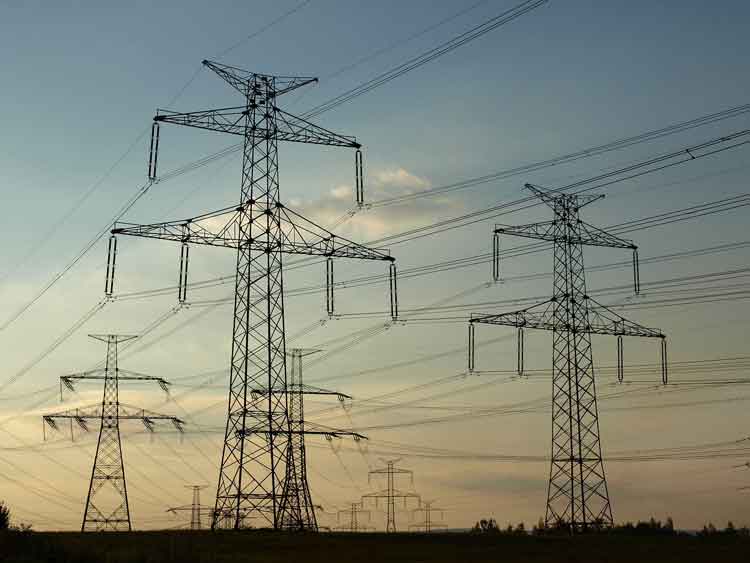
Russia will build up to 16 nuclear reactors for power stations in India, Russia's deputy premier said during a visit to India with Prime Minister Vladimir Putin to reaffirm decades-old ties.

Russia is competing with French and U.S. firms for lucrative contracts to build nuclear power plants for energy-hungry India because Asia's third-largest economy needs to boost its supply to help sustain rapid economic growth.

"The agreement sees construction of up to 16 nuclear reactors in three locations," Deputy Prime Minister Sergei Ivanov told reporters.

Mr. Putin pledged to boost banking and technology cooperation with India, seeking to bolster ties with a Cold War ally that has been shifting focus toward the United States.

Russia wants to boost trade with India to (US) $20-billion by 2015 from the current $8-billion. Together with China and Brazil, Russia and India make up the so-called BRIC group of major emerging economies, whose global influence is rising.

The two nations also seek a greater role in stabilizing the region because both share security interests emanating from Islamist militant violence and the war in Afghanistan.

Aiming mainly to keep one of the world's biggest arms importers interested in Russian weapons, Mr. Putin offered state financial aid for the Indian telecom unit of Russian conglomerate Sistema.

Related News

Biden's Announcement of a 100% Tariff on Chinese-Made Electric Vehicles

U.S. 100% Tariff on Chinese EVs aims to protect domestic manufacturing, counter subsidies, and reshape the EV market, but could raise prices, disrupt supply chains, invite retaliation, and complicate climate policy and trade relations.


Key Points

A 100% import duty on Chinese EVs to boost U.S. manufacturing, counter subsidies, and address supply chain risks.

✅ Protects domestic EV manufacturing and jobs

✅ Counters alleged subsidies and IP concerns

✅ May raise prices, limit choice, trigger retaliation


President Joe Biden's administration recently made headlines with its announcement of a 100% tariff on Chinese electric vehicles (EVs), marking a significant escalation in trade tensions between the two economic powerhouses. The decision, framed as a measure to protect American industries and promote domestic manufacturing, has sparked debates over its potential impact on the EV market, global supply chains, and bilateral relations between the United States and China.

The imposition of a 100% tariff on Chinese-made EVs reflects the Biden administration's broader efforts to revitalize the American automotive industry and promote the transition to electric vehicles as part of its climate agenda and tighter EPA emissions rules that could accelerate adoption. By imposing tariffs on imported EVs, particularly those from China, the administration aims to incentivize domestic production and create jobs in the growing green economy, and to secure critical EV metals through allied supply efforts. Additionally, the tariff is seen as a response to concerns about unfair trade practices, including intellectual property theft and market distortions, allegedly perpetuated by Chinese companies.

However, the announcement has triggered a range of reactions from various stakeholders, with both proponents and critics offering contrasting perspectives on the potential consequences of such a policy. Proponents argue that the tariff will help level the playing field for American automakers, who face stiff competition from Chinese companies benefiting from government subsidies and lower production costs. They contend that promoting domestic manufacturing of EVs will not only create high-quality jobs but also enhance national security by reducing dependence on foreign supply chains at a time when an EV inflection point is approaching.

On the other hand, critics warn that the 100% tariff on Chinese-made EVs could have unintended consequences, including higher prices for consumers, as seen in the UK EV prices and Brexit debate, disruptions to global supply chains, and retaliatory measures from China. Chinese EV manufacturers, such as NIO, BYD, and XPeng, have been gaining momentum in the global market, offering competitive products at relatively affordable prices. The tariff could limit consumer choice at a time when U.S. EV market share dipped in Q1 2024, potentially slowing the adoption of electric vehicles and undermining efforts to combat climate change and reduce greenhouse gas emissions.

Moreover, the tariff announcement comes at a sensitive time for U.S.-China relations, which have been strained by various issues, including trade disputes, human rights concerns, and geopolitical tensions. The imposition of tariffs on Chinese-made EVs could further exacerbate bilateral tensions, potentially leading to retaliatory measures from China and escalating trade frictions. As the world's two largest economies, the United States and China have significant economic interdependencies, and any escalation in trade tensions could have far-reaching implications for global trade and economic stability.

In response to the Biden administration's announcement, Chinese officials have expressed concerns and called for dialogue to resolve trade disputes through negotiation and mutual cooperation. China has also emphasized its commitment to fair trade practices and compliance with international rules and regulations governing trade.

Moving forward, the Biden administration faces the challenge of balancing its domestic priorities with the need to maintain constructive engagement with China and other trading partners, even as EV charging networks scale under its electrification push. While promoting domestic manufacturing and protecting American industries are legitimate policy goals, achieving them without disrupting global trade and undermining diplomatic relations requires careful deliberation and strategic foresight.

In conclusion, President Biden's announcement of a 100% tariff on Chinese-made electric vehicles reflects his administration's commitment to revitalizing American industries and promoting domestic manufacturing. However, the decision has raised concerns about its potential impact on the EV market, global supply chains, and U.S.-China relations. As policymakers navigate these complexities, finding a balance between protecting domestic interests and fostering international cooperation will be crucial to achieving sustainable economic growth and addressing global challenges such as climate change.


Related News

View more

Ford's Washington Meeting: Energy Tariffs and Trade Tensions with U.S

Ontario-U.S. Energy Tariff Dispute highlights cross-border trade tensions, retaliatory tariffs, export surcharges, and White House negotiations as Doug Ford meets U.S. officials to de-escalate pressure over steel, aluminum, and energy supplies.


Key Points

A trade standoff over energy exports and tariffs, sparked by Ontario's surcharge and U.S. duties on steel and aluminum.

✅ 25% Ontario energy surcharge paused before White House talks

✅ U.S. steel and aluminum tariffs reduced from 50% to 25%

✅ Potential energy supply cutoff remains leverage in negotiations


Ontario Premier Doug Ford's recent high-stakes diplomatic trip to Washington, D.C., underscores the delicate trade tensions between Canada and the United States, particularly concerning energy exports and Canada's electricity exports across the border. Ford's potential use of tariffs or even halting U.S. energy supplies, amid Ontario's energy independence considerations, remains a powerful leverage tool, one that could either de-escalate or intensify the ongoing trade conflict between the two neighboring nations.

The meeting in Washington follows a turbulent series of events that began with Ontario's imposition of a 25% surcharge on energy exports to the U.S. This move came in retaliation to what Ontario perceived as unfair treatment in trade agreements, a step that aligned with Canadian support for tariffs at the time. In response, U.S. President Donald Trump's administration threatened its own set of tariffs, specifically targeting Canadian steel and aluminum, which further escalated tensions. U.S. officials labeled Ford's threat to cut off U.S. electricity exports and energy supplies as "egregious and insulting," warning of significant economic retaliation.

However, shortly after these heated exchanges, Trump’s commerce secretary, Howard Lutnick, extended an invitation to Ford for a direct meeting at the White House. Ford described this gesture as an "olive branch," signaling a potential de-escalation of the dispute. In the lead-up to this diplomatic encounter, Ford agreed to pause the energy surcharge, allowing the meeting to proceed, amid concerns tariffs could spike NY energy prices, without further escalating the crisis. Trump's administration responded by lowering its proposed 50% tariff on Canadian steel and aluminum to a more manageable 25%.

The outcome of the meeting, which is set to address these critical issues, could have lasting implications for trade relations between Canada and the U.S. If Ford and Lutnick can reach an agreement, the potential for tariff imposition on energy exports, though experts advise against cutting Quebec's energy exports due to broader risks, could be resolved. However, if the talks fail, it is likely that both countries could face further retaliatory measures, compounding the economic strain on both sides.

As Canada and the U.S. continue to navigate these complex issues, where support for Canadian energy projects has risen, the outcome of Ford's meeting with Lutnick will be closely watched, as it could either defuse the tensions or set the stage for a prolonged trade battle.


Related News

View more

California Welcomes 70 Volvo VNR Electric Trucks

Switch-On Project Electric Trucks accelerate California freight decarbonization, deploying Volvo VNR Electric rigs with high-capacity charging infrastructure, zero-emissions operations, and connected safety features to cut greenhouse gases and improve urban air quality.


Key Points

A California program deploying Volvo VNR Electric trucks and charging to decarbonize freight and improve air quality.

✅ 70 Volvo VNR Electric trucks for regional logistics

✅ Strategic high-capacity charging for heavy-duty fleets

✅ Lower TCO via fuel savings and reduced maintenance


In a significant step toward sustainable transportation, the Switch-On project is bringing 70 Volvo VNR Electric trucks to California. This initiative aims to bolster the state's efforts to reduce emissions and transition to greener logistics solutions. The arrival of these electric vehicles marks an important milestone in California's commitment to combating climate change and improving air quality.

The Switch-On Project: Overview and Goals

The Switch-On project is a collaborative effort designed to enhance electric truck adoption in California. It focuses on developing the necessary infrastructure and technology to support electric vehicles (EVs) in the freight and logistics sectors, building on recent nonprofit investments at California ports. The project not only seeks to increase the availability of electric trucks but also aims to demonstrate their effectiveness in real-world applications.

California has set ambitious goals for reducing greenhouse gas emissions, particularly from the transportation sector, which is one of the largest contributors to air pollution. By introducing electric trucks into freight operations, the state aims to significantly cut emissions, improve public health, and pave the way for a more sustainable future.

The Volvo VNR Electric Trucks

The Volvo VNR Electric trucks are specifically designed for regional distribution and urban transport, aligning with Volvo's broader electric lineup as the company expands offerings, making them ideal for the needs of California’s freight industry. With a range of approximately 250 miles on a single charge, these trucks can efficiently handle most regional routes. Equipped with advanced technology, including regenerative braking and connectivity features, the VNR Electric models enhance operational efficiency and safety.

These trucks not only provide a cleaner alternative to traditional diesel vehicles but also promise lower operational costs over time. With reduced fuel expenses and lower maintenance needs, and emerging vehicle-to-grid pilots that can create new value streams, businesses can benefit from significant savings while contributing to environmental sustainability.

Infrastructure Development

A crucial aspect of the Switch-On project is the development of charging infrastructure to support the new fleet of electric trucks. The project partners are working on installing high-capacity charging stations strategically located throughout California while addressing utility planning challenges that large fleets will pose to the power system. This infrastructure is essential to ensure that electric trucks can be charged efficiently, minimizing downtime and maximizing productivity.

The charging stations are designed to accommodate the specific needs of heavy-duty vehicles, and corridor models like BC's Electric Highway provide useful precedents for network design, allowing for rapid charging that aligns with operational schedules. This development not only supports the new fleet but also encourages other logistics companies to consider electric trucks as a viable option for their operations.

Benefits to California

The introduction of 70 Volvo VNR Electric trucks will have several positive impacts on California. Firstly, it will significantly reduce greenhouse gas emissions from the freight sector, contributing to the state’s ambitious climate goals even as grid expansion will be needed to support widespread electrification across sectors. The transition to electric trucks is expected to improve air quality, particularly in urban areas that struggle with high pollution levels.

Moreover, the project serves as a model for other regions considering similar initiatives. By showcasing the practicality and benefits of electric trucks, California hopes to inspire widespread adoption across the nation. As the market for electric vehicles continues to grow, this project can play a pivotal role in accelerating the transition to sustainable transportation solutions.

Industry and Community Reactions

The arrival of the Volvo VNR Electric trucks has been met with enthusiasm from both industry stakeholders and community members. Logistics companies are excited about the opportunity to reduce their carbon footprints and operational costs. Meanwhile, environmental advocates applaud the project as a crucial step toward cleaner air and healthier communities.

California’s commitment to sustainable transportation has positioned it as a leader in the shift to electric vehicles amid an ongoing biofuels vs. EVs debate over the best path forward, setting an example for other states and countries.

Conclusion

The Switch-On project represents a major advancement in California's efforts to transition to electric transportation. With the deployment of 70 Volvo VNR Electric trucks, the state is not only taking a significant step toward reducing emissions but also demonstrating the feasibility of electric logistics solutions.

As infrastructure develops and more electric trucks hit the roads, California is paving the way for a greener, more sustainable future in transportation. The success of this project could have far-reaching implications, influencing policies and practices in the broader freight industry and beyond.


Related News

View more

A tenth of all electricity is lost in the grid - superconducting cables can help

High-Temperature Superconducting Cables enable lossless, high-voltage, underground transmission for grid modernization, linking renewable energy to cities with liquid nitrogen cooling, boosting efficiency, cutting emissions, reducing land use, and improving resilience against disasters and extreme weather.


Key Points

Liquid-nitrogen-cooled power cables delivering electricity with near-zero losses, lower voltage, and greater resilience.

✅ Near-lossless transmission links renewables to cities efficiently

✅ Operate at lower voltage, reducing substation size and cost

✅ Underground, compact, and resilient to extreme weather events


For most of us, transmitting power is an invisible part of modern life. You flick the switch and the light goes on.

But the way we transport electricity is vital. For us to quit fossil fuels, we will need a better grid, with macrogrid planning connecting renewable energy in the regions with cities.

Electricity grids are big, complex systems. Building new high-voltage transmission lines often spurs backlash from communities, as seen in Hydro-Que9bec power line opposition over aesthetics and land use, worried about the visual impact of the towers. And our 20th century grid loses around 10% of the power generated as heat.

One solution? Use superconducting cables for key sections of the grid. A single 17-centimeter cable can carry the entire output of several nuclear plants. Cities and regions around the world have done this to cut emissions, increase efficiency, protect key infrastructure against disasters and run powerlines underground. As Australia prepares to modernize its grid, it should follow suit with smarter electricity infrastructure initiatives seen elsewhere. It's a once-in-a-generation opportunity.


What's wrong with our tried-and-true technology?
Plenty.

The main advantage of high voltage transmission lines is they're relatively cheap.

But cheap to build comes with hidden costs later. A survey of 140 countries found the electricity currently wasted in transmission accounts for a staggering half-billion tons of carbon dioxide—each year.

These unnecessary emissions are higher than the exhaust from all the world's trucks, or from all the methane burned off at oil rigs.

Inefficient power transmission also means countries have to build extra power plants to compensate for losses on the grid.

Labor has pledged A$20 billion to make the grid ready for clean energy, and international moves such as US-Canada cross-border approvals show the scale of ambition needed. This includes an extra 10,000 kilometers of transmission lines. But what type of lines? At present, the plans are for the conventional high voltage overhead cables you see dotting the countryside.

System planning by Australia's energy market operator shows many grid-modernizing projects will use last century's technologies, the conventional high voltage overhead cables, even as Europe's HVDC expansion gathers pace across its network. If these plans proceed without considering superconductors, it will be a huge missed opportunity.


How could superconducting cables help?
Superconduction is where electrons can flow without resistance or loss. Built into power cables, it holds out the promise of lossless electricity transfer, over both long and short distances. That's important, given Australia's remarkable wind and solar resources are often located far from energy users in the cities.

High voltage superconducting cables would allow us to deliver power with minimal losses from heat or electrical resistance and with footprints at least 100 times smaller than a conventional copper cable for the same power output.

And they are far more resilient to disasters and extreme weather, as they are located underground.

Even more important, a typical superconducting cable can deliver the same or greater power at a much lower voltage than a conventional transmission cable. That means the space needed for transformers and grid connections falls from the size of a large gym to only a double garage.

Bringing these technologies into our power grid offers social, environmental, commercial and efficiency dividends.

Unfortunately, while superconductors are commonplace in Australia's medical community (where they are routinely used in MRI machines and diagnostic instruments) they have not yet found their home in our power sector.

One reason is that superconductors must be cooled to work. But rapid progress in cryogenics means you no longer have to lower their temperature almost to absolute zero (-273℃). Modern "high temperature" superconductors only need to be cooled to -200℃, which can be done with liquid nitrogen—a cheap, readily available substance.

Overseas, however, they are proving themselves daily. Perhaps the most well-known example to date is in Germany's city of Essen. In 2014, engineers installed a 10 kilovolt (kV) superconducting cable in the dense city center. Even though it was only one kilometer long, it avoided the higher cost of building a third substation in an area where there was very limited space for infrastructure. Essen's cable is unobtrusive in a meter-wide easement and only 70cm below ground.

Superconducting cables can be laid underground with a minimal footprint and cost-effectively. They need vastly less land.

A conventional high voltage overhead cable requires an easement of about 130 meters wide, with pylons up to 80 meters high to allow for safety. By contrast, an underground superconducting cable would take up an easement of six meters wide, and up to 2 meters deep.

This has another benefit: overcoming community skepticism. At present, many locals are concerned about the vulnerability of high voltage overhead cables in bushfire-prone and environmentally sensitive regions, as well as the visual impact of the large towers and lines. Communities and farmers in some regions are vocally against plans for new 85-meter high towers and power lines running through or near their land.

Climate extremes, unprecedented windstorms, excessive rainfall and lightning strikes can disrupt power supply networks, as the Victorian town of Moorabool discovered in 2021.

What about cost? This is hard to pin down, as it depends on the scale, nature and complexity of the task. But consider this—the Essen cable cost around $20m in 2014. Replacing the six 500kV towers destroyed by windstorms near Moorabool in January 2020 cost $26 million.

While superconducting cables will cost more up front, you save by avoiding large easements, requiring fewer substations (as the power is at a lower voltage), and streamlining approvals.


Where would superconductors have most effect?
Queensland. The sunshine state is planning four new high-voltage transmission projects, to be built by the mid-2030s. The goal is to link clean energy production in the north of the state with the population centers of the south, similar to sending Canadian hydropower to New York to meet demand.

Right now, there are major congestion issues between southern and central Queensland, and subsea links like Scotland-England renewable corridors highlight how to move power at scale. Strategically locating superconducting cables here would be the best location, serving to future-proof infrastructure, reduce emissions and avoid power loss.


Related News

View more

Disruptions in the U.S. coal, nuclear power industries strain the economy and invite brownouts

Electric power market crisis highlights grid reliability risks as coal and nuclear retire amid subsidies, mandates, and cheap natural gas; intermittent wind and solar raise blackout concerns, resilience costs, and pricing distortions across regulated markets.


Key Points

Reliability and cost risks as coal and nuclear retire; subsidies distort prices; intermittent renewables strain grid.

✅ Coal and nuclear retirements reduce baseload capacity

✅ Subsidies and mandates distort market pricing signals

✅ Intermittent renewables increase blackout and grid risk


Is anyone paying any attention to the crisis that is going on in our electric power markets?

Over the past six months at least four major nuclear power plants have been slated for shutdown, including the last one in operation in California. Meanwhile, dozens of coal plants have been shuttered as well — despite low prices and cleaner coal. Some of our major coal companies may go into bankruptcy.

This is a dangerous game we are playing here with our most valuable resource — outside of clean air and water. Traditionally, we've received almost half our electric power nationwide from coal and nuclear power, and for good reason. They are cheap sources of power and they are highly resilient and reliable.

The disruption to coal and nuclear power wouldn't be disturbing if this were happening as a result of market forces. That's only partially the case.

#google#

The amazing shale oil and gas revolution is providing Americans with cheap gas for home heating and power generation. Hooray. The price of natural gas has fallen by nearly two-thirds over the last decade and this has put enormous price pressure on other forms of power generation.

But this is not a free-market story of Schumpeterian creative destruction. If it were, then wind and solar power would have been shutdown years ago. They can't possibly compete on a level playing field with $3 natural gas.

In most markets solar and wind power survive purely because the states mandate that as much as 30 percent of residential and commercial power come from these sources. The utilities have to buy it regardless of price, even as electricity demand is flat in many regions. What a sweet deal. The California state legislature just mandated that every new home spend $10,000 on solar panels on the roof.

Well over $100 billion of subsidies to big wind and big solar were doled out over the last decade, and even with the avalanche of taxpayer subsidies and bailout funds many of these companies like Solyndra (which received $500 million in handouts) failed, underscoring why a green revolution hasn't materialized as promised.

These industries are not anywhere close to self sufficiency. In 2017 amid utility trends to watch the wind industry admitted that without a continuation of a multi-billion tax credit, the wind turbines would stop turning.

This combines with the left's war on coal through regulations that have destroyed coal plants in many areas. (Thank goodness for the exports of coal or the industry would be in much bigger trouble.)

Bottom line: Our power market is a Soviet central planner's dream come true and it is extinguishing our coal and nuclear industries.


Why should anyone care?

First, because government subsidies, regulations and mandates make electric power more expensive. Natural gas prices have fallen by two-thirds, but electric power costs have still risen in most areas — thanks to the renewable mandates.

More importantly, the electric power market isn't accurately pricing in the value of resilience and reliability. What is the value of making sure the lights don't go off? What is the cost to the economy and human health if we have rolling brownouts and blackouts because the aging U.S. grid doesn't have enough juice during peak demand.

Politicians, utilities and federal regulators are shortsightedly killing our coal and nuclear capacities without considering the risk of future energy shortages and power disruptions. Once a nuclear plant is shutdown, you can't just fire it back up again when you need it.

Wind and solar are notoriously unreliable. Most places where wind power is used, coal plants are needed to back up the system during peak energy use and when the wind isn't blowing.

The first choice to fix energy markets is to finally end the tangled web of layers and layers of taxpayer subsidies and mandates and let the market choose. Alas, that's nearly impossible given the political clout of big wind and solar.

The second best solution is for the regulators and utilities to take into account the grid reliability and safety of our energy. Would people be willing to pay a little more for their power to ensure against brownouts? I sure would. The cost of having too little energy far exceeds the cost of having too much.

A glass of water costs pennies, but if you're in a desert dying of thirst, that water may be worth thousands of dollars.

I'll admit I'm not sure what the best solution is to the power plant closures. But if we have major towns and cities in the country without electric power for stretches of time because of green energy fixation, Americans are going to be mighty angry and our economy will take a major hit.

When our manufacturers, schools, hospitals, the internet and iPhones shut down, we're not going to think wind and solar power are so chic.

If the lights start to go out five or 10 years from now, we will look back at what is happening today and wonder how we could have been so darn stupid.


Related News

View more

Hydro One crews restore power to more than 277,000 customers following damaging storms in Ontario

Hydro One Power Restoration showcases outage recovery after a severe windstorm, with crews repairing downed power lines, broken poles and crossarms, partnering with utilities and contractors to boost grid resilience and promote emergency kit preparedness.


Key Points

A coordinated response by Hydro One and partners to repair storm damage, restore outages, strengthen grid resilience.

✅ Crews repaired downed lines, broken poles, and crossarms

✅ Partners and contractors aided rapid outage restoration

✅ Investments improve grid resilience and emergency readiness


Hydro One crews have restored power to more than 277,000 customers following back-to-back storms, with impacts felt in communities like Sudbury where local crews worked to reconnect service, including a damaging windstorm on that caused 57 broken poles, 27 broken crossarms, as well as downed power lines and fallen trees on lines. Hydro One crews restored power to more than 140,000 customers within 24 hours of Friday's windstorm, even as Toronto outages persisted for some customers elsewhere.

'We understand power outages bring life to a halt, which is why we are continuously improving our storm response, as employee COVID-19 support demonstrated, while making smart investments in a resilient, reliable and sustainable electricity system to energize life for families, businesses and communities for years to come,' said David Lebeter, Chief Operating Officer, Hydro One. 'We thank our customers for their patience as our crews worked tirelessly, alongside our utility partners and contractors, including Ontario crews in Florida, to restore power as quickly and as safely as possible.'

Hydro One thanks all of its utility partners and contractors who assisted with restoration efforts following the windstorm (alongside similar Quebec outages that highlighted the broader impact), including Durham High Voltage, EPCOR, ERTH Power, K-Line Construction Ltd., Lakeland Power Distribution Ltd., North Bay Hydro, Sproule Powerline Construction Ltd. and Valard Construction.

Hydro One encourages customers to restock their emergency kits following these storms, which utilities such as BC Hydro have also characterized as atypical, and to be aware of support programs like our pandemic relief fund that can help during difficult periods, to ensure they're prepared for an emergency or extended power outage.


Related News

View more

Sign Up for Electricity Forum’s Newsletter

Stay informed with our FREE Newsletter — get the latest news, breakthrough technologies, and expert insights, delivered straight to your inbox.

Electricity Today T&D Magazine Subscribe for FREE

Stay informed with the latest T&D policies and technologies.
  • Timely insights from industry experts
  • Practical solutions T&D engineers
  • Free access to every issue

Live Online & In-person Group Training

Advantages To Instructor-Led Training – Instructor-Led Course, Customized Training, Multiple Locations, Economical, CEU Credits, Course Discounts.

Request For Quotation

Whether you would prefer Live Online or In-Person instruction, our electrical training courses can be tailored to meet your company's specific requirements and delivered to your employees in one location or at various locations.