By Chris Baltimore, Reuters


Electrical Testing & Commissioning of Power Systems

Our customized live online or in‑person group training can be delivered to your staff at your location.

  • Live Online
  • 12 hours Instructor-led
  • Group Training Available
Regular Price:
$599
Coupon Price:
$499
Reserve Your Seat Today
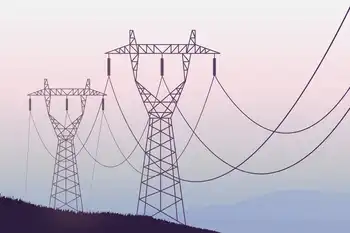
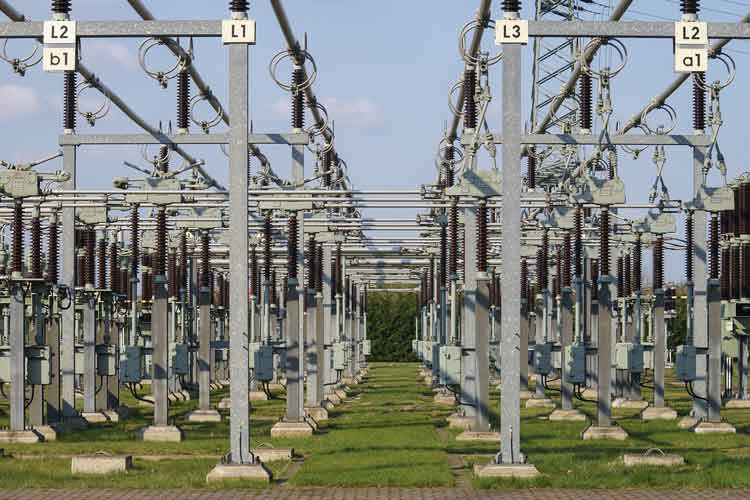
July 30, 2003 - The Senate was expected to vote on Wednesday on proposals that would stop the Federal Energy Regulatory Commission from finalizing new electricity market rules until mid-2005 and give the agency more power to review mergers in the U.S. utility sector.

Senate Republican leaders are trying to finish a broad energy bill with incentives for oil and natural gas drilling, energy conservation and electricity deregulation before adjourning Friday for a month-long August recess. A key issue for lawmakers is the proposed repeal of a Depression-era law that limits utility mergers. The Senate energy bill would repeal the Public Utilities Holding Company Act (PUHCA) of 1935, created as a trust-busting measure to prevent utilities from becoming too powerful. It would also give FERC limited power to review mergers. Democrat Jeff Bingaman of New Mexico on Tuesday night proposed an amendment that would give FERC more authority to prevent utilities from growing too big or from improperly transferring assets between parent and subsidiary units. Under the Republican plan, "a single company could acquire every generator in this country, and FERC could do nothing about it," Bingaman said. Some U.S. consumer groups oppose the repeal of PUHCA, saying that would trigger a round of mergers that would reduce competition in the power industry. The electricity industry and the U.S. Securities and Exchange Commission favor repeal of the law. The Senate was also debating whether FERC should be barred from finalizing its plan to rewrite U.S. electricity market rules and combine transmission grids into super-regional groups. Southern and Western lawmakers, whose states already have cheap electricity, oppose FERC's plan to make utilities join grid groups. A Republican proposal would stop FERC from moving ahead with its transmission grid rules as a package or piecemeal until July 1, 2005. Bingaman urged lawmakers to give FERC more flexibility. The Republican approach, he said, would prevent the agency from carrying out essential functions related to market oversight, transmission pricing or prospective rules for transmission grid groups. Another electricity-related amendment was offered by Democrat Maria Cantwell of Washington. Her proposal would broadly ban market manipulation, compared with a Republican plan that takes a more limited approach to trading strategies, with a ban on so-called "round-trip" trading -- bogus energy trades designed simply to boost revenue. "We are simply saying that market manipulation under the Federal Power Act cannot be 'just and reasonable,"' Cantwell said. Votes on the electricity proposals were expected on Wednesday. If the Senate manages to pass an energy bill, it would have to be reconciled with a House of Representatives measure approved in April. The House bill would repeal the utility holding company law.

A key issue for lawmakers is the proposed repeal of a Depression-era law that limits utility mergers.

The Senate energy bill would repeal the Public Utilities Holding Company Act (PUHCA) of 1935, created as a trust-busting measure to prevent utilities from becoming too powerful. It would also give FERC limited power to review mergers.

Democrat Jeff Bingaman of New Mexico on Tuesday night proposed an amendment that would give FERC more authority to prevent utilities from growing too big or from improperly transferring assets between parent and subsidiary units.

Under the Republican plan, "a single company could acquire every generator in this country, and FERC could do nothing about it," Bingaman said.

Some U.S. consumer groups oppose the repeal of PUHCA, saying that would trigger a round of mergers that would reduce competition in the power industry. The electricity industry and the U.S. Securities and Exchange Commission favor repeal of the law.

The Senate was also debating whether FERC should be barred from finalizing its plan to rewrite U.S. electricity market rules and combine transmission grids into super-regional groups. Southern and Western lawmakers, whose states already have cheap electricity, oppose FERC's plan to make utilities join grid groups.

A Republican proposal would stop FERC from moving ahead with its transmission grid rules as a package or piecemeal until July 1, 2005.

Bingaman urged lawmakers to give FERC more flexibility. The Republican approach, he said, would prevent the agency from carrying out essential functions related to market oversight, transmission pricing or prospective rules for transmission grid groups.

Another electricity-related amendment was offered by Democrat Maria Cantwell of Washington. Her proposal would broadly ban market manipulation, compared with a Republican plan that takes a more limited approach to trading strategies, with a ban on so-called "round-trip" trading -- bogus energy trades designed simply to boost revenue.

"We are simply saying that market manipulation under the Federal Power Act cannot be 'just and reasonable,"' Cantwell said.

Votes on the electricity proposals were expected on Wednesday.

If the Senate manages to pass an energy bill, it would have to be reconciled with a House of Representatives measure approved in April. The House bill would repeal the utility holding company law.

Related News

B.C. Hydro adds more vehicle charging stations across southern B.C.

BC Hydro EV Charging Stations expand provincewide with DC fast chargers, 80% in 30 minutes at 35 c/kWh, easing range anxiety across Vancouver, Vancouver Island, Coquihalla Highway, East Kootenay, between Kamloops and Prince George.


Key Points

Public DC fast-charging network across B.C. enabling 80% charge in 30 minutes to cut EV range anxiety.

✅ 28 new stations added; 30 launched in 2016

✅ 35 c/kWh; about $3.50 per tank equivalent

✅ Coverage: Vancouver, Island, Coquihalla, East Kootenay


B.C. Hydro is expanding its network of electric vehicle charging stations.

The Crown utility says 28 new stations complete the second phase of its fast-charging network and are in addition to the 30 stations opened in 2016.

Thirteen of the stations are in Metro Vancouver, seven are on Vancouver Island, including one at the Pacific Rim Visitor Centre near Tofino, another is in Campbell River, and two have opened on the Coquihalla segment of B.C.'s Electric Highway at the Britton Creek rest area.

A further six stations are located throughout the East Kootenay and B.C. Hydro says the next phase of its program will connect drivers travelling between Kamloops and Prince George, while stations in Prince Rupert are also being planned.

BC Hydro has also opened a fast charging site in Lillooet, illustrating expansion into smaller communities.

Hydro spokeswoman Mora Scott says the stations can charge an electric vehicle to 80 per cent in just 30 minutes, at a cost of 35 cents per kilowatt hour.

Mora Scott says that translates to roughly $3.50 for the equivalent of a full tank of gas in the average four-cylinder car.

“The number of electric vehicles on B.C. roads is increasing, there’s currently around 9,000 across the province, and we actually expect that number to rise to 300,000 by 2030,” Scott says in a news release.

In partnership with municipalities, regional districts and several businesses, B.C. Hydro has been installing charging stations throughout the province since 2012 with support from the provincial and federal governments and programs such as EV charger rebates available to residents.

Scott says the utility wants to ensure the stations are placed where drivers need them so charging options are available provincewide.

“One big thing that we know drivers of electric vehicles worry about is the concept called range anxiety, that the stations aren’t going to be where they need them,” she says.

Several models of electric vehicle are now capable of travelling up to 500 kilometres on a single charge, says Scott.

BC Hydro president Chris O’Riley says the new charging sites will encourage electric vehicle drivers to explore B.C. this summer.


Related News

View more

Electric vehicles to transform the aftermarket … eventually

Heavy-Duty Truck Electrification is disrupting the aftermarket as diesel declines: fewer parts, regenerative braking, emissions rules, e-drives, gearboxes, and software engineering needs reshape service demand, while ICE fleets persist for years.


Key Points

Transition of heavy trucks to EV systems, reducing parts and emissions while reshaping aftermarket service and skills.

✅ 33% fewer parts; regenerative braking slashes brake wear

✅ Diesel share declines; EVs and natural gas slowly gain

✅ Aftermarket shifts to e-drives, gearboxes, software and service


Those who sell parts and repair trucks might feel uneasy when reports emerge about a coming generation of electric trucks.

There are reportedly about 33% fewer parts to consider when internal combustion engines and transmissions are replaced by electric motors. Features such as regenerative braking are expected to dramatically reduce brake wear. As for many of the fluids needed to keep components moving? They can remain in their tanks and drums.

Think of them as disruptors. But presenters during the annual Heavy Duty Aftermarket Dialogue are stressing that the changes are not coming overnight. Chris Patterson, a consultant and former Daimler Trucks North America CEO, noted that the Daimler electrification plan underscores the shift as he counts just 50 electrified heavy trucks in North America.

About 88% of today’s trucks run on diesel, with the remaining 12% mostly powered by gasoline, said John Blodgett, MacKay and Company’s vice-president of sales and marketing. Five years out, even amid talk of an EV inflection point, he expects 1% to be electric, 2% to be natural gas, 12% to be gasoline, and 84% on diesel.

But a decade from now, forecasts suggest a split of 76% diesel, 11% gasoline, 7% electric, and 5% natural gas, with a fraction of a percent relying on hydrogen-electric power. Existing internal combustion engines will still be in service, and need to be serviced, but aftermarket suppliers are now preparing for their roles in the mix, especially as Canada’s EV opportunity comes into focus for North American players.

“This is real, for sure,” said Delphi Technologies CEO Rick Dauch.

Aftermarket support is needed
“As programs are launched five to six years from now, what are the parts coming back?” he asked the crowd. “Braking and steering. The fuel injection business will go down, but not for 20-25 years.” The electric vehicles will also require a gear box and motor.

“You still have a business model,” he assured the crowd of aftermarket professionals.

Shifting emissions standards are largely responsible for the transformation that is occurring. In Europe, Volkswagen’s diesel emissions scandal and future emissions rules of Euro 7 will essentially sideline diesel-powered cars, even as electric buses have yet to take over transit systems. Delphi’s light-duty diesel business has dropped 70% in just five years, leading to plant closures in Spain, France and England.

“We’ve got a billion-dollar business in electrification, last year down $200 million because of the downturn in light-duty diesel controllers,” Dauch said. “We think we’re going to double our electrification business in five years.”

That has meant opening five new plants in Eastern European markets like Turkey, Romania and Poland alone.

Deciding when the market will emerge is no small task, however. One new plant in China offered manufacturing capacity in July 2019, but it has yet to make any electric vehicle parts, highlighting mainstream EV challenges tied to policy shifts, because the Chinese government changed the incentive plans for electric vehicles.

‘All in’ on electric vehicles
Dana has also gone “all in” on electrification, said chairman and CEO Jim Kamsickas, referring to Dana’s work on e-drives with Kenworth and Peterbilt. Its gasket business is focusing on the needs of battery cooling systems and enclosures.

But he also puts the demand for new electric vehicle systems in perspective. “The mechanical piece is still going to be there.”

The demand for the new components and systems, however, has both companies challenged to find enough capable software engineers. Delphi has 1,600 of them now, and it needs more.

“Just being a motor supplier, just being an inverter supplier, just being a gearbox supplier itself, yes you’ll get value out of that. But in the longhaul you’re going to need to have engineers,” Kamsickas said of the work to develop systems.

Dauch noted that Delphi will leave the capital-intensive work of producing batteries to other companies in markets like China and Korea. “We’re going to make the systems that are in between – inverters, chargers, battery management systems,” he said.

Difficult change
But people working for European companies that have been built around diesel components are facing difficult days. Dauch refers to one German village with a population of 1,200, about 800 of whom build diesel engine parts. That business is working furiously to shift to producing gasoline parts.

Electrification will face hurdles of its own, of course. Major cities around the world are looking to ban diesel-powered vehicles by 2050, but they still lack the infrastructure needed to charge all the cars and truck fleet charging at scale, he added.

Kamsickas welcomes the disruptive forces.

“This is great,” he said. “It’s making us all think a little differently. It’s just that business models have had to pivot – for you, for us, for everybody.”

They need to be balanced against other business demands, including evolving cross-border EV collaboration dynamics, too.

Said Kamsickas: “Working through the disruption of electrification, it’s how do you financially manage that? Oh, by the way, the last time I checked there are [company] shareholders and stakeholders you need to take care of.”

“It’s going to be tough,” Dauch agreed, referring to the changes for suppliers. “The next three to four years are really going to be game changes. “There’ll be some survivors and some losers, that’s for sure.”


Related News

View more

Ontario announces SMR plans to four reactors at Darlington

Ontario Darlington SMR Expansion advances four GE Hitachi BWRX-300 reactors with OPG, adding 1,200 MW of baseload nuclear power to support electrification, grid reliability, and clean energy growth across Ontario and Saskatchewan.


Key Points

Plan to build four BWRX-300 SMRs at Darlington, delivering 1,200 MW of clean, reliable baseload power under OPG.

✅ Four GE Hitachi BWRX-300 units, 1,200 MW total

✅ Shared infrastructure cuts costs and timelines

✅ Supports electrification, grid reliability, net zero


The day after Ontario announced it would be building an additional 4,800 megawatts of nuclear reactors at Bruce Nuclear Generating Station, the province announced it would be dramatically expanding its planned rollout of small modular reactors at its Darlington Nuclear Generating Station, and confirmed plans to refurbish Pickering B as part of its broader strategy.

Ontario Power Generation OPG was always going to be the first to build the GE-Hitachi BWRX-300 small modular reactor SMR, with the U.S.’s Tennessee Valley Authority among others like SaskPower and several European nations following suit. But the OPG was originally going to build just one. On July 7, OPG and the Province of Ontario announced they would be bumping that up to four units of the BWRX-300.

The Ontario government is working with Ontario Power Generation (OPG) to commence planning and licensing for three additional small modular reactors (SMRs), for a total of four SMRs at the Darlington nuclear site. Once deployed, these four units would produce a total 1,200 megawatts (MW) of electricity, equivalent to powering 1.2 million homes, helping to meet increasing demand from electrification and fuel the province’s strong economic growth, the Ontario Ministry of Energy said in a release.

“Our government’s open for business approach has led to unprecedented investments across the province — from electric vehicles and battery manufacturing to critical minerals to green steel,” said Todd Smith, Minister of Energy. “Expanding Ontario’s world-leading SMR program will ensure we have the reliable, affordable and clean electricity we need to power the next major international investment, the new homes we are building and industries as they grow and electrify.”

For the first time since 2005, Ontario’s electricity demand is rising. While the government has implemented its plan to meet rising electricity demand this decade, the experts at Ontario’s Independent Electricity System Operator have recommended the province advance new nuclear generation and pursue life-extension at Pickering NGS to provide reliable, baseload power to meet increasing electricity needs in the 2030s and beyond.

Subject to Ontario Government and Canadian Nuclear Safety Commission (CNSC) regulatory approvals on construction, the additional SMRs could come online between 2034 and 2036. That is the same timeframe that SaskPower is looking at for its first, and possibly second, units.

The initial unit is expected to go online in 2028 following Ontario’s first SMR groundbreaking at Darlington.

The Darlington site, which already hosts four reactors, was originally considered for an expansion of “large nuclear,” which is why OPG was already well on its way for site approvals of additional nuclear power generation. The plan changed to one, singular, SMR. Now that has been updated to four.

The announcement has significant impact on Saskatchewan, and its plans to build four of its own SMRs. The timing would allow Ontario Power Generation to apply learnings from the construction of the first unit to deliver cost savings on subsequent units. This is also the strategy SaskPower is following – allow Ontario to build the first, then learn from that experience.

Building multiple units will also allow common infrastructure such as cooling water intake, transmission connection and control room to be utilized by all four units instead of just one, reducing costs even further, the Ministry said.

“A fleet of SMRs at the Darlington New Nuclear Site is key to meeting growing electricity demands and net zero goals,” said Ken Hartwick, OPG President and CEO. “OPG has proven its large nuclear project expertise through the on-time, on budget Darlington Refurbishment project. By taking a similar approach to building a fleet of SMRs, we will deliver cost and schedule savings, and power 1.2 million homes from this site by the mid-2030s.”

The Darlington SMR project is situated on the traditional and treaty territories of the seven Williams Treaties First Nations and is also located within the traditional territory of the Huron Wendat peoples. OPG is actively engaging and consulting with potentially impacted Indigenous communities, including exploring economic opportunities in the Darlington SMR project such as commercial participation and employment.

The Ministry noted, “Ontario’s robust nuclear supply chain is uniquely positioned to support SMR development and deployment in Ontario, Canada and globally. Building additional SMRs at Darlington would provide more opportunities for Ontario companies and broader economic benefits as suppliers of nuclear equipment, components, and services to make further investments to expand their operation to serve the growing SMR market both domestically and abroad.”

Supporting new SMR development and investing in nuclear power is part of the Ontario government’s larger plan, aligned with a Canadian interprovincial nuclear initiative that brings provinces together, to prepare for electricity demand in the 2030s and 2040s that will build on Ontario’s clean electricity advantage and ensure the province has the power to maintain it’s position as leader in job creation and a magnet for the industries of the future, the Ministry said.

In February, World Nuclear News (WNN) reported that Poland was considering up to 79 small modular reactors of the same design as OPG and SaskPower. And on June 5, it reported, “Canada’s Ontario Power Generation will provide operator services to Poland’s Orlen Synthos Green Energy under a letter of intent signed between the partners, extending their existing cooperation on the deployment of small modular reactors.”

WNN added, “The letter of intent is aimed at concluding future agreements under which OPG and its subsidiaries could provide operator services for SMR reactors to OSGE in connection with the deployment of SMRs in Poland and other European countries. The partnership would include a number of SMR-related activities including: development and deployment; operations and maintenance; operator training; commissioning; and regulatory support.”


Related News

View more

Analysis: Why is Ontario’s electricity about to get dirtier?

Ontario electricity emissions forecast highlights rising grid CO2 as nuclear refurbishments and the Pickering closure drive more natural gas, limited renewables, and delayed Quebec hydro imports, pending advances in storage and transmission upgrades.


Key Points

A projection that Ontario's grid CO2 will rise as nuclear units refurbish or retire, increasing natural gas use.

✅ Nuclear refurbs and Pickering shutdown cut zero-carbon baseload

✅ Gas plants fill capacity gaps, boosting GHG emissions

✅ Quebec hydro imports face cost, transmission, and timing limits


Ontario's energy grid is among the cleanest in North America — but the province’s nuclear plans mean that some of our progress will be reversed over the next decade.

What was once Canada’s largest single source of greenhouse-gas emissions is now a solar-power plant. The Nanticoke Generating Station, a coal-fired power plant in Haldimand County, was decommissioned in stages from 2010 to 2013 — and even before the last remaining structures were demolished earlier this year, Ontario Power Generation had replaced its nearly 4,000 megawatts with a 44-megawatt solar project in partnership with the Six Nations of the Grand River Development Corporation and the Mississaugas of the Credit First Nation.

But neither wind nor solar has done much to replace coal in Ontario’s hydro sector, a sign of how slowly Ontario is embracing clean power in practice across the province. At Nanticoke, the solar panels make up less than 2 per cent of the capacity that once flowed out to southern Ontario over high-voltage transmission lines. In cleaning up its electricity system, the province relied primarily on nuclear power — but the need to extend the nuclear system’s lifespan will end up making our electricity dirtier again.

“We’ve made some pretty great strides since 2005 with the fuel mix,” says Terry Young, vice-president of corporate communications at the Independent Electricity System Operator, the provincial agency whose job it is to balance supply and demand in Ontario’s electricity sector. “There have been big changes since 2005, but, yes, we will see an increase because of the closure of Pickering and the refurbs coming.”

“The refurbs” is industry-speak for the major rebuilds of both the Darlington and Bruce nuclear-power stations. The two are both in the early stages of major overhauls intended to extend their operating lives into the 2060s: in the coming years, they’ll be taken offline and rebuilt. (The Pickering nuclear plant will not be refurbished and will shut down in 2024.)

The catch is that, as the province loses its nuclear capacity in increments, Ontario will be short of electricity in the coming years and the IESO will need to find capacity elsewhere to make sure the lights stay on. And that could mean burning a lot more natural gas — and creating more greenhouse-gas emissions.

According to the IESO’s planning assumptions, electricity will be responsible for 11 megatonnes of greenhouse-gas emissions annually by 2035 (last year, it was three megatonnes). That’s the “reference case” scenario: if conservation and efficiency policies shave off some electricity demand, we could get it down to something like nine megatonnes. But if demand is higher than expected, it could be as high as 13 megatonnes — more than quadruple Ontario’s 2018 emissions.

Even in the worst-case scenario, the province’s emissions from electricity would still be less than half of what they were in 2005, before the province began phasing out its coal generation. But it’s still a reversal of a trend that both Liberals and Progressive Conservatives have boasted about — the Liberals to justify their energy policies, the PCs to justify their hostility to a federal carbon tax.

Young emphasized that technology can change and that the IESO’s planning assumptions are just that: projections based on the information available today. A revolution in electricity storage could make it possible to store the province’s cleaner power sources overnight for use during the day, but that’s still only in the realm of speculation — and the natural-gas infrastructure exists in the real world, today.

Ontario Power Generation — the Crown corporation that operates many of the province’s power plants, including Pickering and Darlington — recently bought four gas plants, two of them outright (two it already owned in part). All were nearly complete or already operational, so the purchase itself won’t change the province’s emissions prospects. Rather, OPG is simply looking to maintain its share of the electricity market after the Pickering shutdown.

“It will allow us to maintain our scale, with the upcoming end of Pickering’s commercial operations, so that we can continue our role as the driver of Ontario’s lower carbon future,” Neal Kelly, OPG’s director of media, issues, and management, told TVO.org via email. “Further, there is a growing need for flexible gas fired generation to support intermittent wind and solar generation.”

The shift to more gas-fired generation has been coming for a while, and critics say that Ontario has missed an opportunity to replace the lost Pickering capacity with something cleaner. MPP Mike Schreiner, leader of the Green party, has argued for years that Ontario should have pursued an agreement with Quebec to import clean hydroelectricity.

“To me, it’s a cost-effective solution, and it’s a zero-emissions solution,” Schreiner says. “Regardless of your position on sources of electricity, I think everyone could agree that waterpower from Quebec is going to be less expensive.”

Quebec is eager to sell Ontario its surplus hydro power, but not everyone agrees that importing power would be cheaper. A study published by the Ontario Chamber of Commerce (and commissioned by Ontario Power Generation) calls the claim a “myth” and states that upgrading electric-transmission wires between Ontario and Quebec would cost $1.2 billion and take 10 years, while some estimates suggest fully greening Ontario's grid would cost far more overall.

With Quebec imports seemingly a non-starter and major changes to Ontario’s nuclear fleet already underway, there’s only one path left for this province’s greenhouse-gas emissions: upwards.


Related News

View more

Africa must quadruple power investment to supply electricity for all, IEA says

Africa Energy Investment must quadruple, says IEA, to deliver electricity access via grids, mini-grids, and stand-alone solar PV, wind, hydropower, natural gas, and geothermal, targeting $120 billion annually and 2.5% of GDP.


Key Points

Africa Energy Investment funds reliable, low-carbon electricity via grids, mini-grids, and renewables.

✅ Requires about $120B per year, or 2.5% of GDP

✅ Mix: grids, mini-grids, stand-alone solar PV and wind

✅ Targets reliability, economic growth, and electricity access


African countries will need to quadruple their rate of investment in their power sectors for the next two decades to bring reliable electricity to all Africans, as outlined in the IEA’s path to universal access analysis, an International Energy Agency (IEA) study published on Friday said.

If African countries continue on their policy trajectories, 530 million Africans will still lack electricity in 2030, the IEA report said. It said bringing reliable electricity to all Africans would require annual investment of around $120 billion and a global push for clean, affordable power to mobilize solutions.

“We’re talking about 2.5% of GDP that should go into the power sector,” Laura Cozzi, the IEA’s Chief Energy Modeller, told journalists ahead of the report’s launch. “India’s done it over the past 20 years. China has done it, with solar PV growth outpacing any other fuel, too. So it’s something that is doable.”

Taking advantage of technological advances and optimizing natural resources, as highlighted in a renewables roadmap, could help Africa’s economy grow four-fold by 2040 while requiring just 50% more energy, the agency said.

Africa’s population is currently growing at more than twice the global average rate. By 2040, it will be home to more than 2 billion people. Its cities are forecast to expand by 580 million people, a historically unprecedented pace of urbanization.

While that growth will lead to economic expansion, it will pile pressure on power sectors that have already failed to keep up with demand, with the sub-Saharan electricity challenge intensifying across the region. Nearly half of Africans - around 600 million people - do not have access to electricity. Last year, Africa accounted for nearly 70% of the global population lacking power, a proportion that has almost doubled since 2000, the IEA found.

Some 80% of companies in sub-Saharan Africa suffered frequent power disruptions in 2018, leading to financial losses that curbed economic growth.

The IEA recommended changing how power is distributed, with mini-grids and stand-alone systems like household solar playing a larger role in complementing traditional grids as targeted efforts to accelerate access funding gain momentum.

According to IEA Executive Director Fatih Birol, with the right government policies and energy strategies, Africa has an opportunity to pursue a less carbon-intensive development path than other regions.

“To achieve this, it has to take advantage of the huge potential that solar, wind, hydropower, natural gas and energy efficiency offer,” he said.

Despite possessing the world’s greatest solar potential, Africa boasts just 5 gigawatts of solar photovoltaics (PV), or less than 1% of global installed capacity, a slow green transition that underscores the scale of the challenge, the report stated.

To meet demand, African nations should add nearly 15 gigawatts of PV each year through 2040. Wind power should also expand rapidly, particularly in Ethiopia, Kenya, Senegal and South Africa. And Kenya should develop its geothermal resources.


Related News

View more

US Electricity Market Reforms could save Consumers $7bn

PJM and MISO Electricity-Market Reforms promise consumer savings by enabling renewables, wind, solar, and storage participation in wholesale markets, enhancing grid flexibility, reliability services, and real-time pricing across the Midwest, Great Lakes, and Mid-Atlantic.


Key Points

Market rule updates enabling renewables and storage, improving reliability and lowering consumer costs.

✅ Removes barriers to renewables, storage, demand response

✅ Improves intermarket links and real-time price signals

✅ Rewards flexible resources and reliability services


Electricity-market reforms to enable more renewables generation and storage in the Midwest, Great Lakes, and Mid-Atlantic could save consumers in the US and Canada more than $6.9 billion a year, according to a new report.

The findings may have major implications for consumer groups, large industrial companies, businesses, and homeowners in those regions, said the Wind-Solar Alliance, (WSA), which commissioned the Customer Focused and Clean report.

The WSA is a non-profit organisation supporting the growth of renewables. American Wind Energy Association CEO Tom Kiernan is listed as WSA secretary, amid ongoing debates about the US wind market today.

"Consumers are looking for clean energy, affordable and reliable energy that will keep their monthly electricity bills low," said Kristin Munsch, president of the Board of the Consumer Advocates of the PJM States, which represents over 65 million consumers in 13 states.

"There is great potential to achieve those goals with the cost-effective integration of wind, solar and battery storage plants into our wholesale power markets."

The report found the average residential customer in the PJM and Midcontinent Independent System Operator (MISO) regions, covering 29 US states and the Canadian province of Manitoba, could each save up to $48 a year as lower wholesale electricity prices materialize with significantly more wind, solar and storage on the grid.

The average annual home electricity, for example in New Jersey, in the PJM region, was just over $106 in 2018, according to the US Energy Information Administration.

The latest report quantifies the findings of a previous one for the WSA, published in November 2018, which found that outdated wholesale market rules in the US were preventing full participation by renewable energy, including wind power.


Outdated rules

"The existing wholesale power market rules were largely developed for slower-to-react conventional generators, such as coal and nuclear plants," said Michael Milligan, president of Milligan Grid Solutions and co-author of the new report.

"This report demonstrates the benefits of updating the rules to better accommodate the characteristics and potential contributions of wind and solar and other newer sources of low-cost generation."

With more renewables generation on the grid, customers would benefit the most from increasing power-system flexibility through market structures, the new report concluded. It called for the removal of artificial barriers preventing renewables, storage and demand response from participating in markets.

The report also advocated improving the connections between markets, thereby lowering transaction costs of imports and exports between neighbouring systems.

"There are currently artificial barriers that are preventing the full participation of renewables, storage and other new technologies in the PJM and MISO markets," said Michael Goggin, vice president of Grid Strategies and co-author of the report.

"Providing consumers with a real-time price signal that allows them to adjust their demand, rewarding flexible resources for their capabilities through improved market design, and allowing renewable and storage resources to participate in reliability-services markets would yield the greatest consumer benefits," he said.

PJM and MISO, which incorporate some of the windiest areas of the country, are currently reviewing their market designs as part of a broader grid overhaul underway.


Related News

View more

Sign Up for Electricity Forum’s Newsletter

Stay informed with our FREE Newsletter — get the latest news, breakthrough technologies, and expert insights, delivered straight to your inbox.

Electricity Today T&D Magazine Subscribe for FREE

Stay informed with the latest T&D policies and technologies.
  • Timely insights from industry experts
  • Practical solutions T&D engineers
  • Free access to every issue

Download the 2025 Electrical Training Catalog

Explore 50+ live, expert-led electrical training courses –

  • Interactive
  • Flexible
  • CEU-cerified