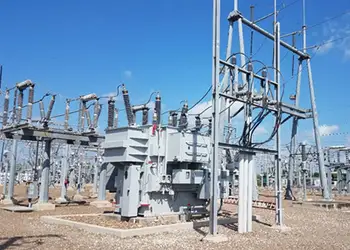
Substation Protection Training - Protect Transformers, Buses and Lines
Our customized live online or in‑person group training can be delivered to your staff at your location.
- Live Online
- 12 hours Instructor-led
- Group Training Available
Regular Price:
$799
Coupon Price:
$699
Smart meters the province hopes to place in Ontario homes would encourage people to turn on their dishwasher in the middle of the night to save money on their energy bill, Premier Dalton McGuinty said recently.
Although residents have to pay part of the cost to install the meters, they will save money in the long run due to a planned revamped billing system that would reward the energy-conscious, McGuinty said.
"If you put your dishwasher on at three o'clock in the morning, although that is good for energy generation in the province of Ontario, we don't (currently) reward you financially for doing so," McGuinty said before a cabinet retreat.
"We're not charging you lesser rates for using electricity at off-peak periods."
The smart meters, which measure when consumers use their electricity so they can get cheaper rates in off-peak hours such as late at night, are part of the province's conservation plan to cut power use by five per cent by 2007, McGuinty said.
Every smart meter "will pay for itself," he added, with the cost covered by a small monthly charge.
"It's all designed to ensure that you are in fact saving money over the long term."
However, there's no date yet for when the province will begin to install the devices.
There's also no decision yet on what kind of smart meters the province could use.
There are a number of different types of meters that can help consumers cut back on their electricity use, said Tom Adams, executive director of Energy Probe.
Woodstock Hydro in southwestern Ontario has a pay-as-you-go system for about 2,600 residential customers.
Consumers use a pre-paid card to buy electricity so they know how much it costs to run appliances, and as a result they conserve. It also helps the utility cut down on bad debts.
It costs about $500 for the utility to put in a meter.
Another technology is an interval meter, which has a microchip in it to count how much electricity is being used by a consumer and when.
But Adams said there's no point in spending money on new meters if the province keeps a cap on electricity prices because that lessens the financial incentive for consumers to conserve.
"If we've got smart meters but dumb prices, we're not going to get the benefit of these better meters," he said.
"The real issue here is what are the Liberals going to do with electricity prices," Adams asked.
The current meters most Ontarians have count how much electricity is being used, at a cost of about $7 a year per meter. Interval meters, though, cost about $100 a year, Adams said.
Electricity prices increase effective Thursday. The rate will be 4.7 cents per kilowatt hour for the first 750 kilowatts used by a household, and will rise to 5.5 cents after that level. The previous cap was 4.3 cents.
The province's conservation plan will be "progressive, aggressive, bold and ambitious," McGuinty said.
"It will equip people with the tools necessary to both save money and save energy," he said.
The goal will be to reduce overall demand and encourage people to use electricity at off-peak times, he added.
Talk of the smart meters came as Energy Minister Dwight Duncan introduced new energy efficiency standards for nine products, including thermostats used with individual-room electric space heaters, and industrial and commercial gas-fired package furnaces.
The compliance date for the two new products is Jan. 1, 2005.
The government estimates the move will save residential and commercial energy users more than $2 million in the first year.
The regulations, filed under Ontario's Energy Efficiency Act, will also set tougher standards for seven other products, including power transformers, incandescent reflector lamps, gas-fired automatic storage-type water heaters, household dishwashers and household electric ranges.
Related News

Avista Commissions Largest Solar Array in Washington
Adams Nielson Solar Array, a 28 MW DC utility-scale project in Lind, WA, spans 200…
View more

DBRS Confirms Ontario Power Generation Inc. at A (low)/R-1 (low), Stable Trends
OPG Credit Rating affirmed by DBRS at A (low) issuer and unsecured debt, R-1 (low)…
View more
Transmission constraints impede incremental Quebec-to-US power deliveries
Hydro-Québec Northeast Clean Energy Transmission delivers surplus hydropower via HVDC interconnections to New York and…
View more

Pennsylvania Home to the First 100% Solar, Marriott-Branded U.S. Hotel
Courtyard by Marriott Lancaster Solar Array delivers 100% renewable electricity via photovoltaic panels at Greenfield…
View more
Iran, Iraq Discuss Further Cooperation in Energy Sector
Iran-Iraq Electricity Cooperation advances with power grid synchronization, cross-border energy trade, 400-kV transmission lines, and…
View more
Global Energy War Escalates: Price Hikes and Instability
Russia-Ukraine Energy War disrupts infrastructure, oil, gas, and electricity, triggering supply shocks, price spikes, and…
View more
Sign Up for Electricity Forum’s Newsletter
Stay informed with our FREE Newsletter — get the latest news, breakthrough technologies, and expert insights, delivered straight to your inbox.
Electricity Today T&D Magazine Subscribe for FREE

Stay informed with the latest T&D policies and technologies.
- Timely insights from industry experts
- Practical solutions T&D engineers
- Free access to every issue

