By B.C. has one aluminum smelter, in Kitimat. Owned by giant Alcan Inc., the smelter has its own electricity-generating station at nearby Kemano. The Kitimat smelter cut production in December of 2000 and again last June because of a critical


Protective Relay Training - Basic

Our customized live online or in‑person group training can be delivered to your staff at your location.

  • Live Online
  • 12 hours Instructor-led
  • Group Training Available
Regular Price:
$699
Coupon Price:
$599
Reserve Your Seat Today
-- A new company wants to build a $1.5-billion (U.S.) aluminum smelter in Port Alberni, B.C., but critics say the project -- long on the area's wish list -- faces significant obstacles, including a shortage of affordable, reliable electricity.

"An aluminum smelter on Vancouver Island would be at the end of a very long extension cord, including a very long underwater portion," said David Austin, a Vancouver lawyer and energy critic. "Why would they build a new smelter on Vancouver Island when existing ones in the state of Washington are still shut down due to the price of electricity?"

But representatives of Alberni Aluminium Corp. believe they would have adequate electricity for the proposed 360,000-tonne-per-year operation, as long as the British Columbia government agrees to make available some of the so-called downstream benefits of the Columbia River Treaty between Canada and the United States.

Those benefits give Canada rights to some electricity generated in the United States in exchange for putting dams on waters running south from B.C.

"We are absolutely comfortable, based on the discussions we have had so far, that a sufficient quantity of power will be available at a justifiable price without subsidies or anything of that nature," Alberni Aluminium director David Krakoff said yesterday.

The company, referred to as Al2Co, was launched yesterday at a news conference in Port Alberni. It will be headed by Patrick James, former chief executive officer of Rio Algom Ltd.

An aluminum smelter in Port Alberni has been on and off the drawing boards since the late 1990s.

Al2Co now plans to conduct detailed engineering and environmental-impact studies, and also will seek to raise capital and to strike a long-term power supply agreement, Mr. Krakoff said.

British Columbia Hydro and Power Authority spokeswoman Elisha Odowichuk said the utility would treat Al2Co like any other customer, providing the company was able to meet requirements for connecting to the grid.

Mr. Krakoff said the proposal is reasonable despite difficulties faced by aluminum producers in the northwestern United States.

A combination of soaring wholesale electricity prices and a soft aluminum market led many smelters in the Pacific Northwest to temporarily close last year.

Related News
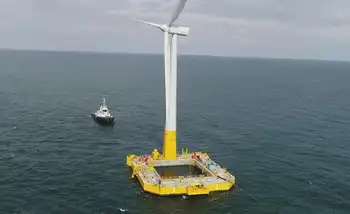
Enel Starts Operations of 450 MW Wind Farm in U.S

High Lonesome Wind Farm powers Texas with 500 MW of renewable energy, backed by a 12-year PPA with Danone North America and a Proxy Revenue Swap, cutting CO2 emissions as Enel's largest project to date.


Key Points

A 500 MW Enel wind project in Texas, supplying renewable power via PPAs and hedged by a Proxy Revenue Swap.

✅ 450 MW online; expanding to 500 MW in early 2020

✅ 12-year PPA with Danone North America for 20.6 MW

✅ PRS hedge with Allianz and Nephila stabilizes revenues


Enel, through its US renewable subsidiary Enel Green Power North America, Inc. (“EGPNA”), has started operations of its 450 MW High Lonesome wind farm in Upton and Crockett Counties, in Texas, the largest operational wind project in the Group’s global renewable portfolio, alongside a recent 90 MW Spanish wind build in its European pipeline. Enel also signed a 12-year, renewable energy power purchase agreement (PPA) with food and beverage company Danone North America, a Public Benefit Corporation, for physical delivery of the renewable electricity associated with 20.6 MW, leading to an additional 50 MW expansion of High Lonesome that will increase the plant’s total capacity to 500 MW. The construction of the 50 MW expansion is currently underway and operations are due to start in the first quarter of 2020.

“The start of operations of Enel’s largest wind farm in the world marks a significant achievement for our company and reinforces our global commitment to accelerated renewable energy growth,” said Antonio Cammisecra, CEO of Enel Green Power, referencing the largest wind project constructed in North America as evidence of market momentum. “This milestone is matched with a new partnership with Danone North America to support their renewable goals, a reinforcement of our continued commitment to provide customers with tailored solutions to meet their sustainability goals.”

The agreement between Enel and Danone North America will provide enough electricity to produce the equivalent of almost 800 million cups of yogurt1 and over 80 million gallons2 of milk each year and support the food and beverage company’s commitment to securing 100% of its purchased electricity from renewable sources by 2030, in a market where North Carolina’s first wind farm is now fully operational and expanding access to clean power.

Mariano Lozano, president and CEO of Danone North America, added:“This is an exciting and significant step as we continue to advance our 2030 renewable electricity goals. As a public benefit corporation committed to balancing the needs of our business with those of society and the planet, we truly believe that this agreement makes sense from both a business and sustainability point of view. We’re delighted to be working with Enel Green Power to expand their High Lonesome wind farm and grow the renewable electricity infrastructure, such as New York’s biggest offshore wind projects, here in the US.”

In addition, as more US wind projects come online, such as TransAlta’s 119 MW project, the energy produced by a 295 MW portion of the project will be hedged under a Proxy Revenue Swap (PRS) with insurer Allianz Global Corporate & Specialty, Inc.'s Alternative Risk Transfer unit (Allianz), and Nephila Climate, a provider of weather and climate risk management products. The PRS is a financial derivative agreement designed to produce stable revenues for the project regardless of power price fluctuations and weather-driven intermittency, hedging the project from this kind of risk in addition to that associated with price and volume.

Under the PRS agreement, and as other projects begin operations, like Building Energy’s latest plant, High Lonesome will receive fixed payments based on the expected value of future energy production, with adjustments paid depending on how the realized proxy revenue of the project differs from the fixed payment. The PRS for High Lonesome, which is the largest by capacity for a single plant globally and the first agreement of its kind for Enel, was executed in collaboration with REsurety, Inc.

The investment in the construction of the 500 MW plant amounts to around 720 million US dollars. The wind farm is due to generate around 1.9 TWh annually, comparable to a 280 MW Alberta wind farm’s output, while avoiding the emission of more than 1.2 million tons of CO2 per year.


Related News

View more

Tunisia invests in major wind farm as part of longterm renewable energy plan

Sidi Mansour Wind Farm Tunisia will deliver 30 MW as an IPP, backed by UPC Renewables and CFM, under a STEG PPA, supporting 2030 renewable energy targets, grid connection, job creation, and CO2 emissions reduction.


Key Points

A 30 MW wind IPP by UPC and CFM in Sidi Mansour, supplying STEG and advancing Tunisia's 2030 renewable target.

✅ 30 MW capacity under STEG PPA, first wind IPP in Tunisia

✅ Co-developed by UPC Renewables and Climate Fund Managers

✅ Cuts CO2 by up to 56,645 t and creates about 100 jobs


UPC Renewables (UPC) and the Climate Fund Managers (CFM) have partnered to develop a 30 megawatt wind farm in Sidi Mansour, Tunisia, which, amid regional wind expansion efforts, will help the country meet its 30% renewable energy target by 2030.

Tunisia announced the launch of its solar energy plan in 2016, with projects like the 10 MW Tunisian solar park aiming to increase the role of renewables in its electricity generation mix ten-fold to 30%,

This Sidi Mansour Project will help Tunisia meet its goals, reducing its reliance on imported fossil fuels and, mirroring 90 MW Spanish wind build milestones, demonstrating to the world that it is serious about further development of renewable energy investment.

“Chams Enfidha”, the first solar energy station in Tunisia with a capacity of 1 megawatt and located in the Enfidha region. (Ministry of Energy, Mines and Energy Transition Facebook page)

This project will also be among the country’s first Independent Power Producers (IPP). CFM is acting as sponsor, financial adviser and co-developer on the project, in a landscape shaped by IRENA-ADFD funding in developing countries, while UPC will lead the development with its local team. The team will be in charge of permitting, grid connection, land securitisation, assessment of wind resources, contract procurement and engineering.

UPC was selected under the “Authorisation Scheme” tender for the project in 2016, similar to utility-scale developments like a 450 MW U.S. wind farm, and promptly signed a power purchase agreement with Société Tunisienne Electricité et du Gaz (STEG).

Brian Caffyn, chairman of UPC Group, said: “We can start the construction of the Sidi Mansour wind farm in 2020, helping stimulate the Tunisian economy, create local jobs and a social plan for local communities while respecting international environmental protection guidelines.”

Sebastian Surie, CFM’s regional head of Africa, added: “CFM is thrilled to partner with a leading wind developer in the Sidi Mansour Wind Project to assist Tunisia in meeting its renewable energy goals. As potentially the first Wind IPP in Tunisia, this Project will be a testament to how CI1’s full life-cycle financing solution can unlock investment in renewable energy in new markets, as seen in an Irish offshore wind project globally.”

The project will not only provide electricity, but also reduce CO2 emissions by up to 56,645 tonnes and create some 100 new jobs.

Wind turbine in El Haouaria, Tunisia, highlighting advances such as a huge offshore wind turbine that can power 18,000 homes. (Reuters)

Tunisia’s first power station, “Chams Enfidha,” inaugurated at the beginning of July, has a capacity of one megawatt, with an estimated cost of 3.3 million dinars ($1.18 million). The state invested 2.3 million dinars into the project ($820,000), with the remaining 1 million dinars ($360,000) provided by a private investor.


Related News

View more

Global oil demand to decline in 2020 as Coronavirus weighs heavily on markets

COVID-19 Impact on Global Oil Demand 2020 signals an IEA forecast of declining consumption as travel restrictions curb transport fuels, disrupt energy markets, and shift OPEC and non-OPEC supply dynamics amid economic slowdown.


Key Points

IEA sees first demand drop since 2009 as COVID-19 curbs travel, weakening transport fuels and unsettling energy markets.

✅ IEA base case: 2020 demand at 99.9 mb/d, down 90 kb/d from 2019.

✅ Travel restrictions hit transport fuels; China drives the decline.

✅ Scenarios: low -730 kb/d; high +480 kb/d in 2020.


Global oil demand is expected to decline in 2020 as the impact of the new coronavirus (COVID-19) spreads around the world, constricting travel and broader economic activity, according to the International Energy Agency’s latest oil market forecast.

The situation remains fluid, creating an extraordinary degree of uncertainty over what the full global impact of the virus will be. In the IEA’s central base case, even as global CO2 emissions flatlined in 2019 according to the IEA, demand this year drops for the first time since 2009 because of the deep contraction in oil consumption in China, and major disruptions to global travel and trade.

“The coronavirus crisis is affecting a wide range of energy markets – including coal-fired electricity generation, gas and renewables – but its impact on oil markets is particularly severe because it is stopping people and goods from moving around, dealing a heavy blow to demand for transport fuels,” said Dr Fatih Birol, the IEA’s Executive Director. “This is especially true in China, the largest energy consumer in the world, which accounted for more than 80% of global oil demand growth last year. While the repercussions of the virus are spreading to other parts of the world, what happens in China will have major implications for global energy and oil markets.”

The IEA now sees global oil demand at 99.9 million barrels a day in 2020, down around 90,000 barrels a day from 2019. This is a sharp downgrade from the IEA’s forecast in February, which predicted global oil demand would grow by 825,000 barrels a day in 2020.

The short-term outlook for the oil market will ultimately depend on how quickly governments move to contain the coronavirus outbreak, how successful their efforts are, and what lingering impact the global health crisis has on economic activity.

To account for the extreme uncertainty facing energy markets, the IEA has developed two other scenarios for how global oil demand could evolve this year. In a more pessimistic low case, global measures fail to contain the virus, and global demand falls by 730,000 barrels a day in 2020. In a more optimistic high case, the virus is contained quickly around the world, and global demand grows by 480,000 barrels a day.

“We are following the situation extremely closely and will provide regular updates to our forecasts as the picture becomes clearer,” Dr Birol said. “The impact of the coronavirus on oil markets may be temporary. But the longer-term challenges facing the world’s suppliers are not going to go away, especially those heavily dependent on oil and gas revenues. As the IEA has repeatedly said, these producer countries need more dynamic and diversified economies in order to navigate the multiple uncertainties that we see today.”

The IEA also published its medium-term outlook examining the key issues in global demand, supply, refining and trade to 2025, as well as the trajectory of the global energy transition now shaping markets. Following a contraction in 2020 and an expected sharp rebound in 2021, yearly growth in global oil demand is set to slow as consumption of transport fuels grows more slowly and as national net-zero pathways, with Canada needing more electricity to reach net-zero influencing power demand, according to the report. Between 2019 and 2025, global oil demand is expected to grow at an average annual rate of just below 1 million barrels a day. Over the period as whole, demand rises by a total of 5.7 million barrels a day, with China and India accounting for about half of the growth.

At the same time, the world’s oil production capacity is expected to rise by 5.9 million barrels a day, with more than three-quarters of it coming from non-OPEC producers, the report forecasts. But production growth in the United States and other non-OPEC countries is set to lose momentum after 2022, amid shifts in Wall Street's energy strategy linked to policy signals, allowing OPEC producers from the Middle East to turn the taps back up to help keep the global oil market in balance.

The medium-term market report, Oil 2020, also considers the impact of clean energy transitions on oil market trends. Demand growth for gasoline and diesel between 2019 and 2025 is forecast to weaken as countries around the world implement policies to improve efficiency and cut carbon dioxide emissions – and as solar power becomes the cheapest electricity in many markets and electric vehicles increase in popularity. The impact of energy transitions on oil supply remains unclear, with many companies prioritising short-cycle projects for the coming years.

“The coronavirus crisis is adding to the uncertainties the global oil industry faces as it contemplates new investments and business strategies,” Dr Birol said. “The pressures on companies are changing, with European oil majors turning electric to diversify. They need to show that they can deliver not just the energy that economies rely on, but also the emissions reductions that the world needs to help tackle our climate challenge.”


Related News

View more

Soaring Electricity And Coal Use Are Proving Once Again, Roger Pielke Jr's "Iron Law Of Climate"

Global Electricity Demand Surge underscores rising coal generation, lagging renewables deployment, and escalating emissions, as nations prioritize reliable power; nuclear energy and grid decarbonization emerge as pivotal solutions to the electricity transition.


Key Points

A rapid post-lockdown rise in power consumption, outpacing renewables growth and driving higher coal use and emissions.

✅ Coal generation rises faster than wind and solar additions

✅ Emissions increase as economies prioritize reliable baseload power

✅ Nuclear power touted for rapid grid decarbonization


By Robert Bryce

As the Covid lockdowns are easing, the global economy is recovering and that recovery is fueling blistering growth in electricity use. The latest data from Ember, the London-based “climate and energy think tank focused on accelerating the global electricity transition,” show that global power demand soared by about 5% in the first half of 2021. That’s faster growth than was happening back in 2018 when electricity use was increasing by about 4% per year.

The numbers from Ember also show that despite lots of talk about the urgent need to reduce greenhouse gas emissions, coal demand for power generation continues to grow and emissions from the electric sector continue to grow: up by 5% over the first half of 2019. In addition, they show that while about half of the growth in electricity demand was met by wind and solar, as low-emissions sources are set to cover almost all new demand over the next three years, overall growth in electricity use is still outstripping the growth in renewables. 

The soaring use of electricity, and increasing emissions from power generation confirm the sage wisdom of Rasheed Wallace, the volatile former power forward with the Detroit Pistons and other NBA teams, and now an assistant coach at the  University of Memphis, who coined the catchphrase: “Ball don’t lie.” If Wallace or one of his teammates was called for a foul during a basketball game that he thought was undeserved, and the opposing player missed the ensuing free throws, Wallace would often holler, “ball don’t lie,” as if the basketball itself was pronouncing judgment on the referee’s errant call. 

I often think about Wallace’s catchphrase while looking at global energy and power trends and substitute my own phrase: numbers don’t lie.

Over the past few weeks Ember, BP, and the International Energy Agency have all published reports which come to the same two conclusions: that countries all around the world — and China's electricity sector in particular — are doing whatever they need to do to get the electricity they need to grow their economies. Second, they are using lots of coal to get that juice. 

As I discuss in my recent book, A Question of Power: Electricity and the Wealth of Nations, Electricity is the world’s most important and fastest-growing form of energy. The Ember data proves that. At a growth rate of 5%, global electricity use will double in about 14 years, and as surging electricity demand is putting power systems under strain around the world, the electricity sector also accounts for the biggest single share of global carbon dioxide emissions: about 25 percent. Thus, if we are to have any hope of cutting global emissions, the electricity sector is pivotal. Further, the soaring use of electricity shows that low-income people and countries around the world are not content to stay in the dark. They want to live high-energy lives with access to all the electronic riches that we take for granted.  

 Ember’s data clearly shows that decarbonizing the global electric grid will require finding a substitute for coal. Indeed, coal use may be plummeting in the U.S. and western Europe, where U.S. electricity consumption has been declining, but over the past two years, several developing countries including Mongolia, China, Bangladesh, Vietnam, Kazakhstan, Pakistan, and India, all boosted their use of coal. This was particularly obvious in China, where, between the first half of 2019 and the first half of 2021, electricity demand jumped by about 14%. Of that increase, coal-fired generation provided roughly twice as much new electricity as wind and solar combined. In Pakistan, electricity demand jumped by about 7%, and coal provided more than three times as much new electricity as nuclear and about three times as much as hydro. (Wind and solar did not grow at all in Pakistan over that period.) 

Hate coal all you like, but its century-long persistence in power generation proves its importance. That persistence proves that climate change concerns are not as important to most consumers and policymakers as reliable electricity. In 2010, Roger Pielke Jr. dubbed this the Iron Law of Climate Policy which says “When policies on emissions reductions collide with policies focused on economic growth, economic growth will win out every time.” Pielke elaborated on that point, saying the Iron Law is a “boundary condition on policy design that is every bit as limiting as is the second law of thermodynamics, and it holds everywhere around the world, in rich and poor countries alike. It says that even if people are willing to bear some costs to reduce emissions (and experience shows that they are), they are willing to go only so far.”

Over the past five years, I’ve written a book about electricity, co-produced a feature-length documentary film about it (Juice: How Electricity Explains the World), and launched a podcast that focuses largely on energy and power. I’m convinced that Pielke’s claim is exactly right and should be extended to electricity and dubbed the Iron Law of Electricity which says, “when forced to choose between dirty electricity and no electricity, people will choose dirty electricity every time.” I saw this at work in electricity-poor places all over the world, including India, Lebanon, and Puerto Rico. 

Pielke, a professor at the University of Colorado as well as a highly regarded author on the politics of climate change and sports governance, has since elaborated on the Iron Law. During an interview in Juice, he explained it thusly: “The Iron Law says we’re not going to reduce emissions by willingly getting poor. Rich people aren't going to want to get poorer, poor people aren't going to want to get poorer.” He continued, “If there is one thing that we can count on it is that policymakers will be rewarded by populations if they make people wealthier. We're doing everything we can to try to get richer as nations, as communities, as individuals. If we want to reduce emissions, we really have only one place to go and that's technology.”

Pielke’s point reminds me of another of my favorite energy analysts, Robert Rapier, who made a salient point in his Forbes column last week. He wrote, “Despite the blistering growth rate of renewables, it’s important to keep in mind that overall global energy consumption is growing. Even though global renewable energy consumption has increased by about 21 exajoules in the past decade, overall energy consumption has increased by 51 exajoules. Increased fossil fuel consumption made up most of this growth, with every category of fossil fuels showing increased consumption over the decade.” 

The punchline here – despite my tangential reference to Rasheed Wallace — is obvious: The claims that massive reductions in global carbon dioxide emissions must happen soon are being mocked by the numbers. Countries around the world are acting in their interest, particularly when it comes to their electricity needs and that is resulting in big increases in emissions. As Ember concludes in their report, wind and solar are growing, and some analyses suggest renewables could eclipse coal by 2025, but the “electricity transition” is “not happening fast enough.”

Ember explains that in the first half of 2021, wind and solar output exceeded the output of the world’s nuclear reactors for the first time. It also noted that over the past two years, “Nuclear generation fell by 2% compared to pre-pandemic levels, as closures at older plants across the OECD, especially amid debates over European nuclear trends, exceeded the new capacity in China.” While that may cheer anti-nuclear activists at groups like Greenpeace and Friends of the Earth, the truth is obvious: the only way – repeat, the only way – the electric sector will achieve significant reductions in carbon dioxide emissions is if we can replace lots of coal-fired generation with nuclear reactors and do so in relatively short order, meaning the next decade or so. Renewables are politically popular and they are growing, but they cannot, will not, be able to match the soaring demand for the electricity that is needed to sustain modern economies and bring developing countries out of the darkness and into modernity. 

Countries like China, Vietnam, India, and others need an alternative to coal for power generation. They need new nuclear reactors that are smaller, safer, and cheaper than the existing designs. And they need it soon. I will be writing about those reactors in future columns.


Related News

View more

Garbage Truck Crash Knocks Down Power Poles in Little Haiti

Little Haiti Garbage Truck Power Outage in Miami after mechanical arms snagged power lines, snapping power poles; FPL crews, police, and businesses faced traffic delays, safety risks, and rapid restoration efforts across the neighborhood.


Key Points

A Miami incident where a garbage truck snagged power lines, toppling poles and causing outages and traffic delays.

✅ Mechanical arms caught overhead lines; three power poles snapped

✅ FPL dispatched, police directed traffic; restoration prioritized

✅ Dozens of businesses affected; afternoon rush hour congestion


On January 16, 2025, a significant incident unfolded in Miami's Little Haiti neighborhood when a garbage truck collided with power lines, causing three power poles to collapse and resulting in widespread power outages and traffic disruptions.

Incident Details

Around 1:30 p.m., a garbage truck traveling west on Northeast 82nd Street toward Interstate 95 became entangled with overhead power lines. The truck's mechanical arms caught the lines, leading to the snapping of three power poles and plunging the area into darkness, a scenario echoed by urban incidents like a manhole fire that left thousands without power. Witnesses reported a loud boom followed by an immediate power outage. One local business owner described the event, stating, "There was a loud boom, and suddenly the power went out."

Impact on the Community

The incident caused significant disruptions in the Little Haiti area. At least a dozen businesses were affected by the power outage, and in wider Florida events restoration can take weeks depending on damage, leading to operational halts and potential financial losses. The timing of the crash, during the afternoon rush hour, exacerbated traffic congestion as commuters were forced to navigate through the area, and similar disruptions occur when strong winds knock out power, further complicating the situation.

Response and Recovery Efforts

In response to the incident, Miami police directed traffic to alleviate congestion and ensure public safety. Florida Power & Light (FPL) crews, known for their major outage response, were promptly dispatched to the scene to assess the damage and begin restoration efforts. The priority was to safely remove the damaged power poles and restore electricity to the affected area. FPL's swift action was crucial in minimizing the duration of the power outage and restoring normalcy to the community.

Safety Considerations

This incident underscores the importance of safety protocols for vehicles operating in areas with overhead power lines. Garbage trucks, due to their design and operational mechanisms, are particularly susceptible to such accidents, and in broader disasters some regions require a power grid rebuild to recover, highlighting the stakes. It is imperative for operators to be vigilant and adhere to safety guidelines to prevent similar occurrences.

Community Resilience

Despite the challenges posed by the incident, the Little Haiti community demonstrated resilience. Local businesses and residents cooperated with authorities, while utilities elsewhere have restored power to thousands after major events, and the prompt response from emergency services highlighted the community's strength in the face of adversity.


Related News

View more

Government of Canada Invests in the Future of Work in Today's Rapidly Changing Electricity Sector

EHRC National Occupational Standards accelerate workforce readiness for smart grids, renewable energy, digitalization, and automation, aligning skills, reskilling, upskilling across the electricity sector with a career portal, labour market insights, and emerging jobs.


Key Points

Industry benchmarks from EHRC defining skills, training, and competencies for Canada's evolving electricity workforce.

✅ Aligns skills to smart grids, renewable energy, and automation

✅ Supports reskilling, upskilling, and career pathways

✅ Informs employers with labour market intelligence


Smart grids, renewable electricity generation, automation, carbon capture and storage, and electric vehicles are transforming the traditional electricity industry. Technological innovation is reshaping and reinventing the skills and occupations required to support the electrical grid of the 21st century, even as pandemic-related grid warnings underscore resilience needs.

Canada has been a global leader in embracing and capitalizing on drivers of disruption and will continue to navigate the rapidly changing landscape of electricity by rethinking and reshaping traditional occupational standards and skills profiles.

In an effort to proactively address the needs of our current and future labour market, building on regional efforts like Nova Scotia energy training to enhance participation, Electricity Human Resources Canada (EHRC) is pleased to announce the launch of funding for the new National Occupational Standards (NOS) and Career Portal project. This project will explore the transformational impact of technology, digitalization and innovation on the changing nature of work in the sector.

Through this research a total of 15 National Occupational Standards and Essential Skills Profiles will be revised or developed to better prepare jobseekers, including young Canadians interested in electricity to transition into the electricity sector. Occupations to be covered include:

  • Electrical Engineering Technician/ Technologist
  • Power Protection and Control Technician/ Technologist
  • Power Systems Operator
  • Solar Photovoltaic Installer
  • Power Station Operator
  • Wind Turbine Technician
  • Geothermal Heat Pump Installer
  • Solar Thermal Installer
  • Utilities Project Manager
  • Heat Pump Designer
  • Small System Designer (Solar)
  • Energy Storage Technician
  • Smart Grid Specialist
  • 2 additional occupations TBD

The labour market intelligence gathered during the research will examine current occupations or job functions facing change or requiring re-skilling or up-skilling, including specialized courses such as arc flash training in Vancouver that bolster safety competencies, as well as entirely emerging occupations that will require specialized skills.

This project is funded in part by the Government of Canada’ Sectoral Initiative Program and supports its goal to address current and future skills shortages through the development and distribution of sector-specific labour market information.

“Canada’s workforce must evolve with the changing economy. This is critical to building the middle class and ensuring continued economic growth. Our government is committed to an evidence-based approach and is focused on helping workers to gain valuable work experience and the skills they need for a fair chance at success. By collaborating with partners like Electricity Human Resources Canada, we can ensure that we are empowering workers today, and planning for the jobs of tomorrow.” – The Honourable Patty Hajdu, Minister of Employment, Workforce Development and Labour

“By encouraging the adoption of new technologies and putting in place the appropriate support for workers, Canada can minimize both skills shortages and technological unemployment. A long-term strategic and national approach to human resource planning and training is therefore critical to ensuring that we continue to maintain the level of growth, reliability, safety and productivity in the system – with a workforce that is truly inclusive and diverse.” – Michelle Branigan, CEO, EHRC.

“The accelerated pace of change in our sector, including advancements in technology and innovation will also have a huge impact on our workforce. We need to anticipate what those impacts will be so employers, employees and job seekers alike can respond to the changing structure of the sector and future job opportunities.” – Jim Kellett, Board Chair, EHRC.

About Electricity Human Resources Canada

EHRC helps to build a better workforce by strengthening the ability of the Canadian electricity industry to meet current and future needs for a highly skilled, safety-focused, diverse and productive workforce by addressing the electrical safety knowledge gap that can lead to injuries.


Related News

View more

Sign Up for Electricity Forum’s Newsletter

Stay informed with our FREE Newsletter — get the latest news, breakthrough technologies, and expert insights, delivered straight to your inbox.

Electricity Today T&D Magazine Subscribe for FREE

Stay informed with the latest T&D policies and technologies.
  • Timely insights from industry experts
  • Practical solutions T&D engineers
  • Free access to every issue

Download the 2025 Electrical Training Catalog

Explore 50+ live, expert-led electrical training courses –

  • Interactive
  • Flexible
  • CEU-cerified