Protective Relay Training - Basic
Our customized live online or in‑person group training can be delivered to your staff at your location.
- Live Online
- 12 hours Instructor-led
- Group Training Available
Regular Price:
$699
Coupon Price:
$599
Ireland
—
Spain-Ireland electricity interconnector: Governments signed a three-year MoU to study technical and economic feasibility, tasking TSOs to assess costs, challenges and market integration impacts, with potential inclusion in the EU TYNDP for renewables and security.
Story Summary
-
Three-year MoU to assess cross-country grid link feasibility
-
TSOs to study costs and technical challenges, then report
-
Project may seek inclusion in the EU TYNDP
Spain and Ireland have signed a memorandum of understanding to explore a future electricity interconnection between the two countries. The agreement sets a structured process for both governments to examine how a new cross-border link could enhance market integration, support renewable generation, and strengthen energy security across Europe.
The MoU will run for an initial three-year term with an option to extend. Under its framework, the countries' transmission system operators will conduct joint studies focused on technical feasibility and economic viability, including an assessment of costs and engineering challenges. Findings from these studies will be reported to both governments to inform any subsequent policy and investment decisions. On the Irish side, the Department of Climate, Energy and the Environment signed the agreement.
If the work demonstrates a viable pathway, the prospective interconnection could be advanced for consideration within the European Union's Ten-Year Network Development Plan. Positioning the concept within that planning process would help align cross-border system needs, network reinforcement priorities, and market-coupling objectives without predetermining a final configuration or schedule.
Interconnection projects of this scale typically require rigorous power system modeling, reliability analysis, and cost-benefit testing to evaluate congestion relief, curtailment reductions, and flexibility gains. For readers tracking comparable grid developments, the commissioning context discussed in maritime link sends first power offers additional perspective on how major links transition from study to service within established regulatory frameworks.
Planning for large transmission assets also draws on lessons about procurement, contracting models, and long-lead materials. Background reading such as maritime link provides context on multi-year delivery programs, while regional coordination themes highlighted in new england clean power underscore how market design and system operations interface with interregional transfers.
As engineering options are screened, siting and permitting considerations are equally important, including routing constraints, environmental sensitivities, and community engagement. Examples such as transwest express transmission project illustrate the complexity of long-distance transmission approvals, and topics like selective undergrounding, as discussed in tucson line bury, show how design choices can be aligned with permitting outcomes and reliability objectives.
For now, the Spain-Ireland collaboration is at the assessment stage. The forthcoming studies by the transmission system operators will shape whether the concept proceeds into formal European network planning, and, if so, the parameters that could deliver measurable system value for consumers and generators on both sides.
Related News
Related News

Longer, more frequent outages afflict the U.S. power grid as states fail to prepare for climate change
Power Grid Climate Resilience demands storm hardening, underground power lines, microgrids, batteries, and renewable energy…
View more
Current Model For Storing Nuclear Waste Is Incomplete
Nuclear Waste Corrosion accelerates as stainless steel, glass, and ceramics interact in aqueous conditions, driving…
View more
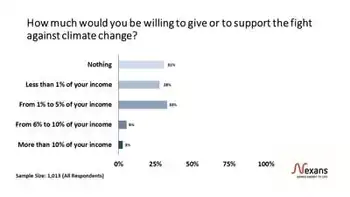
More than Two-thirds of Americans Indicate Willingness to Give or Donate Part of their Income in Support of the Fight Against Climate Change
U.S. Climate Change Donation Survey reveals Americans' willingness to fund sustainability via government incentives, electrification,…
View more

Daimler Details Gigantic Scope of Its Electrification Plan
Daimler Electric Strategy drives EV adoption with global battery factories, Mercedes-Benz electrified models, battery cells…
View more
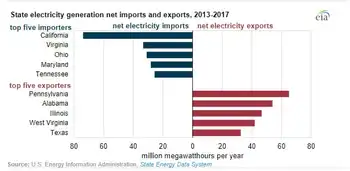
EIA: Pennsylvania exports the most electricity, California imports the most from other states
U.S. Electricity Trade by State, 2013-2017 highlights EIA grid patterns, interstate imports and exports, cross-border…
View more

Maryland’s renewable energy facilities break pollution rules, say groups calling for enforcement
Maryland Renewable Energy Violations highlight RPS compliance gaps as facilities selling renewable energy certificates, including…
View more
Sign Up for Electricity Forum’s Newsletter
Stay informed with our FREE Newsletter — get the latest news, breakthrough technologies, and expert insights, delivered straight to your inbox.
Electricity Today T&D Magazine Subscribe for FREE

Stay informed with the latest T&D policies and technologies.
- Timely insights from industry experts
- Practical solutions T&D engineers
- Free access to every issue

