Wind farm warrants tentative approval

By The Roanoke Times


High Voltage Maintenance Training Online

Our customized live online or in‑person group training can be delivered to your staff at your location.

  • Live Online
  • 12 hours Instructor-led
  • Group Training Available
Regular Price:
$599
Coupon Price:
$499
Reserve Your Seat Today
Careful monitoring should prevent Highland County wind turbines from becoming blades of death.

A proposed wind farm in Highland County pitted environmentalist against environmentalist. Backers of alternative, nonpolluting energy stood off against wildlife defenders.

It's easy to sympathize with cute creatures, but there is insufficient evidence of a pending critter Armageddon to justify blocking the project.

Wind power is one of the more promising alternative energy sources that might ease America's reliance on fossil fuels. It emits no global warming gases, and wind is an abundant resource in many parts of the nation, including the Alleghany Highlands.

The problem is that birds and bats tend to fly into the blades of wind turbines.

So when Highland New Wind Development LLC proposed 19 wind turbines on a ridge line near the West Virginia border, neighbors and others rallied in opposition. Endangered and threatened species such as the Indiana bat, gray bat, Virginia big-eared bat, bald eagle and golden eagle all could meet their ends in the spinning blades.

Wind farm backers countered with their own evidence, arguing it wouldn't be that bad.

A State Corporation Commission hearings officer had the unenviable task of wading into that dispute. After receiving data and testimony from both sides, he recommended SCC approval, but with tight, smart conditions.

No one can say for sure how many birds and bats of what species the turbines would kill. Both sides concede that they can only speculate and that more studies would not clarify the situation. Maybe a lot of flying animals will die, maybe not.

A maybe isn't enough to ban a project with potential economic benefits for the county and environmental benefits for the nation. It's also not enough to rush forward.

The hearings officer therefore crafted a go-slow decision that should satisfy all sides.

He recommends the state allow the company to erect its wind turbines. If dead birds or bats start piling up, the state would enforce mitigating measures such as shutting down the turbines during the deadliest times.

The company and the State Department of Game and Inland Fisheries would work out the exact monitoring and mitigation details before the blades start spinning. Inspections would last a minimum of three years, and state officials would continue to have access beyond that. The company would pay for everything up to $150,000 per year.

In other words, the risk is on the owners. They believe they can turn a profit without killing unacceptable numbers of birds and bats. It would be a good thing if they can. The more wind power put into the grid the better.

If they cannot, they will lose money. The state will not and should not tolerate killing endangered species or mass killing of healthy ones. The county, also, will be prepared. The wind farm must submit a bond to Highland County to cover tower removal if things go badly.

Now it's up to the SCC, which can approve the recommendation, reject it or alter it.

It deserves approval so long as the safeguards remain in place.

Related News
Should California Fund Biofuels or Electric Vehicles?

California Biofuels vs EV Subsidies examines tradeoffs in decarbonization, greenhouse gas reductions, clean energy deployment, charging infrastructure, energy security, lifecycle emissions, and transportation sector policy to meet climate goals and accelerate sustainable mobility.


Key Points

Policy tradeoffs weighing biofuels and EVs to cut GHGs, boost energy security, and advance clean transportation.

✅ Near-term blending cuts emissions from existing fleets

✅ EVs scale with a cleaner grid and charging buildout

✅ Lifecycle impacts and costs guide optimal subsidy mix


California is at the forefront of the transition to a greener economy, driven by its ambitious goals to reduce greenhouse gas emissions and combat climate change. As part of its strategy, the state is grappling with the question of whether it should subsidize out-of-state biofuels or in-state electric vehicles (EVs) to meet these goals. Both options come with their own sets of benefits and challenges, and the decision carries significant implications for the state’s environmental, economic, and energy landscapes.

The Case for Biofuels

Biofuels have long been promoted as a cleaner alternative to traditional fossil fuels like gasoline and diesel. They are made from organic materials such as agricultural crops, algae, and waste, which means they can potentially reduce carbon emissions in comparison to petroleum-based fuels. In the context of California, biofuels—particularly ethanol and biodiesel—are viewed as a way to decarbonize the transportation sector, which is one of the state’s largest sources of greenhouse gas emissions.

Subsidizing out-of-state biofuels can help California reduce its reliance on imported oil while promoting the development of biofuel industries in other states. This approach may have immediate benefits, as biofuels are widely available and can be blended with conventional fuels to lower carbon emissions right away. It also allows the state to diversify its energy sources, improving energy security by reducing dependency on oil imports.

Moreover, biofuels can be produced in many regions across the United States, including rural areas. By subsidizing out-of-state biofuels, California could foster economic development in these regions, creating jobs and stimulating agricultural innovation. This approach could also support farmers who grow the feedstock for biofuel production, boosting the agricultural economy in the U.S.

However, there are drawbacks. The environmental benefits of biofuels are often debated. Critics argue that the production of biofuels—particularly those made from food crops like corn—can contribute to deforestation, water pollution, and increased food prices. Additionally, biofuels are not a silver bullet in the fight against climate change, as their production and combustion still release greenhouse gases. When considering whether to subsidize biofuels, California must also account for the full lifecycle emissions associated with their production and use.

The Case for Electric Vehicles

In contrast to biofuels, electric vehicles (EVs) offer a more direct pathway to reducing emissions from transportation. EVs are powered by electricity, and when coupled with renewable energy sources like solar or wind power, they can provide a nearly zero-emission solution for personal and commercial transportation. California has already invested heavily in EV infrastructure, including expanding its network of charging stations and exploring how EVs can support grid stability through vehicle-to-grid approaches, and offering incentives for consumers to purchase EVs.

Subsidizing in-state EVs could stimulate job creation and innovation within California's thriving clean-tech industry, with other states such as New Mexico projecting substantial economic gains from transportation electrification, and the state has already become a hub for electric vehicle manufacturers, including Tesla, Rivian, and several battery manufacturers. Supporting the EV industry could further strengthen California’s position as a global leader in green technology, attracting investment and fostering growth in related sectors such as battery manufacturing, renewable energy, and smart grid technology.

Additionally, the environmental benefits of EVs are substantial. As the electric grid becomes cleaner with an increasing share of renewable energy, EVs will become even greener, with lower lifecycle emissions than biofuels. By prioritizing EVs, California could further reduce its carbon footprint while also achieving its long-term climate goals, including reaching carbon neutrality by 2045.

However, there are challenges. EV adoption in California remains a significant undertaking, requiring major investments in infrastructure as they challenge state power grids in the near term, technology, and consumer incentives. The cost of EVs, although decreasing, still remains a barrier for many consumers. Additionally, there are concerns about the environmental impact of lithium mining, which is essential for EV batteries. While renewable energy is expanding, California’s grid is still reliant on fossil fuels to some degree, and in other jurisdictions such as Canada's 2019 electricity mix fossil generation remains significant, meaning that the full emissions benefit of EVs is not realized until the grid is entirely powered by clean energy.

A Balancing Act

The debate between subsidizing out-of-state biofuels and in-state electric vehicles is ultimately a question of how best to allocate California’s resources to meet its climate and economic goals. Biofuels may offer a quicker fix for reducing emissions from existing vehicles, but their long-term benefits are more limited compared to the transformative potential of electric vehicles, even as some analysts warn of policy pitfalls that could complicate the transition.

However, biofuels still have a role to play in decarbonizing hard-to-abate sectors like aviation and heavy-duty transportation, where electrification may not be as feasible in the near future. Thus, a mixed strategy that includes both subsidies for EVs and biofuels may be the most effective approach.

Ultimately, California’s decision will likely depend on a combination of factors, including technological advancements, 2021 electricity lessons, and the pace of renewable energy deployment, and the state’s ability to balance short-term needs with long-term environmental goals. The road ahead is not easy, but California's leadership in clean energy will be crucial in shaping the nation’s response to climate change.


Related News

View more

Gaza electricity crisis:

Gaza Electricity Crisis drives severe power cuts in the Gaza Strip, as Hamas-PA tensions and Mahmoud Abbas's supply reductions under blockade spur fuel shortages, hospital strain, and soaring demand for batteries, LED lights, and generators.


Key Points

A prolonged Gaza power shortage from politics, blockade, and fuel cuts, disrupting daily life, hospitals, and water.

✅ Demand surges for batteries, LED lights, and generators

✅ PA cuts to Israel-supplied power deepen shortages

✅ Hospitals, water, and sanitation face critical strain


In Imad Shlayl’s electronics shop in Gaza City, the customers crowding his store are interested in only two products: LED lights and the batteries to power them.

In the already impoverished Gaza Strip, residents have learned to adapt to the fact that electricity is only available for between two and four hours a day.

But fresh anger was sparked when availability was cut further last month, at the request of the Palestinian president, Mahmoud Abbas, in an escalation of his conflict with Hamas, the Islamist group.

The shortages have defined how people live their lives, echoing Europe’s energy crisis in other regions: getting up in the middle of the night, if there is power, to run washing machines or turn on water pumps.

Only the wealthy few have frequent, long-lasting access to electricity, even as U.S. brownout risks highlight grid fragility, to power lights and fans and fridges, televisions and wifi routers, in Gaza’s stifling summer heat.

“We used to sell all sorts of things,” says Shlayl. “But it’s different these days. All we sell is batteries and chargers. Because the crisis is so deep we are selling 100 batteries a day when normally we would sell 20.”

Gaza requires 430 megawatts of power to meet daily demand, but receives only half that. Sixty megawatts are supplied by its solitary power station, now short on fuel, while the rest is provided through the Israel’s power sector and funded by Abbas’s West Bank-based Palestinian Authority (PA).

Abbas’s move to cut supplies to Gaza, which is already under a joint Israeli and Egyptian blockade – now in its 11th year – has quickly made him a hate figure among many Gazans, who question why he is punishing 2 million fellow Palestinians in what appears to be an attempt to force Hamas to relinquish control of the territory.

Though business is good for Shlayl, he is angry at the fresh shortages faced by Gazans which, as pandemic power shut-offs elsewhere have shown, affect all areas of life, from hospital emergency wards to clean water supplies.

“I’ve not done anything to be punished by anyone. It is the worst I can remember but we are expecting it to get worse and worse,” he said. “Not just electricity, but other things as well. We are in a very deep descent.”

As well as cutting electricity, the PA has cut salaries for its employees in Gaza by upwards of 30% , prompting thousands to protest on the streets of Gaza city.

Residents also blame Abbas for a backlog in processing the medical referral process for those needing to travel out of Gaza for treatment, although who is at fault in that issue is less clear cut.

The problems facing Gaza – where high levels of unemployment are endemic – is most obvious in the poorest areas.

In Gaza City’s al-Shati refugee camp, home to the head of Hamas’s political bureau, Ismail Haniyeh, whole housing blocks were dark, while in others only a handful of windows were weakly illuminated.

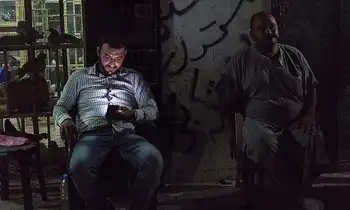
In the one-room kiosk selling pigeons and chickens that he manages, just off the camp’s main market, Ayman Nasser, 32, is sitting on the street with his friends in search of a sea breeze.

His face is illuminated by the light of his mobile phone. He has one battery-powered light burning in his shop.

“Part of the problem is that we don’t have any news. Who should we blame for this? Hamas, Israelis, Abbas?” he said.

 A Palestinian girl reads by candle light due to power cut at the Jabalia Camp in Gaza City
Facebook Twitter Pinterest
 A Palestinian girl reads by candlelight due to a power cut at the Jabalia camp in Gaza City. Photograph: Anadolu Agency/Getty Images
His friend, Ashraf Kashqin, interrupts: “It is all connected to politics, but it is us who is getting played by the two sides.”

If there is a question that all the Palestinians in Gaza are asking, it is what the ageing and remote Abbas hopes to achieve, a dynamic also seen in Lebanon’s electricity disputes, not least whether he hopes the cuts will lead to an insurrection against Hamas following demonstrations linked to the power supply in January.

While a senior official in the Fatah-led government on the West Bank said last month that the aim behind the move by the PA – which has been paying $12m (£9m) a month for the electricity Israel supplies to Gaza – was to “dry up Hamas’s financial resources”, others are dubious about the timing, the motive and the real impact.

Among them are human rights groups, such as Amnesty International, who have warned it could turn Gaza’s long-running crisis into a major disaster already hitting hospitals and waste treatment plants.

“For 10 years the siege has unlawfully deprived Palestinians in Gaza of their most basic rights and necessities. Under the burden of the illegal blockade and three armed conflicts, the economy has sharply declined and humanitarian conditions have deteriorated severely. The latest power cuts risk turning an already dire situation into a full-blown humanitarian catastrophe,” said Magdalena Mughrabi, of the group.

Then there is the question of timing. “Abbas is probably the only one who knows why he is doing this to Gaza,” adds Mohameir Abu Sa’da, a political science professor at Al Azhar University and analyst.

“I honestly don’t buy what he has been saying for the last three months: that he will take exceptional measures against Hamas to put pressure on it to give up control of the Gaza Strip.


Related News

View more

China boosts wind energy, photovoltaic and concentrated solar power

China Renewable Energy Law drives growth in wind power, solar thermal, and photovoltaic capacity, supporting grid integration and five-year plans, even as China leads CO2 emissions, with policy incentives, compliance inspections, and national resource assessments.


Key Points

A legal framework that speeds wind, solar thermal, and PV growth in China via mandates, incentives, and grid rules.

✅ 2018 renewables: 1.87T kWh, 26.7% of national power

✅ Over 100 State Council policies enabling deployment

✅ Law inspections and regional oversight across six provinces


China leads renewable energies, installing more wind power, solar thermal and photovoltaic than any other country, as seen in the China solar PV growth reported in 2016, but also leads CO2 emissions, and much remains to be done.

The effective application of Chinas renewable energy law has boosted the use of renewable energy in the country and facilitated the rapid development of the sector, as solar parity across Chinese cities indicates, a report said.

The report on compliance with renewable energy law was presented today at the current bimonthly session of the Standing Committee of the National Peoples Assembly (APN).

Electricity generated by renewable energy amounted to about 1.87 trillion kilowatts per hour in 2018, representing 26.7 percent of Chinas total energy production in the year, aligning with trends where wind and solar doubling globally over five years, the report said.

Ding Zhongli, vice president of the NPC Standing Committee, presented the report to the legislators at the second plenary meeting of the session.

An inspection of the law enforcement was carried out from August to November, as U.S. renewables hit 28% record showed momentum elsewhere. A total of 21 members of the NPC Standing Committee and the NPC Environmental Protection and Resource Conservation Committee, as well as national legislators, traveled to six regions at the provincial level on inspection visits. Twelve legislative bodies at the provincial level inspected the law enforcement efforts in their jurisdictions.

The relevant State Council agencies have implemented more than 100 regulations and policies to foster a good policy environment for the development of renewable energy, as seen in markets where U.S. renewable electricity surpassed coal in 2022. Local regulations have also been formulated based on local conditions, according to the report.

In accordance with the law, a thorough investigation of the national conditions of renewable energy resources was undertaken.

In 2008 and 2014 atlas of solar energy resources and wind energy evaluation of China were issued. The relevant agencies of the State Council have also implemented five-year plans for the development of renewable energy, which have provided guidance to the sector, while countries like Ireland's one-third green power target remain in focus within four years.

The main provisions of the law have been met, the law has been effectively applied and the purpose of the legislation has been met, and this momentum is echoed abroad, with U.S. renewables near one-fourth according to projections, Ding said.


Related News

View more

Chester County Landfill Converts Methane to Renewable Gas

SECCRA Waga Energy RNG Partnership captures landfill methane with WAGABOX, upgrades biogas to pipeline-quality RNG, enables grid injection, and lowers greenhouse gas emissions, delivering sustainable energy to Chester County homes and businesses.


Key Points

A joint project converting landfill methane to RNG with WAGABOX, cutting emissions and supplying local heat.

✅ WAGABOX captures and purifies landfill gas to RNG

✅ Grid injection supplies energy for 4,000+ homes

✅ Cuts methane and greenhouse gas emissions significantly


In a significant environmental initiative, the Southeastern Chester County Refuse Authority (SECCRA) has partnered with French energy company Waga Energy to convert methane emissions from its landfill into renewable natural gas (RNG). This collaboration aims to reduce greenhouse gas emissions and provide sustainable energy to the local community, echoing energy efficiency projects in Quebec seen elsewhere.

Understanding the Issue

Landfills are a substantial source of methane emissions, accounting for over 14% of human-induced methane emissions, according to the U.S. Environmental Protection Agency. Methane is a potent greenhouse gas, and issues like SF6 in power equipment further boost warming, trapping more heat in the atmosphere than carbon dioxide, making its reduction crucial in the fight against climate change.

The SECCRA-Waga Energy Partnership

SECCRA, serving approximately 105,000 residents in Chester County, processes between 450 to 500 tons of waste daily. To mitigate methane emissions from its landfill, SECCRA has partnered with Waga Energy to install a WAGABOX unit—a technology designed to capture and convert landfill methane into RNG, while related efforts like electrified LNG in B.C. illustrate sector-wide decarbonization.

How the WAGABOX Technology Works

The WAGABOX system utilizes a proprietary process to extract methane from landfill gas, purify it, and inject it into the natural gas grid. This process not only reduces harmful emissions, as emerging carbon dioxide electricity generation concepts also aim to do, but also produces a renewable energy source that can be used to heat homes and power businesses.

Environmental and Community Benefits

By converting methane into RNG, the project significantly lowers greenhouse gas emissions, supported by DOE funding for carbon capture initiatives, contributing to climate change mitigation. Additionally, the RNG produced is expected to supply energy to heat over 4,000 homes, providing a sustainable energy source for the local community.

Broader Implications

This initiative aligns with international clean energy cooperation to reduce methane emissions from landfills. Similar projects have been implemented worldwide, demonstrating the effectiveness of converting landfill methane into renewable energy. For instance, Waga Energy has successfully deployed WAGABOX units at various landfills, showcasing the scalability and impact of this technology.

The collaboration between SECCRA and Waga Energy represents a proactive step toward environmental sustainability and energy innovation. By transforming landfill methane into renewable natural gas, the project not only addresses a significant source of greenhouse gas emissions as new EPA power plant rules on carbon capture advance parallel strategies, but also provides a clean energy alternative for the Chester County community.


Related News

View more

Ontario Government Consults On Changes To Industrial Electricity Pricing And Programs

Ontario electricity pricing consultations will gather business input on OEB rate design, Industrial Conservation Initiative, dynamic pricing, global adjustment, and system costs through online feedback and sector-specific in-person sessions province-wide.


Key Points

Consultations gathering business input on rates, programs, and OEB policy to improve fairness and reduce system costs.

✅ Consults on ICI, GA, dynamic pricing structures

✅ Seeks views on OEB C&I rate design changes

✅ In-person sessions across key industrial sectors


The Ontario government has announced plans to hold consultations to seek input from businesses about industrial electricity pricing and programs. This will be done through Ontario's online consultations directory and though in-person sector-specific consultation sessions across the province. The in-person sessions will be held in all areas of Ontario, and will target "key industries," including automotive and the build-out of electric vehicle charging stations infrastructure, forestry, mining, agriculture, steel, manufacturing and chemicals.

On April 1, 2019, the Ontario government published a consultation notice for this process, confirming that it is looking for input on "electricity rate design, existing tax-based incentives, reducing system costs and regulatory and delivery costs," including related proposals such as the hydrogen rate reduction proposal under discussion. The consultation process includes a list of nine questions for respondents (and presumably participants in the in-person sessions) to address. These include questions about:

The benefits of the Industrial Conservation Initiative (described below), including how it could be changed to improve fairness and industrial competitiveness, and how it could complement programs like the Hydrogen Innovation Fund that support industrial innovation.

Dynamic pricing structures that allow for lower rates in return for responding to price signals versus a flat rate structure that potentially costs more, but is more stable and predictable, as Ontario's energy storage expansion accelerates.

Interest in an all-in commodity contract with an electricity retailer, even if it involves a risk premium.

Interested parties are invited to submit their comments before May 31, 2019.

The government's consultation announcement follows recent developments in the Ontario Energy Board's (OEB) review of electricity ratemaking for commercial and industrial customers, and intertie projects such as the Lake Erie Connector that could affect market dynamics.

In December 2018, the OEB published a paper from its Market Surveillance Panel (MSP) examining the Industrial Conservation Initiative (ICI), and potential alternative approaches. The ICI is a program that allows qualifying large industrial customers to base their global adjustment (GA) payments on their consumption during five peak demand hours in a year. Customers who find ways to reduce consumption at those times, perhaps through DERs and enabling energy storage options, will reduce their electricity costs. This shifts GA costs to other customers. The MSP found that the ICI does not fairly allocate costs to those who cause them and/or benefit from them, and recommends that a better approach should be developed.

In February 2019, the OEB released its Staff Report to the Board on Rate Design for Commercial and Industrial Electricity Customers, setting out recommendations for new rate designs for electricity commercial and industrial (C&I) rate classes as Ontario increasingly turns to battery storage to meet rising demand. As described in an earlier post, the Staff Report includes recommendations to: (i) establish a fixed distribution charge for commercial customers with demands under 10 kW; (ii) implement a demand charge (rather than the current volumetric charge) for C&I customers with demands between 10kW and 50kW; and (iii) introduce a "capacity reserve charge" for customers with load displacement generation to replace stand-by charges and provide for recognition of the benefits of this generation on the system. The OEB held a stakeholder information session in mid-March on this initiative, and interested parties are now filing submissions in response to the Staff Report.

Whether and how the OEB's processes will fit together with the government's consultation process remains to be seen.


Related News

View more

Hydro One bends to government demands, caps CEO pay at $1.5M

Hydro One CEO Pay Cap sets executive compensation at $1.5 million under Ontario's provincial directive, linking incentives to transmission and distribution cost reductions, governance improvements, and board pay limits at the electricity utility.


Key Points

The Hydro One CEO Pay Cap limits pay to $1.5M, linking incentives to cost reductions and defined targets.

✅ Base salary set at $500,000 per year.

✅ Incentives capped at $1,000,000, tied to cost cuts.

✅ Board pay capped: chair $120,000; members $80,000.


Hydro One has agreed to cap the annual compensation of its chief executive at $1.5 million, the provincial utility said Friday, acquiescing to the demands of the Progressive Conservative government.

The CEO's base salary will be set at $500,000 per year, while short-term and long-term incentives are limited to $1 million. Performance targets under the pay plan will include the CEO's contributions to reductions in transmission and distribution costs, even as Hydro One has pursued a bill redesign to clarify charges for customers.

The framework represents a notable political victory for Premier Doug Ford, who vowed to fire Hydro One's CEO and board during the campaign and promised to reduce the annual earnings of Hydro One's board members.

In February, the province issued a directive to the board, ordering it to pay the utility's CEO no more than the $1.5 million figure it has now agreed to, as part of a broader push to lower electricity rates across Ontario.

Hydro One and the government had been at loggerheads over executive compensation, with the company refusing repeated requests to slash the CEO pay below $2,775,000. The board argued it would have difficulty recruiting suitable leaders for anything less, even as customers contend with a recovery rate that could raise hydro bills.

Further, the company agreed to pay the board chair no more than $120,000 annually and board members no more than $80,000 — figures Energy Minister Greg Rickford had outlined in his directive last month, amid calls for cleaning up Ontario's hydro mess from policy commentators.

"Hydro One's compliance with this directive allows us to move forward as a province. It sets the company on the right course for the future, proving that it can operate as a top-class electricity utility while reining in executive compensation and increasing public transparency," Rickford said in a statement issued Friday morning.


Related News

View more

Sign Up for Electricity Forum’s Newsletter

Stay informed with our FREE Newsletter — get the latest news, breakthrough technologies, and expert insights, delivered straight to your inbox.

Electricity Today T&D Magazine Subscribe for FREE

Stay informed with the latest T&D policies and technologies.
  • Timely insights from industry experts
  • Practical solutions T&D engineers
  • Free access to every issue

Live Online & In-person Group Training

Advantages To Instructor-Led Training – Instructor-Led Course, Customized Training, Multiple Locations, Economical, CEU Credits, Course Discounts.

Request For Quotation

Whether you would prefer Live Online or In-Person instruction, our electrical training courses can be tailored to meet your company's specific requirements and delivered to your employees in one location or at various locations.