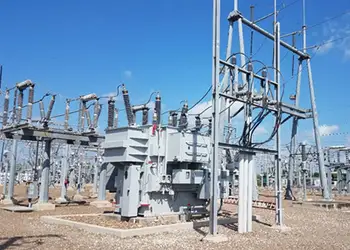
Substation Protection Training - Protect Transformers, Buses and Lines
Our customized live online or in‑person group training can be delivered to your staff at your location.
- Live Online
- 12 hours Instructor-led
- Group Training Available
Regular Price:
$799
Coupon Price:
$699
The nation's biggest nuclear reactor builder, China National Nuclear Corp, expects to start building the country's first inland nuclear power facility within three to five years in the central province of Hunan.
The Beijing-based nuclear power firm has selected Taohuajiang, about 100 kilometres from the province's capital Changsha, to construct rectors with a single capacity of about 600 MW (megawatts), a China Nuclear official told China Daily recently.
"We expect to complete the preliminary work as soon as possible, but the final timetable is to be set by the State Council and the National Development and Reform Commission (NDRC)," said the company official, who declined to be named.
China Nuclear set up an office in Hunan to conduct preparatory work for the nuclear plant.
The official said it was technically viable to build a 600-MW reactor in land-locked regions.
Nuclear reactors set up in coastal areas have a bigger capacity, of about 1,000 MW.
The Hunan plant will draw water from a branch of the Yangtze River, the nation's biggest river, China Nuclear said.
By using home-grown rather than overseas technology, it will cost less in terms of unit capacity to build the 600-MW reactors than the 1,000-MW ones, the official said.
China now has 10 nuclear electricity generators in commercial operation, with a total capacity of about 8,000 MW.
These are all located in coastal regions, such as Guangdong, Zhejiang and Jiangsu.
In an aim to diversify its energy mix and reduce the nation's reliance on coal and oil, China has vowed to have a combined nuclear power capacity of 40,000 MW by 2020.
That means about two 1,000-MW reactors need to be built annually over the next 15 years.
The China Nuclear official said that in order to meet that ambitious target, the State-owned company was looking at a number of other sites in the land-locked provinces of Sichuan, Hubei and Hunan.
"The multi-billion-dollar nuclear project will also fuel the economy of inland regions, where development lags behind the east," he said.
Currently only two companies, China Nuclear and China Guangdong Nuclear Power Group, are authorized to build nuclear reactors. Other power firms can participate only by taking a stake in these firms.
Both nuclear firms are competing to build plants in North China's Hebei Province, with both setting up offices in the province.
Officials from the two companies said they had not come up with a definite timetable for the Hebei project and were still selecting candidate sites.
Qiao Junping, Beijing representative of Guangdong Nuclear, told China Daily that the firm had obtained the initial go-ahead from the NDRC to build two 1,080-MW reactors in Northeast China's Liaoning Province.
The two units will be at Hongyanhe, 104 kilometres north of the port city Dalian, and are expected to come on stream by 2011, Qiao said at the end of last year. It will involve an investment of US$2.8 billion.
Related News
China power cuts: What is causing the country's blackouts?
China Energy Crisis drives electricity shortages, power cuts, and blackouts as coal prices surge, carbon-neutrality…
View more
Hungary's Quiet Alliance with Russia in Europe's Energy Landscape
Hungary's Russian Energy Dependence underscores EU tensions, as TurkStream gas flows, discounted imports, and pipeline…
View more

Hydro One deal to buy Avista receives U.S. antitrust clearance
Hydro One-Avista Acquisition secures U.S. antitrust clearance under Hart-Scott-Rodino, pending approvals from state utility commissions,…
View more
Freezing Rain Causes Widespread Power Outages in Quebec
Quebec Ice Storm 2025 disrupted power across Laurentians and Lanaudiere as freezing rain downed lines;…
View more
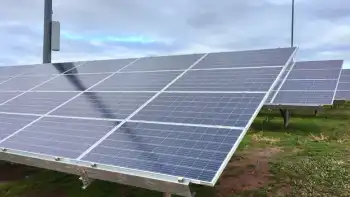
Solar farm the size of 313 football fields to be built at Edmonton airport
Airport City Solar Edmonton will deliver a 120-megawatt, 627-acre photovoltaic, utility-scale renewable energy project at…
View more
TransAlta Poised to Finalize Alberta Data Centre Agreement in 2025
TransAlta Alberta Data Centre integrates AI, cloud computing, and renewable energy, tackling electricity demand, grid…
View more
Sign Up for Electricity Forum’s Newsletter
Stay informed with our FREE Newsletter — get the latest news, breakthrough technologies, and expert insights, delivered straight to your inbox.
Electricity Today T&D Magazine Subscribe for FREE

Stay informed with the latest T&D policies and technologies.
- Timely insights from industry experts
- Practical solutions T&D engineers
- Free access to every issue
