By


CSA Z463 Electrical Maintenance -

Our customized live online or in‑person group training can be delivered to your staff at your location.

  • Live Online
  • 6 hours Instructor-led
  • Group Training Available
Regular Price:
$249
Coupon Price:
$199
Reserve Your Seat Today
-- In the wake of Enron, as companies such as Alliant Energy exit energy trading and others including Dynegy and Williams retrench, has energy trading become a dirty word?

Does energy trading have a future, and if so, what shape will the industry take?

Two experts - a former energy trader and the president of a national energy marketing association - tackle those questions in the current issue of Energy Competition Strategy Report, published by Atlanta-based NHI Publications.

Faced with hurdles almost too high to vault, traders and industry experts are anxiously awaiting the Federal Energy Regulatory Commission's response. Some say they are concerned that the meltdown in the capital markets could have a significant effect on the availability of capital to build the infrastructure necessary to sustain a competitive trading marketplace.

Steve Wisniewski, a former trader and now an executive with energy consulting and technology firm Skipping Stone, sees three significant problems: quantification of risk, downward moving credit ratings, and the fuzzy cost of a transaction. Add to that the extreme volatility of the commodity itself, a bad public image, and a skittish investor community, and opportunities that once seemed limitless in this sector now seem unattainable.

Wisniewski and National Energy Marketers Association president Craig Goodman offer several predictions for the future:

Other highlights of this month's Energy Competition Strategy Report include: CONTACT: NHI Publications

David Schwartz, 404/607-9500

Related News

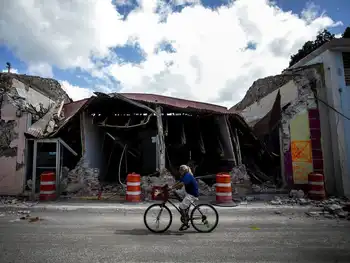
After Quakes, Puerto Rico's Electricity Is Back On For Most, But Uncertainty Remains

Puerto Rico Earthquakes continue as a seismic swarm with aftershocks, landslides near Pef1uelas, damage in Ponce and Guayanilla, grid outages from Costa Sur Plant, PREPA recovery, vulnerable buildings post-Hurricane Maria raising safety concerns.


Key Points

Recurring seismic events impacting Puerto Rico, causing damage, aftershocks, outages, and displacement.

✅ Seismic swarm with 6.4 and 5.9 magnitude quakes and ongoing aftershocks

✅ Costa Sur Plant offline; PREPA urges conservation amid grid repairs

✅ Older, code-deficient buildings and landslides raise safety risks


Some in Puerto Rico are beginning to fear the ground will never stop shaking. The island has been pummeled by hundreds of earthquakes in recent weeks, including the recent 5.9 magnitude temblor, where there were reports of landslides in the town of Peñuelas along the southern coast, rattling residents already on edge from the massive 6.4 magnitude quake, and raising wider concerns about climate risks to the grid in disaster-prone regions.

That was the largest to strike the island in more than a century causing hundreds of structures to crumble, forcing thousands from their homes and leaving millions without power, a scenario echoed by Texas power outages during winter storms too. One person was killed and several others injured.

Utility says 99% of customers have electricity

Puerto Rico's public utility, PREPA, tweeted some welcome news Monday: that nearly all of the homes and businesses it serves have had electric power restored. Still it is urging customers to conserve energy amid utility supply-chain shortages that can slow critical repairs.

Reporting from the port city of Ponce, NPR's Adrian Florido said the Costa Sur Plant, which produces more than 40% of Puerto Rico's electricity, was badly damaged in last week's quake. It remains offline indefinitely, even as grid operators elsewhere have faced California blackout warnings during extreme heat.

He also reports many residents are still reeling from the devastation caused by Hurricane Maria, a deadly Category 4 storm that battered the island in September 2017. The storm exposed the fact that buildings across the island were not up to code, similar to how aging systems have contributed to PG&E power line fires in California. The series of earthquakes are only amplifying fears that structures have been further weakened.

"People aren't coping terribly well," Florido said on NPR's Morning Edition Monday, noting that households elsewhere have endured pandemic power shutoffs and burdensome bills.

Many earthquake victims sleeping outdoors

Florido spoke to one displaced resident, Leticia Espada, who said more than 50 homes in her town of Guayanilla, about an hour drive east of the port city of Ponce, had collapsed.

After sleeping outside for days on her patio following Tuesday's quake, she eventually came to her town's baseball stadium where she's been sleeping on one of hundreds of government-issued cots.

She's like so many others sleeping in open-air shelters, many unwilling to go back to their homes until they've been deemed safe, while even far from disaster zones, brief events like a Northeast D.C. outage show how fragile service can be.

"Thousands of people across several towns sleeping in tents or under tarps, or out in the open, protected by nothing but the shade of a tree with no sense of when these quakes are going to stop," Florido reports.


Related News

View more

BC residents split on going nuclear for electricity generation: survey

BC Energy Debate: Nuclear Power and LNG divides British Columbia, as a new survey weighs zero-emission clean energy, hydroelectric capacity, the Site C dam, EV mandates, energy security, rising costs, and blackout risks.


Key Points

A BC-wide debate on power choices balancing nuclear, LNG, hydro, costs, climate goals, EVs, and grid reliability.

✅ Survey: 43% support nuclear, 40% oppose in BC

✅ 55% back LNG expansion, led by Southern BC

✅ Hydro at 90%; Site C adds 1,100 MW by 2025


There is a long-term need to produce more electricity to meet population and economic growth needs and, in particular, create new clean energy sources, with two new BC generating stations recently commissioned contributing to capacity.

Increasingly, in the worldwide discourse on climate change, nuclear power plants are being touted as a zero-emission clean energy source, with Ontario exploring large-scale nuclear to expand capacity, and a key solution towards meeting reduced emissions goals. New technological advancements could make nuclear power far safer than existing plant designs.

When queried on whether British Columbia should support nuclear power for electricity generation, respondents in a new province-wide survey by Research Co. were split, with 43% in favour and 40% against.

Levels of support reached 46% in Metro Vancouver, 41% in the Fraser Valley, 44% in Southern BC, 39% in Northern BC, and 36% on Vancouver Island.

The closest nuclear power plant to BC is the Columbia Generating Station, located in southern Washington State.

The safe use of nuclear power came to the forefront following the 2011 Fukushima nuclear disaster when the most powerful earthquake ever recorded in Japan triggered a large tsunami that damaged the plant’s emergency generators. Japan subsequently shut off many of its nuclear power plants and increased its reliance on fossil fuel imports, but in recent years there has been a policy reversal to restart shuttered nuclear plants to provide the nation with improved energy security.

Over the past decade, Germany has also been undergoing a transition away from nuclear power. But in an effort to replace Russian natural gas, Germany is now using more coal for power generation than ever before in decades, while Ontario’s electricity outlook suggests a shift to a dirtier mix, and it is looking to expand its use of liquefied natural gas (LNG).

Last summer, German chancellor Olaf Scholz told the CBC he wants Canada to increase its shipments of LNG gas to Europe. LNG, which is greener compared to coal and oil, is generally seen as a transitionary fuel source for parts of the world that currently depend on heavy polluting fuels for power generation.

When the Research Co. survey asked BC residents whether they support the further development of the province’s LNG industry, including LNG electricity demand that BC Hydro says justifies Site C, 55% of respondents were supportive, while 29% were opposed and 17% undecided.

Support for the expansion of the LNG is highest in Southern BC (67%), followed by the Fraser Valley (56%), Metro Vancouver (also 56%), Northern BC (55%), and Vancouver Island (41%).

A larger proportion of BC residents are against any idea of the provincial government moving to ban the use of natural gas for stoves and heating in new buildings, with 45% opposed and 39% in support.

Significant majorities of BC residents are concerned that energy costs could become too expensive, and a report on coal phase-outs underscores potential cost and effectiveness concerns, with 84% expressing concern for residents and 66% for businesses. As well, 70% are concerned that energy shortages could lead to measures such as rationing and rolling blackouts.

Currently, about 90% of BC’s electricity is produced by hydroelectric dams, but this fluctuates throughout the year — at times, BC imports coal- and gas-generated power from the United States when hydro output is low.

According to BC Hydro’s five-year electrification plan released in September 2021, it is estimated BC has a sufficient supply of clean electricity only by 2030, including the capacity of the Site C dam, which is slated to open in 2025. The $16 billion dam will have an output capacity of 1,100 megawatts or enough power for the equivalent of 450,000 homes.

The provincial government’s strategy for pushing vehicles towards becoming dependent on the electrical grid also necessitates a reliable supply of power, prompting BC Hydro’s first call for power in 15 years to prepare for electrification. Most BC residents support the provincial government’s requirement for all new car and passenger truck sales to be zero-emission by 2035, with 75% supporting the goal and 21% opposed.


Related News

View more

BC Hydro activates "winter payment plan"

BC Hydro Winter Payment Plan lets customers spread electricity bills over six months during cold weather, easing costs amid colder-than-average temperatures in British Columbia, with low-income conservation support, energy-saving kits, and insulation upgrades.


Key Points

Allows BC Hydro customers to spread winter electricity bills over six months, with added low-income efficiency support.

✅ Spread Dec-Mar bills across six months

✅ Eases costs during colder-than-average temperatures

✅ Includes low-income conservation and energy-saving kits


As colder temperatures set in across the province again this weekend, BC Hydro says it is activating its winter payment plan to give customers the opportunity to spread out their electricity bills as demand can reach record levels during extreme cold periods.

"Our meteorologists are predicting colder-than-average temperatures will continue over the next of couple of months and we want to provide customers with help to manage their payments," said Chris O'Riley, BC Hydro's president.

All BC Hydro customers will be able to spread payments from the billing period spanning Dec. 1, 2017 to March 31, 2018 over a six-month period.

Cold weather in the second half of December 2017 led to surging electricity demand that was higher than the previous 10-year average and has at times hit all-time highs during peak usage periods, according to BC Hydro.

Hydro operations also respond to summer conditions, as drought and low rainfall can force adjustments in power generation strategies.

People who heat their homes with electricity — about 40 per cent of British Columbians —  have the highest overall bills in the province, $197 more in December than in July, when air conditioning use can affect energy costs.

This is the second year the Crown corporation has activated a cold-weather payment plan, part of broader customer assistance programs it offers.  

BC Hydro has also increased funding for its low-income conservation programs by $2.2 million for a total of $10 million over the next three years. 

The low-income program provides energy-saving kits that include things like free energy assessments, insulation upgrades and weather stripping. 


Related News

View more

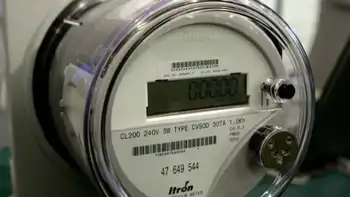
Power customers in British Columbia, Quebec have faced fees for refusing the installation of smart meters

NB Power Smart Meter Opt-Out Fees reflect cost causation principles set before the Energy and Utilities Board, covering meter reading charges, transmitter-disable options, rollout targets, and education plans across New Brunswick's smart metering program.


Key Points

Fees NB Power may apply to customers opting out of smart meters, reflecting cost causation and meter-reading costs.

✅ Based on cost causation and meter reading expenses

✅ BC and Quebec charge monthly opt-out surcharges

✅ Policy finalized during rollout after EUB review


NB Power customers who do not want a smart meter installed on their home could be facing a stiff fee for that decision, but so far the utility is not saying how much it might be.  

"It will be based on the principles of cost causation, but we have not gotten into the detail of what that fee would be at this point," said NB Power Senior Vice President of Operations Lori Clark at Energy and Utilities Board hearings on Friday.

In other jurisdictions that have already adopted smart meters, customers not wanting to participate have faced hundreds of dollars in extra charges, while Texas utilities' pullback from smart-home networks shows approaches can differ.

In British Columbia, power customers are charged a meter reading fee of $32.40 per month if they refuse a smart meter, or $20 per month if they accept a smart meter but insist its radio transmitter be turned off. That's a cost of between $240 and $388.80 per year for customers to opt out.

In Quebec, smart meters were installed beginning in 2012. Customers who refused the devices were initially charged $98 to opt out plus a meter reading fee of $17 per month. That was eventually cut by Quebec's energy board in 2014 to a $15 refusal fee and a $5 per month meter reading surcharge.

NB Power said it may be a year or more before it settles on its own fee.

"The opt out policy will be developed and implemented as part of the roll out.  It will be one of the last things we do," said Clark.


Customers need to be on board

NB Power is in front of the New Brunswick Energy and Utilities Board seeking permission to spend $122.7 million to install 350,000 smart meters province wide, as neighboring markets grapple with major rate increases that heighten affordability concerns.  

The meters are capable of transmitting consumption data of customers back to NB Power in real time, which the utility said will allow for a number of innovations in pricing and service, and help address old meter inaccuracies that affected some households.

The meters require near universal adoption by customers to maximize their financial benefit — like eliminating more than $20 million a year NB Power currently spends to read meters manually. The utility has said the switch will not succeed if too many customers opt out.

"We certainly wouldn't be looking at making an investment of this size without having the customer with us," said Clark.

On Thursday, Kent County resident Daniel LeBlanc, who along with Roger Richard, is opposing the introduction of smart meters for health reasons, predicted a cool reception for the technology in many parts of the province, given concerns that include health effects and billing disputes in Nova Scotia reported elsewhere.

"If one were to ask most of the people in the rural areas, I'm not sure you would get a lot of takers for this infrastructure," said LeBlanc, who is concerned with the long-term effect microwave frequencies used by the meters to transmit data may have on human health.

That issue is before the EUB next week.


Haven't tested the waters

NB Power acknowledged it has not measured public opinion on adopting smart meters but is confident it can convince customers it is a good idea for them and the utility, even as seasonal rate proposals in New Brunswick have prompted consumer backlash.

"People don't understand what the smart meter is," said Clark. "We need to educate our customers first to allow them to make an informed decision so that will be part of the roll out plan."

Clark noted that smart meters, helped by stiff opting out penalties, were eventually accepted by 98 per cent of customers in British Columbia and by 97.4 per cent of customers in Quebec.

"We will check and adjust along the way if there are issues with customer uptake," said Clark.


"This is very similar to what has been done in other jurisdictions and they haven't had those challenges."


Related News

View more

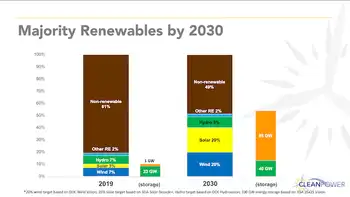
U.S. Renewable and Clean Energy Industries Set Sights on Market Majority

U.S. Majority Renewables by 2030 targets over half of electricity from wind, solar, hydropower, and energy storage, enabling a resilient, efficient grid, deep carbon reductions, fair market rules, and job growth across regions.


Key Points

A joint industry pledge for over 50% U.S. power from wind, solar, hydropower, and storage by 2030.

✅ Joint pledge by AWEA, SEIA, NHA, and ESA for a cleaner grid

✅ Focus on resilience, efficiency, affordability, and fair competition

✅ Storage enables flexibility to integrate variable renewables


Within a decade, more than half of the electricity generated in the U.S. will come from clean, renewable resources, with analyses indicating that wind and solar could meet 80% of U.S. electricity demand, supported by energy storage, according to a joint commitment today from the American wind, solar, hydropower, and energy storage industries. The American Wind Energy Association (AWEA), Solar Energy Industries Association (SEIA), National Hydropower Association (NHA), and Energy Storage Association (ESA) have agreed to actively collaborate across their industry segments to achieve this target. 

The four industries have released a set of joint advocacy principles that will enable them to realize this bold vision of a majority renewables grid. Along with increased collaboration, these shared principles include building a more resilient, efficient, sustainable, and affordable grid; achieving carbon reductions; and advancing greater competition through electricity market reforms and fair market rules. Each of these areas is critical to attaining the shared vision for 2030.  

The leaders of the four industry associations gathered to announce the shared vision, aligned with a broader 100% renewables pathway pursued nationwide, during the first CLEANPOWER annual conference for businesses across the renewable and clean energy spectrum. 

American Wind Energy Association 

"This collaborative promise sets the stage to deliver on the American electric grid of the future powered by wind, solar, hydropower, and storage," said Tom Kiernan, CEO of the American Wind Energy Association. "Market opportunities for projects that include a mix of technologies have opened up that didn't exist even a few years ago. And demand is growing for integrated renewable energy options. Individually and cooperatively, these sectors will continue growing to meet that demand and create hundreds of thousands of new jobs to strengthen economies from coast to coast, building a better, cleaner tomorrow. In the face of significant challenges the country is currently facing across pandemic response, economic, climate and social injustice problems, we are prepared to help lead toward a healthier and more equitable future."

Solar Energy Industries Association

"These principles are just another step toward realizing our vision for a Solar+ Decade," said Abigail Ross Hopper, president and CEO of the Solar Energy Industries Association. "In the face of this dreadful pandemic, our nation must chart a path forward that puts a premium on innovation, jobs recovery and a smarter approach to energy generation, reflecting expected solar and storage growth across the market. The right policies will make a growing American economy fueled by clean energy a reality for all Americans."

National Hydropower Association 

"The path towards an affordable, reliable, carbon-free electricity grid, supported by an ongoing grid overhaul for renewables, starts by harnessing the immense potential of hydropower, wind, solar and storage to work together," said Malcolm Woolf, President and CEO of the National Hydropower Association. "Today, hydropower and pumped storage are force multipliers that provide the grid with the flexibility needed to integrate other renewables onto the grid. By adding new generation onto existing non-powered dams and developing 15 GW of new pumped storage hydropower capacity, we can help accelerate the development of a clean energy electricity grid."

Energy Storage Association 

"We are pleased to join forces with our clean energy friends to substantially reduce carbon emissions by 2030, guided by practical decarbonization strategies, building a more resilient, efficient, sustainable, and affordable grid for generations to come," said ESA CEO Kelly Speakes-Backman. "A majority of generation supplied by renewable energy represents a significant change in the way we operate the grid, and the storage industry is a fundamental asset to provide the flexibility that a more modern, decarbonized grid will require. We look forward to actively collaborating with our colleagues to make this vision a reality by 2030."


Related News

View more

TagEnergy Launches France’s Largest Battery Storage Platform

TagEnergy France Battery Storage Platform enables grid flexibility, stability, and resilience across France, storing wind and solar power, balancing supply and demand, reducing curtailment, and supporting carbon neutrality with fast-response, utility-scale capacity.


Key Points

A utility-scale BESS in France that stores renewable energy to stabilize the grid, boost flexibility, and cut emissions.

✅ Several hundred MW utility-scale capacity for peak shaving.

✅ Fast-response frequency regulation and voltage support.

✅ Reduces fossil peaker use and renewable curtailment.


In a significant leap toward enhancing France’s renewable energy infrastructure, TagEnergy has officially launched the country's largest battery storage platform. This cutting-edge project is set to revolutionize the way France manages its electricity grid by providing much-needed flexibility, stability, and resilience, particularly as the country ramps up its use of renewable energy sources and experiences negative prices in France during periods of oversupply,

The new battery storage platform, with a total capacity of several hundred megawatts, will play a crucial role in facilitating the country's transition to a greener, more sustainable energy future. It marks a significant step forward in addressing one of the most pressing challenges of renewable energy: how to store and dispatch power generated from intermittent sources such as wind and solar energy.

The Role of Battery Storage in Renewable Energy

Battery storage systems are key to unlocking the full potential of renewable energy sources. While wind and solar power are increasingly important in reducing reliance on fossil fuels, their intermittent nature—dependent on weather conditions and time of day—presents a challenge for grid operators. Without an efficient way to store surplus energy produced during peak generation periods, when negative electricity prices can emerge, the grid can become unstable, leading to waste or even blackouts.

This is where TagEnergy’s new platform comes into play. The state-of-the-art battery storage system will capture excess energy when production is high, and then release it back into the grid during periods of high demand, supporting peak demand strategies or when renewable generation dips. This capability will smooth out the fluctuations in renewable energy production and ensure a constant, reliable supply of power to consumers. By doing so, the platform will not only stabilize the grid but also increase the overall efficiency and utilization of renewable energy sources.

The Scale and Scope of the Platform

TagEnergy's battery storage platform is one of the largest in France, with a capacity capable of supporting a wide range of energy storage needs across the country. The platform’s size is designed to handle significant energy loads, making it a critical piece of infrastructure for grid stability. The project will primarily focus on large-scale energy storage, but it will also incorporate cutting-edge technologies to ensure fast response times and high efficiency in energy release.

France’s energy mix is undergoing a transformation as the country aims to achieve carbon neutrality by 2050. With ambitious plans to expand renewable energy production, particularly from offshore wind such as North Sea wind potential, solar, and hydropower, energy storage becomes essential for managing supply and demand. The new battery platform is poised to provide the necessary storage capabilities to keep up with this shift toward greener, more sustainable energy production.

Economic and Environmental Impact

The launch of the battery storage platform is a major boon for the French economy, creating jobs and attracting investment in the clean energy sector. The project is expected to generate hundreds of construction and operational jobs, providing a boost to local economies, particularly in the areas where the storage facilities are located.

From an environmental perspective, the platform’s ability to store and release renewable energy will greatly reduce the country’s reliance on fossil fuels, decreasing greenhouse gas emissions. The efficient storage of solar and wind energy will mean that more clean electricity can be used, with solar-plus-storage cheaper than conventional power in Germany underscoring cost competitiveness, even during times when these renewable sources are not producing at full capacity. This will help France meet its energy and climate goals, including reducing carbon emissions by 40% by 2030 and achieving carbon neutrality by 2050.

The development also aligns with broader European Union goals to increase the share of renewables in the energy mix. As EU nations work toward their collective climate commitments, energy storage projects like TagEnergy’s platform will be vital in helping the continent achieve a greener, more sustainable future.

A Step Toward Energy Independence

The new battery storage platform also has the potential to enhance France’s energy independence. By increasing the storage capacity for renewable energy, France will be able to rely less on imported fossil fuels and energy from neighboring countries, particularly during periods of high demand. Energy independence is a key strategic goal for many nations, as it reduces vulnerability to geopolitical tensions and fluctuating energy prices.

In addition to bolstering national security, the platform supports France’s energy transition by facilitating the deployment of more renewable energy. As storage capacity increases, grid operators will be able to integrate larger quantities of intermittent renewable energy without sacrificing reliability. This will enable France to meet its long-term energy goals while also supporting the EU’s ambitious climate targets.

Future of Battery Storage in France and Beyond

TagEnergy’s launch of France’s largest battery storage platform is a monumental achievement in the country’s energy transition. However, it is unlikely to be the last of its kind. The success of this project could pave the way for similar initiatives across France and the wider European market. As battery storage technology advances, and affordable solar batteries scale up, the capacity for storing and utilizing renewable energy will only grow, unlocking new possibilities for clean, affordable power.

Looking ahead, TagEnergy plans to expand its operations and further invest in renewable energy solutions. The French market, along with growing demand for storage solutions across Europe, presents significant opportunities for further development in the energy storage sector. With the continued integration of renewable energy into the grid, large-scale storage platforms will play an increasingly critical role in shaping a low-carbon future.

The launch of TagEnergy’s battery storage platform marks a pivotal moment for France’s renewable energy landscape. By providing critical storage capacity and ensuring the reliable delivery of clean electricity, the platform will help the country meet its ambitious climate and energy goals. As technology advances and the global transition to renewables accelerates, with over 30% of global electricity now coming from renewables, projects like this one will play an essential role in creating a sustainable, low-carbon energy future.


Related News

View more

Sign Up for Electricity Forum’s Newsletter

Stay informed with our FREE Newsletter — get the latest news, breakthrough technologies, and expert insights, delivered straight to your inbox.

Electricity Today T&D Magazine Subscribe for FREE

Stay informed with the latest T&D policies and technologies.
  • Timely insights from industry experts
  • Practical solutions T&D engineers
  • Free access to every issue

Live Online & In-person Group Training

Advantages To Instructor-Led Training – Instructor-Led Course, Customized Training, Multiple Locations, Economical, CEU Credits, Course Discounts.

Request For Quotation

Whether you would prefer Live Online or In-Person instruction, our electrical training courses can be tailored to meet your company's specific requirements and delivered to your employees in one location or at various locations.