Gas plant developers fight TrAIL power transmission

By Charleston Gazette


NFPA 70e Training - Arc Flash

Our customized live online or in‑person group training can be delivered to your staff at your location.

  • Live Online
  • 6 hours Instructor-led
  • Group Training Available
Regular Price:
$199
Coupon Price:
$149
Reserve Your Seat Today
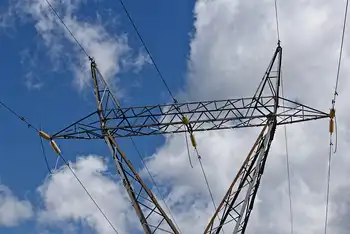
Developers of two natural gas-fired power plants proposed for Virginia and Maryland are fighting plans to build a $1.3 billion electrical transmission line across Northern West Virginia.

Competitive Power Ventures Inc. argues that its plants would eliminate the need for the 500-kilovolt transmission line to ship more coal-fired power from Appalachia to Washington, D.C., and its growing suburbs.

One of CPVÂ’s projects, CPV Warren LLC, has intervened in a pending West Virginia Public Service Commission review of the Trans-Allegheny Interstate Line, or TrAIL.

CPV Warren proposes to build a 600-megawatt gas-fired plant in Warren County, Va. A sister company proposes a similar 640-megawatt plant in Charles County, Md. Both plants are expected to be in operation by 2011.

Reports from CPV Warren experts, filed with the PSC, conclude the gas-fired plants are a better solution to electrical reliability problems identified by PJM Interconnections, a private organization that maintains the regional power grid.

“If the generation resource cap is in the East, build generation resources, such as CPV Warren, in the East, not a massive transmission line such as the one proposed here to support the delivery of power and energy from existing and proposed generation in the West,” George C. Loehr, a consultant for CPV Warren, said in prepared testimony filed with the PSC.

Debate over CPV WarrenÂ’s arguments was among the issues focused on last week as the PSC began formal evidentiary hearings on the 240-mile transmission line that would carry electricity from western Pennsylvania across West Virginia and into Virginia.

Allegheny Energy wants the PSC to approve the 114 miles of the line that run through West Virginia. TrAIL would enter the state north of Morgantown and run south and east through Monongalia, Preston and Tucker counties to Mount Storm in Grant County. Then it would turn east through Hardy and Hampshire counties before entering Virginia.

Allegheny officials say the line is needed to provide cheap and reliable power to big Eastern cities and their growing suburbs. Aging infrastructure, combined with increasing power demand, could cause rolling blackouts by 2011 that would extend into eastern West Virginia, power company officials say.

The project has drawn intense opposition from hundreds of West Virginians, who fear it will mar scenic views, lower their property values and otherwise damage rural communities.

Among other opponents, the Sierra Club has intervened to fight TrAIL, arguing that increasing coal-fired power would make the climate-change problem worse.

“At a time when the overriding need, nationally and internationally, is to reduce emissions of carbon dioxide the case for any proposed increase must face an overwhelming burden of proof,” the Sierra Club said in a prepared opening statement.

“Such an evidentiary showing could never be sustained where the purported electric objective — increase net supplies of electricity in the target market — can be achieved by available regulatory tools in the target market that will, incidentally, achieve the desired objective and reduce, not increase, carbon dioxide emissions.”

In deciding the case, commissioners must decide whether the power line will “economically, adequately and reliably contribute to meeting the present and anticipated requirements for electric power of the customers served” and whether it is “desirable for present and anticipated reliability of service for electric power for its service area or region.”

The PSC also must decide whether the project “will result in an acceptable balance between reasonable power needs and reasonable environmental factors.”

The PSC already held a series of public-comment periods last year, and set aside 10 days in January — including several Saturday sessions — and four days in February for formal testimony.

A ruling is not expected until late April or early May.

The TrAIL project is the first of two new major transmission lines that the PSC is expected to be asked to approve in West Virginia over the next few years.

American Electric Power wants to build a 765-kilovolt transmission line from the John Amos Power Station near St. Albans to a substation northeast of Martinsburg.

That 250-mile project is part of a $3 billion, 550-mile line that would run to New Jersey. AEP calls that proposal PATH, for Potomac-Appalachian Transmission Highline.

During the opening hearings on TrAIL, CPV Warren lawyer Michael Engleman spent several hours grilling PJM Vice President Steven Herling about his organizationÂ’s backing of the power line.

Related News

B.C. politicians must focus more on phasing out fossil fuels, report says

BC Fossil Fuel Phase-Out outlines a just transition to a green economy, meeting climate targets by mid-century through carbon budgets, ending subsidies for fracking, capping production, and investing in renewable energy, remediation, and resilient infrastructure.


Key Points

A strategic plan to wind down oil and gas, end subsidies, and achieve climate targets with a just transition in BC.

✅ End new leases, phase out subsidies, cap fossil production

✅ Carbon budgets and timelines to meet mid-century climate targets

✅ Just transition: income supports, retraining, site remediation jobs


Politicians in British Columbia aren't focused enough on phasing out fossil fuel industries, a new report says.

The report, authored by the left-leaning Canadian Centre for Policy Alternatives, says the province must move away from fossil fuel industries by mid-century in order to meet its climate targets, with B.C. projected to fall short of 2050 targets according to recent analysis, but adds that the B.C. government is ill prepared to transition to a green economy.

"We are totally moving in the wrong direction," said economist Marc Lee, one of the authors of the report, on The Early Edition Wednesday. 

He said most of the emphasis of B.C. government policy has been on slowing reductions in emissions from transportation or emissions from buildings, even though Canada will need more electricity to hit net-zero according to the IEA, while still subsidizing fossil fuel extraction, such as fracking projects, that Lee said should be phased out.

"What we are putting on the table is politically unthinkable right now," said Lee, adding that last month's provincial budget called for a 26 per cent increased gas production over the next three years, even though electrified LNG facilities could boost demand for clean power.

B.C.'s $830M in fossil fuel subsidies undermines efforts to fight climate crisis, report says
He said B.C. needs to start thinking instead about how its going to wind down its dependence on fossil fuel industries.


'Greener' job transition needed
The report said the provincial government's continued interest in expanding production and exporting fossil fuels, even as Canada's race to net-zero intensifies across the energy sector, suggests little political will to think about a plan to move away from them.

It suggests the threat of major job losses in those industries is contributing to the political inaction, but cited several examples of ways governments can help move workers into greener jobs, as many fossil-fuel workers are ready to support the transition according to recent commentary. 

Lee said early retirement provisions or income replacement for transitioning workers are options to consider.

"We actually have seen a lot of real-world policy around transition starting to happen, including in Alberta, which brought in a whole transition package for coal workers producing coal for electricity generation, and regional cooperation like bridging the electricity gap between Alberta and B.C. could further support reliability," Lee said.

Give cities the power to move more quickly on the environment, say Metro Van politicians
Make it easier for small businesses to go green, B.C. Chamber of Commerce urges government
Lee also said well-paying jobs could be created by, for example, remediating old coal mines and gas wells and building green infrastructure and renewable electricity projects in affected areas.

The report also calls for a moratorium on new fossil fuel leases and ending fossil fuel subsidies, as well as creating carbon budgets and fossil fuel production limits.

"Change is coming," said Lee. "We need to get out ahead of it."


Related News

View more

Nova Scotia Power says it now generates 30 per cent of its power from renewables

Nova Scotia Power Renewable Energy delivers 30% in 2018, led by wind power, hydroelectric and biomass, with coal and natural gas declining, as Muskrat Falls imports from Labrador target 40% renewables to cut emissions.


Key Points

It is the utility's 30% 2018 renewable mix and plan to reach 40% via Muskrat Falls while reducing carbon emissions.

✅ 18% wind, 9% hydro and tidal, 3% biomass in 2018

✅ Coal reliance fell from 76% in 2007 to 52% in 2018

✅ 58% carbon emissions cut from 2005 levels projected by 2030


Nova Scotia's private utility says it has hit a new milestone in its delivery of electricity from renewable resources, a trend highlighted by Summerside wind generation in nearby P.E.I.

Nova Scotia Power says 30 per cent of the electricity it produced in 2018 came from renewable sources such as wind power.

The utility says 18 per cent came from wind turbines, nine per cent from hydroelectric and tidal turbines and three per cent by burning biomass.

However, over half of the province's electrical generation still comes from the burning of coal or petroleum coke. Another 13 per cent come from burning natural gas and five per cent from imports, even as U.S. renewable generation hits record shares.

The utility says that since 2007, the province's reliance on coal-fired plants has dropped from 76 per cent of electricity generated to 52 per cent last year, as Prairie renewables growth accelerates nationally.

It says it expects to meet the province's legislated renewable target of 40 per cent in 2020, when it begins accessing hydroelectricity from the Muskrat Falls project in Labrador.

"We have made greener, cleaner energy a priority," utility president and CEO Karen Hutt said in a news release.

"As we continue to achieve new records in renewable electricity, we remain focused on ensuring electricity prices stay predictable and affordable for our customers, including solar customers across the province."

Nova Scotia Power also projects achieving a 58 per cent reduction in carbon emissions from 2005 levels by 2030.


Related News

View more

Quebec Halts Crypto Mining Electricity Requests

Hydro-Quebec Crypto Mining Pause signals a temporary halt as blockchain power requests surge; energy regulator review will weigh electricity demand, winter peak constraints, tariffs, investments, and local jobs to optimize grid stability and revenues.


Key Points

A provincial halt on new miner power requests as Hydro-Quebec sets rules to safeguard demand, winter peaks, and rates.

✅ Temporary halt on new electricity sales to crypto miners

✅ Regulator to rank projects by jobs, investment, and revenue

✅ Winter peak demand and tariffs central to new framework


Major Canadian electricity provider Hydro-Québec will temporarily stop processing requests from cryptocurrency miners in order for the company to fulfil its obligations to supply energy to the entire province, while its global ambitions adjust to changing demand, according to a press release published June 7.

Hydro-Québec is experiencing “unprecedented” demand from blockchain companies, which reportedly exceeds the electric utility’s short and medium-term capacity. In this regard, the Quebec provincial government has ordered Hydro-Québec to halt electric power sales to cryptocurrency miners, and, following the New Hampshire rejection of Northern Pass announced a new framework for this category of electricity consumers.

In the coming days, Hydro-Québec will reportedly file an application to local energy regulator Régie de l'énergie, proposing a selection process for blockchain industry projects so as “not to miss the opportunities offered by this industry.” Regulators will reportedly target companies which can offer the province the most profitable economic advantages, including investments and local job creation.

#google#

Régie de l'énergie is instructed to consider “the need for a reserved block of energy for this category of consumers, the possibility of maximizing Hydro-Québec's revenues, and issues related to the winter peak period” as well as interprovincial arrangements like the Ontario-Québec electricity deal under discussion. Éric Filion, President of Hydro-Québec Distribution, said:

"The blockchain industry is a promising avenue for Hydro-Québec. Guidelines are nevertheless required to ensure that the development of this industry maximizes spinoffs for Québec without resulting in rate increases for our customers. We are actively participating in the Régie de l'énergie's process so that these guidelines can be produced as quickly as possible."

With this move, the government of Québec deviates from its decision to reportedly open the electricity market to miners at the end of last month, even as an Ontario-Quebec energy swap helps manage electricity demands. In March, the government said it was not interested in providing cheap electricity to Bitcoin miners, stating that cryptocurrency mining at a discount without any sort of “added value” for the local economy was unfavorable.


Related News

View more

Lawmakers question FERC licensing process for dams in West Virginia

FERC Hydropower Licensing Dispute centers on FERC authority, Clean Water Act compliance, state water quality certifications, Federal Power Act timelines, and Army Corps dams on West Virginia's Monongahela River licenses.


Key Points

An inquiry into FERC's licensing process and state water quality authority for hydropower at Monongahela River dams.

✅ Questions on omitted state water quality conditions

✅ Debate over starting Clean Water Act certification timelines

✅ Potential impacts on states' rights and licensing schedules


As federal lawmakers, including Democrats pressing FERC, plan to consider a bill that would expand Federal Energy Regulatory Commission (FERC) licensing authority, questions emerged on Tuesday about the process used by FERC to issue two hydropower licenses for existing dams in West Virginia.

In a letter to FERC Chairman Neil Chatterjee, Democratic leaders of the House Energy and Commerce Committee, as electricity pricing changes were being debated, raised questions about hydropower licenses issued for two dams operated by the U.S. Army Corps of Engineers on the Monongahela River in West Virginia.

U.S. Reps. Frank Pallone Jr. (D-NJ), the ranking member of the Subcommittee on Energy, Bobby Rush (D-IL), the ranking member of the Subcommittee on Environment, and John Sarbanes (D-MD), amid Maryland clean energy enforcement concerns, questioned why FERC did not incorporate all conditions outlined in a West Virginia Department of Environmental Protection water quality certificate into plans for the projects.

“By denying the state its allotted time to review this application and submit requirements on these licenses, FERC is undermining the state’s authority under the Clean Water Act and Federal Power Act to impose conditions that will ensure water quality standards are met,” the letter stated.

The House of Representatives was slated to consider the Hydropower Policy Modernization Act of 2017, H.R. 3043, later in the week. The measure would expand FERC authority over licensing processes, a theme mirrored in Maine's transmission line debate over interstate energy projects. Opponents of the bill argue that the changes would make it more difficult for states to protect their clean water interests.

West Virginia has announced plans to challenge FERC hydropower licenses for the dams on the Monongahela River, echoing Northern Pass opposition seen in New Hampshire.


Related News

View more

Zero-emission electricity in Canada by 2035 is practical and profitable

Canada 100% Renewable Power by 2035 envisions a decentralized grid built on wind, solar, energy storage, and efficiency, delivering zero-emission, resilient, low-cost electricity while phasing out nuclear and gas to meet net-zero targets.


Key Points

Zero-emission, decentralized grid using wind, solar, and storage, plus efficiency, to retire fossil and nuclear by 2035.

✅ Scale wind and solar 18x with storage for reliability.

✅ Phase out nuclear and gas; no CCS or offsets needed.

✅ Modernize grids and codes; boost efficiency, jobs, and affordability.


A powerful derecho that left nearly a million people without power in Ontario and Quebec on May 21 was a reminder of the critical importance of electricity in our daily lives.

Canada’s electrical infrastructure could be more resilient to such events, while being carbon-emission free and provide low-cost electricity with a decentralized grid powered by 100 per cent renewable energy, according to a new study from the David Suzuki Foundation (DSF), a vision of an electric, connected and clean future if the country chooses.

This could be accomplished by 2035 by building a lot more solar and wind, despite indications that demand for solar electricity has lagged in Canada, adding energy storage, while increasing the energy efficiency in buildings, and modernizing provincial energy grids. As this happens, nuclear energy and gas power would be phased out. There would also be no need for carbon capture and storage nor carbon offsets, the modeling study concluded.

“Solar and wind are the cheapest sources of electricity generation in history,” said study co-author Stephen Thomas, a mechanical engineer and climate solutions policy analyst at the DSF.

“There are no technical barriers to reaching 100 per cent zero-emission electricity by 2035 nationwide,” Thomas told The Weather Network (TWN). However, there are considerable institutional and political barriers to be overcome, he said.

Other countries face similar barriers and many have found ways to reduce their emissions; for example, the U.S. grid's slow path to 100% renewables illustrates these challenges. There are enormous benefits including improved air quality and health, up to 75,000 new jobs annually, and lower electricity costs. Carbon emissions would be reduced by 200 million tons a year by 2050, just over one quarter of the reductions needed for Canada to meet its overall net zero target, the study stated.

Building a net-zero carbon electricity system by 2035 is a key part of Canada’s 2030 Emissions Reduction Plan. Currently over 80 per cent of the nation’s electricity comes from non-carbon sources including a 15 per cent contribution from nuclear, with solar capacity nearing a 5 GW milestone nationally. How the final 20 per cent will be emission-free is currently under discussion.

The Shifting Power study envisions an 18-fold increase in wind and solar energy, with the Prairie provinces expected to lead growth, along with a big increase in Canada’s electrical generation capacity to bridge the 20 per cent gap as well as replacing existing nuclear power.

The report does not see a future role for nuclear power due to the high costs of refurbishing existing plants, including the challenges with disposal of radioactive wastes and decommissioning plants at their end of life. As for the oft-proposed small modular nuclear reactors, their costs will likely “be much more costly than renewables,” according to the report.

There are no technical barriers to building a bigger, cleaner, and smarter electricity system, agrees Caroline Lee, co-author of the Canadian Climate Institute’s study on net-zero electricity, “The Big Switch” released in May. However, as Lee previously told TWN, there are substantial institutional and political barriers.

In many respects, the Shifting Power study is similar to Lee’s study except it phases out nuclear power, forecasts a reduction in hydro power generation, and does not require any carbon capture and storage, she told TWN. Those are replaced with a lot more wind generation and more storage capacity.

“There are strengths and weaknesses to both approaches. We can do either but need a wide debate on what kind of electricity system we want,” Lee said.

That debate has to happen immediately because there is an enormous amount of work to do. When it comes to energy infrastructure, nearly everything “we put in the ground has to be wind, solar, or storage” to meet the 2035 deadline, she said.

There is no path to net zero by 2050 without a zero-emissions electricity system well before that date. Here are some of the necessary steps the report provided:

Create a range of skills training programs for renewable energy construction and installation as well as building retrofits.

Prioritize energy efficiency and conservation across all sectors through regulations such as building codes.

Ensure communities and individuals are fully informed and can decide if they wish to benefit from hosting energy generation infrastructure.

Create a national energy poverty strategy to ensure affordable access.

Strong and clear federal and provincial rules for utilities that mandate zero-emission electricity by 2035.

For Indigenous communities, make sure ownership opportunities are available along with decision-making power.

Canada should move as fast as possible to 100 per cent renewable energy to gain the benefits of lower energy costs, less pollution, and reduced carbon emissions, says Stanford University engineer and energy expert Mark Jacobson.

“Canada has so many clean, renewable energy resources that it is one of the easier countries [that can] transition away from fossil fuels,” Jacobson told TWN.

For the past decade, Jacobson has been producing studies and technical reports on 100 per cent renewable energy, including a new one for Canada, even as Canada is often seen as a solar power laggard today. The Stanford report, A Solution to Global Warming, Air Pollution, and Energy Insecurity for Canada, says a 100 per cent transition by 2035 timeline is ideal. Where it differs from DSF’s Shifting Power report is that it envisions offshore wind and rooftop solar panels which the latter did not.

“Our report is very conservative. Much more is possible,” agrees Thomas.

“We’re lagging behind. Canadians really want to get going on building solutions and getting the benefits of a zero emissions electricity system.”


Related News

View more

China to build 2,000-MW Lawa hydropower station on Jinsha River

Lawa Hydropower Station approved on the Jinsha River, a Yangtze tributary, delivers 2,000 MW via four units; 784 ft dam, 12 sq mi reservoir, Sichuan-Tibet site, US$4.59b investment, Huadian stake, renewable energy generation.


Key Points

A 2,000 MW dam project on the Jinsha River with four units, a 784 ft barrier, and 8.36 billion kWh annual output.

✅ Sichuan-Tibet junction on the Jinsha River

✅ 2,000 MW capacity; four turbine-generator units

✅ 8.36 bn kWh/yr; US$4.59b total; Huadian 48% stake


China has approved construction of the 2,000-MW Lawa hydropower station, a Yangtze tributary hydropower project on the Jinsha River, multiple news agencies are reporting.

Lawa, at the junction of Sichuan province and the Tibet autonomous region, will feature a 784-foot-high dam and the reservoir will submerge about 12 square miles of land. The Jinsha River is a tributary of the Yangtze River, and the project aligns with green hydrogen development in China.

The National Development and Reform Commission of the People’s Republic of China, which also guides China's nuclear energy development as part of national planning, is reported to have said that four turbine-generator units will be installed, and the project is expected to produce about 8.36 billion kWh of electricity annually.

Total investment in the project is to be US$4.59 billion, and Huadian Group Co. Ltd. will have a 48% stake in the project, reflecting overseas power infrastructure activity, with minority stakes held by provincial firms, according to China Daily.

In other recent news in China, Andritz received an order in December 2018 to supply four 350-MW reversible pump-turbines and motor-generators, alongside progress in compressed air generation technologies, for the 1,400-MW ZhenAn pumped storage plant in Shaanxi province.


Related News

View more

Sign Up for Electricity Forum’s Newsletter

Stay informed with our FREE Newsletter — get the latest news, breakthrough technologies, and expert insights, delivered straight to your inbox.

Electricity Today T&D Magazine Subscribe for FREE

Stay informed with the latest T&D policies and technologies.
  • Timely insights from industry experts
  • Practical solutions T&D engineers
  • Free access to every issue

Live Online & In-person Group Training

Advantages To Instructor-Led Training – Instructor-Led Course, Customized Training, Multiple Locations, Economical, CEU Credits, Course Discounts.

Request For Quotation

Whether you would prefer Live Online or In-Person instruction, our electrical training courses can be tailored to meet your company's specific requirements and delivered to your employees in one location or at various locations.