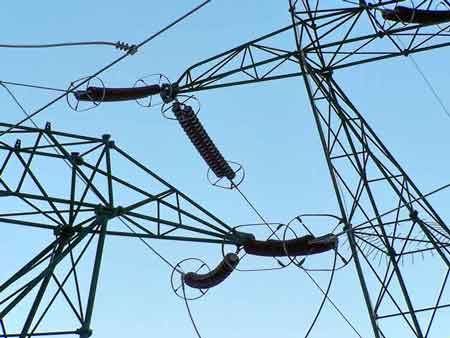
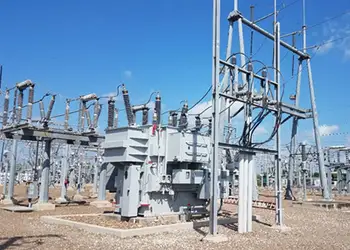
Substation Protection Training - Protect Transformers, Buses and Lines
Our customized live online or in‑person group training can be delivered to your staff at your location.
- Live Online
- 12 hours Instructor-led
- Group Training Available
Regular Price:
$799
Coupon Price:
$699
Pennsylvania
—
Transmission Upgrade Delays are stalling PJM interconnections, as an NRDC analysis warns that costly network upgrades and long timelines are blocking new generation, affecting data centers, reliability planning, and consumer costs across the 13-state region.
The Core Facts
-
NRDC finds 26 GW blocked and 11.7 GW delayed in PJM
-
Developers fund upgrades; data centers often do not
-
Pennsylvania advances HB 1834 and HB 2223 on cost and tech
-
Three Mile Island restart could slip to 2030-2031
Rising electricity demand and affordability concerns are colliding with an aging grid, and delays in transmission network upgrades are increasingly determining which power projects move forward. A recent analysis highlights that across PJM, required network upgrades are currently preventing 26 GW of new generation from interconnecting and delaying another 11.7 GW of capacity that could otherwise serve millions of homes if brought online.
The analysis reviewed PJM interconnection queues to pinpoint recurring network upgrades linked to project withdrawals, identifying concentrations in several states and signaling where the system is most constrained. Because resources awaiting interconnection are largely clean energy and storage, the backlog intersects with broader booming us clean energy buildouts now shaping regional planning.
Developers typically must pay for interconnection and any network upgrades triggered by their projects, while separate transmission owners construct those upgrades on their own schedules. By contrast, new large-load customers, such as data centers, are often not required to shoulder comparable costs, creating what advocates describe as a major gap in today's cost allocation approach. Some newer agreements are beginning to assign a portion of those expenses to large loads.
Pennsylvania features prominently in the debate. The state exports roughly 25 percent to 30 percent of its electricity and is pursuing measures to ease financing and siting for new, reliable resources. Proposals include a framework to ensure fair treatment of large-load customers and a requirement that utilities consider advanced technologies before proposing new lines, themes echoed in ongoing policy discussions and wires senate testimony on transmission modernization.
A marquee example is the proposed restart of Three Mile Island. Initially expected to supply Microsoft data centers and the grid by late 2027, a recent review indicates that necessary network upgrades could push initial deliveries to 2030 or 2031, even after the project advanced in PJM's Reliability Resource Initiative.
Today's Pennsylvania resource mix is about 59 percent natural gas, 30 percent nuclear, 7 percent coal, and roughly 4 percent renewables. Given that most queued projects are clean energy and storage, accelerating interconnections could help diversify the mix and reduce exposure to winter gas constraints, while steering development toward less congested parts of the grid. Market design and planning processes, including how capacity is signaled in mechanisms such as the us grid auction, will continue to influence the sequence and location of needed upgrades.
The report suggests that states can reduce delays by pressing utilities to explain causes, holding transmission owners to realistic schedules, and partnering with PJM on faster, lower-cost options. Those options include advanced transmission technologies that boost line efficiency, surplus interconnection service, and the reuse of infrastructure at retiring plant sites. While some recent commentary has examined electricity demand flat scenarios, the near-term outlook in PJM is described as rapidly rising load. Debates in some quarters even revisit back to coal ideas, but the emphasis here is on clearing upgrade backlogs so cleaner additions, storage, and limited use of existing baseload can maintain reliability and manage consumer costs.
Related News

India to Ration Coal Supplies as Electricity Demand Surges
India Coal Supply Rationing redirects shipments from high-inventory power plants to stations facing shortages as…
View more

Europe's Worst Energy Nightmare Is Becoming Reality
European Energy Crisis shocks markets as Russia slashes gas via Nord Stream, spiking prices and…
View more

Effort to make Philippines among best power grids in Asia
NGCP-SGCC Partnership drives transmission grid modernization in the Philippines, boosting high-voltage capacity, reliability, and resilience,…
View more
Why rolling back European electricity prices is tougher than appears
EU Energy Price Crisis drives soaring electricity bills as natural gas sets pay-as-clear power prices;…
View more

3 Reasons Why Cheap Abundant Electricity Is Getting Closer To Reality
Renewable Energy Breakthroughs drive quantum dots solar efficiency, Air-gen protein nanowires harvesting humidity, and cellulose…
View more

Australia stuck in the middle of the US and China as tensions rise
Manus Island Naval Base strengthens US-Australia-PNG cooperation at Lombrum, near the South China Sea, bolstering…
View more
Sign Up for Electricity Forum’s Newsletter
Stay informed with our FREE Newsletter — get the latest news, breakthrough technologies, and expert insights, delivered straight to your inbox.
Electricity Today T&D Magazine Subscribe for FREE

Stay informed with the latest T&D policies and technologies.
- Timely insights from industry experts
- Practical solutions T&D engineers
- Free access to every issue

