CSA Z463 (2024) - Maintenance of Electrical Systems
Our customized live online or in‑person group training can be delivered to your staff at your location.

- Live Online
- 6 hours Instructor-led
- Group Training Available
Regular Price:
$399
Coupon Price:
$349
-- There were dire predictions this spring of a summer on the fritz. Blackouts would be common in California and could spread. Now, as summer ends with but one 1-hour blackout in Las Vegas, officials say a main reason was a rush of power plant construction during the past 3 years.
According to private and public data, some 67,000 megawatts of generating capacity have been added to the nation's power grid since the beginning of 1999, almost half of it during this year alone.
Power plants that will produce another 70,000 megawatts are under construction, more than 60,000 of which will be on line by the end of next year. The nation's generating capacity will increase 18% over 1998.
One megawatt is considered enough to power 1,000 households at any one time.
"With what is still in the pipeline over the next couple of years there could be enough new power to result in a substantial surplus in some regions," says Doug Logan, a principal with RDI Consulting, which tracks the power industry from Boulder, Colo.
There are still trouble spots.
Fast-growing Las Vegas outran its power supply on July 2, resulting in a 1-hour blackout in sections of the city. And there are concerns that drought in the Pacific Northwest could reduce the amount of power produced by hydroelectric dams this winter.
But in the rest of the country, power supplies recently have grown faster than demand. For example, on July 6, 1999, New England nearly ran out of electricity. The region used a record 22,544 megawatts, leaving 900 megawatts in reserve. If any regional power stations had failed, it could have meant rolling blackouts.
This summer, 2 weeks of sweltering temperatures pushed electricity demand to a high of 25,158 megawatts on Aug. 9. This time, the region had a cushion. Twelve new plants, producing 3,500 megawatts, had been built during the past 2 years.
Once power-starved regions such as New England and the Gulf Coast will see their generating capacity grow by a third or more within the next year or two, Logan says.
Nearly all of the new generating facilities are so-called merchant plants, which are built by private investors eager to tap into the nation's appetite for electricity.
"The construction of new generation is a response to the market," says Mark Stultz of the Electric Power Supply Association, a trade organization for merchant plants.
The trend could mean lower rates for consumers.
"I don't know if a strong case can be made yet, but there should be evidence next year that it has helped consumers," Logan says.
Related News
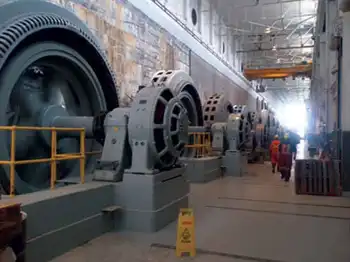
Canada and Manitoba invest in new turbines
Manitoba Clean Electricity Investment will upgrade hydroelectric turbines, expand a 230 kV transmission network, and…
View more

Hydro One CEO's $4.5M salary won't be reduced to help cut electricity costs
Hydro One CEO Salary shapes debate on Ontario electricity costs, executive compensation, sunshine list transparency,…
View more

Electricity turns garbage into graphene
Waste-to-Graphene uses flash joule heating to convert carbon-rich trash into turbostratic graphene for composites, asphalt,…
View more
BC Hydro electricity demand down 10% amid COVID-19 pandemic
BC Hydro electricity demand decline reflects COVID-19 impacts across British Columbia, with reduced industrial load,…
View more

It's CHEAP but not necessarily easy: Crosbie introduces PCs' Newfoundland electricity rate reduction strategy
Crosbie Hydro Energy Action Plan outlines rate mitigation for Muskrat Falls, leveraging Nalcor oil revenues,…
View more

Hydro One extends ban on electricity disconnections until further notice
Hydro One Disconnection Ban Extension keeps Ontario electricity customers connected during COVID-19, extending the moratorium…
View more
Sign Up for Electricity Forum’s Newsletter
Stay informed with our FREE Newsletter — get the latest news, breakthrough technologies, and expert insights, delivered straight to your inbox.
Electricity Today T&D Magazine Subscribe for FREE

Stay informed with the latest T&D policies and technologies.
- Timely insights from industry experts
- Practical solutions T&D engineers
- Free access to every issue
