Thirty New Power Plants Proposed for Virginia

By -- Source, The Virginian-Pilot,


Protective Relay Training - Basic

Our customized live online or in‑person group training can be delivered to your staff at your location.

  • Live Online
  • 12 hours Instructor-led
  • Group Training Available
Regular Price:
$699
Coupon Price:
$599
Reserve Your Seat Today
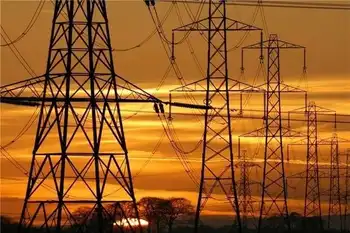
RICHMOND, Va.--Thirty new power plants are proposed for Virginia, an unprecedented surge that would overcome any future California-like energy crisis.

But health and environmental advocates warn that building so many plants at the same time could spur air pollution and spread more hazy smog over national parks and forests.

On Wednesday, these advocates urged state regulators to slow down the 30 projects or enact a moratorium on new licenses so potential side effects can be fully studied.

States such as Kentucky, Tennessee and Georgia have called time-outs in the wake of similar spikes in power plant applications, said Dan Holmes of the Piedmont Environmental Council.

"Why can't we do the same?" Holmes asked. "What's the hurry?"

The Virginia Air Pollution Control Board did not take any action Wednesday, but state environmental officials who advise the board said they already have studied all pertinent angles to the trend and could find no significant risk.

"Air quality in Virginia is generally pretty good, and we'd expect it to stay that way," said John Daniel Jr., state director of air programs for the Virginia Department of Environmental Quality.

Daniel said his staff has reviewed the cumulative impacts of eight power plants likely to be built, including one on the Eastern Shore in Accomack County. The results: negligible smog increases in Hampton Roads and Richmond, and mild increases in a few spots around the state.

The dispute is the latest fallout from the continuing deregulation of the electric power industry in Virginia.

Since 1998, about the time the state declared its intention to open up energy markets, 30 companies and utilities have asked for state approval to build new plants -- including 18 applications this year alone. If all the plants were constructed, Virginia would double its number of power generators, from 30 to 60, and double its potential yearly output, from 20,000 megawatts to 40,000 megawatts, according to an analysis by the Piedmont Environmental Council.

The council argues that, at its peak last year, Dominion Virginia Power needed 16,000 megawatts to serve its customers. Activists say the wave of new plants is intended to supply energy to Northeast states, where most utilities face stiff environmental regulations because they violate federal air standards.

Only Northern Virginia exceeds standards under the national Clean Air Act.

Much as Virginia accepts tons of household trash from many Northeast states, "now we'll be holding their air pollution, too," Holmes said. An advisory group composed of utility and industry representatives tried to debunk such criticism as emotional rhetoric.

It released a report Wednesday that found that:

Twenty-eight of the 30 new plants would run on cleaner-burning natural gas, not coal or fuel oil.

Other federal requirements will reduce harmful emissions from older, dirtier power plants by as much as 65 percent by 2004.

Because of market conditions and cooling-water shortages, only a handful of the proposed new plants will actually be built.

The detailed study and computer modeling that environmentalists want would cost too much and be too unreliable.

"Basically, what's already on the books, and what's already been done, is going to bring us into compliance" with federal clean-air rules, said Sheryl Raulston, an environmental manager for International Paper in Franklin, who presented the industry report.

Christi Gordon, an air specialist at Shenandoah National Park, said smog already is harming the natural beauty and integrity of the park.

Trout streams in the George Washington National Forest are suffering from acid rain, said Alice Carlton of the U.S. Forest Service, and poor visibility because of smog at the James River Face Wilderness Area is "among the worst in the nation."

Gordon and Carlton urged the state to install more air monitors and consider the new plants collectively, not individually.

"It's time the state of Virginia got serious about its air pollution," said Glen Besa, director of the Virginia chapter of the Sierra Club.

Daniel, the state air director, said concerns about air quality at national parks and sanctuaries are legitimate. But given new controls mandated by the U.S. Environmental Protection Agency, he said, they "likely will be taken care of in time."

Related News

Explainer: Why nuclear-powered France faces power outage risks

France Nuclear Power Outages threaten the grid as EDF reactors undergo stress corrosion inspections, maintenance delays, and staff shortages, driving electricity imports, peak-demand curtailment plans, and potential rolling blackouts during a cold snap across Europe.


Key Points

EDF maintenance and stress corrosion cut reactor output, forcing imports and blackouts as cold weather lifts demand.

✅ EDF inspects stress corrosion cracks in reactor piping

✅ Maintenance backlogs and skilled labor shortages slow repairs

✅ Government plans demand cuts, imports, and rolling blackouts


France is bracing for possible power outages in the coming days as falling temperatures push up demand while state-controlled nuclear group EDF struggles to bring more production on line.


WHY CAN'T FRANCE MEET DEMAND?
France is one of the most nuclear-powered countries in the world, with a significant role of nuclear power in its energy mix, typically producing over 70% of its electricity with its fleet of 56 reactors and providing about 15% of Europe's total power through exports.

However, EDF (EDF.PA) has had to take a record number of its ageing reactors offline for maintenance this year just as Europe is struggling to cope with cuts in Russian natural gas supplies used for generating electricity, with electricity prices surging across the continent this year.

That has left France's nuclear output at a 30-year low, and mirrors how Europe is losing nuclear power more broadly, forcing France to import electricity and prepare plans for possible blackouts as a cold snap fuels demand for heating.


WHAT ARE EDF'S MAINTENANCE PROBLEMS?
While EDF normally has a number of its reactors offline for maintenance, it has had far more than usual this year due to what is known as stress corrosion on pipes in some reactors, and during heatwaves river temperature limits have constrained output further.

At the request of France's nuclear safety watchdog, EDF is in the process of inspecting and making repairs across its fleet since detecting cracks in the welding connecting pipes in one reactor at the end of last year.

Years of under-investment in the nuclear sector mean that there is precious little spare capacity to meet demand while reactors are offline for maintenance, and environmental constraints such as limits on energy output during high river temperatures reduce flexibility.

France also lacks specialised welders and other workers in sufficient numbers to be able to make repairs fast enough to get reactors back online.


WHAT IS BEING DONE?
In the very short term, after a summer when power markets hit records as plants buckled in heat, there is little that can be done to get more reactors online faster, leaving the government to plan for voluntary cuts at peak demand periods and limited forced blackouts.

In the very short term, there is little that can be done to get more reactors online faster, leaving the government to plan for voluntary cuts at peak demand periods and limited forced blackouts.

Meanwhile, EDF and others in the French nuclear industry are on a recruitment drive for the next generation of welders, pipe-fitters and boiler makers, going so far as to set up a new school to train them.

President Emmanuel Macron wants a new push in nuclear energy, even as a nuclear power dispute with Germany persists, and has committed to building six new reactors at a cost his government estimates at nearly 52 billion euros ($55 billion).

As a first step, the government is in the process of buying out EDF's minority shareholders and fully nationalising the debt-laden group, which it says is necessary to make the long-term investments in new reactors.


Related News

View more

Lump sum credit on electricity bills as soon as July

NL Hydro electricity credit delivers a one-time on-bill rebate from the rate stabilization fund, linked to oil prices and the Holyrood plant, via the Public Utilities Board, with payment deferrals and interest relief for customers.


Key Points

A one-time on-bill credit from the rate stabilization fund to cut power costs as oil prices remain low.

✅ One-time on-bill credit via the Public Utilities Board

✅ Funded by surplus in the rate stabilization fund

✅ Deferrals and 15 months interest assistance available


Most people who pay electricity bills will get a one-time credit as early as July.

The provincial government on Thursday outlined a new directive to the Public Utilities Board to provide a one-time credit for customers whose electricity rates are affected by the price of oil, part of an effort to shield ratepayers from Muskrat Falls overruns through recent agreements.

Electricity customers who are not a part of the Labrador interconnected system, including those using diesel on the north coast of Labrador, will receive the credit.

The credit, announced at a press conference Thursday morning, will come from the rate stabilization fund and comes as many customers have begun paying for Muskrat Falls on their bills, which has an estimated surplus of about $50 million because low oil prices mean NL Hydro has spent less on fuel for the Holyrood thermal generating station.

Normally a surplus would be paid out over a year, but customers this year will get the credit in a lump sum, as early as July, with the amount varying based on electricity usage.

"Given the difficult times many are finding themselves in, we believe an upfront, one-time on-bill credit would be much more helpful for customers than a small monthly decrease over the next 12 months," said Natural Resources Minister Siobhan Coady at the provincial government's announcement Thursday morning.

Premier Dwight Ball said with many households and businesses experiencing financial hardship, the one-time credit is meant to make life a little easier, noting that Nova Scotia's premier has urged regulators to reject a major hike elsewhere.

"We have requested that the board of commissioners of the Public Utilities Board, even as Nova Scotia's regulator approved a 14% increase recently, adopt a policy so that a credit will be dispersed immediately," Ball said.

"This is to help people when they need it the most.… We're doing what we can to support you."

The provincial government estimates someone whose power costs an average of $200 a month would get a one-time credit of about $130. Details of the plan will be left to the PUB.

Deferred payments allowed
Ball said the credit will make a "significant impact" on customers' July bills.

Both businesses and residential customers will also be able to defer payments, similar to Alberta's deferral program that shifted costs for unpaid bills, with up to $2.5 million in interest being waived on overdue accounts. Customers will be required to make agreed-upon monthly payments to their account, and there will be interest assistance for 15 months, beginning June 1.

Coady said customers can renegotiate their bills and defer payments, with the province picking up the tab for the interest.

"You can speak to a customer service agent and they will make accommodations, but you have to continue to make some version of a monthly payment," Coady

"The interest that may be accrued is going to be paid for by the provincial government, so if you're a business, a person, and you're having difficulty and you can't make what I would say is your normal payment, call your utility, make some arrangements."

Labrador's interconnected grid isn't affected by the price of oil, but those customers can take advantage of the interest relief.

Relief policies already put in place during the pandemic, like not disconnecting customers and providing options for more flexible bill payments, will continue, as utilities such as Hydro One reconnecting customers demonstrate in Ontario.

Credit not enough to support customers: PCs
While Ball said his government is doing what they can to help ratepayers, the opposition doesn't believe the announcement does enough to support those who need it.

Tony Wakeham, the Progressive Conservative MHA for Stephenville-Port au Port, said in a statement Thursday the credit simply gives people's money back to them, after the NL Consumer Advocate called an 18% rate hike unacceptable, and Newfoundland Power stands to benefit. 

"The Liberal government would like ratepayers to believe that they are getting electricity rate relief, but in reality, customers would have been entitled to receive the value of this credit anyway over a 12-month period. Furthermore, in providing a one-time credit, Newfoundland Power will also be able to collect an administrative fee, adding to their revenues," Wakeham said in the statement.

"People and businesses in this province are struggling to pay their utility bills, and the Liberal government should help them by putting extra money into their pockets, not by recycling an already existing program to the benefit of a large corporation."

Wakeham called on government to direct the PUB to lower Newfoundland Power's guaranteed rate of return to give cash refunds to customers, and for Newfoundland Power to waive its fees.


Related News

View more

Attacks on power substations are growing. Why is the electric grid so hard to protect?

Power Grid Attacks surge across substations and transmission lines, straining critical infrastructure as DHS and FBI cite vandalism, domestic extremists, and cybersecurity risks impacting resilience, outages, and grid reliability nationwide.


Key Points

Power Grid Attacks are deliberate strikes on substations and lines to disrupt power and weaken grid reliability.

✅ Physical attacks rose across multiple states and utilities.

✅ DHS and FBI warn of threats to critical infrastructure.

✅ Substation security and grid resilience upgrades urged.


Even before Christmas Day attacks on power substations in five states in the Pacific Northwest and Southeast, similar incidents of attacks, vandalism and suspicious activity were on the rise.

Federal energy reports through August – the most recent available – show an increase in physical attacks at electrical facilities across the nation this year, continuing a trend seen since 2017.

At least 108 human-related events were reported during the first eight months of 2022, compared with 99 in all of 2021 and 97 in 2020. More than a dozen cases of vandalism have been reported since September.

The attacks have prompted a flurry of calls to better protect the nation's power grid, with a renewed focus on protecting the U.S. power grid across sectors, but experts have warned for more than three decades that stepped-up protection was needed.

Attacks on power stations on the rise 
Twice this year, the Department of Homeland Security warned "a heightened threat environment" remains for the nation, including its critical infrastructure amid reports of suspected Russian breaches of power plant systems. 

At least 20 actual physical attacks were reported, compared with six in all of 2021. 
Suspicious-activity reports jumped three years ago, nearly doubling in 2020 to 32 events. In the first eight months of this year, 34 suspicious incidents were reported.
Total human-related incidents – including vandalism, suspicious activity and cyber events such as Russian hackers and U.S. utilities in recent years – are on track to be the highest since the reports started showing such activity in 2011.


Attacks reported in at least 5 states
Since September, attacks or potential attacks have been reported on at least 18 additional substations and one power plant in Florida, Oregon, Washington and the Carolinas. Several involved firearms.

  • In Florida: Six "intrusion events" occurred at Duke Energy substations in September, resulting in at least one brief power outage, according to the News Nation television network, which cited a report the utility sent to the Energy Department. Duke Energy spokesperson Ana Gibbs confirmed a related arrest, but the company declined to comment further.
  • In Oregon and Washington state: Substations were attacked at least six times in November and December, with firearms used in some cases, local news outlets reported. On Christmas Day, four additional substations were vandalized in Washington State, cutting power to more than 14,000 customers.
  • In North Carolina: A substation in Maysville was vandalized on Nov. 11. On Dec. 3, shootings that authorities called a "targeted attack" damaged two power substations in Moore County, leaving tens of thousands without power amid freezing temperatures.
  • In South Carolina: Days later, gunfire was reported near a hydropower plant, but police said the shooting was a "random act."

It's not yet clear whether any of the attacks were coordinated. After the North Carolina attacks, a coordinating council between the electric power industry and the federal government ordered a security evaluation.


FBI mum on its investigations
The FBI is looking into some of the attacks, including cyber intrusions where hackers accessed control rooms in past cases, but it hasn't said how many it's investigating or where. 

Shelley Lynch, a spokesperson for the FBI's Charlotte field office, confirmed the bureau was investigating the North Carolina attack. The Kershaw County Sheriff's Office reported the FBI was looking into the South Carolina incident.

Utilities in Oregon and Washington told news outlets they were cooperating with the FBI, but spokespeople for the agency's Seattle and Portland field offices said they couldn't confirm or deny an investigation.

Could domestic extremists be involved?
In January, the Department of Homeland Security said domestic extremists had been developing "credible, specific plans" since at least 2020, including a Neo-Nazi plot against power stations detailed in a federal complaint, and would continue to "encourage physical attacks against electrical infrastructure."

In February, three men who ascribed to white supremacy and Neo-Nazism pleaded guilty to federal crimes related to a scheme to attack the grid with rifles.

In a news release, Timothy Langan, assistant director of the FBI’s Counterterrorism Division, said the defendants "wanted to attack regional power substations and expected the damage would lead to economic distress and civil unrest."


Why is the power grid so hard to protect?
Industry experts, federal officials and others have warned in one report after another since at least 1990 that the power grid was at risk, and a recent grid vulnerability report card highlights dangerous weak points, said Granger Morgan, an engineering professor at Carnegie Mellon University who chaired three National Academies of Sciences reports.

The reports urged state and federal agencies to collaborate to make the system more resilient to attacks and natural disasters such as hurricanes and storms. 

"The system is inherently vulnerable, with the U.S. grid experiencing more blackouts than other developed nations in one study. It's spread all across the countryside," which makes the lines and substations easy targets, Morgan said. The grid includes more than 7,300 power plants, 160,000 miles of high-voltage power lines and 55,000 transmission substations.

One challenge is that there's no single entity whose responsibilities span the entire system, Morgan said. And the risks are only increasing as the grid expands to include renewable energy sources such as solar and wind, he said. 


Related News

View more

Ford announces an all-electric Transit cargo van

Ford Electric Transit is an all electric cargo van for US and Canada, launching 2021, with 4G LTE hotspot, fleet telematics, GPS tracking, and driver assistance safety tech; battery, range, and performance specs TBD.


Key Points

An all electric cargo van with fleet telematics, 4G LTE, and driver assistance features for US and Canada.

✅ 4G LTE hotspot, live GPS tracking, and diagnostics

✅ Fleet telematics and management tools for operations

✅ Driver assistance: AEB, lane keeping, and collision warning


Ford is making an all-electric version of its popular Transit cargo van for the US and Canadian markets, slated to be released in 2021, aligning with Ford’s EV manufacturing plans to scale production across North America. The company did not share any specifics about the van’s battery pack size, estimated range, or performance characteristics. Ford previously announced an electric Transit for the European market in 2019.

The new cargo van will come equipped with a 4G LTE hotspot and will be outfitted with a number of tech features designed for fleet managers, like live GPS tracking and diagnostics, mirroring moves by Volvo’s electric trucks aimed at connected operations. The electric Transit van will also be equipped with a number of Ford’s safety and driver assistance features, like collision warning and assist, automatic emergency braking, pedestrian detection, and automatic lane-keeping.

Ford said it didn’t have any news to share about an electric version of its Transit passenger van “at this time,” even as the market reaches an EV inflection point for adoption.

Ford’s Transit van is the bestselling cargo van in the US, though it has seen increased competition over the last few years from Mercedes-Benz, which recently refreshed its popular Sprinter van, while others pursue electrified freight like Tesla’s electric truck plans that expand options.

Mercedes-Benz has already unveiled an electric version of the Sprinter, which comes in two configurations, targeting delivery networks where UPS’s Tesla Semi orders signal growing demand. There’s a version with a 55kWh battery pack that can travel 168 kilometers (104 miles) on a full charge, and has a payload capacity of 891 kilograms (1,964 pounds). Mercedes-Benz is making a version with a smaller 41kWh battery pack that goes 115 kilometers (72 miles), but which can carry up to 1,045 (2,304 pounds). Both versions come with 10.5 cubic meters (370.8 cubic feet) of storage space.

Mercedes-Benz also announced the EQV concept a year ago, which is an electric van aimed at slightly more everyday use, reflecting broader people-moving trends as electric bus adoption faces hurdles worldwide. The company touted more promising specs with the slightly smaller EQV, saying it will get around 249 miles out of a 100kWh battery pack. Oh, and it has 200 horsepower on offer and will be equipped with the company’s MBUX infotainment system.

Another player in the space is EV startup Rivian, which will build 100,000 electric delivery vans for Amazon over the next few years. Ford has invested $500 million in Rivian, and the startup is helping build a luxury electric SUV for the automotive giant’s Lincoln brand, though the two van projects don’t seem to be related, as Ford and others also boost gas-electric hybrid strategies in the US. Ford is also collaborating with Volkswagen on commercial vans after the two companies formed a global alliance early last year.


Related News

View more

27 giant parts from China to be transported to wind farm in Saskatchewan

Port of Vancouver Wind Turbine Blades arrive from China for a Saskatchewan wind farm, showcasing record oversized cargo logistics, tandem crane handling, renewable energy capacity, and North America's longest blades from Goldwind.


Key Points

Record-length blades for a Canadian wind farm, boosting renewable energy and requiring heavy-lift logistics at the port.

✅ 27 blades unloaded via tandem cranes with cage supports

✅ 50 turbines headed to Assiniboia over 21 weeks

✅ Largest 250 ft blades to arrive; reduced CO2 vs coal


A set of 220-foot-long wind turbine blades arrived at the Port of Vancouver from China over the weekend as part a shipment bound for a wind farm in Canada, alongside BC generating stations coming online in the region.

They’re the largest blades ever handled by the port, and this summer, even larger blades will arrive as companies expand production such as GE’s blade factory in France to meet demand — the largest North America has ever seen.

Alex Strogen described the scene as crews used two tandem cranes to unload 27 giant white blades from the MV Star Kilimanjaro, which picked up the wind turbine assemblies in China. They were manufactured by Goldwind Co.

“When you see these things come off and put onto these trailers, it’s exceptional in the sheer length of them,” Strogen said. “It looks as long as an airplane.”

In fact, each blade is about as long as the wingspan of a Boeing 747.

Groups of longshoremen attached the cranes to each blade and hoisted it into the air and onto a waiting truck. Metal cage-like devices on both ends kept the blades from touching the ground. Once loaded onto the trucks, the blades and shaft parts head to a terminal to be unloaded by another group of workers.

Another fleet of trucks will drive the wind turbines, towers and blades to Assiniboia, Saskatchewan, Canada, over the course of 21 weeks. Potentia Renewables of Toronto is erecting the turbines on 34,000 acres of leased agriculture land, amid wind farm expansion in PEI elsewhere in the country, according to a news release from the Port of Vancouver.

Potentia’s project, called the Golden South Wind Project, will generate approximately 900,000 megawatt-hours of electricity. It also has greatly reduced CO2 emissions compared with a coal-fired plant, and complements tidal power in Nova Scotia in Canada’s clean energy mix, according to the news release.

The project is expected to be operating in 2021, similar to major UK offshore wind additions coming online.

The Port of Vancouver will receive 50 full turbines of two models for the project, as Manitoba invests in new turbines across Canada. In August, the larger of the models, with blades measuring 250 feet, will arrive. They’ll be the longest blades ever imported into any port in North America.

“It’s an exciting year for the port,” said Ryan Hart, chief external affairs officer.

The Port of Vancouver is following all the recommended safety precautions during the COVID-19 pandemic, including social distancing and face masks, Strogen said, with support from initiatives like Bruce Power’s PPE donation across Canada.
As for crews onboard the ships, the U.S. Coast Guard is the agency in charge, and it is monitoring the last port-of-call for all vessels seeking to enter the Columbia River, Hart wrote in an email.

Vessel masters on each ship are responsible for monitoring the health of the crew and are required to report sick or ill crew members to the USCG prior to arrival or face fines and potential arrest.


Related News

View more

Old meters giving away free electricity to thousands of N.B. households

NB Power Smart Meters will replace aging analog meters, boosting billing accuracy, reducing leakage, and modernizing distribution as the EUB considers a $92 million rollout of 360,000 advanced meters for residential and commercial customers.


Key Points

NB Power Smart Meters replace analog meters, improving billing accuracy and reducing leakage in the electricity network.

✅ EUB reviewing $92M plan for 360,000 advanced meters

✅ Replaces 98,000 analog units; curbs unbilled kWh

✅ Improves billing accuracy and reduces system leakage


Home and business owners with old power meters in New Brunswick have been getting the equivalent of up to 10 days worth of electricity a year or more for free, a multi million dollar perk that will end quickly if the Energy and Utilities Board approves the adoption of smart meters, a move that in other provinces has prompted refusal fees for some holdouts.

Last week the EUB began deliberations over whether to allow NB Power to purchase and install 360,000 new generation smart meters for its residential and commercial customers as part of a $92 million upgrade of its distribution system, even as regulators elsewhere approve major rate changes that affect customer bills.

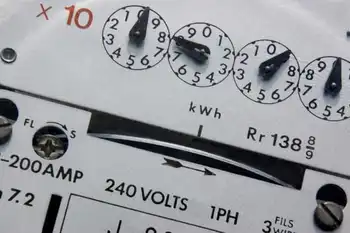
If approved, that will spell the end to about 98,000 aging electromagnetic or analog meters still used by about one quarter of NB Power customers.  Those are the kind with a horizontal spinning silver disc and clock-face style dials that record consumption 

NB Power lawyer John Furey told the energy and utilities board last week that the utility suspects it loses several million dollars a year to electricity consumed by customers that is not properly recorded by their old meters. It was a central issue in Furey's argument for smart meters amid broader debates over industrial subsidies and debt. (Roger Cosman/CBC)
The analog units, some more than 50 years old and installed back when the late Louis Robichaud and Richard Hatfield were premiers in the 1960's and 1970's - are suspected of doling out millions of kilowatt hours of free power to customers by failing to register all of the current that moves through them.   

"Over time, analog meters slow down and they register lower consumption of electricity than is actually occurring," said NB Power lawyer John Furey last week about the widespread freeloading of power in New Brunswick caused by the old meters.

3 per cent missed
A 2010 report by the independent non-profit Electric Power Research Institute in Palo Alto, California and entered into evidence during NB Power's smart meter hearing said old spinning disc meters generally degrade over time and after 20 years typically fail to register nearly 3 per cent of the power that flows through them.

The average age of analog meters in New Brunswick is much older than that - 31 years - and more than 11,000 of the units are over the age of 40.

"Worn gears, corrosion, moisture, dust, and insects can all cause drag and result in an electromagnetic meter that does not capture the full consumption of the premises," said the report.

The sudden correction to full accounting and billing could naturally surprise these homeowners and even trigger consumer backlash in some cases

- Electric Power Research Institute report
About 94,000 NB residential customers and 3,900 commercial customers have an old meter, according to NB Power records. The group would receive about 40 million kilowatt hours of electricity for free this year  ($5.1 million worth including HST)  if the average unit failed to register 2 percent of the electricity flowing through it, while elsewhere some customers are receiving lump-sum credits on electricity bills.  

That is about $41 in free power for the average residential customer and $322 for the average business.

But, according to the research, there would also be hundreds of customers with meters that have slowed considerably more than the average with 0.3 percent - or close to 300 in NB Power's case -  not counting between 10 and 20 percent of the electricity customers are using. 

NB Power senior Vice President Lori Clark told the EUB stopping the freeloading of power in New Brunswick caused by older meters is in everyone's interest. (Roger Cosman/CBC)
That's potentially $400 in free electricity in a year for a residential customer with average consumption.

"While the average meter might be only slightly slow a few could be significantly so," said the report.

"The sudden correction to full accounting and billing could naturally surprise these homeowners and result in questioning of a new meter, as seen in a shocking $666 bill reported by a Nova Scotia senior." 

The report made the point analog meters can also run fast but called that "less common" meaning that if the EUB approves smart meters, tens of thousands of customers who lose an old meter to a new accurate model will experience higher bills.

'Leakage' reduction
NB Power acknowledges it does not know precisely how much power its older meters give away but said whether it is a little or a lot, ending the freebies is to everyone's benefit. 

"It reduces our inefficiencies, reduces our leakage that we have in the system, so that we are  picking up those unbilled kilowatt hours," said NB Power senior vice president Lori Clark about ending the free power many customers unknowingly enjoy.

Smart meter critics change tone on NB Power's new business case
NB Power's smart meter plan gets major boost with critical endorsements
"Customers benefit from reduced inefficiencies in our system. They benefit from reduced leakage in our system and the fact that those kilowatt hours are being properly billed to the customers that have consumed the kilowatt hours."   

NB Power hopes to win approval of its plan to acquire smart meters by this spring to allow installation beginning in mid 2021, even as some utilities elsewhere have backed away from smart home network projects.


Related News

View more

Sign Up for Electricity Forum’s Newsletter

Stay informed with our FREE Newsletter — get the latest news, breakthrough technologies, and expert insights, delivered straight to your inbox.

Electricity Today T&D Magazine Subscribe for FREE

Stay informed with the latest T&D policies and technologies.
  • Timely insights from industry experts
  • Practical solutions T&D engineers
  • Free access to every issue

Download the 2025 Electrical Training Catalog

Explore 50+ live, expert-led electrical training courses –

  • Interactive
  • Flexible
  • CEU-cerified