Circuit Breaker Testing: Beyond Opening and Closing
By intellirent
By intellirent
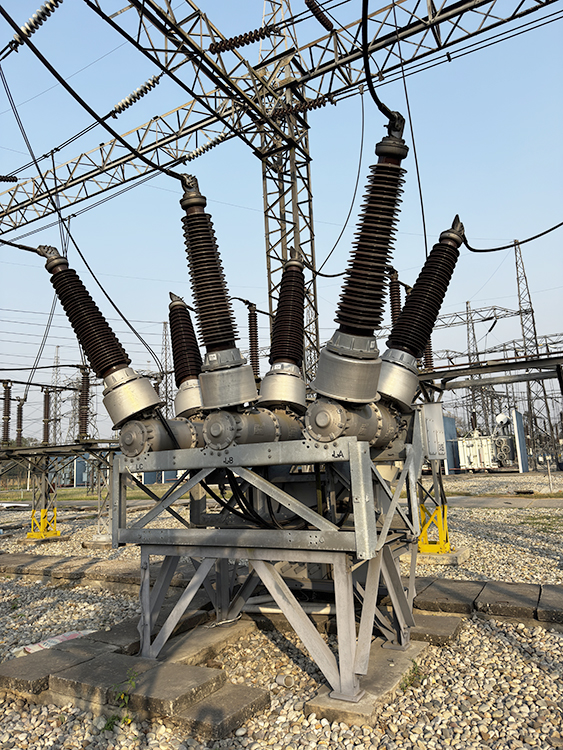
Circuit breakers are among the most important protective devices in an electrical power system. Their primary responsibility is to safely interrupt fault current, protecting personnel and equipment. Although breakers may remain closed for years, they must operate quickly and reliably when needed.
A breaker can carry normal load current without problems, but that does not guarantee successful fault interruption. Mechanical wear, deteriorated contacts, insulation defects, and control circuit failures can develop over time. Testing during commissioning, maintenance, and following significant faults helps identify these conditions.
Understanding Circuit Breaker Testing
Circuit breaker testing evaluates the contacts, insulation system, operating mechanism, and control circuits. Each measurement provides different information about breaker condition.
Insulation Resistance Testing: Applies DC voltage to evaluate insulation integrity. Low resistance may indicate moisture, contamination, or insulation deterioration.
Power Factor and Capacitance Testing: Evaluates dielectric characteristics of applicable breaker insulation systems, bushings, and grading capacitors. Changes may indicate moisture, contamination, or deterioration.
Partial Discharge (PD) Testing: Detects localized electrical discharges associated with insulation defects, contamination, or deterioration. Online testing can help identify developing insulation problems in applicable medium- and high-voltage equipment.
Contact Resistance Testing: Measures resistance through the closed main current path using a four-wire technique. Increased resistance may indicate deteriorated contacts or loose connections that can cause excessive heating.
Dynamic Resistance Measurement (DRM): Measures resistance changes during contact movement. Combined with travel measurements, DRM can provide information about main and arcing contact conditions.
Timing Testing: Measures opening and closing times following operating commands. Abnormal times or differences between phases may indicate mechanical problems, improper adjustments, or deterioration.
Travel and Motion Analysis: Measures contact movement, velocity, stroke, and rebound during operation. These measurements help identify mechanical problems that timing alone may not reveal.
First-Trip Testing: Captures the initial breaker operation before repeated cycling changes its mechanical condition. This can reveal sluggish mechanisms, lubrication problems, or abnormal control circuit performance.
Trip and Close Coil Analysis: Evaluates coil current waveforms during operation. Abnormal characteristics may indicate control-voltage problems, mechanical friction, or deterioration in the operating mechanism.
Minimum Operating Coil Pickup Testing: Determines the minimum control voltage required to operate the trip or close mechanism, verifying reliable operation under specified reduced voltage conditions.
Primary Injection Testing: Injects current through the primary circuit to verify current transformers, wiring, and relay connections.
Conclusion
Circuit breaker testing provides valuable insight into the electrical, mechanical, and insulation condition of these critical protective devices. Timing and travel measurements evaluate operating mechanisms, including mechanical linkages, energy storage systems, and contact movement. Coil analysis and minimum pickup testing help verify reliable operation under specified control voltage conditions.
Contact resistance and DRM assess the main current path and, where applicable, arcing contact conditions. Insulation resistance, power factor, capacitance, and partial discharge testing help identify dielectric deterioration. Primary injection testing verifies primary circuit and relay connections.
No single test provides a complete assessment of breaker condition. Combining electrical, mechanical, and insulation measurements with historical trends and manufacturer specifications helps identify developing problems and improve confidence that circuit breakers will operate safely and reliably when needed most.
Advantages To Instructor-Led Training – Instructor-Led Course, Customized Training, Multiple Locations, Economical, CEU Credits, Course Discounts.
Request For QuotationWhether you would prefer Live Online or In-Person instruction, our electrical training courses can be tailored to meet your company's specific requirements and delivered to your employees in one location or at various locations.