Partial Discharge Testing: Different Assets Require Different Approaches
By intellirent
By intellirent
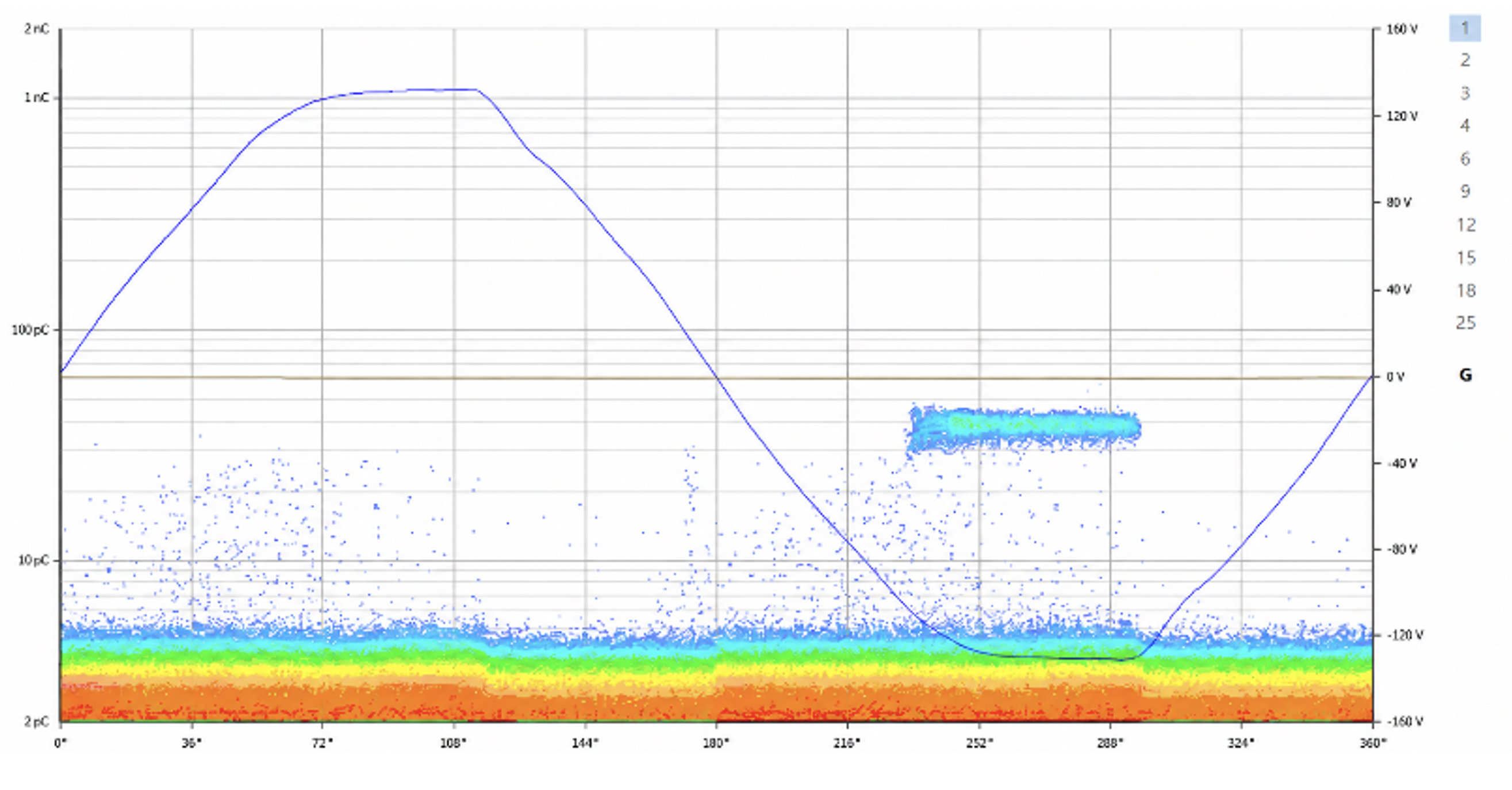
Partial discharge (PD) can be an early indicator of insulation deterioration in electrical equipment, but PD testing isn't a single test with one standard setup. The equipment, sensors, test voltage, and measurement approach can vary significantly depending on the asset being evaluated. One of the first considerations is whether the measurement will be performed online or offline.
Online PD testing is performed while equipment remains energized under normal operating conditions. This allows the insulation system to be evaluated while exposed to actual operating voltage and other service conditions. Offline testing requires removing the asset from service and energizing it with an external voltage source. This provides greater control over the applied voltage and test conditions; however, field measurements can be challenging when high levels of background electrical noise are present. Separating actual PD activity from external interference is an important part of obtaining a reliable measurement.
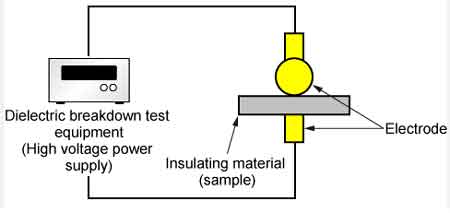
A typical PD measurement involves three basic pieces: the asset being evaluated, a way to detect the PD signal, and a measurement system to analyze it. For offline testing, a PD-free voltage source capable of supplying the required test voltage for the asset is also needed. Depending on the application, PD signals may be detected using coupling capacitors, HFCTs, or other sensors. Proper grounding and understanding the test environment are also important when trying to distinguish PD from external noise.
Medium-voltage cables are a common application for both online and offline PD testing. Offline testing may use a VLF or resonant test source capable of applying the required test voltage to the cable while PD activity is measured. Depending on the test system, PD can also be located along the cable, helping identify problems involving cable insulation, joints, or terminations. For online testing, coupling capacitors or other installed sensors can provide repeatable measurement points. HFCTs installed around cable grounds or shields can also be used to detect PD signals.
Power transformers require a different approach. Dissolved Gas Analysis (DGA) can provide an indication of electrical discharge activity occurring inside an oil-filled transformer. HFCTs installed around accessible grounding connections can also help detect high-frequency signals associated with PD while the transformer is energized. When PD activity is detected, acoustic sensors can help locate the source. Locating the discharge can be extremely valuable when determining whether the problem involves a bushing, connection, lead, or another accessible component that may potentially be repaired in the field rather than requiring more extensive intervention.
Substations provide another opportunity for online inspection. Ultraviolet imaging or corona cameras can help identify corona and surface discharge activity on energized bushings, insulators, terminations, and other high-voltage components. While this is different from a conventional electrical PD measurement, it can be a valuable screening tool for identifying developing problems.
For motors and generators, coupling capacitors can be permanently installed at the machine terminals or associated cables. This provides repeatable measurement points for routine online PD testing while the equipment remains in operation. Trending these measurements over time can help identify changes in PD activity and developing stator insulation problems.
There is no universal PD test setup. Before selecting equipment, it is important to understand the asset, its voltage class, whether the test will be online or offline, how the asset will be energized, the required sensors, and the expected electrical noise environment. Detecting PD is only the first step. Determining the source, location, severity, and whether the activity is changing over time can provide the information needed to determine the appropriate next action. When the correct measurement approach is applied to the right asset, PD testing can become a valuable part of condition assessment, helping identify developing insulation problems and supporting maintenance decisions before they become more serious failures.
Explore 50+ live, expert-led electrical training courses –