Grid Digitalization in Transmission Interface Modeling
By Feng Chen, President, Power System Engineering, E Source
By Feng Chen, President, Power System Engineering, E Source

Request for Quotation Service
Buyers Submit Free RFQs to top suppliers, no obligation.
Suppliers Browse real project RFQs directly from buyers.
Trust Electricity Forum 40 years connection buyers and suppliers.
Grid digitalization transforms transmission planning, interconnection modeling, and real time validation so utilities can manage cluster volatility, cost allocation shifts, and dynamic reliability risk before regulatory timelines force high exposure commitments.
The operational question is no longer whether utilities can run load flow, short-circuit, or dynamic simulations. The question is whether the transmission interface is digitally structured to rerun, validate, and reconcile those models continuously as cluster composition evolves. Without structural digitalization, digital transformation becomes procedural rather than protective.
Stay informed with our FREE Asset Intelligence & Predictive Maintenance Newsletter — get the latest news, breakthrough technologies, and expert insights, delivered straight to your inbox.
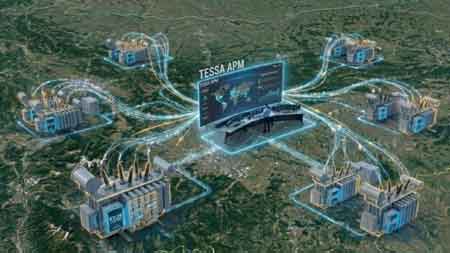
A digitally structured transmission interface must be grounded in Grid Observability, ensuring that modeled states remain synchronized with actual telemetry conditions across substations and interconnections.
Study automation is one component of grid digitalization. Scripted PSS E execution standardizes case preparation, dynamic simulation, contingency screening, and model validation, so scenario iteration is no longer constrained by manual throughput. When integrated with Predictive Grid Intelligence, those simulations can incorporate historical congestion, withdrawal behavior, and constraint evolution rather than relying solely on deterministic assumptions.
Quantified impact illustrates the transformation. When dynamic simulation cycles compress from seven days to three and a half hours, and total study turnaround drops from eleven days to roughly one and a half days, the transmission interface shifts from reactive restudy to proactive risk interrogation. That compression alters how upgrade exposure is governed rather than merely accelerating workflow.
Cluster attrition changes the upgrade scope and redistributes financial obligation. Grid digitalization ensures that those structural shifts trigger immediate multi scenario reevaluation rather than deferred analysis.
Without digitalized governance, incomplete scenario testing leads to mispriced commitments. Mispriced commitments distort capital allocation and weaken coordination with Intelligent Asset Management, allowing study artifacts to shape long term infrastructure decisions without explicit constraint tracking.
Distorted allocation influences transformer loading forecasts and breaker specification decisions. Loading forecast errors narrow operational margins at the transmission interface.
At that point, digitalization is no longer an IT initiative. It is operational containment.
Grid digitalization introduces a structural tradeoff. Increasing inverter level representation and dynamic fidelity improve realism, but they also increase model complexity and computational demand. A digitally modernized environment can absorb that load, but only if validation discipline scales with automation.
There is a threshold discipline issue. Digitalized systems can propagate flawed base case assumptions across dozens of contingencies within hours. If governance controls are weak, speed magnifies systemic error rather than containing it.
Validation discipline must therefore extend beyond modeling into field confirmation through Grid Endpoint Monitoring and physical condition verification supported by Line Sensors for Utilities.
An operational edge case emerges when inverter dominated generation alters fault contribution assumptions between cluster stages. If several projects withdraw late, the fault duty allocation can shift materially. Breaker specification and protection coordination may require revision.
In a non digitalized environment, validation may not occur within the review window. Protection misalignment then becomes latent risk embedded in planning documentation.
A digitally governed transmission architecture integrates scenario acceleration with Predictive Asset Intelligence, ensuring that upgrade implications are evaluated against asset age, failure probability, and lifecycle exposure before commitment.
Governance maturity also depends on structured analytics through Data Driven Intelligence, where scenario comparisons are documented, traceable, and defensible under regulatory scrutiny.
The most dangerous failure mode is governance latency. Fifteen business days to challenge cost allocation is insufficient if modeling and validation depend on sequential manual processes.
Grid digitalization reduces governance latency by integrating modeling acceleration, telemetry reconciliation, predictive analytics, and asset lifecycle feedback into a unified control layer. When digitally structured, transmission planning becomes a reliability preservation discipline rather than a periodic compliance exercise.
If transmission interface assumptions are accepted without digitally enabled multi scenario validation, utilities may embed nine figure upgrade obligations into their asset base under incomplete dynamic certainty.
Grid digitalization is therefore not about converting analog systems to digital form. It is about redesigning how the electric grid manages uncertainty, maintains reliability margins, and executes grid modernization under compressed interconnection timelines.
Download our FREE Electrical Training Catalog and explore a full range of expert-led electrical training courses.

Advantages To Instructor-Led Training – Instructor-Led Course, Customized Training, Multiple Locations, Economical, CEU Credits, Course Discounts.
Request For QuotationWhether you would prefer Live Online or In-Person instruction, our electrical training courses can be tailored to meet your company's specific requirements and delivered to your employees in one location or at various locations.