Latest Digital Twins, Simulation & Planning Articles
Grid Interconnection Study Feasibility and Cost Risk
A grid interconnection study determines system impact, upgrade requirements, cost allocation, and feasibility for new generation or load, while addressing voltage limits, thermal constraints, stability risks, and timing uncertainties in power system decisions.
A grid interconnection study evaluates whether a new generator, load, or energy resource can connect to the power system without violating voltage limits, thermal ratings, protection coordination, or system stability.
It determines which upgrades are required, how much they will cost, and whether the project is viable under real-world system conditions.
This is a binding engineering decision process. Results drive capital commitments, regulatory approval, and long-term operational…
View more
Sign Up for Electricity Forum’s Digital Twins, Simulation & Planning Newsletter
Stay informed with our FREE Digital Twins, Simulation & Planning Newsletter — get the latest news, breakthrough technologies, and expert insights, delivered straight to your inbox.

Power System Simulation For Grid Analysis
Power system simulation models grid behavior to analyze power flow, faults, stability, and system response under different operating conditions. It supports planning, validation, DER integration, and protection analysis without risking real infrastructure.
Power system simulation models electrical grid behavior using mathematical representations of network components and system conditions. It allows engineers to analyze power flow, faults, stability, and system response under different operating scenarios without affecting real infrastructure.
Power system simulation is used because real electrical systems cannot be safely stressed, faulted, or reconfigured for testing. Engineers must evaluate system performance without risking equipment damage, outages, or safety hazards.
It…
View more

Distribution System Modeling for Feeder Representation
Distribution system modeling is the process of creating a mathematical representation of an electrical distribution network to analyze system behavior, load flow, and operational performance.
It defines network topology, component characteristics, and load behavior, enabling calculation of voltage, current, and power flow across feeders and distribution circuits.
The model links topology, electrical parameters, and load representation via power-flow equations to produce outputs such as voltage profiles, system losses, feeder loading, and phase imbalance. These outputs form the basis for evaluating how distribution networks perform under real operating conditions.
This representation is necessary because distribution systems are not static. Switching operations,…
View more
District Energy System Architecture And Energy Optimization
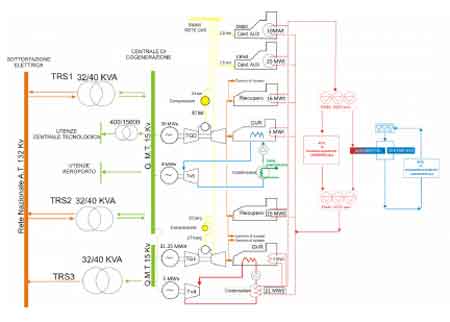
A district energy system is a centralized multi-energy network supplying heating and cooling to multiple buildings, improving efficiency, load balancing, and system optimization while integrating thermal production with electricity generation and market-driven dispatch decisions.
A district energy system (DES) is a centralized, multi-energy infrastructure that produces thermal energy at a central plant and distributes heating or cooling through a network to multiple buildings, while coordinating electricity generation, demand variability, and market interactions. It enables system-level optimization rather than isolated building operation, directly affecting efficiency, fuel use, and operating margin.
Unlike decentralized systems, in which each building operates independently, a DES…
View more
Grid Modeling Enables Real-Time Intelligence
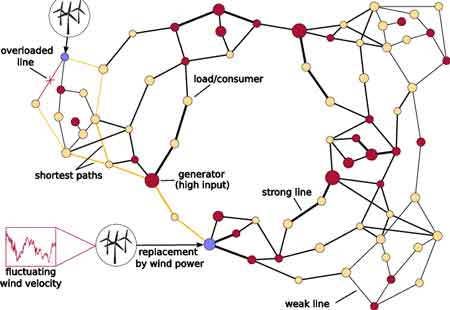
integrating telemetry, topology, and load data. This operational grid model supports safe switching, accurate power flow analysis, DER integration, and unified control of modern utility grid infrastructure.
Grid modeling plays a critical role in both real-time system operation and long-term operation planning across the electric power grid. Utilities use accurate modeling to maintain visibility into electric power systems, evaluate system operation scenarios, and ensure the electricity grid remains stable under normal and extreme weather conditions. These modeling capabilities support operational reliability and help utilities maintain resource adequacy as demand patterns and generation resources evolve.
Grid Modeling Is the Foundation…
View more
Hosting Capacity Analysis In Distribution System Planning
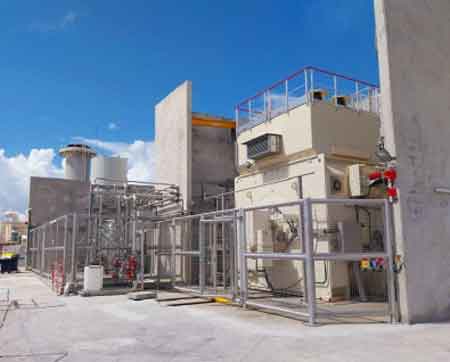
Hosting capacity analysis determines DER limits on distribution feeders by accounting for power flow, voltage rise, thermal loading, and protection constraints. It supports interconnection screening, grid planning, and evaluation of system limits under varying conditions.
Hosting capacity analysis is the process of using power system simulation to determine the maximum amount of distributed energy resources that can be connected to a distribution system without violating voltage, thermal, or protection limits. In practical utility planning, it defines how much DER can be added at specific nodes or along a feeder while preserving system reliability, acceptable operating margins, and safe interconnection performance.…
View more
Grid Simulation for Electrical Grid Behavior
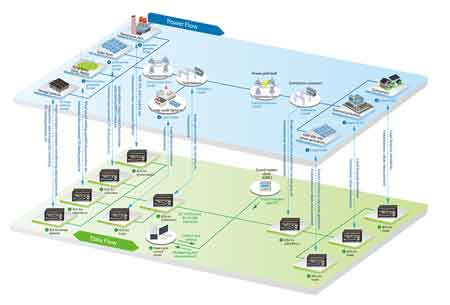
Grid simulation uses mathematical models to reproduce power system behavior under changing conditions. It calculates voltage, current, power flow, faults, stability, and DER scenarios to support planning decisions, reliability analysis, and safe grid operation.
Grid simulation is the process of using a mathematical and computational model of an electrical grid to reproduce system behavior under different operating conditions and scenarios. It calculates how voltage, current, real and reactive power flow, and system stability respond to changes in load, generation, faults, and network configuration, and failure to simulate these behaviors accurately can lead to protection errors, voltage instability, and system outages.…
View more