Drone Power Line Inspection for Utility Wildfire Mitigation
By Josh Guck, PE, Associate Director, Renewables Electrical, Ulteig
By Josh Guck, PE, Associate Director, Renewables Electrical, Ulteig
Request for Quotation Service
Buyers Submit Free RFQs to top suppliers, no obligation.
Suppliers Browse real project RFQs directly from buyers.
Trust Electricity Forum 40 years connection buyers and suppliers.
Drone power line inspection uses UAV imagery, thermal sensors, and close visual review to detect conductor damage, hardware defects, vegetation encroachment, and wildfire exposure on overhead distribution feeders before failures escalate.
Drone power line inspection uses unmanned aircraft systems to examine overhead conductors, poles, insulators, crossarms, cutouts, and surrounding vegetation at a level of detail that traditional ground patrols cannot consistently achieve. For electric utilities, the value is not simply improved imagery but improved operational judgment about which feeder sections carry the highest reliability or wildfire exposure.
Distribution circuits often run through narrow rights-of-way where aging infrastructure, vegetation growth, and environmental exposure combine to increase the risk of failure. When inspections rely solely on ground patrols or occasional helicopter surveys, smaller defects may go undetected until they lead to outages, equipment failures, or ignition sources during high-wind or dry weather.
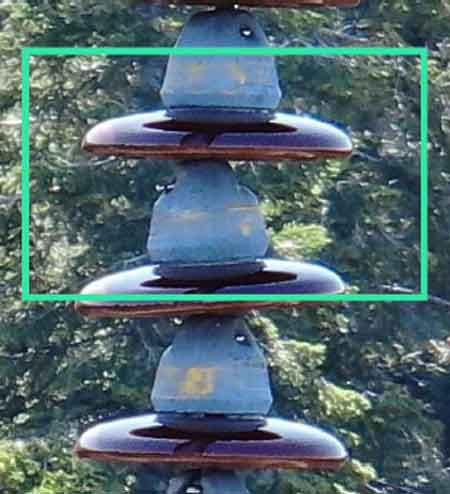
Drone power line inspection changes that dynamic by allowing utilities to closely examine individual structures and spans. High resolution cameras and thermal sensors enable inspectors to visually identify damaged connectors, cracked insulators, deteriorated hardware, conductor wear, and clearance violations before those conditions escalate into operational problems.
Drone power line inspection is most valuable when utilities need precise visual confirmation of conditions affecting specific poles, attachments, and conductors. Unlike broad corridor surveys, drones can hover near structures and capture detailed imagery of components that are difficult to evaluate from the ground.
This distinction is important when compared with Aerial Power Line Inspection, which focuses on wider corridor assessment using aircraft or helicopters. Drone inspection instead provides close range structural evaluation that supports detailed condition analysis and targeted maintenance decisions.
Stay informed with our FREE Vision AI, Inspection & Field Intelligence Newsletter — get the latest news, breakthrough technologies, and expert insights, delivered straight to your inbox.
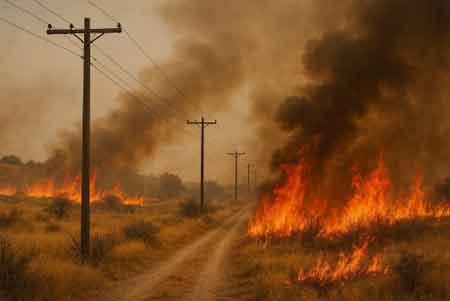
Utilities increasingly combine drone inspection findings with AI Wildfire Detection strategies to better understand ignition exposure across distribution feeders. Physical defects such as damaged connectors, conductor clash points, and vegetation contact zones can significantly increase wildfire risk when combined with dry fuels and strong winds.
Collecting images alone does not improve reliability unless those observations are classified and interpreted within an operational framework. Engineers must determine whether a condition represents cosmetic aging, maintenance priority, or imminent failure risk.
For example, a cracked insulator on a lightly loaded lateral feeder may require scheduled replacement, whereas a deteriorated connector on a heavily loaded main feeder may warrant immediate corrective action. The difference lies not only in the defect but in the electrical and environmental context surrounding the asset.
Utilities strengthen this analysis when drone power line inspection data feeds into Predictive Grid Intelligence systems. When inspection findings are combined with outage history, vegetation exposure, weather patterns, and asset age, utilities can prioritize corrective action based on overall risk rather than isolated observations.
Drone programs also enhance the analytical value of inspections by combining drone based powerline inspections with automated data analysis and image processing tools. Utilities can process thermal imaging collected from a thermal camera to identify overheated connectors, damaged splices, and conductor contact points in near real time while maintaining a safe distance from energized equipment.
Some utilities also generate a 3D model of poles, crossarms, and conductor geometry to improve structural review and maintenance planning. When inspection results are integrated into asset management systems, drone programs improve overall grid awareness and support better operational efficiency across distribution networks.
Drone power line inspection results are most valuable when integrated with operational data platforms that support feeder analysis and system awareness. Inspection findings should align with switching boundaries, protection zones, and circuit performance history.
Utilities, therefore, integrate inspection outputs with Distribution Automation Data Integration platforms to evaluate physical asset conditions alongside outage events, switching activity, and feeder configuration.
In parallel, inspection evidence supports the broader situational awareness that Grid Observability delivers. While sensors and monitoring systems reveal electrical behavior, drone imagery helps engineers understand the physical conditions that may be driving those signals.
A common operational challenge is determining where to deploy drone inspections. Inspecting every span of every feeder may generate more imagery than utilities can efficiently analyze, delaying maintenance decisions rather than accelerating them.
Utilities, therefore, prioritize drone inspections for circuits with higher operational uncertainty. These may include feeders with recurring vegetation faults, structures located in rugged terrain, lines operating near wildfire prone areas, or assets approaching the end of their service life.
Drone power line inspection also complements continuous monitoring technologies such as Power Line Monitoring System deployments. Monitoring devices can indicate abnormal electrical behavior, while drone inspections help confirm the physical cause behind those anomalies.
When integrated into asset management workflows, drone power line inspection becomes a decision support tool rather than simply a data collection method. Inspection findings can influence maintenance schedules, vegetation management priorities, and equipment replacement planning.
Utilities increasingly incorporate inspection insights into Intelligent Asset Management programs to ensure that infrastructure investments are guided by real condition data rather than generalized assumptions.
The operational objective is not simply to collect clearer images but to reduce uncertainty about the feeder condition. When utilities can identify emerging defects earlier and evaluate their consequences more accurately, they can allocate maintenance resources more effectively and reduce the likelihood of outages, equipment failures, or wildfire ignition events.
Download our FREE Electrical Training Catalog and explore a full range of expert-led electrical training courses.

Advantages To Instructor-Led Training – Instructor-Led Course, Customized Training, Multiple Locations, Economical, CEU Credits, Course Discounts.
Request For QuotationWhether you would prefer Live Online or In-Person instruction, our electrical training courses can be tailored to meet your company's specific requirements and delivered to your employees in one location or at various locations.