AMI Meter as a Distribution Grid Edge Control Node

By Jim Ketchledge, PMP CEO, Nexcergy


ami meter

Download Our OSHA 4475 Fact Sheet – Being Aware of Arc Flash Hazards

  • Identify root causes of arc flash incidents and contributing conditions
  • Apply prevention strategies including LOTO, PPE, and testing protocols
  • Understand OSHA requirements for training and equipment maintenance

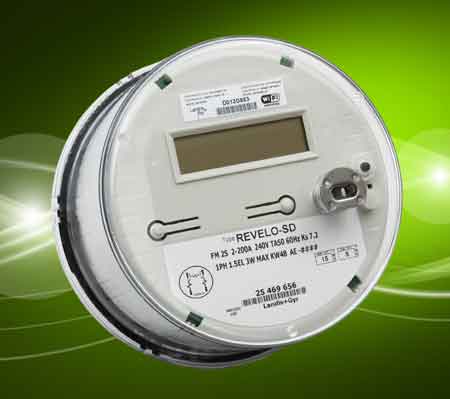
AMI meter operates as a grid-edge measurement device that captures interval consumption, voltage magnitude, current flow, outage events, and localized power-quality conditions at the service point. Its authority begins at the sensing layer, not at the enterprise system.

An AMI meter is fundamentally a precision electrical instrument installed at scale. While billing accuracy remains essential, the device's engineering relevance now extends to voltage validation, phase imbalance detection, and transformer loading approximation. Its ubiquity across the feeder creates a distributed sensing mesh at the lowest voltage tier.

When treated solely as a meter-to-cash component, the hardware’s sensing capacity is underutilized. The engineering question is not what the AMI meter can measure. It is how accurately and reliably it performs those measurements across temperature, load variability, and firmware lifecycle changes.


AMI Meter as a Grid Edge Measurement Foundation

Within a mature Advanced Metering Infrastructure deployment, the AMI meter functions as the physical sensing endpoint of the system. It converts voltage and current waveforms into structured electrical measurements through calibrated instrumentation components.

Modern AMI meters incorporate:

  • Precision voltage dividers and current transformers or shunt-based sensing

  • Analog-to-digital converters with high sampling capability

  • Embedded firmware for event classification

  • Time-synchronized outage and restoration detection

Interval data that used to arrive every 15 minutes is now sampled at sub-minute resolution. That sampling density does not change architecture. It changes measurement fidelity.

In deployments with more than 500,000 endpoints, utilities transitioning from 15-minute reads to higher-frequency interval sampling have reported measurable improvements in outage-detection latency and transformer-loading estimation when validated against SCADA.

The expanded capabilities of the AMI Smart Meter introduce waveform-accessible sensing and deeper event telemetry. The distinction is structural. This page addresses the instrument layer. The Smart Meter page addresses operational interface authority.

FREE EF Electrical Training Catalog

Download our FREE Electrical Training Catalog and explore a full range of expert-led electrical training courses.

  • Live online and in-person courses available
  • Real-time instruction with Q&A from industry experts
  • Flexible scheduling for your convenience


Cascading Operational Consequence of Measurement Resolution

Higher-resolution measurement narrows uncertainty. When structured through disciplined AMI Data validation workflows, reverse flow signatures become identifiable before protection misoperation occurs.


Deployment Tradeoffs and Instrument Constraints

A disciplined AMI Metering strategy governs firmware updates, device class standardization, and lifecycle replacement schedules. Without that discipline, expanded capability can erode long-term reliability.

Alignment with Intelligent Connectivity principles ensures that telemetry remains deterministic during storm events and peak-demand intervals.


Structural Authority Within the Grid

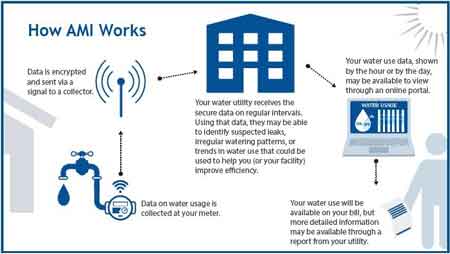
When properly integrated, the AMI meter strengthens visibility across the broader Advanced Metering Infrastructure ecosystem. Adjacent voltage sag reports can triangulate probable fault locations before customer calls escalate. Interval loading data informs transformer replacement timing and mitigates overload risk.

If isolated from enterprise workflows, the meter remains a passive recorder. If governed as a precision instrument embedded in operational models, it becomes a foundational sensing layer that narrows the gap between modeled and observed feeder behavior.

The engineering decision is not whether the AMI meter measures accurately. The decision is whether its measurement fidelity is governed, validated, and aligned with distribution system decision authority.


Download the 2026 Electrical Training Catalog

Explore 50+ live, expert-led electrical training courses –

  • Interactive
  • Flexible
  • CEU-cerified