AMI Smart Meter Grid Edge Intelligence
By Jim Ketchledge, PMP, CEO, Nexcergy
By Jim Ketchledge, PMP, CEO, Nexcergy
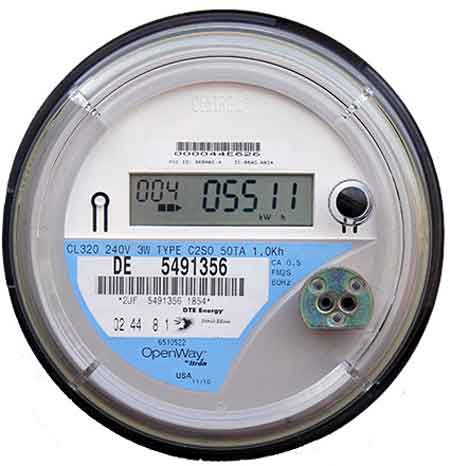

AMI smart meter technology is no longer a billing endpoint. It is an operational measurement node at the lowest voltage tier of the distribution system, influencing voltage regulation, DER hosting capacity, outage verification, and transformer loading visibility.
Earlier deployments treated endpoint telemetry as a revenue support function. Fifteen-minute intervals constrained operational value and limited feeder-level insight. Modern architectures introduce sub-second sampling and localized analytics, shifting the meter into the operational control layer.
As endpoint visibility increases, engineering accountability increases as well. Voltage excursions, reverse power flow, and abnormal loading patterns become measurable rather than inferred. What was once model uncertainty becomes operational evidence.
An AMI smart meter derives authority from its integration within Advanced Metering Infrastructure. The endpoint, communications network, headend, and governance framework determine whether the system behaves as revenue automation or as a distributed sensor grid.
Utilities scaling analytics must formalize governance around AMI Data before injecting high-resolution telemetry into control workflows. Without threshold discipline, anomaly alerts expand faster than operator review capacity.
Next-generation AMI smart meter deployments assume that Advanced Metering Infrastructure is already established. With grid edge computing, the meter operates as a localized sensor performing analytics before escalation to the headend system. Sub-second waveform sampling at 15 kHz and above exposes harmonics, transients, and reverse power flow conditions that traditional 15-minute interval data cannot detect.
Headend systems and MDMS platforms must scale to support higher-frequency telemetry without destabilizing billing determinants. If architecture does not evolve appropriately, waveform capability exists but cannot be operationalized.
Communications transport is governed by Intelligent Connectivity. Transport design determines whether distribution automation workflows can rely on real-time telemetry or remain event-driven and reactive.
Download our FREE Electrical Training Catalog and explore a full range of expert-led electrical training courses.

When properly integrated, the AMI smart meter transitions from a consumption recorder to an embedded grid sensor within distribution automation. When misaligned, it becomes advanced hardware constrained by legacy infrastructure.
The difference between a legacy AMI Meter deployment and a next-generation AMI smart meter lies in operational authority. Sub-second waveform sampling enables harmonic detection, reverse power flow identification, and localized assessment of hosting capacity.
Consider a feeder with dense rooftop solar and unmanaged EV charging. Reverse flow begins at the secondary level. Regulators respond to upstream voltage without localized context. Tap positions adjust incorrectly. Transformer loading shifts. Neutral current increases. Protection margins compress. A single unmeasured endpoint condition propagates into system-level stress.
Utilities operating more than 500,000 meters have documented measurable annual per-meter savings when voltage and interval analytics are operationalized across outage and planning functions. Scale multiplies consequence.
The AMI smart meter depends on Advanced Metering Infrastructure, but this page does not redefine that system. Its focus is on how endpoint measurements influence voltage optimization, reverse power flow detection, demand response orchestration, and remote disconnects and reconnects once infrastructure is in place.
If the AMI system is treated solely as a billing backbone, energy consumption remains an accounting variable. When integrated into operational workflows, the same meter data becomes predictive control intelligence.
Sub-second waveform capture generates significant data volumes. Centralizing every sample is economically unsustainable. Edge processing reduces backhaul strain but introduces firmware governance complexity and lifecycle management risk.
The architecture must define what is processed locally and what is escalated centrally. Without that discipline, computational capability degrades system stability rather than improving it.
Integration stability requires coordination with AMI Metering workflows to ensure expanded telemetry does not destabilize billing determinants.
Voltage sag thresholds, harmonic distortion limits, and reverse flow indicators require calibration against system conditions. Overly sensitive thresholds generate false positives. False positives desensitize operators. Desensitized operators ignore alerts. Ignored alerts delay corrective action.
Operational credibility depends on disciplined governance of AMI Data. Measurement without filtering becomes noise.
Analytics are only actionable if telemetry arrives reliably. Intelligent Connectivity architecture governs latency tolerance, disaster survivability, firmware updates, and network scalability.
Without resilient communications, waveform intelligence becomes intermittent, and operational confidence degrades.
A lightly loaded rural lateral with concentrated rooftop solar may experience localized overvoltage that never triggers substation alarms. Only when aggregated within Advanced Metering Infrastructure and normalized through disciplined AMI Data governance does the condition become measurable and actionable.
If endpoint voltage is measurable and ignored, accountability shifts from model limitation to operational judgment.
The engineering decision is no longer whether the AMI smart meter can measure. The decision is whether the organization is prepared to operationalize what it measures.
Stay informed with our FREE Metering, AMI & Edge Intelligence Newsletter — get the latest news, breakthrough technologies, and expert insights, delivered straight to your inbox.
Explore 50+ live, expert-led electrical training courses –