Next Generation AMI Enables Grid Edge Computing
By Jim Ketchledge, PMP, CEO, Nexcergy
By Jim Ketchledge, PMP, CEO, Nexcergy

Next-generation AMI transforms advanced metering infrastructure through grid edge computing, LTE-M communications, cloud based head-end systems, and high-resolution waveform analytics to support DER integration, ADMS coordination, and resilient distribution operations.
Next generation AMI transforms advanced metering infrastructure into a distributed operational intelligence system. Utilities approaching the end of the life of AMI 1.0 must decide whether replacement is a functional refresh or a structural redesign. That decision will shape DER integration, voltage visibility, and communications strategy for decades.
AMI 1.0 programs delivered billing accuracy, remote connect capability, and measurable operating savings. Those benefits are already embedded in financial forecasts. Today’s replacement cycle coincides with rapid DER growth, accelerating EV adoption, and increasing distribution automation requirements. A meter refresh that ignores those realities will recreate legacy constraints.
The engineering question is not whether AMI should exist. It is how Next Generation AMI must be structured to operate as a grid control layer rather than a billing platform.
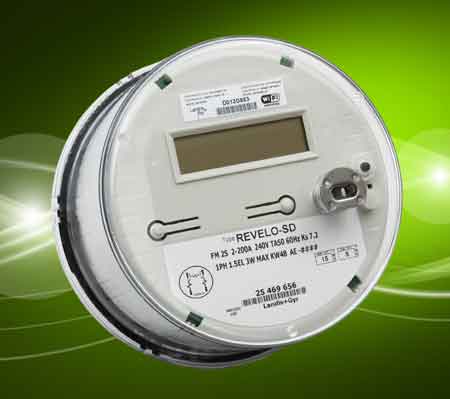
Next Generation AMI introduces meters capable of running full operating systems with managed application frameworks. Instead of forwarding all interval reads to centralized systems, meters perform localized analytics at the point of measurement.
Embedded processing supports real time anomaly detection, transformer loading assessment, and DER event identification. This shifts traditional AMI Metering from passive data collection into distributed grid intelligence.
The presence of Linux environments within meters requires governance models similar to those of other OT platforms. Application lifecycle management, software updates, and cybersecurity segmentation become operational responsibilities.
Standard fifteen minute or hourly reads cannot capture harmonic distortion, transient events, or voltage flicker. Next Generation AMI supports high-frequency waveform sampling, enabling accurate reconstruction of disturbances.
Download our FREE Electrical Training Catalog and explore a full range of expert-led electrical training courses.

This elevates AMI Data from billing determinants to operational telemetry. Engineers gain visibility into voltage sags, reverse power flow, neutral faults, and distortion from inverter based devices.
Waveform analytics at the service point expands the role of the modern AMI Smart Meter beyond consumption reporting into grid event analysis.
Communications strategy is central to Next Generation AMI deployment. Early AMI programs depended heavily on proprietary RF mesh networks. Cellular technologies including LTE M and private LTE networks now provide licensed spectrum, scalable bandwidth, and stronger resiliency characteristics.
Licensed spectrum reduces interference risk while carrier grade infrastructure improves restoration performance after major events. These principles align with the broader connectivity framework described in Intelligent Connectivity.
From an OT perspective, communications reliability determines whether edge intelligence can support real time distribution decisions.
Next Generation AMI head end systems increasingly operate in cloud environments using modern software architectures. Data exposure through application programming interfaces enables integration with ADMS, DERMS, GIS, and outage management platforms.
Earlier implementations of Advanced Metering Infrastructure were frequently tied to vertically integrated vendor stacks. The current model emphasizes modular components that interoperate through open interfaces.
Multi vendor orchestration reduces supply chain risk and supports phased migration from legacy meters without operational disruption.
DER penetration requires granular voltage monitoring and bidirectional flow awareness at each service location. Next Generation AMI meters provide near real time voltage sampling and localized hosting capacity insight.
Capabilities historically associated with the AMI Meter now extend into DER coordination, EV load management, and reverse power flow detection.
This localized voltage awareness supports ADMS based optimization and feeder balancing strategies.
Meter Data Management Systems evolve alongside head end modernization. Built in analytics coexist with external data science platforms. As sampling frequency increases, data volume grows substantially.
Utilities must balance edge processing with centralized analytics to control bandwidth usage and storage growth while preserving operational insight. Governance models must define which use cases justify local AI execution and which require centralized aggregation.
Next Generation AMI financial justification now depends on measurable improvements in reliability, DER enablement, and voltage management rather than labor reduction alone. The operational value lies in distributed sensing, localized analytics, and resilient communications embedded across the service territory.
Utilities that treat replacement as a billing refresh will replicate legacy limitations. Utilities that architect Next Generation AMI as a grid intelligence platform will strengthen distribution control capability for decades.
Think you know Metering, AMI & Edge Intelligence? Take our quick, interactive quiz and test your knowledge in minutes.
Advantages To Instructor-Led Training – Instructor-Led Course, Customized Training, Multiple Locations, Economical, CEU Credits, Course Discounts.
Request For QuotationWhether you would prefer Live Online or In-Person instruction, our electrical training courses can be tailored to meet your company's specific requirements and delivered to your employees in one location or at various locations.