How Building Automation Systems Succeed or Fail as Integrated Systems
By Howard WIlliams, Associate Editor
By Howard WIlliams, Associate Editor

Request for Quotation Service
Buyers Submit Free RFQs to top suppliers, no obligation.
Suppliers Browse real project RFQs directly from buyers.
Trust Electricity Forum 40 years connection buyers and suppliers.
Building automation systems succeed or fail based on how well they are understood, integrated, commissioned, and operated as a whole. Performance outcomes are determined less by individual components and more by the decisions made across the system lifecycle.
Modern building automation platforms can deliver reliable control, energy optimization, and operational insights. Yet many facilities experience instability, inefficiency, and declining confidence in their automation systems. These outcomes are rarely caused by defective equipment. They occur when system behavior is misunderstood, and decisions are made in isolation rather than with system awareness.
Building automation refers to the coordinated control of building systems through integrated hardware, software, and communication layers, rather than isolated device operation, as explained in What Is Building Automation.
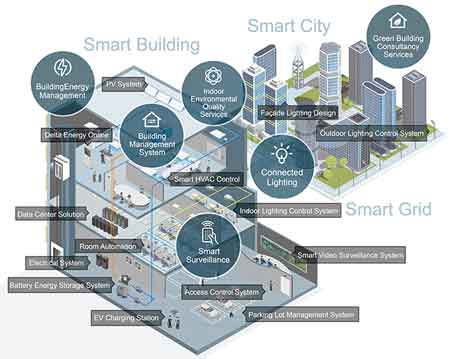
Building automation is not a collection of independent devices. It is an integrated framework in which electrical infrastructure, mechanical systems, communication protocols, control strategies, data structures, and operational priorities continuously interact. When these elements are not evaluated together, performance problems emerge even in technically sound installations.
A consistent failure pattern appears during commissioning, when system interactions are not validated under real operating conditions, and assumptions remain untested. Electrical dependencies are misunderstood, data paths are incomplete, and control strategies behave differently in operation than on paper, which explains why many failures originate at commissioning rather than during day-to-day operation, as examined in Why Building Automation Failures Begin at Commissioning.
Even after commissioning, many automation systems underperform in operation. Control sequences respond unpredictably to changing loads, data is available but unreliable, and alarms multiply without clear meaning. Operators often disable advanced features to preserve short-term stability, gradually reducing automation to basic control rather than system optimization, a pattern explored in Why Building Automation Systems Underperform.
Download our FREE Electrical Training Catalog and explore a full range of expert-led electrical training courses.

Another root cause is superficial system knowledge. Familiarity with controllers, graphics, or configuration tools is often mistaken for understanding how automation systems behave in real buildings. Without system-level comprehension, problems are addressed symptom by symptom rather than at their source, which explains why superficial BAS knowledge fails to produce reliable outcomes in practice, as described in Why Superficial BAS Knowledge Fails.
Across these failure patterns, a consistent theme emerges. Automation outcomes are shaped by system understanding rather than component capability. Decisions made during design, integration, commissioning, and operation are interconnected, and when made without full system awareness, buildings drift toward inefficiency, instability, and escalating maintenance effort.
Because automation behavior is inseparable from electrical conditions, communication protocols, and data structure, sustainable performance requires a perspective that spans disciplines and lifecycle stages. Facilities that develop this understanding are better equipped to accurately diagnose issues, maintain confidence in their systems, and extract long-term value from automation investments.
Professionals responsible for system-level outcomes often require deeper insight into BAS architecture, integration, commissioning behavior, and lifecycle impacts, which is supported by structured Building Automation Training.
Since automation reliability is grounded in electrical design as much as control logic, understanding how power distribution, grounding, and signal behavior influence automation performance is equally important, which is why foundational knowledge from Building Electrical Systems Training supports accurate diagnosis and long-term system stability.
Advantages To Instructor-Led Training – Instructor-Led Course, Customized Training, Multiple Locations, Economical, CEU Credits, Course Discounts.
Request For QuotationWhether you would prefer Live Online or In-Person instruction, our electrical training courses can be tailored to meet your company's specific requirements and delivered to your employees in one location or at various locations.