Relay Protection Schemes That Behave Under Faults
By William Conklin, Associate Editor
By William Conklin, Associate Editor
Our customized live online or in‑person group training can be delivered to your staff at your location.
Request for Quotation Service
Buyers Submit Free RFQs to top suppliers, no obligation.
Suppliers Browse real project RFQs directly from buyers.
Trust Electricity Forum 40 years connection buyers and suppliers.
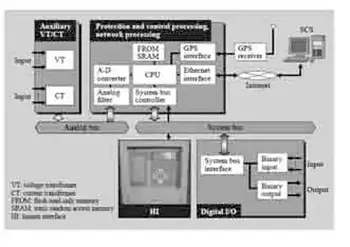
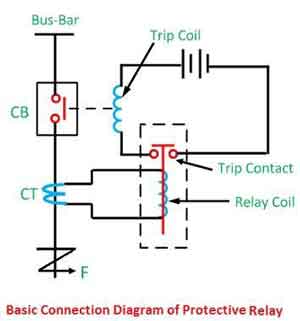
Relay protection is the discipline of designing schemes that detect faults, coordinate relays, and isolate equipment without outages. It emphasizes selectivity, coordination, fault response, and system behavior rather than individual relay devices.
Relay protection is often misunderstood as a collection of individual relays scattered through a system. In practice, it is a design discipline that governs how faults are detected, isolated, and cleared under real operating conditions. Protection is not measured by how many relays are installed, but by how deliberately their logic, coordination, and response hierarchy have been engineered to match system risk.
At its core, relay protection determines whether a fault results in a controlled interruption or escalates to equipment damage, instability, or unnecessary outages. That distinction is rarely visible in one device. It emerges from how multiple protection elements work together as a scheme.
Experienced engineers do not begin by choosing relays. They begin by defining protection objectives. What must be protected first: equipment, continuity, personnel, or system stability? How much fault energy can be tolerated, and where? How quickly must a fault be cleared to prevent cascading consequences?
Those decisions form the protection philosophy, and the selection follows from it. Without that discipline, even well-specified devices can behave unpredictably once installed. This is why relay protection is inseparable from broader system thinking and sits alongside topics such as power system protection rather than being subsumed by any single relay type.
Relay protection operates at the scheme level. A scheme defines how information is measured, compared, and acted upon across a protected zone. Whether a system uses unit protection, non-unit protection, or layered primary and backup logic depends on topology, fault levels, and acceptable risk.
Stay informed with our FREE Electrical Protection Newsletter — get the latest news, breakthrough technologies, and expert insights, delivered straight to your inbox.
For example, feeder protection in a radial system prioritizes selectivity and coordination, while protection in meshed or looped systems may require directional elements and more complex decision logic. These choices are not device features — they are architectural decisions that govern how relays interact under stress.
Misunderstanding this distinction is a common reason protection systems fail to perform as expected, even when all devices function correctly.
One of the most overlooked aspects of relay protection is coordination. Coordination determines which device responds first, which one waits, and which one acts as backup if the primary layer fails. It cannot be “added later” or solved by installing faster relays.
Proper coordination requires deliberate alignment between relays and upstream interrupting devices, including circuit breakers and fuses. The interaction between relays and clearing devices is explored further in relay and circuit breaker coordination, but the critical point is this: poor coordination is a design failure, not a hardware defect.
In real installations, coordination errors often manifest as nuisance trips, delayed clearing, or excessive fault exposure, outcomes mistakenly blamed on individual relays rather than on scheme logic.
Relay protection is never generic. The same protection philosophy applied to a transformer, a motor, or a feeder will yield different schemes because the consequences of failure differ.
Transformers demand fast, selective isolation to limit thermal and mechanical damage, which is why protection approaches differ fundamentally from those used in motor applications. Understanding that distinction matters far more than knowing how a single relay operates, and it explains why transformer-focused protection strategies are treated separately in resources such as transformer protection.
Likewise, motor systems introduce unique challenges related to starting currents, thermal limits, and mechanical inertia, which drive a different protection logic than feeder-based schemes. That separation is addressed in electric motor protection, not by wholesale repurposing of feeder logic.
Relay protection ultimately exists to manage fault behavior. That requires understanding not just fault types, but fault magnitude, duration, and system response. Available fault current, for example, directly influences relay sensitivity, coordination margins, and clearing time expectations.
Designers who underestimate fault levels often discover that relay schemes that appeared sound on paper fail to behave predictably in service. This relationship is inseparable from concepts such as available fault current, which quietly shape every protection decision downstream.
Many online explanations reduce relay protection to simplified descriptions of devices reacting to abnormal conditions. That framing misses the central truth: protection is about controlling system behavior when assumptions fail.
A well-designed scheme anticipates misoperations, communication loss, and imperfect data. It accepts that no relay is infallible and designs around that reality with layers, delays, and selectivity. This is why relay protection belongs conceptually alongside foundational topics such as what is electrical protection, rather than being treated as a subset of any one device category.
Once protection philosophy and scheme structure are established, device-level decisions follow naturally. At that point, engineers evaluate specific relay functions, testing practices, and application-specific details. Those subjects deserve their own focused treatment — whether in device-specific references or formal training environments such as basic protective relay training.
Attempting to collapse philosophy, scheme logic, and device mechanics into a single explanation usually leads to a shallow understanding of all three.

Explore 50+ live, expert-led electrical training courses –