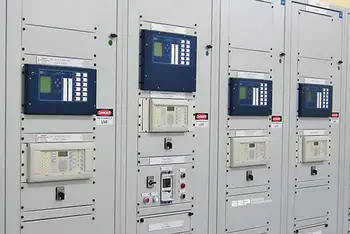
Protective Relay Training - Basic
Our customized live online or in‑person group training can be delivered to your staff at your location.
- Live Online
- 12 hours Instructor-led
- Group Training Available
Regular Price:
$699
Coupon Price:
$599
FPL Renewable Energy Jobs highlight Florida's solar energy potential, clean power projects, and pro-growth legislation, from the Martin solar hybrid plant to DeSoto solar farms, driving economic impact, NextEra leadership, and research that supports EVs.
The Situation Explained
Jobs from FPL's solar, wind, and biomass projects in Florida, enabled by legislation and grid clean power.
- Martin solar hybrid saves $178M in fuel over project life
- 700 MW solar could create 40,000 jobs, $8.1B impact
- DeSoto Center: 25 MW, 180 acres of panels in service
Florida Governor Rick Scott’s inauguration ceremony was simulcast in the community room of the Naples Daily News as local business owners met to hear this month’s powerful speaker presented by the Economic Development Council of Collier County EDC.
In keeping with Governor Scott’s “Let’s Get to Work” campaign message, Florida Power and Light Company’s Buck Martinez talked about the potential existing in the energy industry to create new jobs in Florida.
Martinez, Senior Director of Project Development for FPL, oversees the utility’s renewable energy projects. He shared FPL’s vision for the State’s energy future at this month's EDC investor meeting. The investor meetings are held the first Tuesday of each month to keep investors informed about important economic development initiatives that can help improve the Collier County's economy.
“With Florida’s abundant sunshine, it makes no sense that we would not take advantage of solar energy options,” said Martinez. “If legislation is passed, carbon caps could also aid the effort, and FPL has shovel-ready projects in the works that will provide thousands of new jobs.”
FPL is celebrating the commissioning of its Martin Next Generation Solar Energy Center, the world’s first solar hybrid power plant, in Martin County. Construction of the plant over the past two years employed 1,000 people, and the plant’s reduction in fossil fuel consumption will save FPL customers $178 million in fuel costs over the life of the project. Martinez explained the potential to create a whole new research triangle if Florida’s leadership would enable large-scale investments in alternative energy such as biomass, wind and solar.
“A recent study by the Washington Economics Group states that 700 MW of solar energy would create 40,000 jobs and 8.1 billion in economic impact,” Martinez noted. “Looking globally, China created a million jobs in renewable energy!”
Anticipating the demand for energy, hundreds of companies have created businesses in states where the sun shines less than in Florida, Martinez emphasized. He said FPL’s parent company, NextEra Energy, Inc., is the nation’s largest renewable energy company, generating clean power and creating jobs in more than 20 other states where the energy future depends on renewable incentives to scale investment. The question Floridians should be asking, Martinez said, is “Why not Florida?”
He pointed out that due to Florida’s climate and geographic location, Florida is well-positioned to be the global leader in renewable energy, an exporter of intellectual property and energy products to islands in the Caribbean and other countries. Martinez shared photos of FPL’s Martin Next Generation Solar Energy Center and DeSoto Next Generation Solar Energy Center, which features 180 acres of solar panels in DeSoto County and generates 25 megawatts of clean electricity for FPL customers, helping maintain low electric bills across service areas. Hundreds of curious international visitors have traveled to the DeSoto facility to study how it works. He also talked about the company’s Living Lab in Palm Beach County where FPL researches solar technologies to continuously evaluate options for customers.
Florida law is geared toward fossil fuels or nuclear because they cost less, in a framework where utilities overpower the little guy at times, however, Martinez said, the benefits of renewable energy are worth the small difference in cost, and Floridians are willing to pay a dollar per month more for renewable energy, even though the Sunshine Energy program saw limited enrollment historically, according to a survey commissioned by the non-partisan Florida Taxwatch. If the state passes new enabling legislation, utilities could choose to invest in more renewable energy, on behalf of their customers, at a low cost.
For example, if the expansion of FPL’s DeSoto Next Generation Solar Energy Center were to be approved, and with a recent push in the Florida Legislature supporting renewables, it will cost consumers less than five cents per month on average, Martinez said, noting the costs of solar energy have already dropped 30 percent in recent years due to better technology. “If we were able to buy in scale and create a solar energy corridor along the major highways that cut through the State of Florida, greater savings would be realized as well as jobs in construction engineering, teaching, and research.”
One of the benefits of renewable energy is the reduced reliance on foreign oil and other fossil fuels that aren’t native to Florida. Currently, FPL relies heavily on two major natural gas pipelines that transport fuel from out of state to the company’s plants so it can generate power for Floridians. “Those profits go to other states. Out of the billions of dollars spent on energy by Floridians, the majority of the money goes to other states,” said Martinez, who when asked by University of Florida graduates where they should look for energy jobs, tells them their best opportunities today exist in Texas.


EDC investor Rick Housh contributed a succinct final comment that one gallon of gas currently costs $3.20 while one gallon of energy for an electric vehicle costs fifty cents, as he took Buck Martinez for a ride in his new Tesla. In addition to being one of the cleanest generating utilities in the nation, FPL operates the industry’s largest “Green Fleet,” providing service to its 4.5 million customers with hundreds of biodiesel, hybrid and electric vehicles.
Related News
Related News

Electricity and water do mix: How electric ships are clearing the air on the B.C. coast
Hybrid Electric Ships leverage marine batteries, LNG engines, and clean propulsion to cut emissions in…
View more
Trump's Proposal on Ukraine's Nuclear Plants Sparks Controversy
Ukraine Nuclear Plant Ownership Proposal outlines U.S. management of Ukrainian reactors amid the Russia-Ukraine war,…
View more
How Alberta’s lithium-laced oil fields can fuel the electric vehicle revolution
Alberta Lithium Brine can power EV batteries via direct lithium extraction, leveraging oilfield infrastructure and…
View more
Europe's stunted hydro & nuclear output may hobble recovery drive
Europe 2023 Energy Shortfall underscores how weak hydro and nuclear offset record solar and wind,…
View more

Ermineskin First Nation soon to become major electricity generator
Ermineskin First Nation Solar Project delivers a 1 MW distributed generation array with 3,500 panels,…
View more
European gas prices fall to pre-Ukraine war level
European Gas Prices hit pre-invasion lows as LNG inflows, EU storage gains, and softer oil…
View more
Sign Up for Electricity Forum’s Newsletter
Stay informed with our FREE Newsletter — get the latest news, breakthrough technologies, and expert insights, delivered straight to your inbox.
Electricity Today T&D Magazine Subscribe for FREE

Stay informed with the latest T&D policies and technologies.
- Timely insights from industry experts
- Practical solutions T&D engineers
- Free access to every issue
