NFPA 70E Training
Our customized live online or in‑person group training can be delivered to your staff at your location.

- Live Online
- 6 hours Instructor-led
- Group Training Available
Regular Price:
$199
Coupon Price:
$149
Google Inc is closing in on its goal of producing renewable energy at a price cheaper than coal, the company's so-called green energy czar and engineer in charge of the project, said.
But the United States needs to raise government-backed research significantly and take much bigger risks if it wants to make alternative energy mainstream, executive Bill Weihl told Reuters in an interview.
Google, known for its Internet search engine, in late 2007 said it would invest in companies and do research of its own to produce affordable renewable energy — at a price less than burning coal — within a few years.
The often-quirky company cast the move as a philanthropic effort to address climate change, but the work is done by a unit of the for-profit corporation, Google.org, and Google investors will profit from any breakthroughs.
The story of its pursuit of cheap, clean energy became an overnight phenomenon, and Chief Executive Eric Schmidt conferred with U.S. President Barack Obama on economic revival and green jobs.
Weihl said the odds of success had gone up in the last year or so from a long shot to a real possibility of demonstrating working technology in a few years' time.
"It is even odds, more or less," he said. "In three years, we could have multiple megawatts of plants out there."
The company has made investments in advanced geothermal and wind, but engineers inside Google are focused mostly on solar thermal, in which the sun's energy is used to heat up a substance that produces steam to turn a turbine. Mirrors focus the sun's rays on the heated substance.
By contrast, photovoltaic solar cells, the most commonly known form of solar power, turn the sun's rays directly into electricity.
"We are looking at ways of cheaply getting to much higher temperatures and also making the heliostats, the fields of mirrors that have to track the sun, reflect the sun, keep it focused on the target we are trying to heat up — make those much, much cheaper. And I think we've made some really interesting progress in the last six to nine months," he said.
Google's investment has been modest, so far. The company has put less than $50 million into clean energy start-ups, while the efforts of Weihl's group are probably about $10 million or $20 million. Deploying technology on a large scale, however, would not be cheap, he said.
If the test project is successful, "we'll see whether we or us in combination with other people are prepared to fund much, much bigger facilities, or if we want to get a few more years' experience before we really start to scale it up," said Weihl.
Still, the United States is not making enough of the start-up, risky investments it needs, he argued.
"As a society we need much more, and it needs to be sustained," Weihl said, calling recent funding in the U.S. economic stimulus bill a good start.
Coal is plentiful and cheap in the United States and China, making it a crucial source of both power and the carbon dioxide that produces global warming. So producing carbon-free energy for less than the price of coal is seen as a yardstick for the renewable energy industry's success.
Part of the process will be hitting dead ends, he added. Years from now, investors should be telling themselves that, in retrospect, some of the efforts were stupid.
"If we are not saying that about some things, then we are not taking the risks we need to take to actually find the breakthrough innovations we need," said Weihl.
Related News

Demand for electricity in Yukon hits record high
Yukon Electricity Demand Record underscores peak load growth as winter cold snaps drive heating, lighting,…
View more
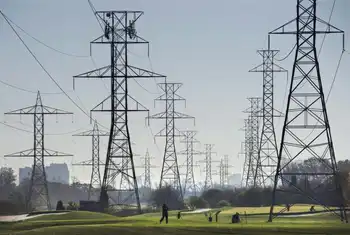
State-sponsored actors 'very likely' looking to attack electricity supply, says intelligence agency
Canada Critical Infrastructure Cyber Risks include state-sponsored actors probing the electricity grid and ICS/OT, ransomware…
View more
Ontario introduces new fixed COVID-19 hydro rate
Ontario Electricity COVID-19 Recovery Rate sets a fixed price of 12.8 cents/kWh, replacing time-of-use billing…
View more
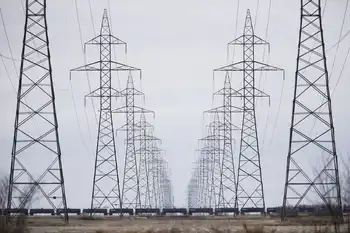
Is Ontario's Power Cost-Effective?
Ontario Nuclear Power Costs highlight LCOE, capex, refurbishment outlays, and waste management, compared with renewables,…
View more
California Legislators Prepare Vote to Crack Down on Utility Spending
California Utility Spending Bill scrutinizes how ratepayer funds are used by utilities, targeting lobbying, advertising,…
View more
Alberta creates fund to help communities hit by coal phase-out
Alberta Coal Community Transition Fund backs renewables, natural gas, and economic diversification, offering grants, workforce…
View more
Sign Up for Electricity Forum’s Newsletter
Stay informed with our FREE Newsletter — get the latest news, breakthrough technologies, and expert insights, delivered straight to your inbox.
Electricity Today T&D Magazine Subscribe for FREE

Stay informed with the latest T&D policies and technologies.
- Timely insights from industry experts
- Practical solutions T&D engineers
- Free access to every issue

