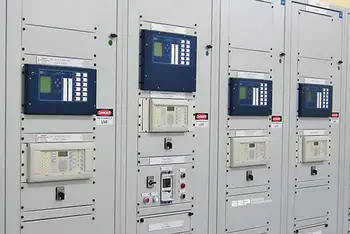
Protective Relay Training - Basic
Our customized live online or in‑person group training can be delivered to your staff at your location.
- Live Online
- 12 hours Instructor-led
- Group Training Available
Regular Price:
$699
Coupon Price:
$599
Transforming Montana's renewable energy law is the focus of two bills before lawmakers that have utilities lining up to counter claims that the changes will stall renewable project development in the state.
Senate Bill 403 aims to soften Montana's renewable portfolio requirements for utilities. The bill, sponsored by Sen. Kelly Gebhardt, R-Roundup, is stoking deep-seated rancor between NorthWestern Energy and small power producers, with both sides claiming the other seeks unfair benefits.
At issue is an existing Montana law that requires public utilities to buy an increasing amount of electricity from renewable sources, such as wind, solar or geothermal, stopping at a cap of 15 percent in 2015.
The battle being pitched between the utilities and small wind developers, such as Horseshoe Bend Wind Park near Great Falls, is playing out over what are known as renewable energy credits — often called RECs or 'wrecks' — which are certificates granted to developers for each megawatt of clean power generated.
To meet state rules, NorthWestern Energy and other utilities must purchase these RECs from developers in amounts matching the renewable energy they acquire to meet mandated portfolio requirements. They can also meet state standards just by buying RECs.
But under Gebhardt's proposed measure, which has already passed the Senate, they could use renewable energy purchases alone to satisfy their quotas.
"The bill the way it's written lets NorthWestern Energy take credit for the RECs that belong to the developers without paying for them and basically taints them in the process," said Bill Pascoe, spokesman for Horseshoe Bend, during a House committee hearing for the bill.
RECs can be sold in regional markets, but their popularity turns on confidence in their value. Opponents, including Democratic Gov. Brian Schweitzer, say the proposed change to the state's 2005 renewables law would erode the value of Montana RECs, since the credits could be tied to energy that has already been used by someone to meet portfolio requirements.
"Our concern is that by basically double-counting the RECs for both in-state use and out-of-state use you compromise the value of the REC," said Paul Cartwright, energy adviser for the governor.
NorthWestern Energy, however, argues that a different kind of doubling up is going on.
"Essentially there is a double dipping," said John Fitzpatrick, spokesman for the electric company. "The utility has to buy the qualifying facility power and then it has to buy the equivalent power to meet the renewable standard."
Under federal law, NorthWestern and other utilities are required to purchase power from small renewable power producers, also known as qualifying facilities.
Since those purchases already required by the federal law cannot be used to meet the state standards, Fitzpatrick said, rate-payers are stuck holding a check of about $13.3 million a year. Under Gebhardt's measure, the utility would be able to tally those purchases against the state quota.
"If this bill is defeated, those of you who vote against it can go out and say to your constituents 'I voted for a lot higher rates for you'," Fitzpatrick told the members of the House Federal Relations, Energy and Telecommunications Committee.
Along with changing the quota standards, lawmakers in the same committee are considering allowing hydroelectric dam upgrades to generate the same renewable energy credits as wind or solar energy.
Under Senate Bill 257, those credits would be available for upgrades completed since the end of 2004, including those at Kerr Dam southwest of Polson, and could be used by PPL Montana to meet its state-mandated renewable purchases.
"What could be more environmentally friendly than an upgrade at an existing facility that poses no environmental impacts?" David Hoffmann, spokesman for PPL said to the committee. A portion of the RECs generated — 22 percent — would also be donated to the low-income energy assistance fund by the utility.
But opponents argue that the measure sponsored by Sen. Jim Keane, D-Butte, sets unfair rules for doling out the credits, even if hydroelectric should be included on the state's renewables list. Since it would grant RECs for all of the power generated post-upgrade by a dam, instead of just the power associated with the upgrade, they say it would flood the state's REC market.
"Passing this bill could very well mean that not a single additional new megawatt of renewable energy could be built in Montana," said Chuck Magraw, of the Natural Resources Defense Council.
According to the governor's office, if the state's renewable portfolio standards were left alone, they would generate demand for about 11,000 credits between now and 2014, but under the change proposed by Senate Bill 257, roughly 600,000 new RECs would be created immediately, all belonging to PPL Montana.
Both Senate Bills 403 and 257 have passed the Senate. If they pass out of the House energy committee, they will move to the full House for consideration.
Related News

Canadian Manufacturers and Exporters Congratulates the Ontario Government for Taking Steps to Reduce Electricity Prices
Ontario Global Adjustment Deferral offers COVID-19 electricity bill relief to industrial and commercial consumers not…
View more

Trump's Pledge to Scrap Offshore Wind Projects
Trump Offshore Wind Pledge signals a push for deregulation over renewable energy, challenging climate policy,…
View more
Hydro once made up around half of Alberta's power capacity. Why does Alberta have so little now?
Alberta Hydropower Potential highlights renewable energy, dams, reservoirs, grid flexibility, contrasting wind and solar growth…
View more
Russian Missiles and Drones Target Kyiv's Power Grid in Five-Hour Assault
Assault on Kyiv's Power Grid intensifies as missiles and drones strike critical energy infrastructure. Ukraine's…
View more
Altmaier's new electricity forecast: the main driver is e-mobility
Germany 2030 Electricity Demand Forecast projects 658 TWh, driven by e-mobility, heat pumps, and green…
View more

Canadian power crews head to Irma-hit Florida to help restore service
Canadian Power Crews Aid Florida after Hurricane Irma, supporting power restoration for Tampa Electric and…
View more
Sign Up for Electricity Forum’s Newsletter
Stay informed with our FREE Newsletter — get the latest news, breakthrough technologies, and expert insights, delivered straight to your inbox.
Electricity Today T&D Magazine Subscribe for FREE

Stay informed with the latest T&D policies and technologies.
- Timely insights from industry experts
- Practical solutions T&D engineers
- Free access to every issue
