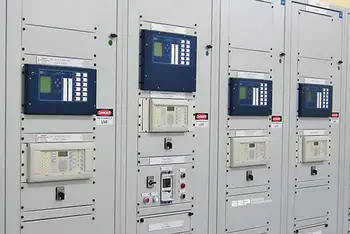
Protective Relay Training - Basic
Our customized live online or in‑person group training can be delivered to your staff at your location.
- Live Online
- 12 hours Instructor-led
- Group Training Available
Regular Price:
$699
Coupon Price:
$599
During California's energy crisis, some hailed it as an innovation that could prevent future blackouts: a "smart meter" system that allows PG&E to charge more for electricity during midday hours when power is scarce.
State regulators are considering whether businesses must use the new system - and consumers could be next.
The pricing system, though, has become controversial. While California energy planners insist it would provide an incentive to conserve during critical periods, businesses call it an unfair burden.
The Silicon Valley Leadership Group and the Building Owners and Managers Association say their member companies already try to conserve power, and mandating the price system would only drive up costs.
"There's been a huge amount of investment and a lot of progress, and then out of the blue comes this notion that we are going to modify the behavior more with these gimmicky price structures," said Bill Roberts, consultant with the Building Owners and Managers Association.
If the California Public Utilities Commission approves the business pricing plan, 8,000 businesses that already have the meters would be required to pay more during peak times starting in January.
Even if businesses are forced to use the smart meters, home users seem likely to have a choice. PG&E and other energy providers favor making the flexible pricing optional, and say they believe they can line up enough power to avoid blackouts in Northern California for the next four years.
The utilities do, however, want the smart meters installed at every home, and hope regulators will approve a rate increase in July to pay for installation starting in the fall. PG&E said the project would cost about $1.6 billion over several years, adding about 69 cents per month to household bills.
The meters would transmit the data through either phone or power lines to PG&E. Customers would be able to go online the next day and monitor their energy consumption.
In many cases, energy experts say the pricing system used in conjunction with the meters could lower household electricity bills by helping them shift their use to times when power costs less. Those who can't adjust during high-rate hours would see higher bills.
"If we had had this tool in 2001 we wouldn't have had blackouts," said Mike Messenger, demand response program manager at the California Energy Commission. "When you send people price signals, they do things even though they think they can't." Consumers would have the ability to opt out of the variable pricing if it costs too much, Messenger said.
Businesses were supposed to provide an early glimpse at how the program would work, but the results are unclear. Several years ago, large businesses got the smart meters, and had the opportunity to volunteer for the variable pricing program.
So far, only about 5 percent of the 8,000 large companies in PG&E's coverage area have volunteered to use the variable pricing schedule.
PG&E said more companies have signed up each year, though a spokesman wouldn't identify them or say how many there were. PG&E also said it couldn't provide the total energy savings achieved because the program is too new.
The Utility Reform Network, which supports consumers rights and generally opposes mandatory pricing, said it is lobbying for more businesses to participate in the program.
Before utility customers spend money to install the smart meters on homes, "I think at the minimum we should test it out for a couple of years on the large customers," said Marcel Hawiger, attorney for the group.
Related News
"Knowledge Gap" Is Contributing To On-the-job Electrical Injuries
BC Hydro Trades Electrical Safety addresses electric contact incidents among trade workers, emphasizing power line…
View more
The Impact of AI on Corporate Electricity Bills
AI Energy Consumption strains corporate electricity bills as data centers and HPC workloads run nonstop,…
View more
Alberta's Last Coal Plant Closes, Embracing Clean Energy
Alberta Coal Phase-Out signals a clean energy transition, replacing coal with natural gas and renewables,…
View more
On the road to 100 per cent renewables
US Climate Alliance 100% Renewables 2035 accelerates clean energy, electrification, and decarbonization, replacing coal and…
View more

Energy storage poised to tackle grid challenges from rising EVs as mobile chargers bring new flexibility
EV Charging Grid Readiness addresses how rising EV adoption, larger batteries, and fast charging affect…
View more
Latvia eyes electricity from Belarus nuclear plant
Latvia Astravets electricity imports weigh AST purchases from the Belarusian nuclear plant, impacting the Baltic…
View more
Sign Up for Electricity Forum’s Newsletter
Stay informed with our FREE Newsletter — get the latest news, breakthrough technologies, and expert insights, delivered straight to your inbox.
Electricity Today T&D Magazine Subscribe for FREE

Stay informed with the latest T&D policies and technologies.
- Timely insights from industry experts
- Practical solutions T&D engineers
- Free access to every issue
