High Voltage Maintenance Training Online
Our customized live online or in‑person group training can be delivered to your staff at your location.
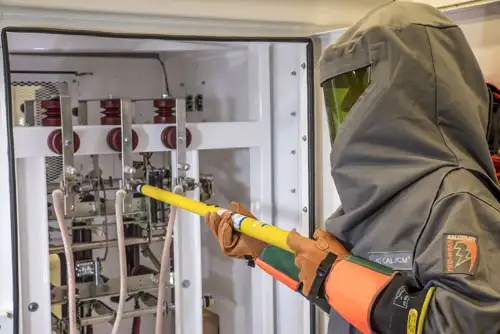
- Live Online
- 12 hours Instructor-led
- Group Training Available
Regular Price:
$599
Coupon Price:
$499
Clean coal faces scrutiny as CCS, carbon capture, and CO2 storage promise near-zero emissions. Projects like FutureGen and Mountaineer highlight high costs, modest reductions, policy subsidies, and competition from renewables.
Top Insights
Clean coal is coal power with CCS to cut CO2, but costs, lifecycle emissions, and storage risks limit its viability.
- CCS injects supercritical CO2 deep underground
- FutureGen touts near-zero emissions, omits lifecycle CO2
- Mountaineer stores about 100,000 tons, about 1.5% annual cut
- High capex and O&M raise electricity costs
- Renewables undercut CCS on cost and risk
Coal. Considered by many to be a necessary evil. But with clean coal, everybody wins, right?
\n
That’s what the Obama administration and the coal industry would have us all believe, but there’s just one problem. Coal isn’t clean, as clean coal doesn't exist according to many analyses, at all. It’s a problem though, because we either need it to be clean or we need it gone.
Electricity is the single largest greenhouse-gas-emitting sector of the national energy equation, and coal and electricity are deeply linked in meeting about half of our enormous demand for it, so it’s pretty unfortunate that it also happens to be the dirtiest of any of the fossil fuels. Supposedly that’s about to change, though, amidst increasing political pressure for coal to clean up its act.
A few initiatives in particular caught my eye recently as I searched to find out more about this elusive, somewhat mysterious idea of what is clean coal and how it’s defined.
One such project, a new coal plant to be built in Mattoon, Ill., is called FutureGen and claims it will be the first “near-zero” emissions coal plant, buoyed by stimulus funding that hastened such projects. The FutureGen Web site says it will capture and transport a minimum of 100 metric tons of CO2 it will produce every year to an underground site in Canada where it will be deposited and therefore not contribute those emissions to the warming atmosphere. (Hooray!)
Yet nowhere on its Web site does it account for the emissions it will produce in the construction process, transportation of the liquid coal to the depository site, or basic plant operations, a point echoed by critics who urge us to face the realities of clean coal when assessing full life-cycle impacts. Hmm — so not actually emissions free will you be, FutureGen?
On a less conceptual note, one already existent coal plant, American Electric’s Mountaineer plant in New Haven, W.V., became the first coal-fired power plant in the U.S. to capture and store some of its carbon dioxide emissions last month, even as debates over clean coal future or fallacy continue in the industry. The company plans to inject about 100,000 tons of the plant’s emissions for the first few years, reducing its carbon footprint annually by about 1.5 percent. That’s commendable in the context of the situation, where competitors have largely done zilch, but the environmental payoff is still small considering the approximately $100 million-bill.
Actually though, I’m still a little stuck on this whole notion of putting the emissions underground. When “stored,” CO2 is first converted to a liquid-like substance known as supercritical fluid, then transported and injected 3,000 feet into the earth where it remains indefinitely.
Is it just me, or does this seem like some sort of escapism? The coal plant still does its normal thing, but then hides the evidence. It feels more like an “out of sight, out of mind” situation that got out of hand than a viable option for helping to avert climate change.
And it’s not affordable. For how much the fossil fuel lobbyists complain, amid a dirty war against clean coal in messaging, that renewables are not commercially viable, they should really look in the mirror on this one.
There are provisions for coal in the Senate climate bill, though, to help with the high costs of the emerging carbon capture and storage technologies which would provide advance payments to coal plants to take measures to reduce their emissions.
The coal industry is asking for much more though; it wants production tax credits for liquid coal, loan guarantees, construction grants (like that approved for FutureGen to the tune of a billion dollars), and even that the Department of Defense be required to purchase a certain amount of its energy from clean coal at a set price.
And of course that tab would be passed right along to the taxpayer. And it’s there that I have to quit lobbing softballs and draw the line. No more optimism for “clean coal” if I and mine as well as you and yours are going to be the ones footing the bill.
The choices we must make about how to power this country in the future have reached a critical point. It basically comes down to choosing between continuing to use finite natural resources that produce waste harmful to earth systems, or harnessing the energy that occurs freely and naturally on a constant basis and which creates no waste.




Why anyone would promote the former is beyond me. Leave money out of the conversation for two seconds and there’s no contest. And even with money in the equation, investing in clean, renewable energy makes more sense than putting that same money into finding supposedly more efficient ways of hiding our pollution.
It’s time to move beyond it: clean coal is no coal.
Related News
Related News
Alberta breaks summer electricity record, still far short of capacity
Alberta Electricity Peak Demand surged to 10,638 MW, as AESO reported record summer load from…
View more
Prevent Summer Power Outages
Summer Heatwave Electricity Shutoffs strain utilities and vulnerable communities, highlighting energy assistance, utility moratoriums, cooling…
View more
When did BC Hydro really know about Site C dam stability issues? Utilities watchdog wants to know
BC Utilities Commission Site C Dam Questions press BC Hydro on geotechnical risks, stability issues,…
View more

NEW Hydro One shares down after Ontario government says CEO, board out
Hydro One Leadership Shakeup unsettles investors as Ontario government ousts CEO and board, pressuring shares;…
View more
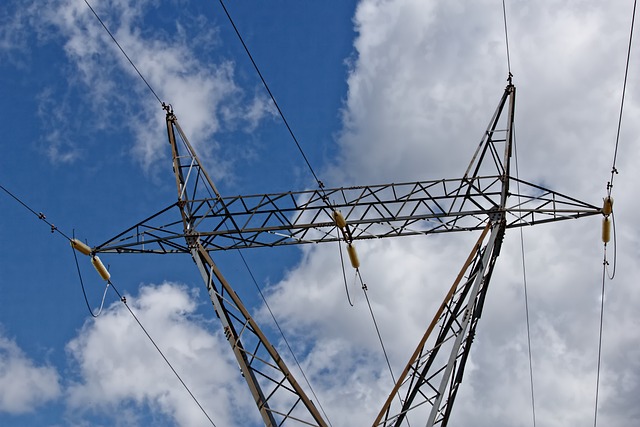
B.C. Challenges Alberta's Electricity Export Restrictions
BC-Alberta Electricity Restrictions spotlight interprovincial energy tensions, limiting power exports and affecting grid reliability, energy…
View more
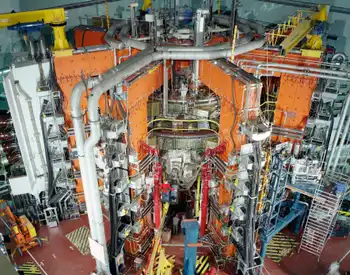
Why Nuclear Fusion Is Still The Holy Grail Of Clean Energy
Nuclear fusion breakthrough signals progress toward clean energy as NIF lasers near ignition and net…
View more
Sign Up for Electricity Forum’s Newsletter
Stay informed with our FREE Newsletter — get the latest news, breakthrough technologies, and expert insights, delivered straight to your inbox.
Electricity Today T&D Magazine Subscribe for FREE

Stay informed with the latest T&D policies and technologies.
- Timely insights from industry experts
- Practical solutions T&D engineers
- Free access to every issue

