NFPA 70b Training - Electrical Maintenance
Our customized live online or in‑person group training can be delivered to your staff at your location.

- Live Online
- 12 hours Instructor-led
- Group Training Available
Regular Price:
$699
Coupon Price:
$599
Giant windmills are popping up on farms, scenic mountain ridges, prairie grass and now an Indian reservation, dramatically changing the nation's landscape and spinning a debate about where they belong.
Wind power grew rapidly in 2005, becoming more competitive as natural gas prices jumped and crude oil prices reached record highs. Improved technology, a federal tax credit and pressure on utilities to use clean energy sources helped fuel the growth from coast to coast.
Officials in Atlantic City, N.J., in December dedicated the nation's first coastal wind farm. And last week, General Electric Co. announced a startup near San Diego of the largest wind power farm on Indian land.
Last year, Klickitat County in south-central Washington took a bold step by creating a so-called Energy Overlay Zone, a planning tool aimed at expediting renewable energy development.
Wind developers, who often face bitter battles with locals who object to massive turbine farms, say it's the first such zone in the country.
A green energy company plans to build a $100 million wind farm in Eastern Oregon. As many as 70 turbines will generate up to 104 megawatts of power, enough to serve 25,000 homes. Zilkha Renewable Energy's power will be delivered via Idaho Power's high-voltage transmission lines that run near the site.
Wind power still makes up less than 1 percent of the nation's electricity, but experts expect wind to generate at least 5 percent by 2020.
"The wind resource in the United States is comparable to the oil resource in Saudi Arabia," said Tom Gray, deputy executive director of the American Wind Energy Association, an industry trade group. "It's a major strategic national resource we should be making every effort to develop."
While windmills may evoke quaint images of yesteryear, they're sparking growing debate, particularly as the first offshore projects are proposed in popular tourist areas, such as Cape Cod, Long Island, N.Y., and the New Jersey shore. Critics, including a member of the influential Kennedy family, worry that some projects could harm national treasures.
"All of a sudden you're transferring an asset used by 5 million people into the hands of private industrial speculators," said Robert F. Kennedy Jr., an environmentalist who has objected to the Cape Cod proposal.
The industry added about 2,500 megawatts of wind power this year, a record 35 percent increase, according to the association. The country's wind capacity is more than 9,200 megawatts in 30 states, enough for 2.4 million average U.S. homes.
In September, a report by the Government Accountability Office, Congress' investigative arm, found that the federal government offers minimal oversight in approving wind power plants. The report urged federal officials to take a more active role in weighing the impact of wind power farms on bird and bat deaths, saying local and state regulators sometimes lack the necessary expertise.
Wind projects have sparked complaints around the country that the windmills cause noise, obstruct scenic views and kill wildlife, including thousands of federally protected birds in California.
In Maryland, state officials have sought to limit 420-foot windmills atop a mountain ridge because of concerns about the impact to rare species.
In Kansas, conservation groups have asked state officials to create guidelines for wind energy developments, citing concerns that more wind farms will harm the remnants of the nation's prairie grass and prairie chicken populations.
Proponents say bird kills have been minimal at most wind farms, though Gray acknowledged some bird kills. They say the visual impact is far less severe than other forms of energy such as oil drilling.
Wind power helps lower home heating and electric bills by reducing the demand for natural gas and brings new jobs, rural economic development and tax revenue to cash-strapped states, proponents say.
In McCamey, Tex., Mayor Sherry Phillips said the population has dwindled over the decades from about 10,000 to 1,800 as oil dried up. But these days the area is remaking itself as the wind farm capital of Texas, collecting millions of dollars in taxes and creating 40 to 50 jobs from 860 wind turbines, she said.
The wind power added this year will offset the emission of about 7 billion pounds of carbon dioxide, equivalent to keeping nearly 500,000 SUVs off the road, the association said.
"If we could just find a way to make them invisible," Gray said, "we'd have something everybody could get behind."
Related News
Canada Faces Critical Crunch in Electrical Supply
Canada Electricity Supply Crunch underscores grid reliability risks, aging infrastructure, and rising demand, pushing upgrades…
View more
Cooperation agreement for Rosatom and Russian Academy
Rosatom-RAS Cooperation drives joint R&D in nuclear energy, nuclear medicine, fusion, particle accelerators, laser technologies,…
View more
Chinese-built electricity poles plant inaugurated in South Sudan
Juba Power Distribution Expansion accelerates grid rehabilitation in South Sudan, adding concrete poles, medium and…
View more
Tube Strikes Disrupt London Economy
London Tube Strikes Economic Impact highlights transport disruption reducing foot traffic, commuter flows, and tourism,…
View more
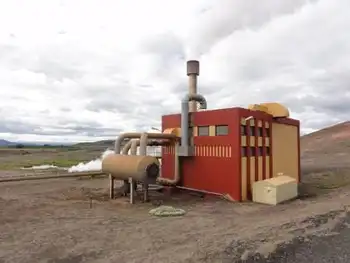
Swiss Earthquake Service and ETH Zurich aim to make geothermal energy safer
Advanced Traffic Light System for Geothermal Safety models fracture growth and friction with rock physics,…
View more

Can COVID-19 accelerate funding for access to electricity?
Africa Energy Access Funding faces disbursement bottlenecks as SDG 7 goals demand investment in decentralized…
View more
Sign Up for Electricity Forum’s Newsletter
Stay informed with our FREE Newsletter — get the latest news, breakthrough technologies, and expert insights, delivered straight to your inbox.
Electricity Today T&D Magazine Subscribe for FREE

Stay informed with the latest T&D policies and technologies.
- Timely insights from industry experts
- Practical solutions T&D engineers
- Free access to every issue
